A NEW ERA FOR CYPRUS
NEW RULERS FOR THE ISLAND IN THE SUN
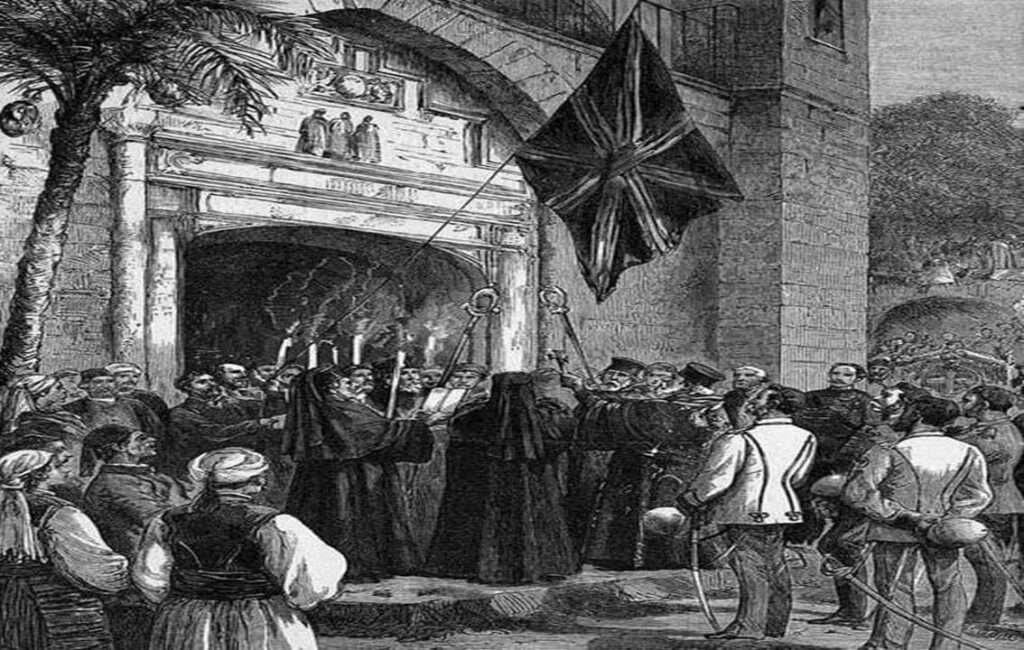
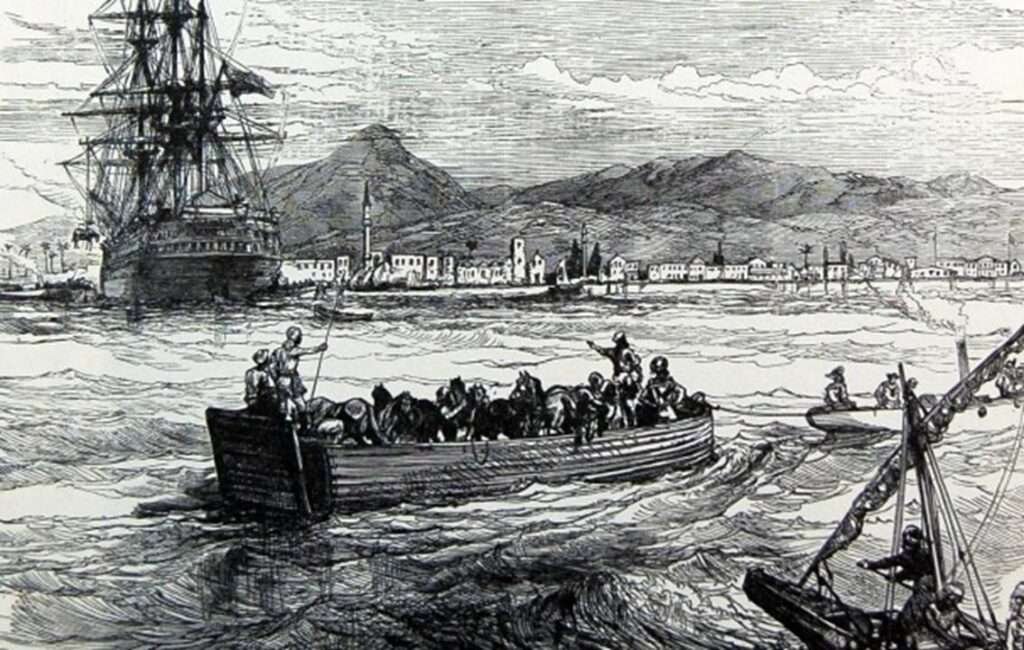
Clandestine negotiations between the British and the Ottoman Empire culminated in the Cyprus Convention of 1878. Signed on June 4th during the Congress of Berlin, it saw the Ottoman Empire retain rights over the territory of Cyprus, but grant total administrative control of the whole island to Great Britain. The Ottomans had made similar offers to the British three times previously. Although these proposals were rebuffed in 1833, 1841, and again in 1845, an agreement regarding Cyprus was finally reached at the fourth attempt in 1878.
RUSSIAN EXPANSION
Western Europe, and particularly the Eastern Mediterranean region, faced a constant Russian threat of expansion during the 1870s. The Russian Empire, which found itself in a power vacuum, was continually focusing its efforts southward towards the warm-water port of Constantinople and the Dardanelles. This set in motion a series of both military and diplomatic missions that saw a weakened Ottoman Empire taking decisive steps towards securing its northern borders. This resulted in a British presence in Cyprus, which was intended to help forestall such an expansion.
PROTECTION FOR BRITISH INTERESTS
The 1878 agreement firmly stipulated that the British would use the island primarily as a military base. This would help protect not only the Ottoman Empire but also the greater eastern Mediterranean against any possible Russian aggression. Taking control of Cyprus also served other British interests at the time. Britain would eventually use Cyprus to protect its interests in the nearby Suez Canal, which had become a crucial gateway to its empire in the east.
CONFRONTED WITH THE IDEA OF A UNION WITH GREECE
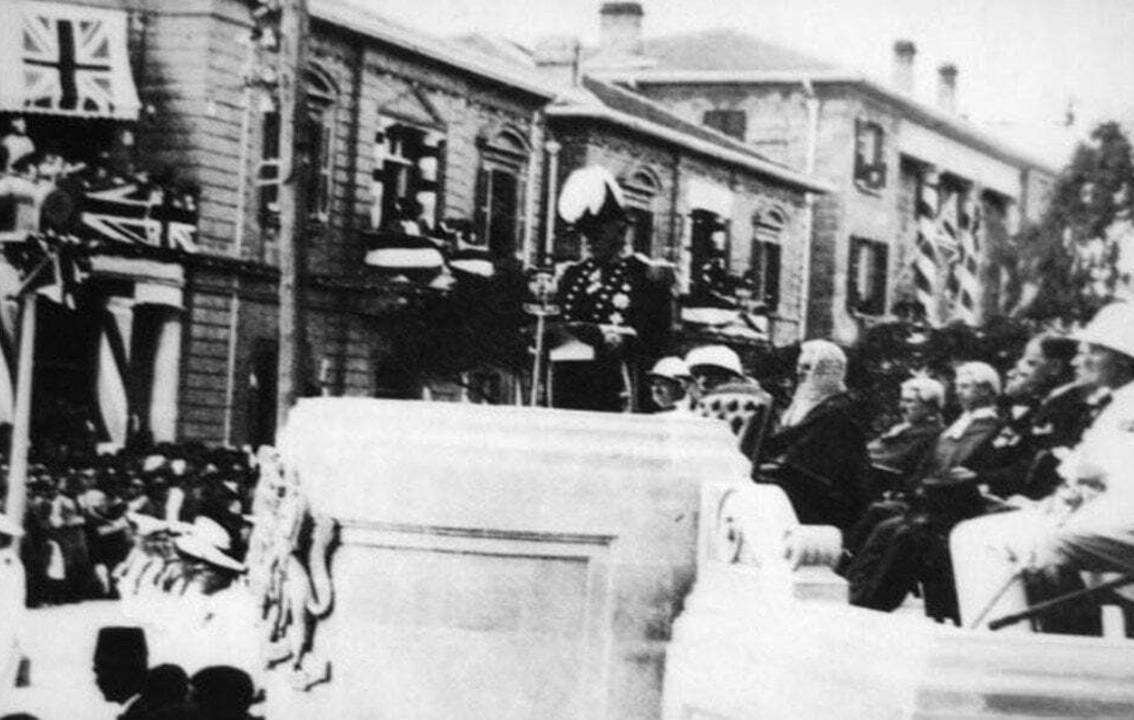
The first British High Commissioner to Cyprus, during a welcoming speech in Larnaca, met with several Cypriot representatives. They initially welcomed and embraced British control of the island, with some believing that a Cypriot future would be much brighter under British control. The majority of Cypriots at the time viewed the British as world leaders, and they welcomed the idea of being part of their commonwealth. Others, however, were pushing for a very different agenda. The British High Commissioner was confronted at the very beginning of his administration with the reality that the majority of Greek Cypriots wanted union with Greece. This was apparent after Greek Cypriot Nationalism made its presence known at these meetings. The Bishop of Kition was particularly vocal, expressing the hope that the British would eventually expedite the unification of Cyprus with Greece, as they had previously done with the Ionian Islands.
PAYING A PRICE
Cypriots were soon to realise that British Colonial rule came at a price. The terms of the Cyprus Convention of 1878 provided a clause that saw any excess of the island’s revenue, after government expenditure, paid as an annual fixed tribute to the Ottomans. This provision enabled the Ottomans to assert that the island was still part of their empire. The agreement, as a result, was sometimes referred to as an ad hoc British lease agreement because of this.
THE CYPRUS TRIBUTE
The Cyprus Tribute, as it became known, would later become a major source of discontent amongst Cypriots, becoming an underlying factor in later Cypriot unrest. It created a constant drain on the Cypriot economy that could not be ignored. Discontent set in after Cypriots found themselves not only paying tribute to the Ottomans, but also covering the expenses incurred by the British colonial administration. Matters worsened when it surfaced that money earmarked for the Ottomans was never actually paid to them. Cypriot public opinion at the time felt that Cypriots were being forced to pay a debt that was not theirs to bear, after the British took funds generated by the Cypriot economy to pay off Ottoman Crimean War loans. This would later greatly disturb the Ottomans as well as the Cypriots.
A SPECIAL CYPRUS CONTINGENCY FUND
The annual payment would eventually become a symbol of British oppression across the island. Further irritations were then caused by the creation of the ‘Cyprus contingency fund’. Exclusively controlled by British administrators, this was created to mop up any excess Cypriot wealth. This was noted by the Undersecretary of State for the Colonies at the time, Winston Churchill. He raised the issue of Cypriot finances in Parliament after a visit to the island in 1907. This resulted in a vote that enabled the British Government to issue a permanent annual grant-in-aid of £50,000 to Cyprus. This reduced the tribute and Cypriot burden accordingly.
A KEY MILITARY BASE
In 1906, a new harbour at Famagusta was completed, increasing the importance of Cyprus as a strategic naval outpost. The harbour helped to protect the approach to the Suez Canal and allowed Cyprus to go on to serve Britain as a key military base on the sea route to British India. This also led to Cyprus becoming one of Britain’s most important overseas colonies.
THE END OF THE AGREEMENT
On November 5th, 1914, the Cyprus Convention agreement of 1878 came to an abrupt end. Great Britain formally annexed Cyprus, and the island became a Crown colony. This came after the Ottoman Empire entered the side of the Central Powers, in opposition to Great Britain, during the First World War. Great Britain also took control of the Ottoman Khedivate of Egypt and the Sudan.
KEY DETAILS OF THE CYPRUS CONVENTION OF 1878
The Cyprus Convention of June 4th, 1878, was a secret defensive pact that was forged between the British and Ottoman Empires. The defensive pact included a British pledge to defend the Ottoman Empire’s Asian territories against Russian aggression in exchange for administrative control over Cyprus. This agreement stipulated that although Cyprus remained under nominal Ottoman sovereignty, it would become a British overseas territory, which would establish Britain as its protectorate. The island, which was later formally annexed by the British Empire in 1914, continues to this day to secure strategic eastern Mediterranean bases that serve British interests in the region.
Key details regarding the Convention include:
Strategic Objective: Britain, at the time, sought a base to protect its interests in the Middle East. Britain planned to use the island as a military and naval base in the eastern Mediterranean to protect its trade routes to India following the opening of the Suez Canal. Great Britain also sought to prevent further Russian expansion in the immediate area following their gains during the Russo-Turkish War. In light of this, Britain promised to join forces with the Ottoman Sultan to defend his Asian territories from future Russian expansion. Britain also agreed to support the Ottomans at the upcoming Congress of Berlin.
Terms of Occupation: The agreement stipulated that while formal sovereignty remained with the Ottoman Empire, the island of Cyprus would be fully occupied and administered by Great Britain, which would retain complete administrative rights and control over Cyprus. The agreement also stipulated that if Russia returned occupied Armenian territories to the Ottoman Empire, Britain would then vacate Cyprus.
Financial Arrangement: The convention allowed for a Muslim religious tribunal to operate for the local Muslim population and stipulated that Britain would pay any excess of island revenue over expenditures back to the Ottoman Porte.
Evolution of Status: The agreement transformed from a protectorate into a formal annexation on November 5, 1914, when the Ottomans joined World War I against Britain. Cyprus then officially became a Crown Colony in 1925.
WHY DID THE OTTOMANS CEDE CYPRUS TO GREAT BRITAIN?
The Ottoman Empire gave full administrative control of Cyprus to Britain in 1878 in exchange for British military and diplomatic protection against Russian expansion. The Ottoman Empire had just suffered a major defeat in the Russo-Turkish War of 1877, resulting in the loss of territory. Fearing further territorial losses to Russia, they instigated the covert Cyprus Convention, which took place on June 4th, 1878.
The agreement reached at this meeting gave Great Britain full access to Cyprus. Although the Ottoman Empire formally retained nominal land sovereignty over the island, the agreement allowed Britain not only to occupy but also to fully administer the island for an annual tribute payment. Britain, in return, also agreed to support the Ottomans at the international Congress of Berlin.
Britain took control of Cyprus with a view to using it as a strategic naval base in the Eastern Mediterranean. This was mainly to help protect its interests in the Suez Canal, which was a vital component of their empire at the time. Their intentions were also to monitor extensive Russian movements in the region.
Cyprus was officially annexed outright when the Ottoman Empire entered World War I on the side of the Central Powers that opposed Britain. After defeat and following the subsequent collapse of the Ottoman Empire, the newly established Republic of Turkey officially recognised British sovereignty over Cyprus under Article 20 of the Treaty of Lausanne in 1923.