AN ORTHODOX CHRISTIAN SANCTUARY
A HIGH MOUNTAIN SETTING
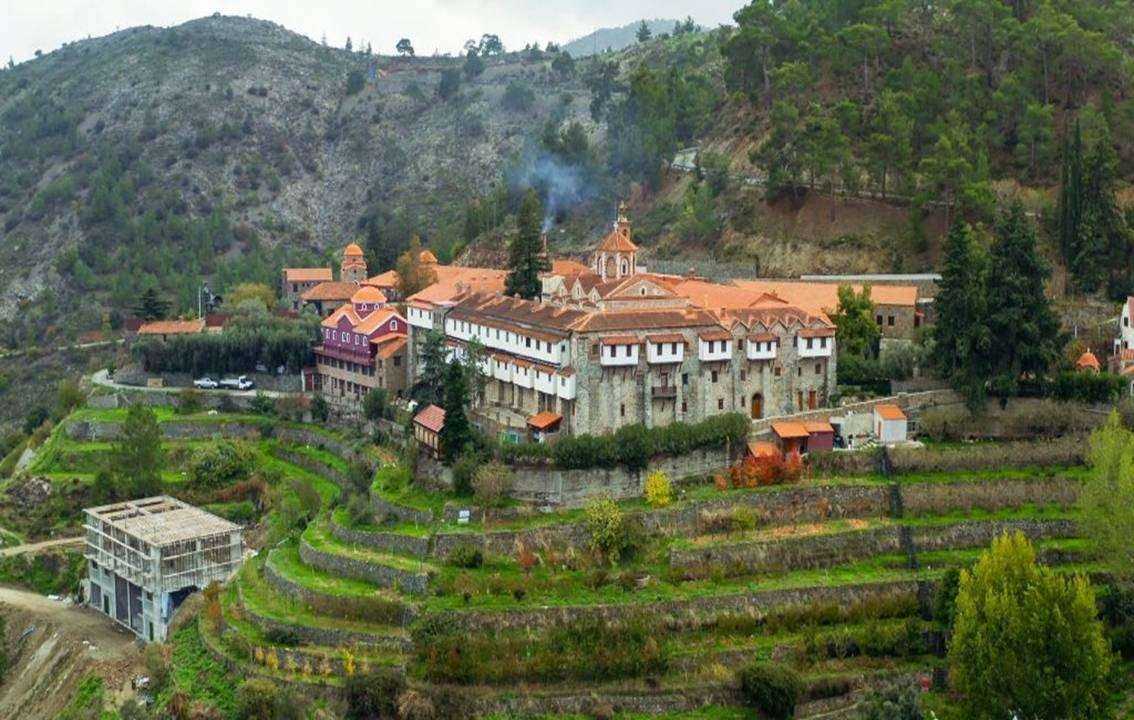
Throughout its turbulent history, Cyprus has been repeatedly occupied by several larger foreign powers. This has inevitably caused political unrest, in particular for the Greek Orthodox Church. In light of this, the isolated mountains of Troodos have throughout the ages offered a critical sanctuary for the Orthodox Christian community. The monastic order of the Holy Monastery of Panagia Machairas today follows equally strict rules similar to those of the brotherhood of Mount Athos in Greece. Every year on August 15th and on September 8th, large religious fairs are held within the monastery’s grounds.
FOUNDED IN THE 12TH CENTURY
Founded in 1148, near the village of Lazanias, by a Greek Byzantine monastic order, the Holy Monastery of Panagia Machairas is one of the oldest and most important monasteries in Cyprus. Located approximately 40 km south of the City of Nicosia, in the eastern part of the Troodos Mountain range, the monastery stands today at an altitude of approximately 900 meters above sea level.
STAVROPEGIAL STATUS
Retaining its special status to this day, this monastery, along with the monasteries of Kykkos and Agios Neophytos, was granted stavropegial status by order of the Byzantine Emperor Manuel I Komnenos. All three, as a result, are allowed to retain their independence from the local diocese. This has made all three monasteries the most important, majestic, and ancient active monasteries on the island.
THE ICON OF THEOTIKOS MACHAIROTISSA
Steeped in legend, the discovery of the wonder-working icon of the Theotokos Machairotissa nearby is connected with the founding of the monastery, giving it its name. Renowned for its miracles of healing, the icon is considered to be one of the icons painted by the Evangelist Luke. It was initially hidden in a cave in the mountains after it was secretly brought from Constantinople to Cyprus during the period of iconoclasm, but then mysteriously disappeared. In 1145, however, the local hermit monks, Neophytos and Ignatios, discovered the icon after clearing dense undergrowth using large knives much like machetes. After the discovery, Machairas, which translates to knife, gave both the icon and the monastery its name.
A DEFENSIVE STRUCTURE
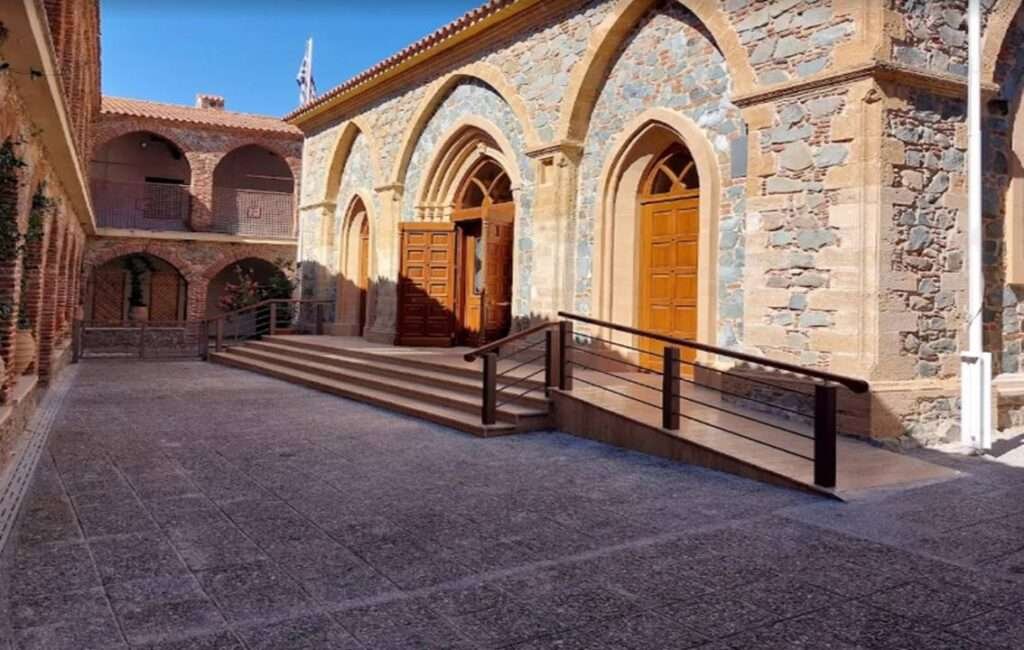
Designed with defence in mind, this monastery was built primarily to protect its resident monks and to safeguard its valuable religious treasures. This helped the monastery maintain independent Orthodox worship under the Latin and then later Ottoman eras. Remaining as a rare example of a fortified monastery, its structure is emphasised by its thick stone walls and buttresses, and an ancient bridge spanning a deep ravine.
A REFUGE FOR A KING
The monastery’s monks have traditionally managed extensive mountain lands and have been known for their many craft traditions. Although the monks have been known for extensive baking, winemaking, and intricate metal wares, it was the monastery’s association with healing that it was mainly known for. In light of this, the monastery grounds once housed a grand hospital where free medical care was provided to all who sought sanctuary there. This took King James I of Cyprus to the monastery in 1393, after a local plague had beset the area.
AN EDUCATIONAL CENTRE
During the Ottoman era, the Machairas Monastery served as a vital spiritual and cultural anchor for Greek Orthodox Christians in Cyprus. Despite initial looting following the Ottoman conquest of 1571, the monastery managed to preserve its religious heritage and later became an educational centre. In light of this, the monastery fostered Greek literacy traditions through an informal educational program for the surrounding areas. This helped to keep Greek language and heritage alive throughout the Ottoman era.
GREEK REVOLUTION
The monastery lost substantial assets and lands when Ottoman authorities targeted church wealth during the Greek War of Independence. The Ottomans would also execute Archbishop Kyprianos, alongside hundreds of other clerics and laymen across Cyprus on July 9th, 1821. This occurred after the Greek Orthodox church openly supported the Greek revolution against Ottoman rule.
DESTROYED BY FIRE
The monastery was severely damaged by fire in 1530, and again in 1892. Although several buildings were damaged, its icons and the ancient parchment manuscript containing the monastic rule remained unharmed. After the 1892 fire, Archimandrite Chariton collected donations for its restoration. One of its main benefactors at the time was the Orthodox Russian Empire.
THE HOLY CROSS
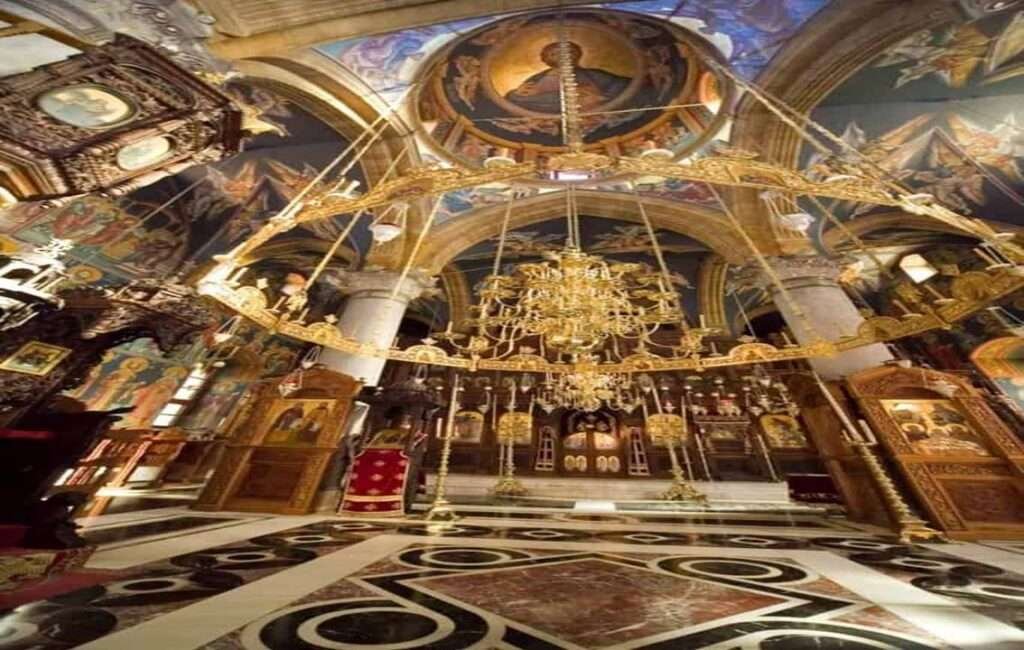
The monastery’s vestry, exhibition areas, and storage rooms, housing icons and ecclesiastical objects, have been restored thanks to donations by the A. G. Leventis Foundation. These areas house a rich collection of ancient books, manuscripts, icons, and ecclesiastical artefacts. The restorations also include the original quarters of the monks, as well as the stables and storehouses. The monastery’s main church building also houses the icon of the Theotokos Machairotissa and the Theotokos Hodegetria. The main chapel, which contains a particle of the true cross encased in a silver-gilt cover, takes centre stage in the main chapel.
A HIDEOUT FOR EOKA REVOLUTIONARIES
The protective structure of the monastery also remained strategically vital well into the 20th century. This is when it was used as part of a hideout network for Greek-Cypriot revolutionaries fighting British colonial rule. About 2km north of the monastery lies the hideout of Grigoris Afxentiou, hero of the 1955-59 Liberation Struggle. The EOKA leader often disguised himself as a local monk and used the monastery as cover for several of his covert operations. In light of this, the monastery complex today houses a small museum dedicated to a major hero of the Cypriot liberation struggle.
INSIDE THE MONASTERY
THE IMMEDIATE GROUNDS OF THE MONASTERY
THE EAGLE OF MACHAIRAS
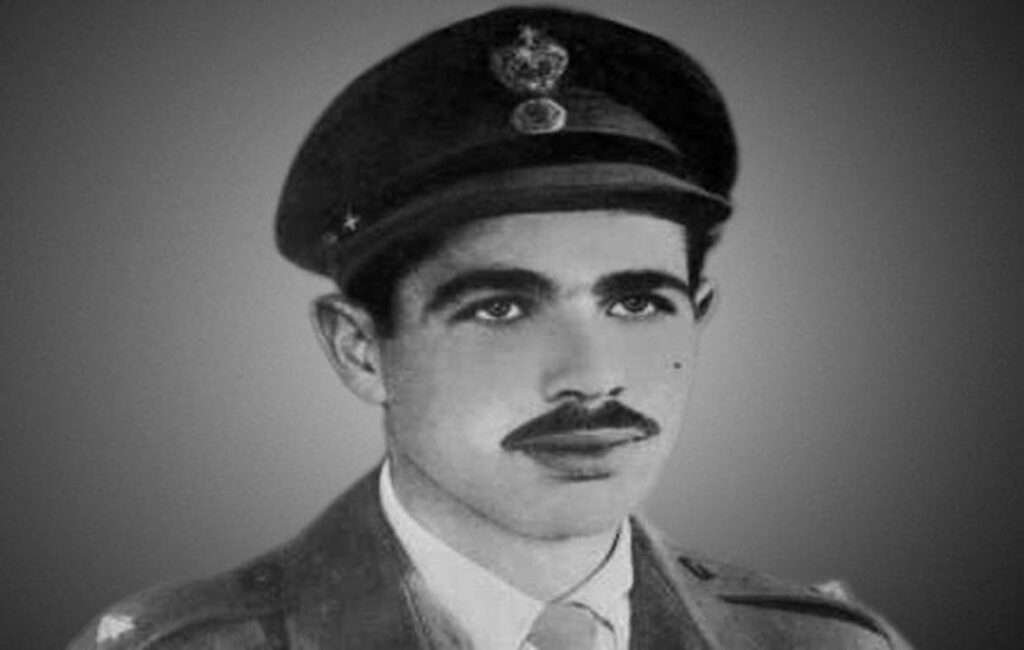
GENERAL GRIGORIS AFXENTIOU
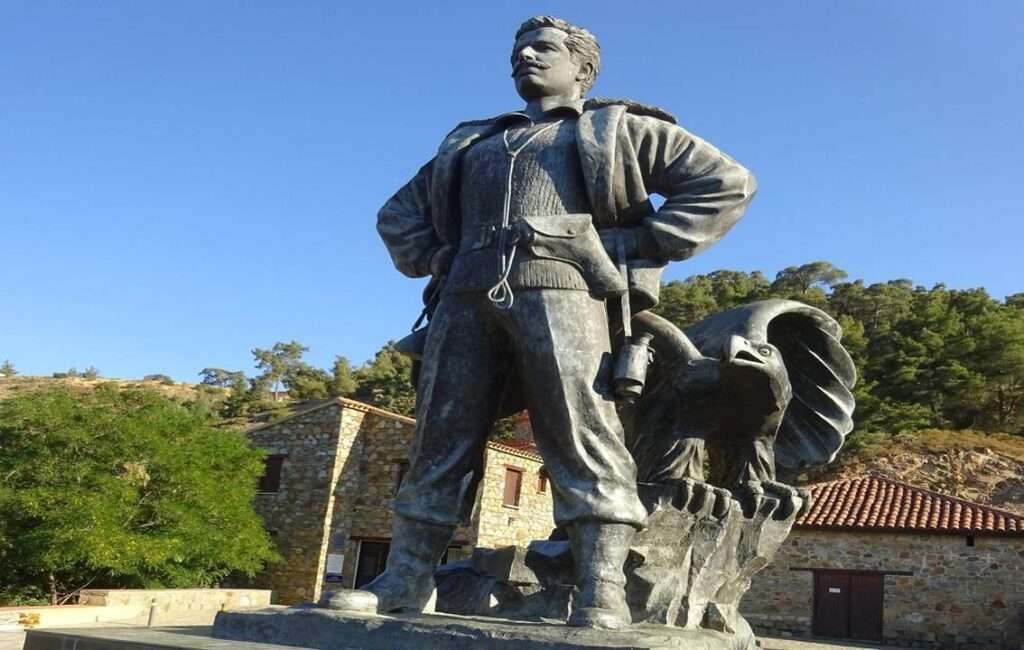
THE STATUE OF GENERAL GRIGORIS AFXENTIOU
GRIGORIS AFXENTIOU
A NATIONAL CYPRIOT HERO
Widely revered as a national hero in Cyprus, Grigoris Pieris Afxentiou was a prominent Greek-Cypriot guerrilla leader of the National Organisation of Cypriot Fighters, also known as EOKA. Born on February 22nd, 1928, in the village of Lysi, in the Famagusta district, he travelled to Athens to study literature at the Hellenic Military Academy. After graduating from the Army as a Reserve Infantry Lieutenant, he went on to serve on the Greek-Bulgarian border. He eventually repatriated to Cyprus in 1952, working alongside his father as a taxi driver.
RECRUITED IN 1955
His fight to help free his homeland from British colonial rule began in 1955, after he was directly recruited by General Georgios Grivas. Operating under the pseudonym ‘Zidhros’, he was assigned as the regional commander of the Famagusta sector. Known for his expertise in explosive operations, he successfully led early guerrilla strikes against colonial infrastructure, which included British-controlled broadcasting facilities.
THE BATTLE OF SPILIA
His command was also instrumental during the Battle of Spilia in December 1955. This is when he successfully outmanoeuvred British forces chasing his troops. His impressive tactics led two separate British units to mistake each other for the enemy. This allowed his troops to escape after the British units exchanged friendly fire.
THE EAGLE OF MACHAIRAS
After being installed as second-in-command of EOKA, he moved his operations to the eastern areas of the Troodos Mountains, in particular the area near the Holy Monastery of Machairas. He was famously given the name the ‘Eagle of Machairas’ following his final standoff against British forces, which resulted in his death on March 3rd, 1957.
THE BATTLE OF MACHAIRAS
The Battle of Machairas began after a local informant betrayed his position to British authorities. He, along with a small group of fellow fighters, was then tracked to a mountain cave, which he often used as a hideout, near the Machairas Monastery. After being surrounded by hundreds of British troops, the general ordered his men to surrender to help save their lives. He himself, however, refused to step down and held off the British troops single-handedly for up to 10 hours. After he was ordered by the British to surrender his weapons, he famously shouted back, ‘Molon Labe’, which translates to come and take them echoing King Leonidas of ancient Sparta.
A SYMBOL OF CYPRIOT INDEPENDANCE
Unable to flush him out, British forces poured petrol into his hideout and then detonated several explosives, which burned him alive inside the cave. To prevent public demonstrations and riots, his remains were secretly taken to Nicosia and were buried in an unmarked grave in the yard of the Nicosia Central Prison. His sacrifice remains one of the most defining symbols of Cypriot independence.