A CRISIS THAT SAW THE RISE OF A NEW LANDMARK
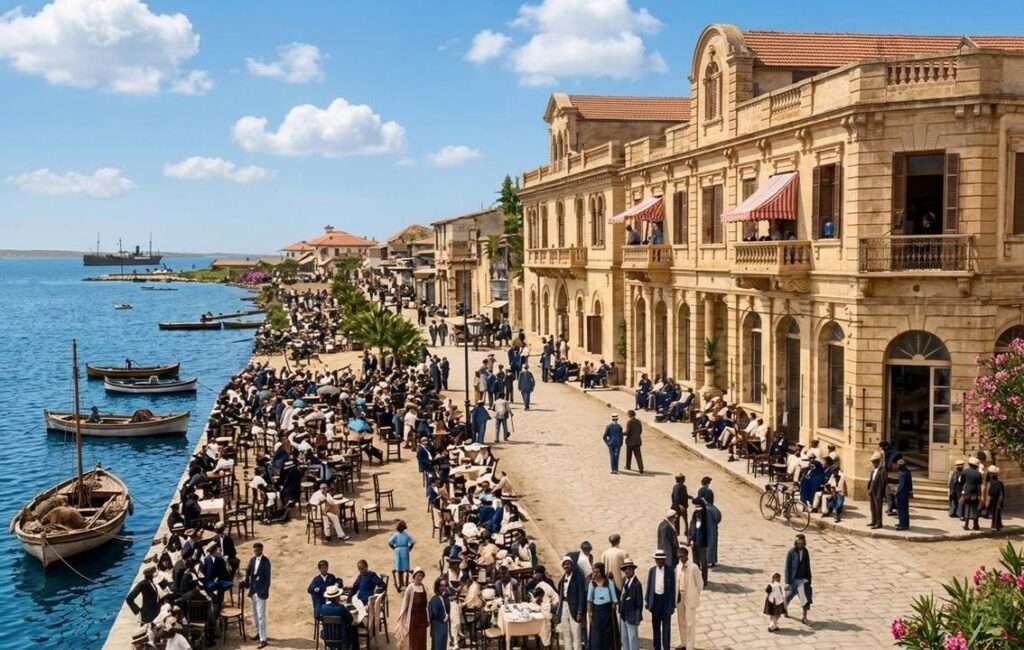
During the 1920s, Limassol began to face a water emergency that was gradually worsening every year. Things then came to a head in the summer of 1928 when an official water emergency was declared after the water supply was constantly interrupted. Limassol at this time relied heavily on water carts and stone reservoirs, known as HAVOUZA’S, to supply fresh water to the city, but it was obvious that this antiquated infrastructure system, introduced by the Ottomans, could no longer support the demands of the rapidly growing population of this fledgling city.
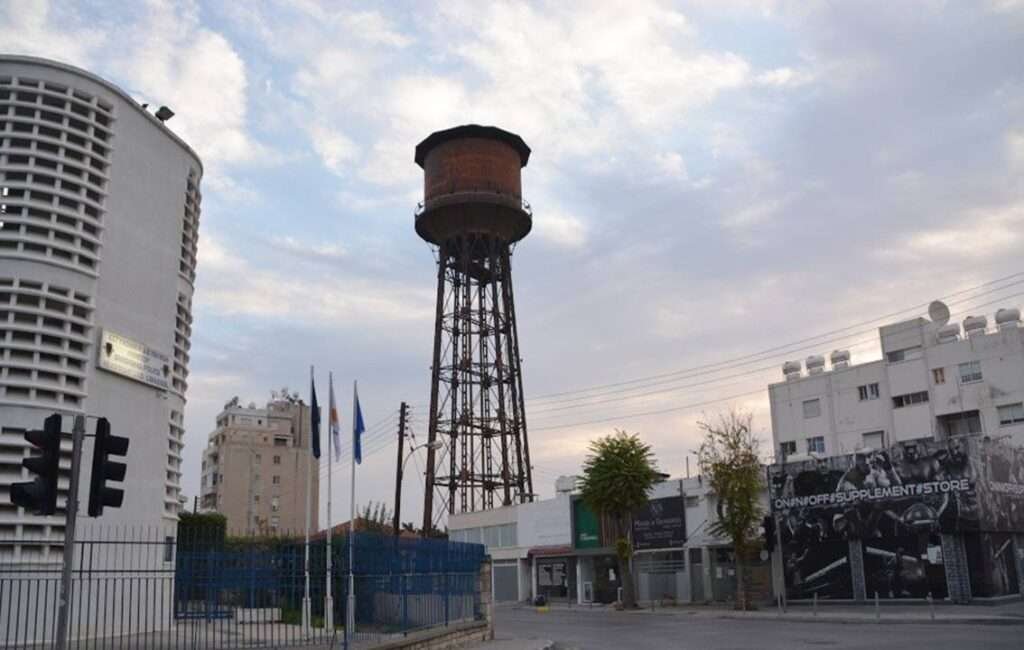
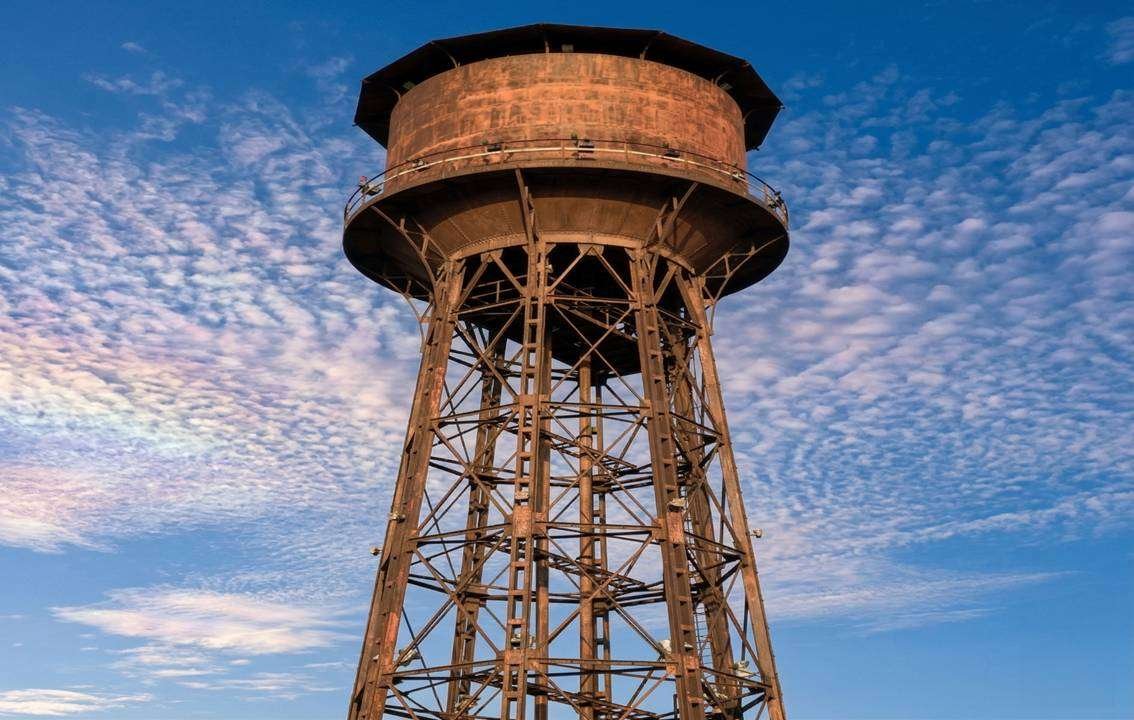
Architects then embarked on an ambitious engineering project that would see a pressurised water tower using gravity built to serve the entire city. The construction of the huge 40-metre-tall industrial landmark was completed by 1930. Featuring an iron tank with walls that are 8 mm thick and a 9-metre diameter, the engineering marvel at the time has the capacity to hold 500 cubic metres of fresh water.
The design and construction project was a significant public investment for a Cypriot municipality in that period, and it was an international undertaking, shaped by the British colonial administration of the era. Williamson & Pengelly, an English engineering firm then operating out of Egypt, used local contractors to handle the ground-level execution of the project. Builders mainly constructed the structure from structural steel with iron sheet panels that are approximately 8 mm thick, fastening them with iron nails and rivets. This was standard construction practice of the era, predating modern welding techniques.
Water to the tower, which stood at what was then the highest point of the city, was pumped from the Garyllis Delta aquifer at the historic water machine pumping station in the Limassol suburb of Tsiflikoudia. An electromechanical cable system, which allowed operators to monitor water levels remotely, was also revolutionary at the time. The tower would serve active infrastructure needs until 1947, when rapid population growth outpaced the single elevated tank.
Standing directly opposite Limassol’s Central Police Station, the tower has defined the area’s skyline for nearly a century. Its construction is regarded by locals as the moment when Limassol became a modern city.
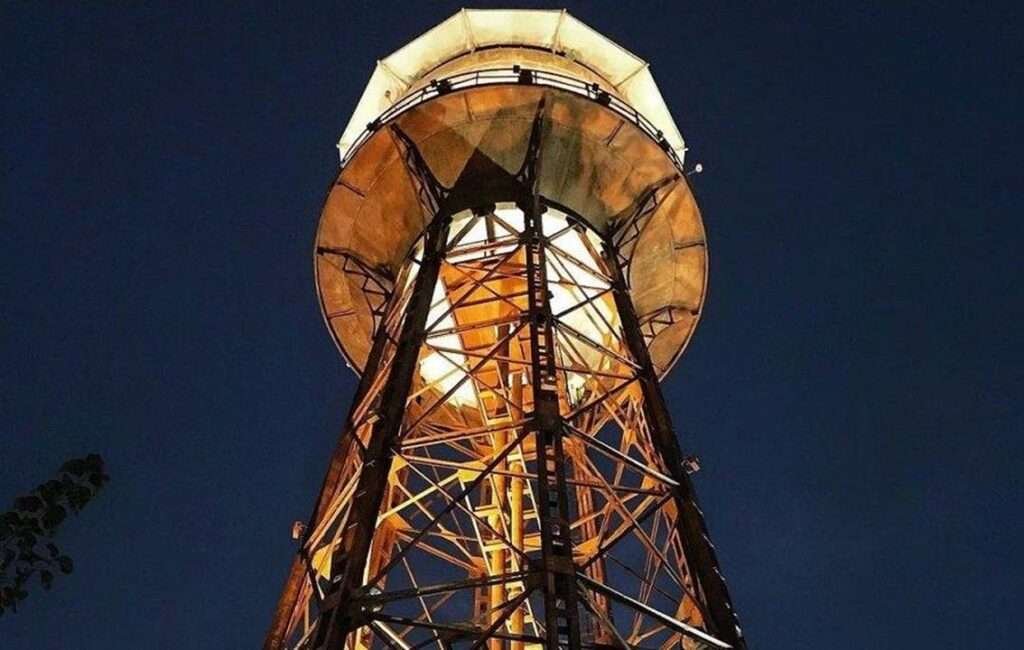
Left in darkness for decades after its retirement, Limassol Municipal Council acknowledged the landmark by illuminating it in 1999 as part of the island’s millennium celebrations. Continuous lighting has since transformed it into a glowing navigational point, allowing it to once again become a beloved symbol of Limassol’s old town.