A NEW FLAG FOR A NEW REPUBLIC
A FLAG THAT TELLS ITS OWN STORY
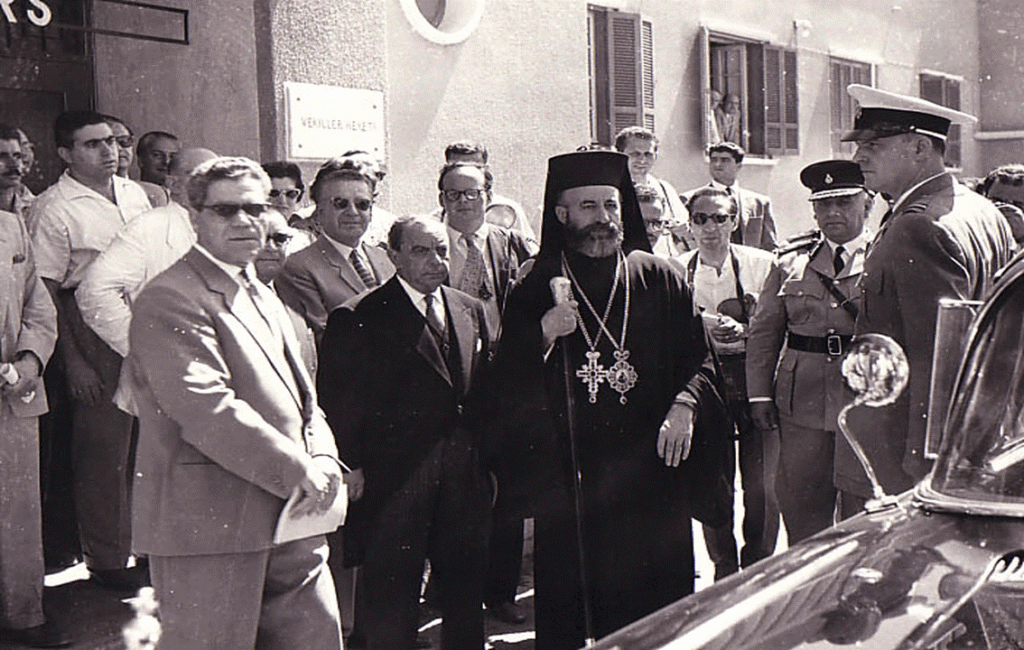
Although Cyprus is an island that has endured much turmoil and strife throughout the ages, one of the most poignant moments in its recent history was when the island gained independence after 82 years of British Colonial rule. After Cyprus became a new independent Republic at midnight on August 15th, 1960, a need for a new national flag that would represent a new beginning for all Cypriots across the island was soon acknowledged. The government of the new Republic, led by Archbishop Makarios III, stipulated that its new flag would feature neutral colours and reflect an island with a new identity and values.
THE QUEST FOR NEUTRALITY
The Greek Cypriot majority across the island primarily flew the blue-and-white flag of Greece, and the Turkish Cypriot minority flew the red-and-white flag of Turkey before independence was achieved. Some thought that this had helped to escalate ethnic tensions before the new Republic was formed. In light of this, Article 4 of the new Cypriot Constitution strictly mandated that any new national flag, for an independent Cyprus, would be neutral in both design and colour. This meant that it was legally forbidden from featuring a cross or a crescent, and could not use blue or red in its design.
AN IRONIC GESTURE
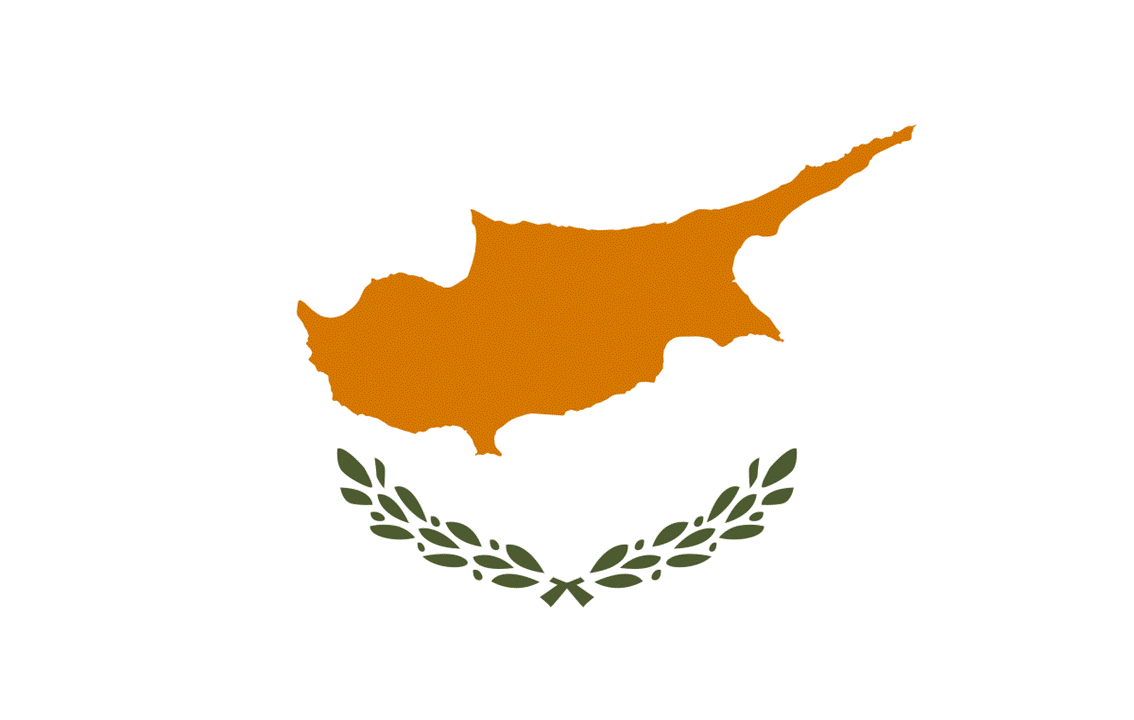
Every element of the design of the flag was chosen to represent a unified future. It also represents an international symbol of peace, neutrality, and purity. The new flag of Cyprus that emerged is one of the few national flags that does not feature any symbols related to religion or the military. Instead, it features neutral colours and symbols of both peace and unity. This would become somewhat ironic 14 years later, when in the SUMMER OF 1974, the island would suffer a Greece inspired Coup d’ etat. This subsequently led to a Turkish-inspired military intervention and then occupation of the north of the island. Cyprus has remained divided ever since!
A DEEP & MEANINGFUL REPRESENTATION
The solid white background represents a fresh new start, and the entire silhouette of the island is filled with a copper-orange colour. This not only represents unity but also directly references the island’s vast, ancient deposits of copper ore. This long association with copper is also referenced by the island’s name, as the word Cyprus itself derives from the Latin word for copper, ‘cuprum’. The two green olive branches, positioned directly beneath the island map, symbolise the desire for peace and co-operation between the different Cypriot communities that once shared the island side by side.
A COMPETITION FOR A NEW FLAG
A NEW BEGINNING
The story of how the Cyprus flag came to be is a fascinating tale of political and social intrigue. The Republic of Cyprus was formed after the island gained independence from British colonial rule in 1960. This came after a brutal four-year Cypriot military struggle. The new administration, led by Greek Cypriot Archbishop Makarios III and his Turkish Vice President, Fazil Küçük, immediately decided that an island-wide competition would be the best way to find a flag design for their newly formed independent Republic.
A COMPETITION
Advertisements were subsequently placed in several newspapers. These advertisements called for all Cypriot artists to submit designs. The competition rules stipulated that the new flag should not represent any of the three greater powers that had previously claimed dominion over the island. Out of over 500 entries submitted, the flag design submitted by Turkish Cypriot schoolteacher Ismet Vehit Güney was eventually selected as the winner.
A REPRESENTATION OF PEACE & UNITY
Ismet Vehit Güney’s flag design was selected after he personally explained what it represented. He stated that, at the time, he drew inspiration from the concept of peace, unity and independence. He had chosen a white background to represent a new, fresh beginning for the island. His copper-orange map of Cyprus represented unity and the island’s association with copper, which also gave Cyprus its name. The two olive branches represented a lasting peace for both the Greek and Turkish Cypriot communities, who were living side by side as Cypriots of the Republic at the time. After his design was chosen, Cyprus became the first country in the world to feature a map on its flag.
INITIALLY EMBRACED BY ALL CYPRIOTS
Officially adopted on August 16th, 1960, the new flag of the Republic of Cyprus helped to mark the beginning of a new era of independence and self-determination. This helped to mark a significant milestone in the island’s history, and the end of British colonial rule. The flag’s design also initially embodied the spirit of reconciliation and cooperation between the different ethnic and cultural communities across the island. Initially embraced by all Cypriots for a time, it helped to achieve the main goals of representation for all. This flag has remained a symbol of national pride for the Republic of Cyprus ever since.
ANOTHER MILESTONE
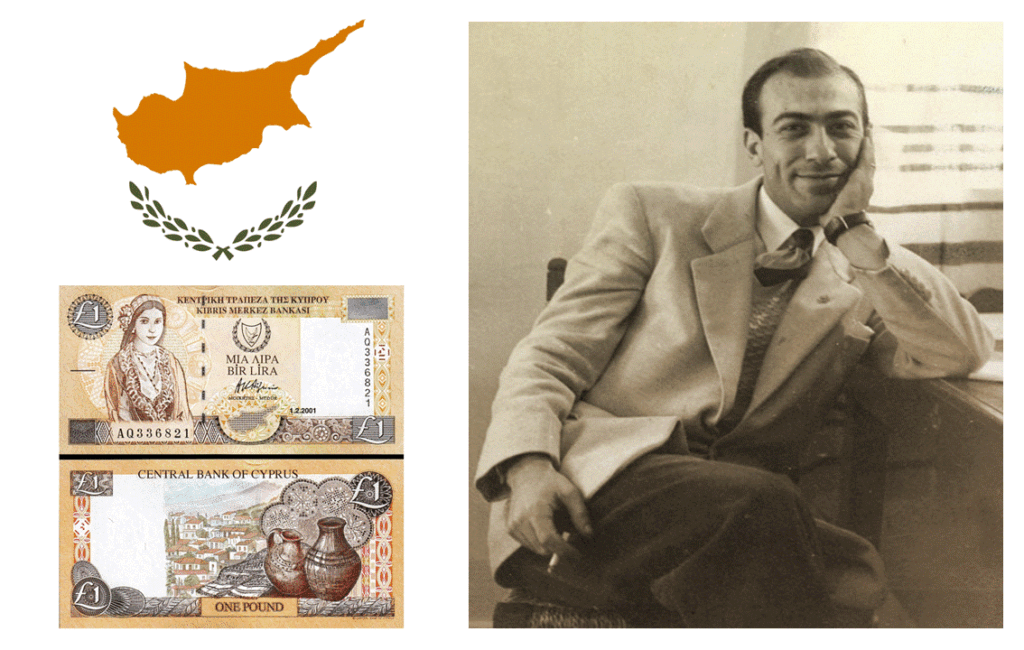
Ismet Vehit Güney received the princely sum of £50 and a letter of congratulations from Archbishop Makarios III. He also went on to design a new Coat of Arms for the new Republic, and a full set of commemorative stamps. He would also design the Republic’s new currency. This included the first versions of the infamous LIRA BANKNOTES. Controversy would later surround the art teacher from Limassol. This came after he made claims that he was promised a £20 annuity for the rest of his life for his designs that he claimed he never received.
A SYMBOL OF INDEPENDENCE, PEACE, & NATIONAL PRIDE
The flag of the Republic of Cyprus continues to serve as a powerful symbol of unity and national identity for all Cypriots today. The national symbol is a testament to the country’s rich history and the enduring spirit of its people. Its design reflects the natural beauty and resources of the island, as well as the unity and cooperation between its diverse communities. It still stands as a powerful symbol of independence, peace, and national pride for all Cypriots, even though the island remains divided.
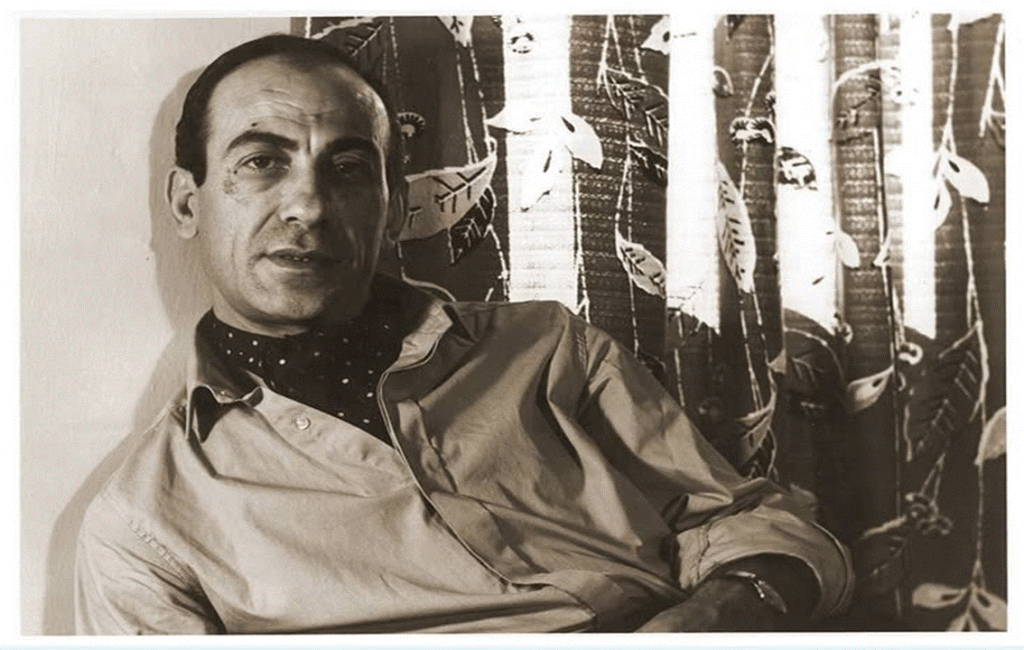
ISMET VEHIT GUNEY

THE WINNING FLAG DESIGNER
School teacher, Ismet Vehit Güney, entered and then won the competition to design the new flag for the new Republic of Cyprus in 1960. Born in Limassol on July 15th, 1923, to Turkish Cypriot parents, he also went on to design the island’s NEW CURRENCY at the time. As a lasting sentiment, his tri-coloured flag design still represents the Republic of Cyprus today.
THE EARLY YEARS
Ismet Vehit Güney’s childhood years were spent in a multicultural neighbourhood in Limassol. This is where Turkish, Greek and Armenian Cypriots all lived together. As a young boy, he would spend his time at a local signwriting shop. This had a lasting influence on the artist, and after encouragement by the signwriter, he went on to paint landscapes using oil paint in his spare time.
ART LESSONS AT A MILITARY ACADEMY
With the outbreak of World War Two, the wide-eyed seventeen-year-old joined the CYPRUS VOLUNTEER REGIMENT. He served as a corporal-translator in Cyprus, Palestine and Italy. During this time, he also took the opportunity to take art lessons at a Military Academy in Haifa called Mont Carmel. By the end of the war and at the age of twenty-two, he left the army and returned to Limassol.
A SOLO ART EXHIBITION
He would become the first Turkish Cypriot solo artist in Cyprus to open a personal art exhibition. This was held in 1947 at the British Consulate in Limassol. This was the first solo exhibition ever held by a Turkish Cypriot artist. That same year he opened a second exhibition in Nicosia at the Victoria Girls Lycee. He also opened a bookstore and joined the ‘Limassol Turkish Sports Club’, which was a place where Turkish Cypriot intellectuals would regularly meet. This sparked his interest in theatre and led him to participate in several performances and other theatrical events. Although none were published, he also began to express himself through poems and short stories. He was also commissioned to create caricatures for daily Turkish Cypriot newspapers of the time. These included Karstiklâl and Köylü.
A SOLO ART EXHIBITION
After holding a second exhibition in Nicosia at the Victoria Girl’s Lycée, he was offered a position to teach fine art at the Nicosia Turkish Boy’s Lycee. After setting up a popular art club for his mature students, he began collaborating with the celebrated Impressionist Turkish artist Ibrahim Çalli, who immediately took İsmet under his wing. He went on to expose the Cypriot artist to the rich culture of arts and painting that existed in Turkey at that time. He would continue to visit and work alongside İbrahim Çalli every summer until the maestro died in 1960.
A LASTING IMPACT
Although it is obvious that Çalli had a lasting impact on İsmet, he tried not to adopt the master’s techniques but rather to develop his own creative style. Ismet was also inspired by artists such as Corot, Delacroix, Constable and Turner, and although he was often also regarded as an Impressionist artist, he rather saw himself as more of an advocate of the Romanticism movement.
NUMEROUS ACCOLADES & AWARDS
İsmet, under the stewardship of Çalli, also became a member of the Turkish Painters and Artists Association. This collaboration also produced works that would feature in several exhibitions. He attended the 57th anniversary exhibition of Statues and Paintings, where he was invited to exhibit one of his own artworks. This directly led him to gain numerous accolades and awards and he would later achieve the Culture Art Service Award in 1986. Ismet Vehit Güney, artist, schoolteacher, designer, and painter, passed away on June 24th, 2009.
KEY FACTS
- The new design for the flag of the newly formed Republic of Cyprus was chosen by President Archbishop Makarios III and Vice-President Fazıl Küçük after they launched a design competition.
- The winning entry was created by İsmet Güney, a Turkish Cypriot art teacher and painter.
- The new national flag for the Republic of Cyprus was officially adopted on 16 August 1960 under the Zürich and London Agreements, which established Cyprus as an independent republic free from British colonial rule.
- It is historically significant as one of the only national flags in the world to display the map of its own territory.
- The British colonial administration, as a parting gesture, initially proposed a design featuring a rust-brown letter ‘K’ on a white field.
- The design was explicitly selected because it embodied peace, harmony, and a shared island identity without favouring any ethnic Cypriot groups.
- Today, the 1960 flag continues to be the official emblem of the internationally recognised Republic of Cyprus, which primarily administers the southern part of the island.
- In April 2006, the design was given a slight visual update. The shape of the olive branches was adjusted, and the copper hue was deepened to a more defined Pantone shade. The flag’s official proportions were also altered from 3:5 to 3:2.