

A SIP OF CYPRIOT BREWING TRADITION
PASSED DOWN THROUGH SUCCESSIVE GENERATIONS
Cypriot coffee culture includes rich social rituals of blending traditional slow-brewed speciality coffee, vibrant modern iced coffee habits, and deep-rooted community hospitality. Passed down through successive generations, many suggest that this unassuming drink also symbolises a connection throughout Cypriot culture. In light of this, the process of not only making but sharing a cup of Cypriot coffee embodies hospitality, friendship, and community across the island.
MORE THAN JUST A HOT BEVERAGE
Serving as the primary way for people to connect, talk, and relax, each cup of Cypriot coffee is truly more than just a hot beverage. Rooted in centuries of history, meeting up for coffee on the island is never rushed, and each sip carries a sense of warmth and cultural identity.
CYPRUS'S COFFEE CULTURE ENGRAINED INTO CYPRIOT CULTURE
AN OTTOMAN IMPORT
It can be said that the Cypriot coffee culture has been ingrained in Cypriot society for over 500 years. The hot beverage was introduced to the island during the Ottoman era of rule, which began in 1571. Most Cypriots, however, initially shunned the new-style coffee houses that began to operate all over the island. Coffee drinking was mainly reserved for the Ottomans and remained unpopular with the greater populace on the island until several years later. With further integration, Ottoman rule subsequently became the norm, helping to usher in a new coffee tradition. Coffee drinking began to flourish thereafter, and after it was embraced, it became an integral part of Cypriot life. The concept of the traditional coffee shop became known as the ‘KAFENIEON’, and it still plays a significant role in Cypriot social life today.
THE DEVELOPMENT OF CYPRUS COFFEE
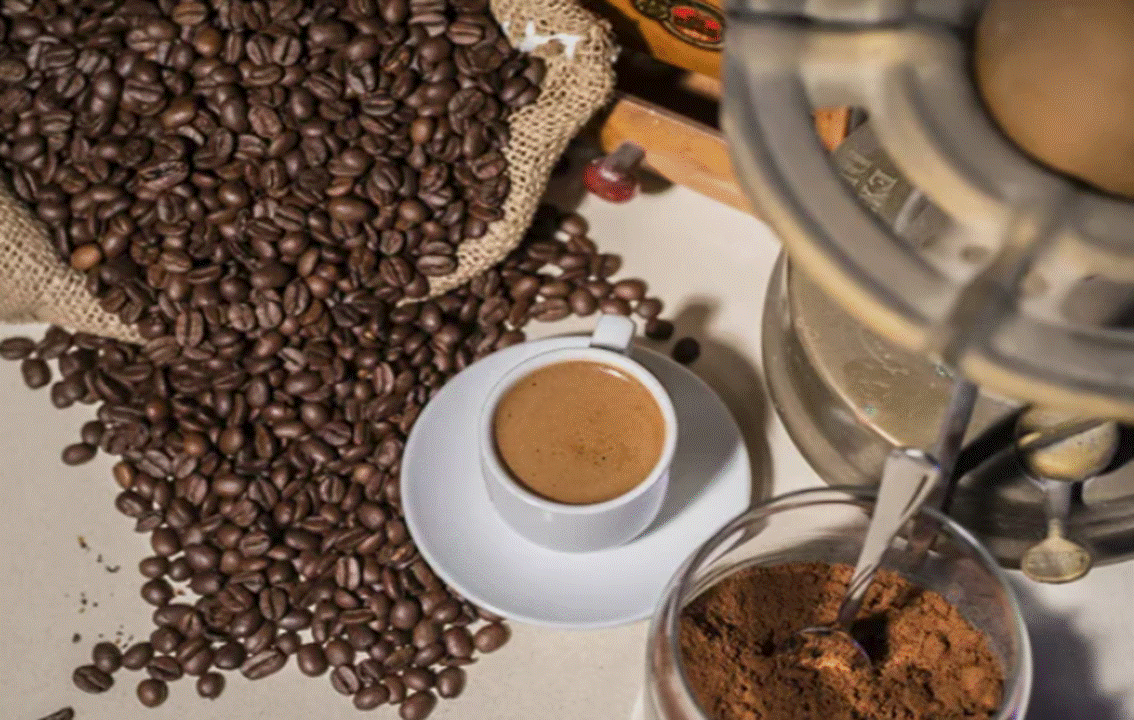
Cyprus coffee has gone through quite a change from the original Ottoman import that existed centuries ago. Today, the Cyprus version of this type of coffee is considered a unique Cypriot product. The modern refinement of the actual beans used creates a unique aroma and taste that makes all the difference. Cyprus coffee uses a blend of finely ground Arabica and Robusta beans that originate from Brazil, Ethiopia and India. Along with its unique pungent aroma, the coffee also has a strong tobacco, chocolate earthy flavour. Turkish coffee, on the other hand, which remains as the closest version to the original Ottoman import, mainly uses Arabica beans from Yemen, which offers a different ambience altogether.
A SLOW BOIL OF A LOW FLAME
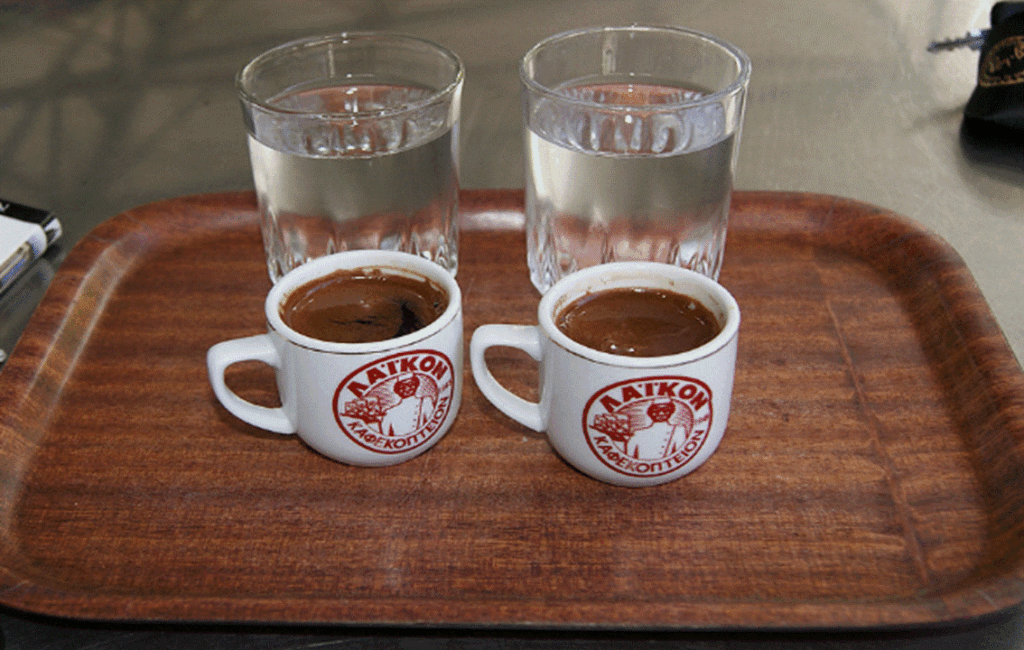
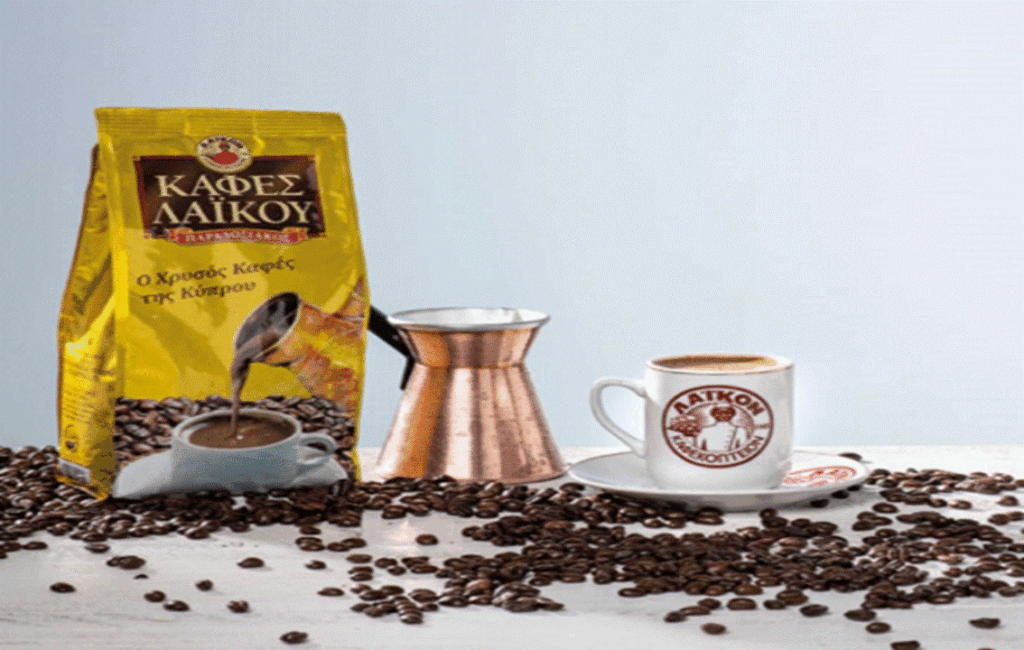
The main difference between Cyprus coffee and other regular European versions of the drink is the way it is prepared. No brewing takes place when making a Cyprus coffee. It is freshly prepared on the spot by bringing a small coffee pot, known as an ‘Mbriki’ to a slow boil over a low flame or a bed of hot sand. This means that more nutrients, antioxidants, and health-boosting compounds remain after its preparation. The coffee is then taken off the boil as soon as it starts to rise. This method allows for a frothy top called ‘Kaimaki’ to form. This signifies that the coffee is ready, resulting in a very strong, thick and frothy coffee. Each coffee is usually served in a small traditional coffee cup that resembles Italian espresso cups. It is customary for a glass of cold water to always accompany each coffee.
ENGRAINED IN CYPRIOT CULTURE
Drinking Cyprus coffee is a popular tradition that stands as a symbol of both hospitality and friendship throughout the island. This is firmly illustrated by not only the ‘KAFENIEON’ but also the modern Coffee shops. These regularly serve as popular gathering places for locals on the island to socialise and enjoy a cup of coffee or two.
THE TELLING OF FORTUNES
The Ottomans, along with their coffee, also brought tasseography to the island. This form of fortune-telling comes hand in hand with drinking this type of coffee that still exists today. Cup readers use the thick coffee residue, left at the bottom of each coffee cup, to predict future events based on their interpretation of the varying shapes. The thick coffee residue in the cup hardens as it cools once the cup is placed upside down onto a saucer. After a few minutes, the cup reader turns the cup back over and then interprets the patterns that are created, telling the drinker what lies ahead for them!
ORDERING A COFFEE
All coffee shops on the island serve Cypriot coffee. These include the traditional coffee shops, also known as the ‘KAFENIEON’, along with all of the speciality coffee shops and modern coffee chains. Served in small espresso-style cups, drinking coffee is often accompanied by lively conversation or moments of pause and reflection.
Rooted in a rich tradition spanning centuries, Cyprus coffee is typically prepared using finely ground coffee beans, water, and, if desired, sugar. Finely ground coffee beans are boiled slowly with water in a small bronze or copper pot called a mbriki. The brew, which is often heated over hot sand or hot embers, creates a frothy top layer called kaimaki. A Cyprus coffee is always served with a glass of cold water.
A typical Cyprus coffee is available in three different sweetness Levels. Sugar is added during the brewing process rather than after. With this in mind, the exact sweetness preference must be specified when ordering.
Traditional Cyprus coffee and ordering styles
- Skettos: plain with no sugar
- Metrios: medium sweet
- Glykos: very sweet
Modern and cold coffee preferences
Iced Favourites: Because of the warm Mediterranean climate, cold coffees are extremely popular year-round. The FRAPPE, which is made with whipped instant coffee and ice, and the freddo espresso or freddo cappuccino dominate daily routines.
Third-Wave Cafés: Urban centres like Nicosia and Limassol feature modern speciality coffee shops offering international coffee favourites. These include diverse artisan establishments that offer more diverse brewing techniques alongside traditional methods.
The Kafeneion: The traditional village or neighbourhood coffee house, also known locally as the KAFENEION, functions as the social heart of a community. This is where locals gather from early morning to chat, follow local news, and play card games or backgammon, also known as TAVLI. Buying a round of coffee for others or welcoming strangers into a conversation with a coffee treat is common in these establishments and is a core expression of traditional Cypriot warmth and generosity.
HOW TO PREPARE A CYPRUS COFFEE WITH THE PERFECT 'KAIMAKI'
Fill the cup to the top with water and then pour into an mbriki
Add a heaped teaspoon of coffee to the water and then add sugar as required.
Using a low flame, begin to boil the mbriki, stirring the coffee continuously.
Carry on slowly heating and stirring the coffee until a light-coloured swirl, known as the kaimaki, forms on the top.
Stop stirring and allow the coffee to rise from the heat.
Remove the coffee from the heat and try not to disturb the kaimaki.
Pour the coffee into the coffee cup slowly, allowing the kaimaki to gently form on top.
Serve with a glass of cooled water.
THE STORY OF THE WATER
A glass of ice-cold water always accompanies every cup of coffee. Most Cypriots pour a little of the water into their coffee before drinking it. Although this cycle has become the norm amongst coffee drinker across the island, most coffee drinkers do not know the real reason behind this formality. If asked, most will say that water is poured into the coffee to cool it down before drinking, whilst others will say that the water balances the strong coffee taste. The origins of this custom, however, lie elsewhere and in some ways are quite sinister.
During the reign of the Ottomans, poison was often used to dispose of adversaries, and coffee became the preferred way of administering it. The poison that was used was both tasteless and odourless, and once administered, it was slow and deadly. It was later discovered that water was the only way of detecting this poison in coffee. This meant that coffee drinkers began to pour a little water into every cup before drinking it. If the coffee was tainted, then it would turn green. This legacy remains forgotten today, and most Cypriots today still pour a little water into their coffee before drinking without really knowing why!