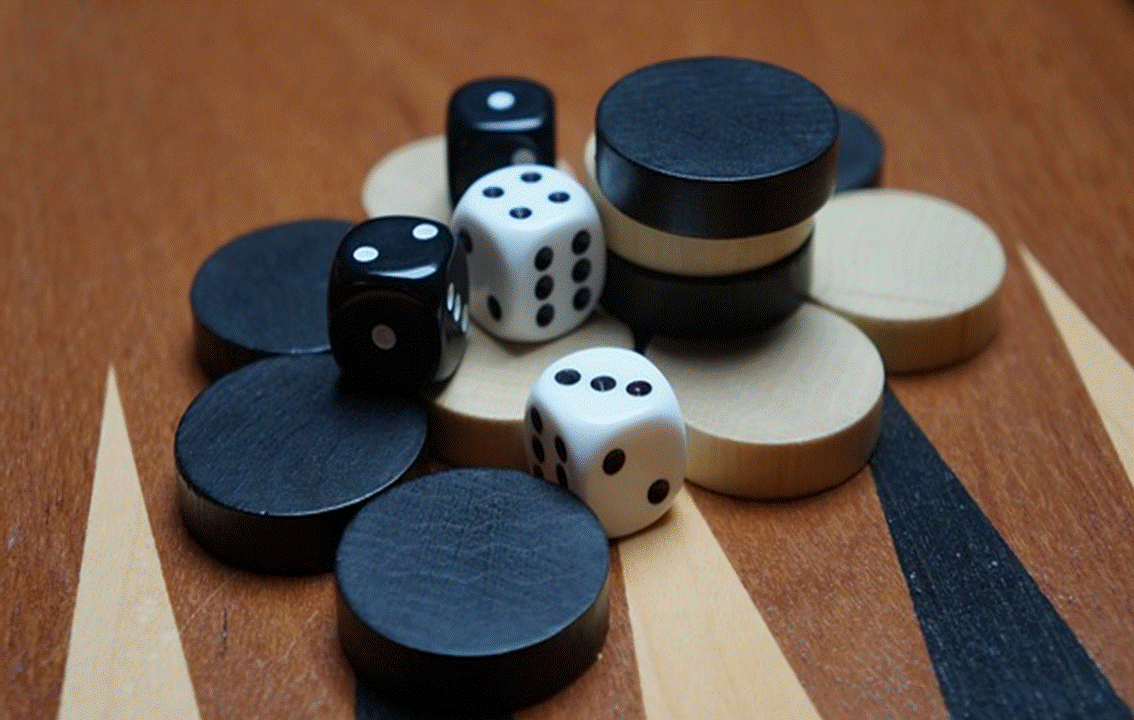
A CYPRIOT BACKGAMMON GAME
PLAYING TAVLI
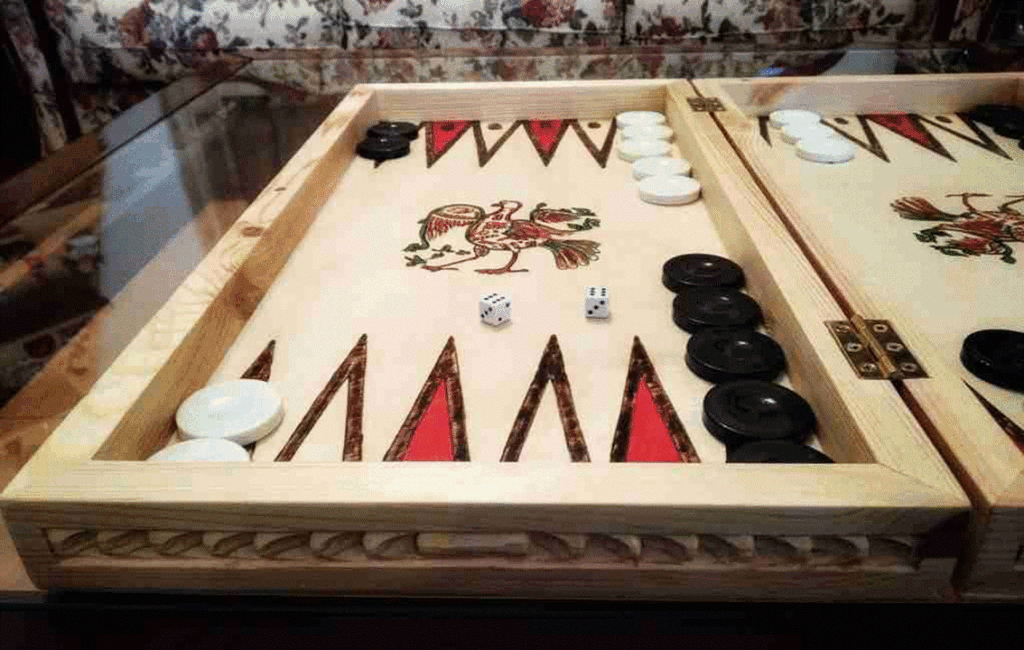
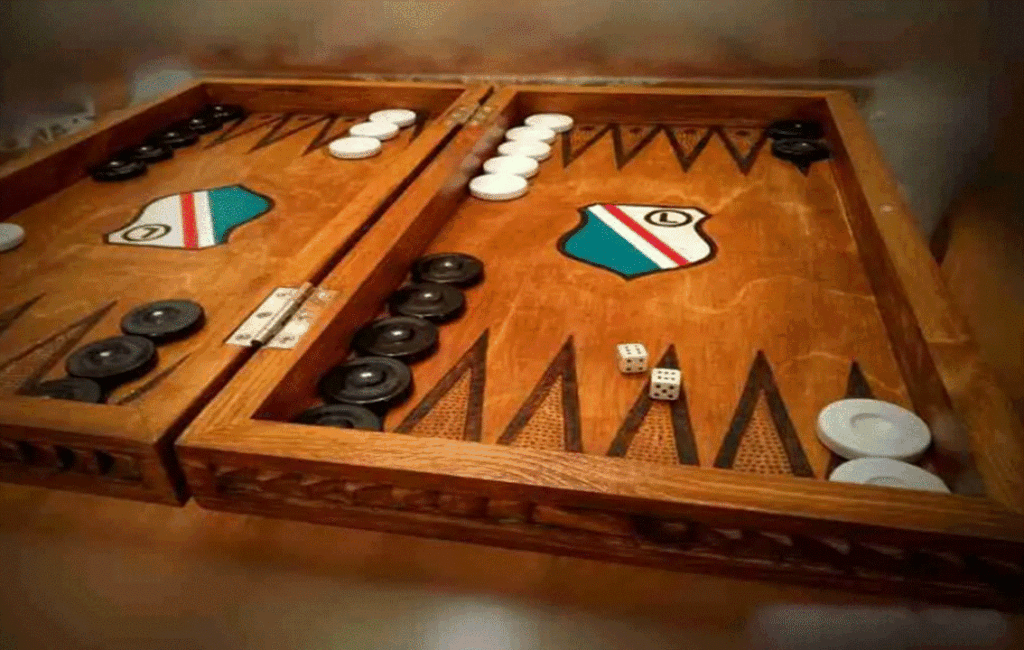
Played widely in local cafes, also known as KAFENEIA, Tavli is basically a traditional Greek version of backgammon. Tavli, which acts as a national pastime in both Greece and Cyprus, uses the same 24-point board and 30 checkers as Western backgammon. It often functions, however, as a compendium of three distinct game variants. With this in mind, a standard Tavli match is played continuously until one player reaches a set score, which usually consists of 5 or 7 points.
TAVLI SPECIFICS
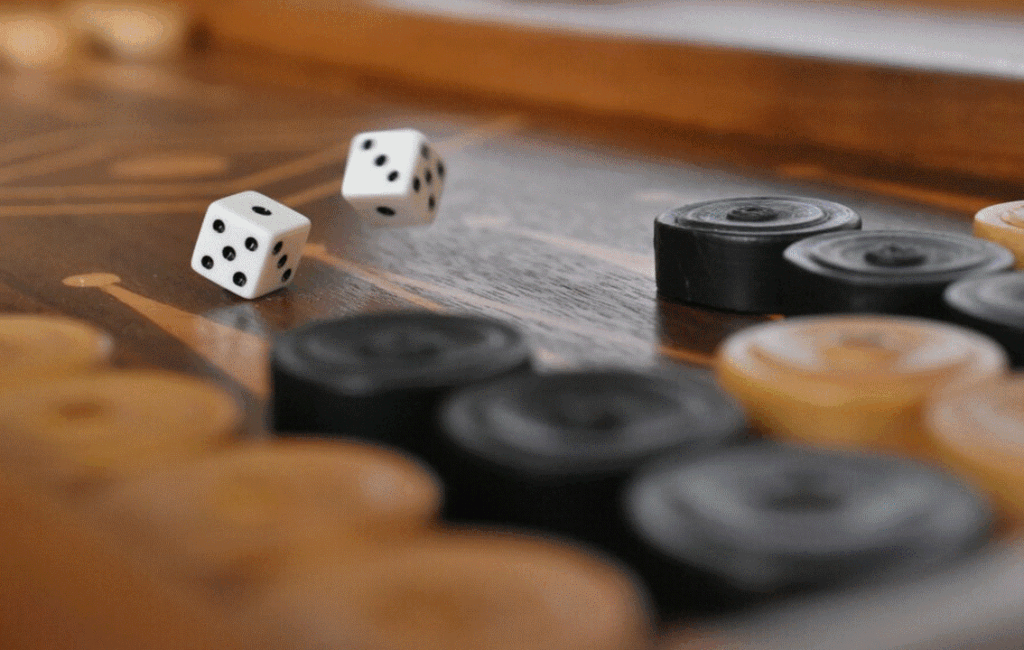
Unlike Western backgammon, Tavli does not use a doubling cube. The stake-raising element central to Western tournaments also does not exist in traditional Tavli. Dice rolling rules keep the game exceptionally fast-paced, and players usually share a single set of two dice. These are rolled by hand directly onto the board, rather than using any dice cups, and dice cannot be rolled until the opponent has fully finished moving their checkers and lifted their hand off the board.
CYPRIOT COFFEE CULTURE
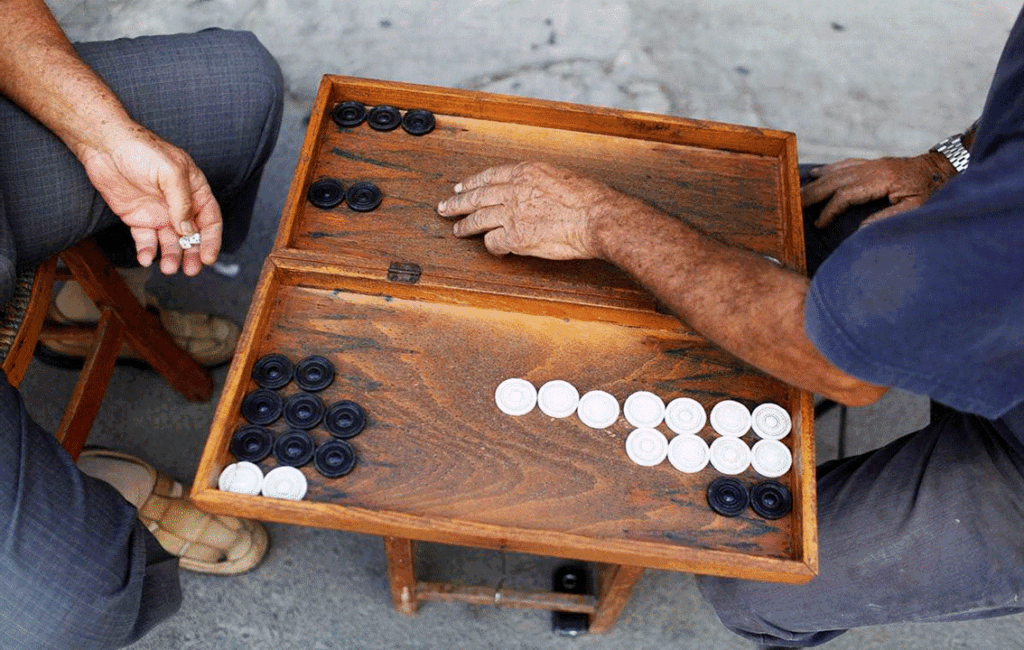
Played in cafes and coffee shops all over the island, Cyprus backgammon, or Tavli as it is locally known, is a popular Cypriot version of Backgammon. Steeped in both history and tradition, it has also become a favoured Cypriot cultural pastime that embodies not just a form of recreation for locals but also the social fabric of the Cypriot coffee shop culture.
A HISTORICAL EVOLUTION
To understand the popular game of both skill and chance, the history of backgammon itself must first be explored. The origins of modern-day Backgammon trace back thousands of years. Its history intertwines with the historical evolution of other similar dice-based board games. Sharing common elements with contemporary versions of the game today, several ancient cultures, mainly from the East, and across several ages, went on to introduce several dice-based games of a similar nature.
OF EGYPTIAN ORIGIN
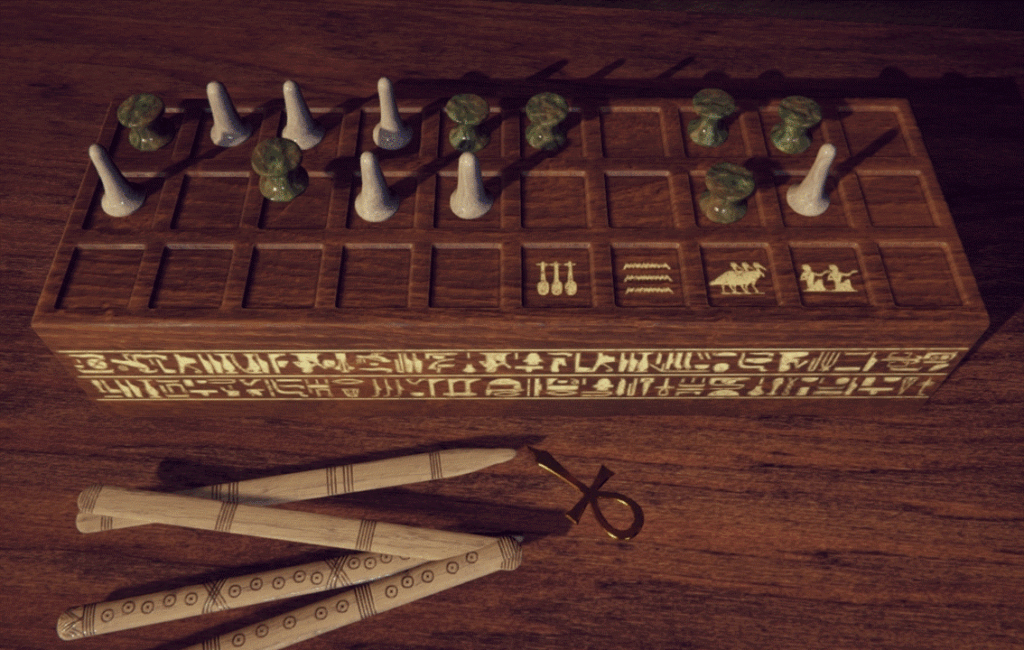
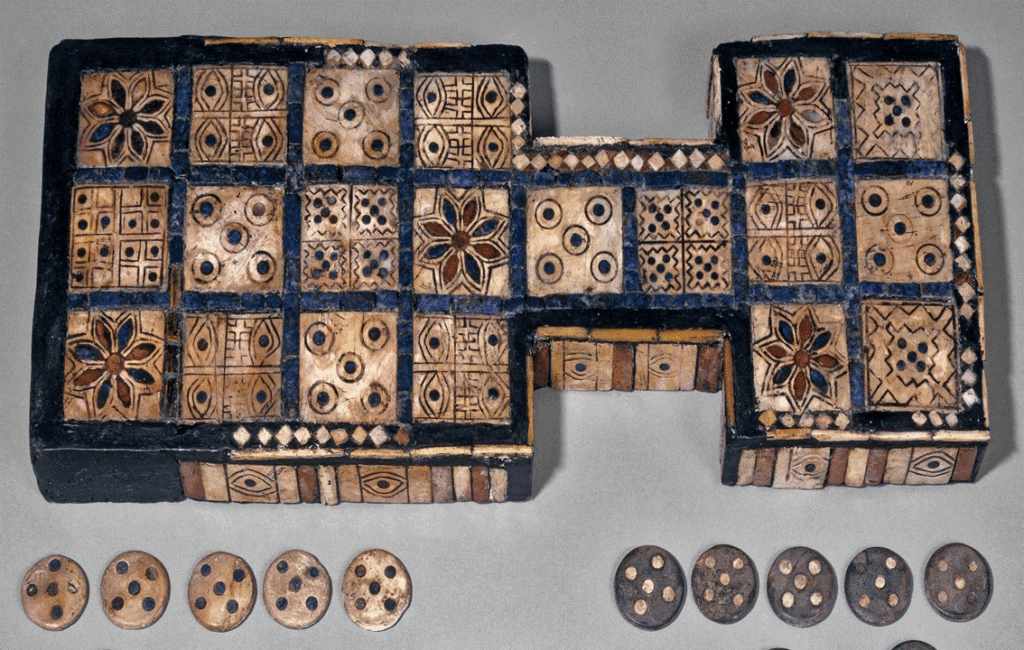
Cypriot ‘Tavli’ in particular is believed to share its roots with the ancient game of Senet. First played in Egypt around 3100 BC, this game emerged at around the same time as the Royal Game of Ur, which was played in Mesopotamia. The evolution of Ur then took significant strides in Persian society, where it later became known as Nard.
A FIRM SOCIAL & CULTURAL FAVOURITE
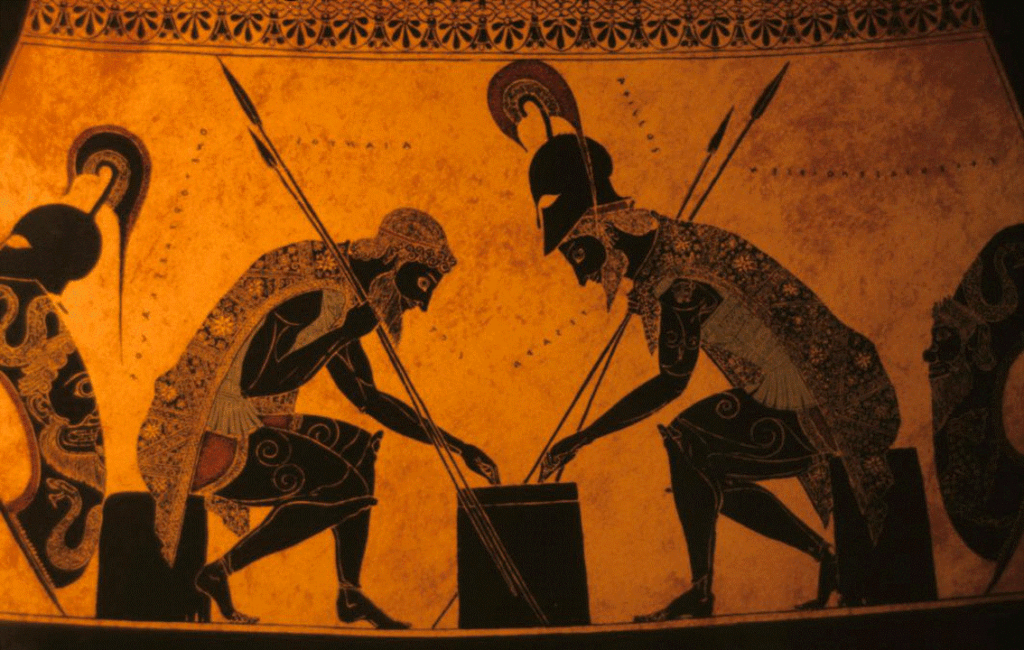
These early versions of the game went on to establish themselves as firm social and cultural favourites in the greater Eastern Mediterranean during the Byzantine era. Further diverse adaptations of the game then spread to Western Europe throughout the Middle Ages. Backgammon then became the game of choice amongst the French and English nobility. This eventually culminated in the modern version of the game known today.
THE GAME IN A CYPRIOT CONTEXT
‘Tavli’ in its Cypriot context is a direct descendant of all of these ancient games. The term ‘Tavli’ itself derives from the Greek word meaning ‘board’. Tavli is thought to have been introduced to Cyprus during the Byzantine era, when games that used a form of dice enjoyed immense popularity.
A COMPETITIVE FORM OF ENTERTAINMENT
Tavli today creates general camaraderie between players. This often helps to create a very competitive environment. Its relevance and importance are often highlighted during national holidays, festivals, and even simple gatherings. This is when the game often becomes a central activity, encouraging dialogue, laughter, and fierce competition. This is especially observed within a coffee shop environment.
THE SOUND OF ROLLING DICE & CLATTERING PIECES
It is not uncommon to hear the sounds of rolling dice and clattering pieces resonating from several households, street coffee shops, or cafes throughout the day and most evenings in Cyprus. The game plays an essential role in fostering social connections, often bridging generations and various social classes. With this in mind, grandparents are often found teaching their grandchildren the intricacies of the game’s strategy and its set moves.
THE BASIC PRINCIPLES OF THE GAME
Although they all follow the same basic principle, there are different versions of Tavli. All versions are designed to be a two-player game that uses dice to dictate the movement of checkers around the board. These checkers are also used to capture or trap an opponent’s pieces.
THE 3 MAIN VERSIONS OF CYPRUS TAVLI
Cypriot Tavli comprises three main versions. These are known as Fevga, Porta, and Tsilito. Although each variant of the game comes with its own rules, they all share the common goal of the movement of pieces around the board based on dice rolls. Different strategies can be employed for each version of the game.
FEVGA
Fevga: Often considered the simplest version of the game, this version serves as an excellent introduction for beginners wanting to master set moves. All 15 checkers start on a single point diagonally opposite the opponent. Fevga, which has Turkish origins, does not allow hitting or pinning, and enables players instead to move in the same parallel direction around the board. With this in mind, a single checker is enough to secure and block a point.
PORTA
Porta: Particularly engaging, this version of the game features players who must skilfully manage their checkers while trying to block their opponent. The main object of the game is to do this whilst trying to free other trapped checkers that are sent to the bar. Although this variant is the closest to Western backgammon, there is no doubling cube, and a backgammon win counts as only a double point instead of triple point.
TSILITO
Tsilito: This version of ‘Tavli’ creates an additional layer of strategy by allowing players to capture and then trap an opponent’s pieces by simply landing on them. This is considered the most difficult version of the game because of this. All 15 checkers start on the opponent’s 1-point, and instead of hitting a single vulnerable checker and sending it to the bar, landing on an opponent’s checker will pin and trap it. The trapped checker cannot be moved until it is released by the opponent.
HOW TO PLAY
AN ENDURING SYMBOL OF CYPRIOT CULTURE
A CAPTIVATING & ENGAGING ACTIVITY
The evolution of Tavli from an ancient eastern board game to its relevant status in contemporary Cypriot society remains unequalled. The game provides camaraderie, excitement, and humour and all of this is embodied in the stories that surround the game. This captivating and often engaging activity allows patrons of the game to highlight both the game’s adaptability and its relevance.
A FREETHINKING STRATEGY
To some, Cypriot Tavli is not just merely a game, but a timeless tradition that continues to enrich Cypriot social life. Others uphold that it is also a symbol of Cypriot culture that represents history, freethinking strategy, and social interaction.
FOUNDATIONAL TO THE CYPRIOT IDENTITY
Whether it is played as a casual game among friends or within a heated high-stakes championship, it remains foundational to the Cypriot identity. Cypriots share joy and laughter whilst playing the game that continues to create lasting memories whilst forging newfound social connections.
FAMOUS STORIES SURROUNDING THE GAME
There are some famous stories surrounding the game that have created memorable experiences and topics of conversation in recent history.
Double sixes: This particular story involved a group of friends who decided to hold a ‘Tavli’ tournament over a weekend. As the tournament progressed, tensions mounted and rivalries intensified. After a particularly heated game, one player, known for his dramatic flair, tossed his dice across the room after losing a crucial point. The dice then ricocheted off a wall and landed perfectly on top of a nearby pot of tzatziki, landing double sixes face up. This incident became a cherished memory, recounted with laughter during subsequent gatherings. The player in question became known thereafter as ‘Exaris’, the Greek word for sixes.
A generational gap: This delightful tale involved a grandfather who invited his grandchildren to play ‘Tavli’. Confident in his skills, he repeatedly boasted about his past victories, and he went on to give several tips about strategy and set moves to his grandchildren. They, however, knew how to play, but decided to let him win the first two games and then surprise him by winning the final match. Little did they know, however, that the old man’s luck was unmatched in the final game. Remaining undefeated, the old man’s jubilant celebrations, thinking that he was a far superior player, are still fondly remembered within his family today.
A case of mistaken identity: An amusing story featured a taverna owner who decided to host rotating ‘Tavli’ nights. Players would compete at multiple tables, and the pairings would then shift each round to face a different opponent. On one of these evenings, a famous ‘Tavli’ player graced the tournament with his presence. This led to an unexpected shift in strategy by several of the local players. As the evening progressed, most began to overthink their moves when facing the Tavli master, making a series of crucial mistakes. After the famous ‘Tavli’ player won the tournament, he went on to reveal that he was not who everyone thought he was, but rather that he just looked like the famous ‘Tavli’ player. He also revealed that he did not really like playing ‘Tavli’, and that he much preferred to play card games.

KEY BACKGAMMON STRATEGIES
Each key strategy can be employed at different times, and several strategies can be employed to take full advantage of different gameplay and certain situations that may arise. All are dictated by the roll of the dice and the overall gameplay that follows.
The four main backgammon strategies for winning are the running game, the blocking game, the attacking game, and the back game.
Running Game: This strategy involves moving all the checkers home as fast as possible. This strategy is best employed when fewer points are left to clear. Taking risks should be avoided, and the furthest checkers should be moved on quickly.
Blocking Game: Opponent’s checkers should be trapped behind a wall. This strategy is best employed if early dice rolls allow for making consecutive points. Creating a prime of 4 to 6 connected points will suffocate an opponent’s movement.
Attacking Game: Keep hitting opponent checkers to trap them on the bar. This strategy is best employed if an opponent leaves early vulnerabilities. Consistently, hitting an opponent’s single checkers on the home board will pay dividends if they cannot re-enter.
Back Game: A losing game can be turned into a late-stage ambush. This strategy is best employed when far behind in the race. It is advisable to try to secure at least two defensive anchors in the opponent’s home board. The aim is to keep the opponent’s late checker on the home board by constantly hitting it.
KEY BACKGAMMON TIPS
Prioritise the 5-Point Prime: A 5-point prime involves building a wall of checkers in a connected series of made points across the board. This is considered the most effective way to block an opponent. Using this strategy early in the game will expose an opponent’s weaknesses and allow players to pick off an opponent’s single checkers.
Racing: Focus on moving fast when ahead on points. A good strategy when ahead is to keep moving and avoid unnecessary fights.
Anchoring: If behind on points, do not race. Instead, build a back game by holding points on your opponent’s home board. Securing points on the opponent’s home board when behind is considered a good defence.
Avoid Stacking: Do not pile too many checkers on a single point, also known as stacking. Spreading checkers out allows for maximum flexibility and defensive coverage.
Over-committing to attack: An overly aggressive attack may expose a player’s checkers, leaving too many unprotected checkers on the home board.
Use the Doubling Cube: During the game, players should generally look to double if about 10% ahead.
Back Checkers: Do not rush your two deepest checkers out of the opponent’s home board, as keeping them there provides an anchor.