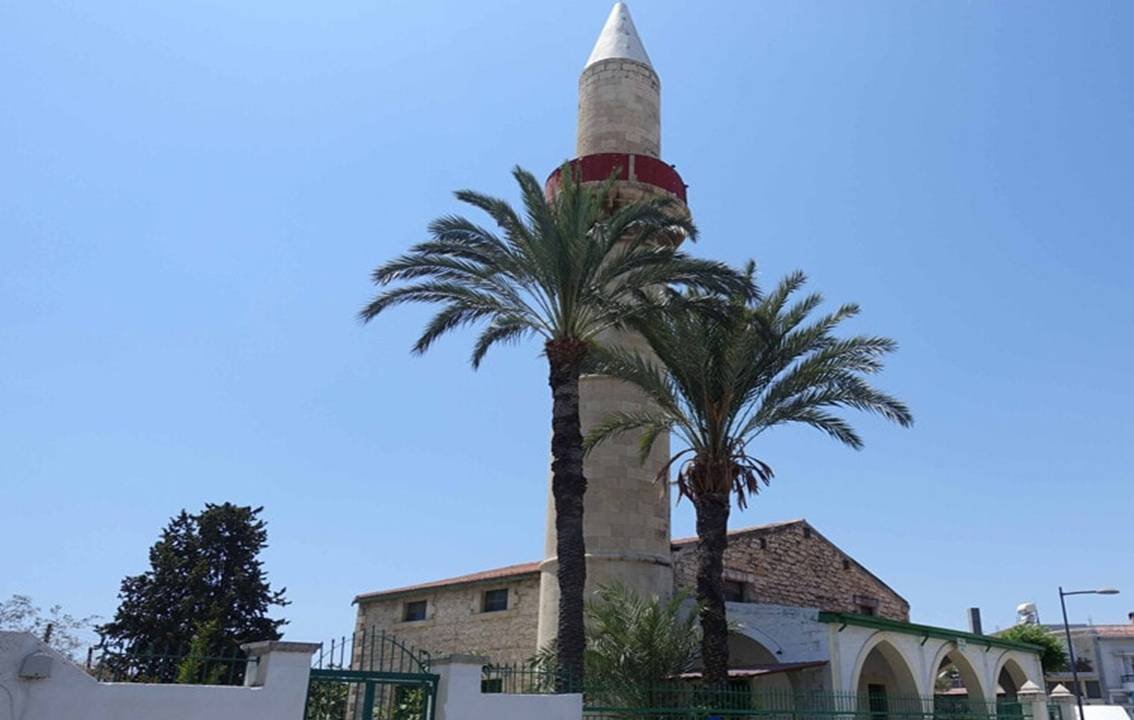
BUILT TO COMMEMORATE VICTORY OVER NAPOLEON BONAPERTE

A MONUMENT TO VICTORY
There are several monuments around the world commemorating victories against the once mighty armies of French usurper Napoleon Bonaparte. Few people acknowledge, however, that one was built in the heart of Limassol in 1825. Founded by a Turkish Cypriot veteran of war, the Jami Jedid Mosque also commemorates one such victory over the armies of Napoleon.
A DEFIANT DEFENCE
This landmark commemorates a collaboration of Ottoman, Egyptian, and Cypriot forces that all stood firm against the odds to gain victory during the siege of Acre. It was built in honour of these men, and it remains a symbol of the Cypriot fighting spirit. In March 1799, after taking Jaffa, Napoleon’s armies approached the walls of Acre. After a lengthy siege that saw many suffer, the city’s defences, against the odds, held firm, and Napoleon’s armies were eventually repelled.
THE SEIGE OF ACRE
Amongst the ranks of the defenders was an infantryman known as Haji Ibrahim Agha Koprulu. The young Cypriot soldier, during this siege, made a vow whilst facing adversity. He professed that if he returned to Cyprus from the war unharmed, he would build a new mosque as a tribute to his faith. After helping to defeat the French, he promptly returned to his home in Limassol, Cyprus. He immediately set about fulfilling his vow, and the construction of the Jami Jedid Mosque began soon after.
THE NEW MOSQUE
Haji Ibrahim Agha Koprulu chose to build his new mosque near his home in Limassol. The area that he chose at the time was one of the most vibrant, cosmopolitan Turkish-Cypriot quarters on the island. The bustling, well-populated neighbourhood had several apartment blocks, warehouses, shops, cafes, bars and restaurants. The mosque, which was completed in 1825, became known as ‘the new mosque’.
AN IMPORTANT LANDMARK
Built along the eastern side of the Garallis River, the new mosque soon became an important religious and cultural centre for all muslims across the island. Lying just metres away from the mosque, Greek Cypriots would later construct the Greek Orthodox Church of Saint Anthony. Built on the opposite side of the river, a wooden bridge would later be erected over the river connecting the two holy sites. This helped to forge important links between the two main Cypriot communities at the time. It also represents an important legacy of the historical coexistence of both Turkish and Greek Cypriots who once lived side by side across the island.
THE GREAT FLOOD OF 1894
The great flood of 1894 saw the Garallis River burst its banks. The impending flood caused severe damage to the mosque, and the wooden bridge was swept away by the rushing water. The mosque then lay in ruins for the next fifteen years until 1909. The mosque was then restored to its former glory. As a tribute, the grounds of the mosque were also used as a fitting burial ground for its founder, Haji Ibrahim Agha Koprulu.
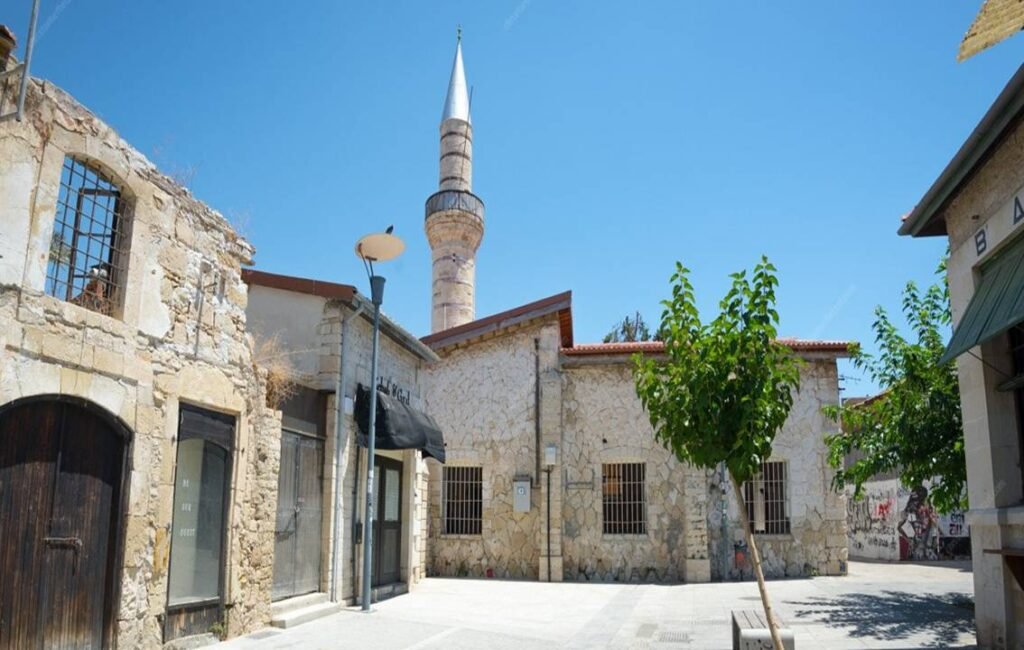
THE JAMI JEDID MOSQUE
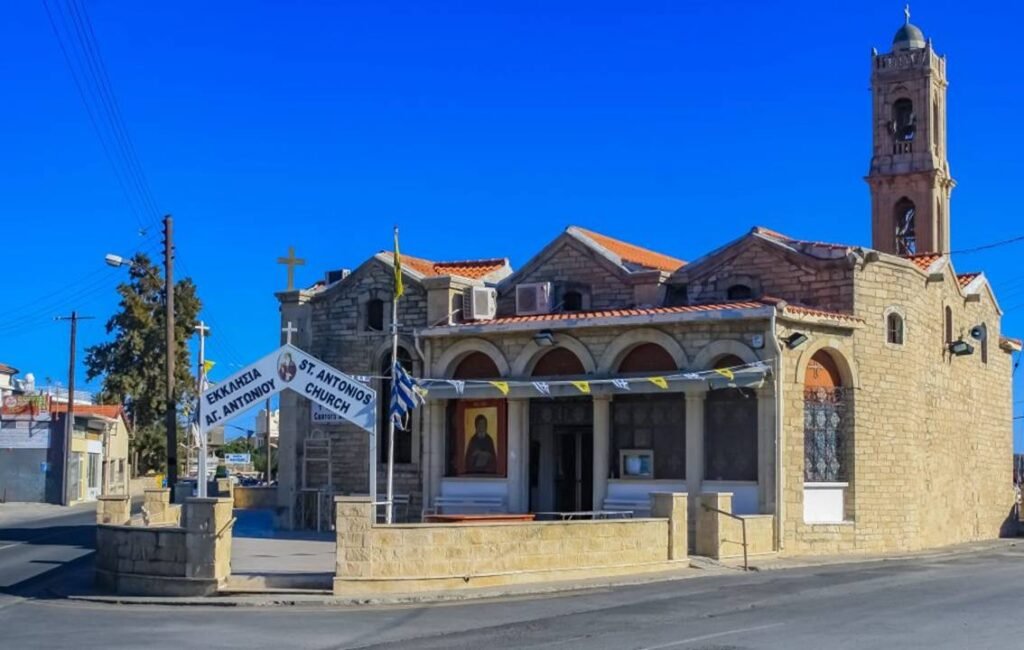
THE GREEK ORTHODOX CHURCH OF SAINT ANTHONY
KEY FACTS
- Also known as the ‘New Mosque’, the Jami Jedid Mosque is a significant 19th-century historical landmark located near the Garyllis River in the old Turkish-Cypriot quarter of Limassol.
- The Jami Jedid Mosque was built in 1825 by a local Limassol resident and Ottoman soldier named Köprülü Hacı İbrahim Ağa at his own expense.
- Before being later designated as the ‘New Mosque’, the structure was initially called the ‘Dere Mosque’, meaning River Mosque.
- The mosque retains a small historical courtyard cemetery that also acts as its founder’s final resting place
- This mosque features a classic Ottoman-Cypriot vernacular style with a semi-open exterior layout that features sweeping round arches that move into a pointed arch configuration on the interior.
- The main wooden entrance is encased in a distinct, heavy stone opening frame.
- When the Garyllis River burst its banks during the flood of 1894, the torrent destroyed a private wooden bridge that connected the mosque to the main street
- The mosque underwent a full historic reconstruction funded primarily by financial aid sent from Istanbul in 1909.
- The mosque sits slightly west of Limassol Castle, just a brief walk from the historic St. Anthony’s Church, which was built in 1830, showcasing the historical religious coexistence of the neighbourhood.
- The Jami Jedid mosque primarily serves today as a protected cultural monument under the care of the local Department of Antiquities.