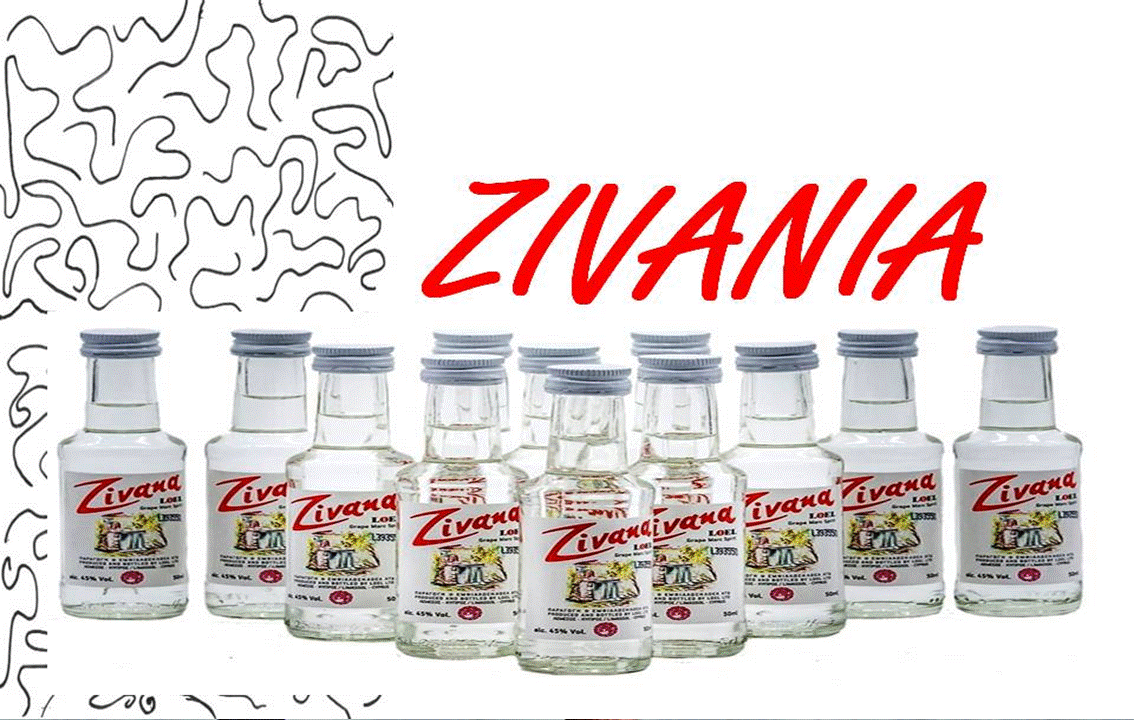
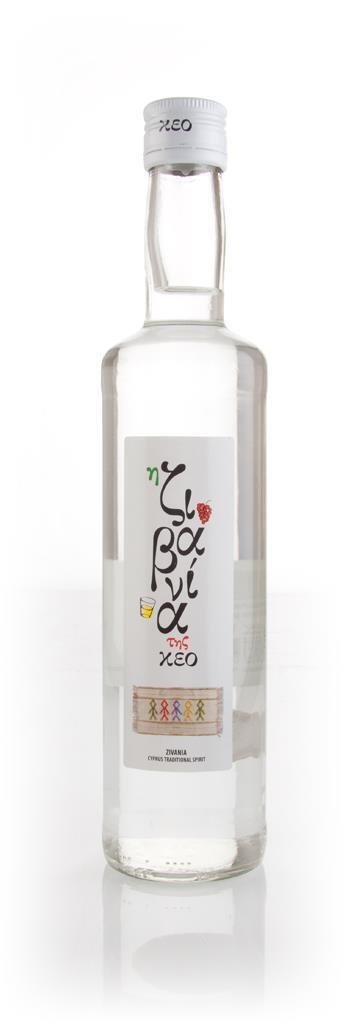
THE POLISHED CYPRIOT SPIRIT OF CHOICE
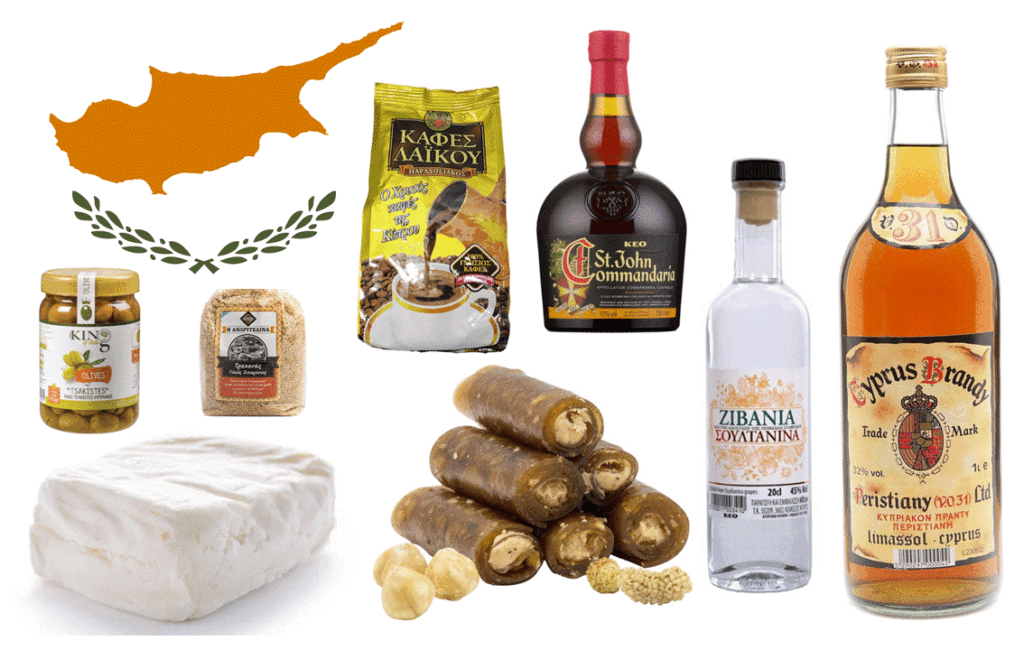
WHY IS ZIVANIA SO SPECIAL?
With no residual sugars or acidity, Zivania is regarded as a special drink in Cyprus. This is mainly because of its pure distillate and its robust composition. Normally kept in the freezer and then served ice cold, this national treasure also has no freezing point. The Cypriot spirit of choice uses a deeply historical Cypriot grape pomace brandy in its production. This essentially connects the spirit to a viticulture that the island has enjoyed for centuries. Zivania also offers a dramatic historical narrative. Under British colonial rule, its production was heavily restricted due to its high alcohol content. The Kykkos Monastery, in the TROODOS MOUNTAINS, famously safeguarded its production, helping to keep the drink’s traditions alive.
IT’S IN THE NAME: Zivania is born out of the age-old winemaker’s desire to find a use for one of the by-products of wine production. The name ‘Zivania’ is derived from the Greek word for pomace, which is the main component of the drink.
HOW IT’S MADE: Zivania is produced using a traditional copper alembic still. Known locally as a Lambikos, it is distilled exclusively from the pomace of the XYNESTIRI and MAVRO indigenous Cypriot grape varieties. The pomace is then combined with a mixture of local dry wines. The result is a clear, high-alcohol-content spirit that has a light aroma of raisins.
SERVED HOT OR COLD: Zivania is generally still consumed throughout the year. During the summer months, it is served ice-cold straight from the freezer. During the winter months, however, it is generally served as a hot beverage. This is a common offering in numerous traditional coffee shops, known as the ‘KAFENEON’, and taverns dotted all over the villages of the TROODOS MOUNTAINS.
DIFFERING VERSIONS: Although several versions of the drink exist, Zivania is primarily mass-produced as a standard product by the largest distilleries across the island. The standard version of Zivania is typically made with an alcohol content of between 43% and 47% ABV. Smaller, independent village distilleries also produce the drink using traditional methods. Known as ‘Lampikos’ locally, these distilleries are mainly situated in the TROODOS MOUNTAINS. Lampikos versions of Zivania are typically stronger, with some versions having an alcohol content of up to 60%. Aged Zivania is a highly sought-after, valued product. The ageing process allows for the spirit to gain stronger flavours and aromas.
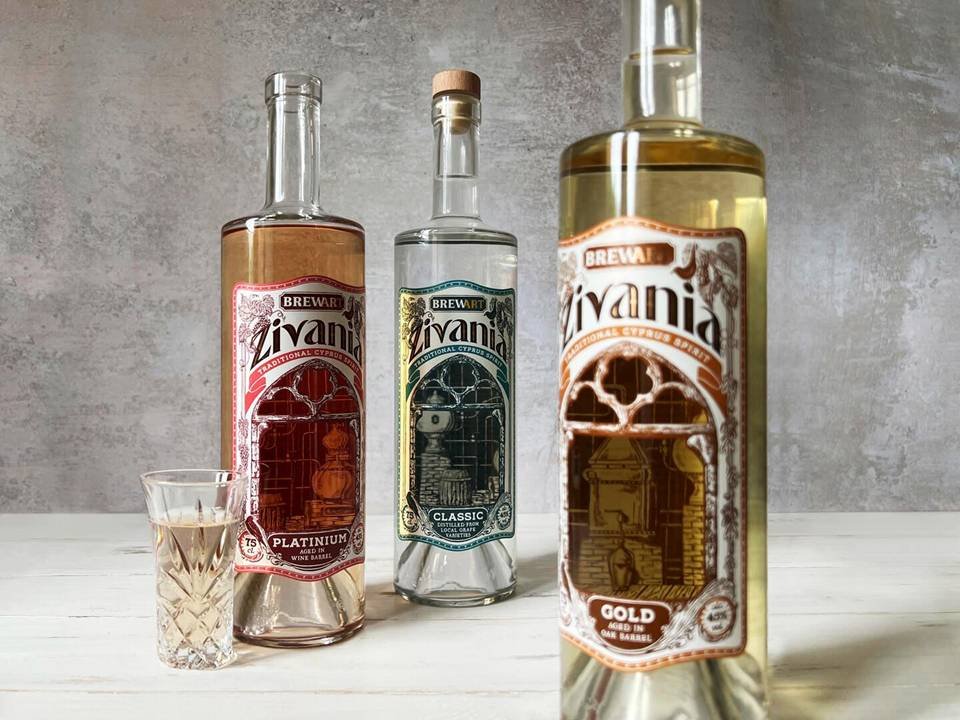
ZIVANIA GOLD: Zivania Gold is a well-known ‘Lampikos’ product. This version of the spirit contains ground cinnamon. This enhances the taste and gives the drink a distinctive, fresh, fruity flavour and a rich golden colour. This version of the drink pairs well with several Cypriot cheeses and cured meat products, and also supplements a CYPRIOT SOUVLA very well.
OTHER USES: Many Cypriots over the ages have also found other uses for the drink. A Warmed-up version of Zivania is still often used as a remedy for several ailments. These include colds, toothaches, and it is also used as a stimulant for massaging aches and pains or sore body parts.
FROM MOONSHINE TO NATIONAL DRINK
Traditionally, Cyprus wine producers made Zivania on a large scale. They then sold it on to merchants of wines and spirits who then distributed the drink across the whole island. This continued unabated until 1949. This is when British Colonial authorities, who were finding it too difficult to collect excise duties on the product, decided that it would serve their interests better to simply ban it. They went on to issue a British Colonial decree in 1949 that made the distribution of all Zivania products illegal.
After the 1949 British Colonial decree, all Zivania production was forced underground. Moonshine versions of the drink were then produced domestically in small quantities mainly for private consumption. The moonshine versions of the drink also removed all forms of quality control from its production. This created a range in both taste and alcohol strength, creating a true drink of champions.
The British Colonial decree of 1949 was unbelievably still in place up until it was finally abolished in 1998. It was only then that the spirit began to be legally produced in Cyprus again. Quality controls were then reintroduced and, to some extent, standardised the drink’s production. Zivania has been produced and marketed under its proper name ever since.
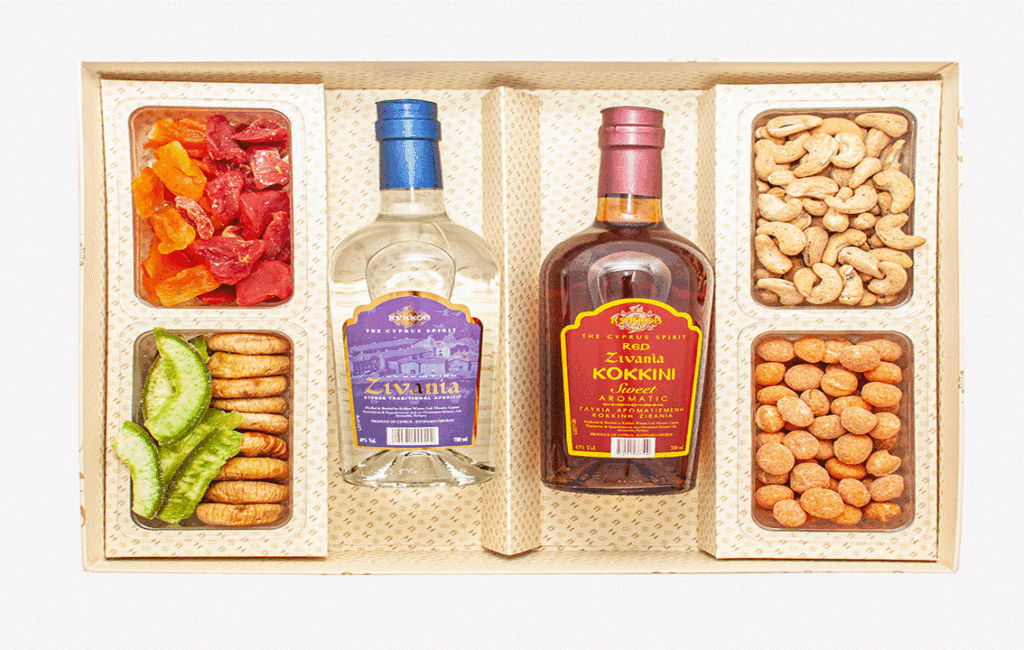
With sales soaring in recent years, Zivania has come to form part of today’s unique Cypriot identity. In light of this, it usually accompanies a good meal or is served with a range of dried fruit and nuts, leaving most to agree that it is also best enjoyed in good company!
LOCAL FIREWATER
Affectionately dubbed ‘firewater’ by locals due to its intense potency, Zivania has held Protected Geographical Status under European Union regulations after Cyprus joined the European Union in 2004. Zivania immediately gained Protected Designation of Origin status. This means that true Zivania can only be produced on the island of Cyprus using local grape varieties like Xynisteri and Mavro.
CULTURAL ROLE
A Drink of Choice: Becoming the local drink of choice, Zivania is heavily woven into the fabric of everyday Cypriot hospitality. In light of this, it is typically paired alongside local Mediterranean meze platters, savoury snacks, crudités, nuts, or local dried fruits.
A Traditional Serving: Traditionally served ice-cold straight from the freezer, it also functions beautifully as an aperitif or digestif.
A Home Remedy: Generations of Cypriots have also historically used high-proof Zivania as a domestic home remedy. In light of this, Zivania is still applied topically today to treat wounds, massage aching muscles, soothe toothaches, or as a remedy for the common cold.
Village Tradition: For centuries, rural families in Cyprus have produced Zivania using traditional copper stills in the autumn right after the grape harvest. In light of this, the drink was always readily available across Cyprus. Visitors travelling through local villages were often offered the drink at coffee shops as a sign of hospitality. The drink, as today, was also commonplace at weddings and festivals.
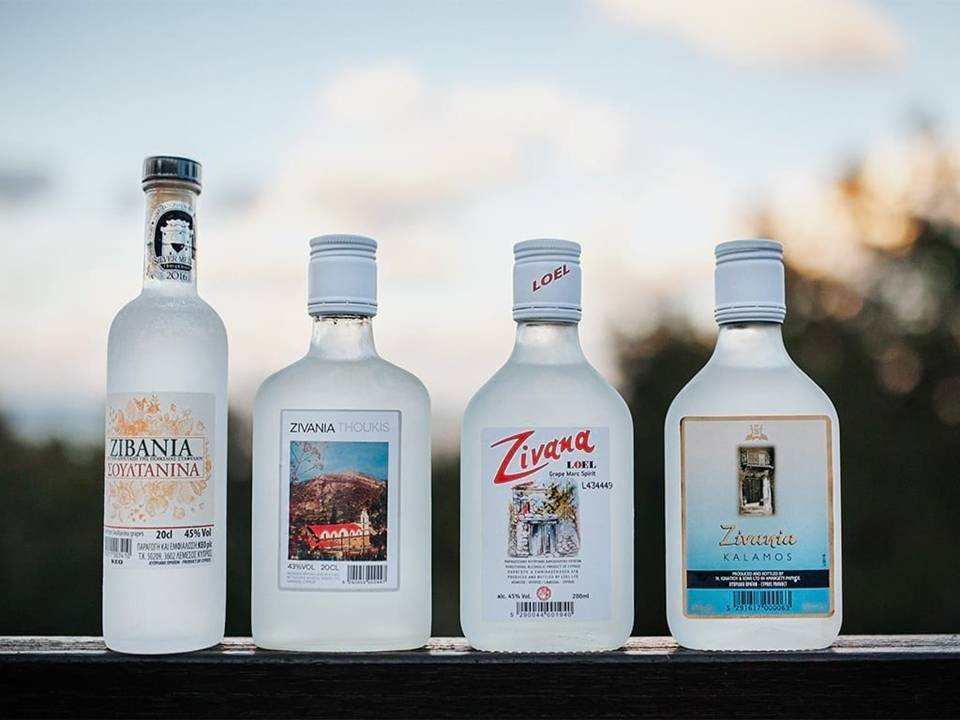
Prominent Commercial Labels: LOEL Zivania, which pioneered commercial bottling in 1999, and KEO continue to mass-produce the drink.
KEY CHARACTERISTICS & PRODUCTION
Ingredients: It is made strictly from local grape varieties, primarily the white Xynisteri and red Mavro grapes.
The Process: Winemaking residue, also known as pomace, is mixed with dry wine and then slowly distilled for several hours in a traditional copper cauldron called a kazani or lambikos.
Taste Profile: Authentic Zivania is crystal clear, completely dry, sugar-free, and lacks acidity. It features a sharp, slightly spicy warmth that is accompanied by a delicate, natural aroma of raisins.
Alcohol Content: While commercial bottled versions typically sit at 45% ABV, home-distilled traditional varieties can reach up to 70% ABV.
ORIGINS & EARLY HISTORY
Ancient Roots: The roots of grape distillation across Cyprus date back centuries, with some historical accounts noting Zivania’s similarities to ancient Mediterranean pomace spirits that were produced throughout the ages.
Venetian Era: Systematic production of Zivania began around the late 15th century during the Venetian rule of Cyprus.
Name Origin: The name of the national drink comes from zivana, which is the Greek word for the grape pomace that is used to make the spirit.