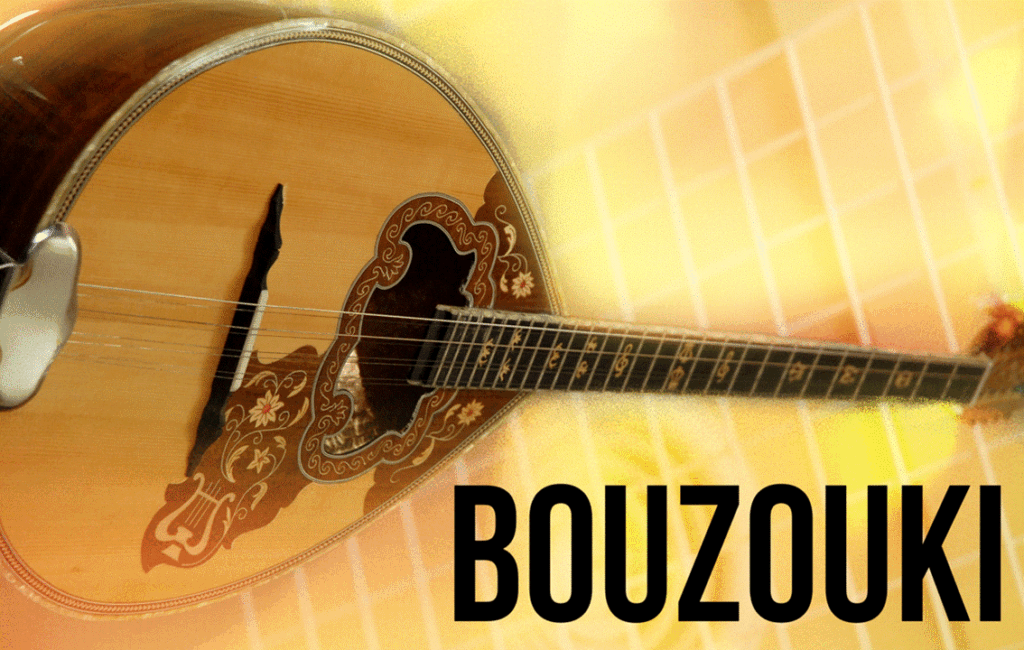
A GREEK ICON
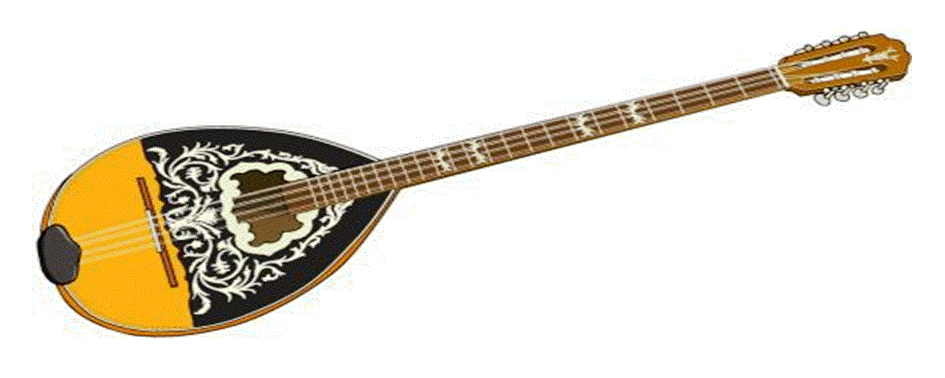
A GREEK NATIONAL INSTRUMENT
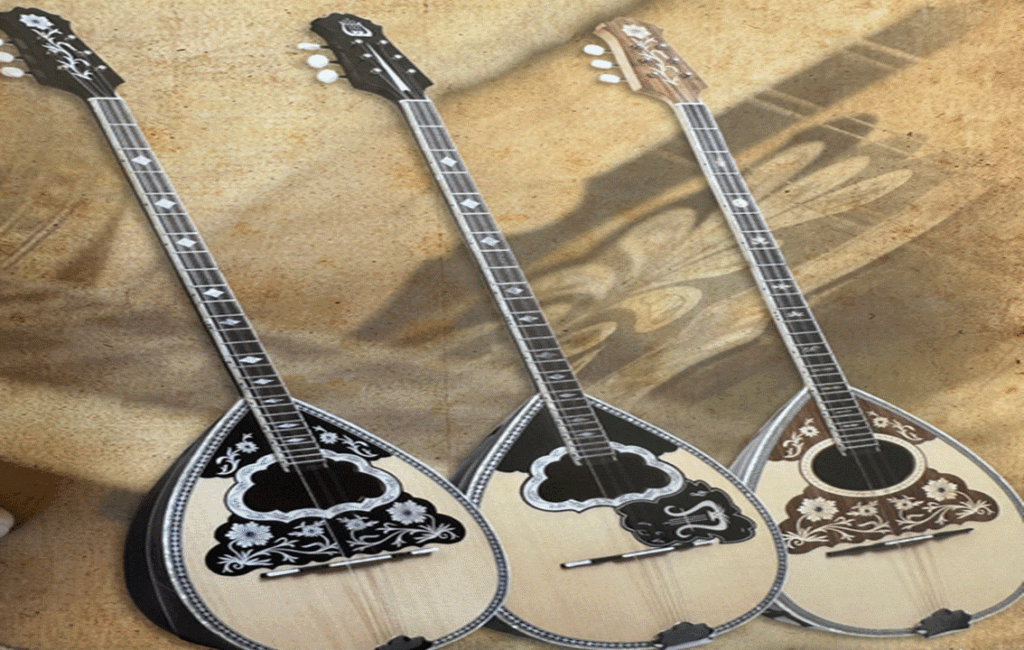
The bouzouki family of instruments today are classified by their body shape, number of string courses, and structural dimensions. Alongside these, smaller subset instruments form a cohesive bouzouki family that are mainly used within a more traditional folk music context.
A HIGHLY ORNAMENTAL INSTRUMENT
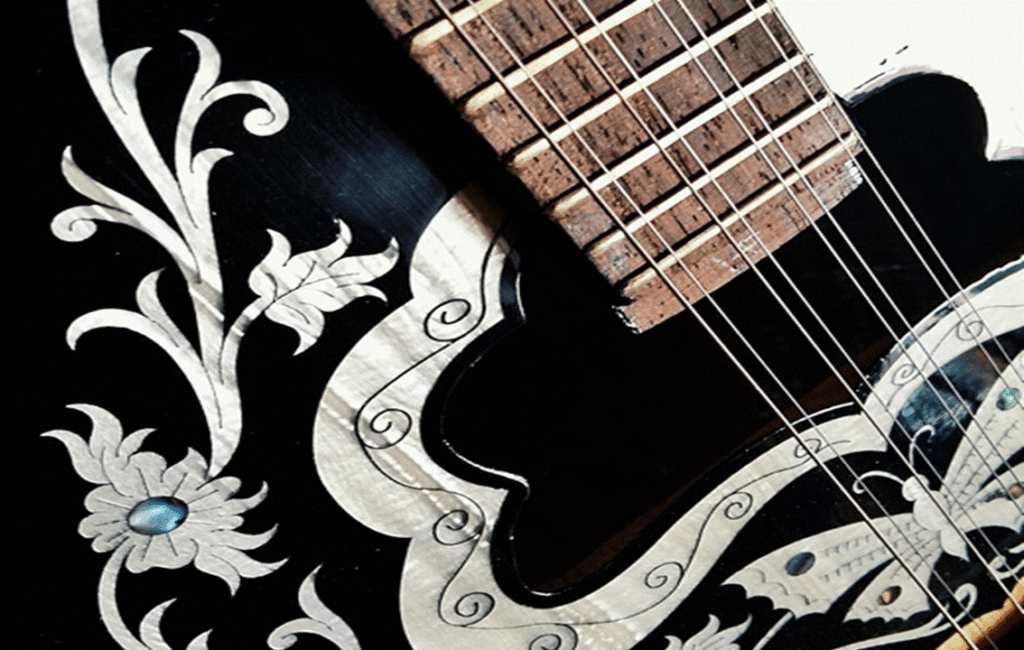
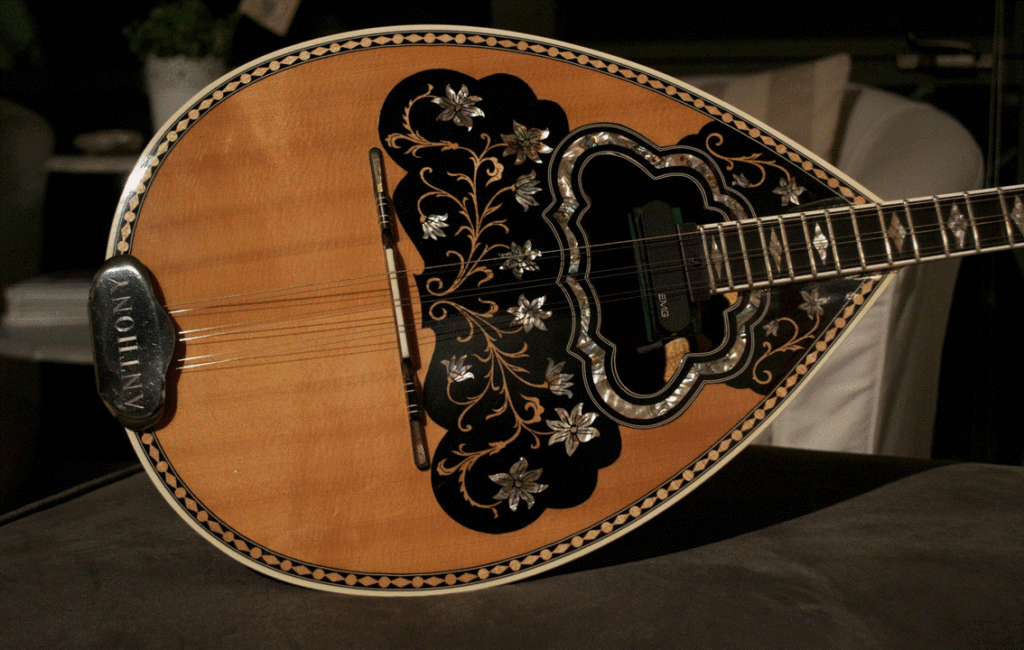
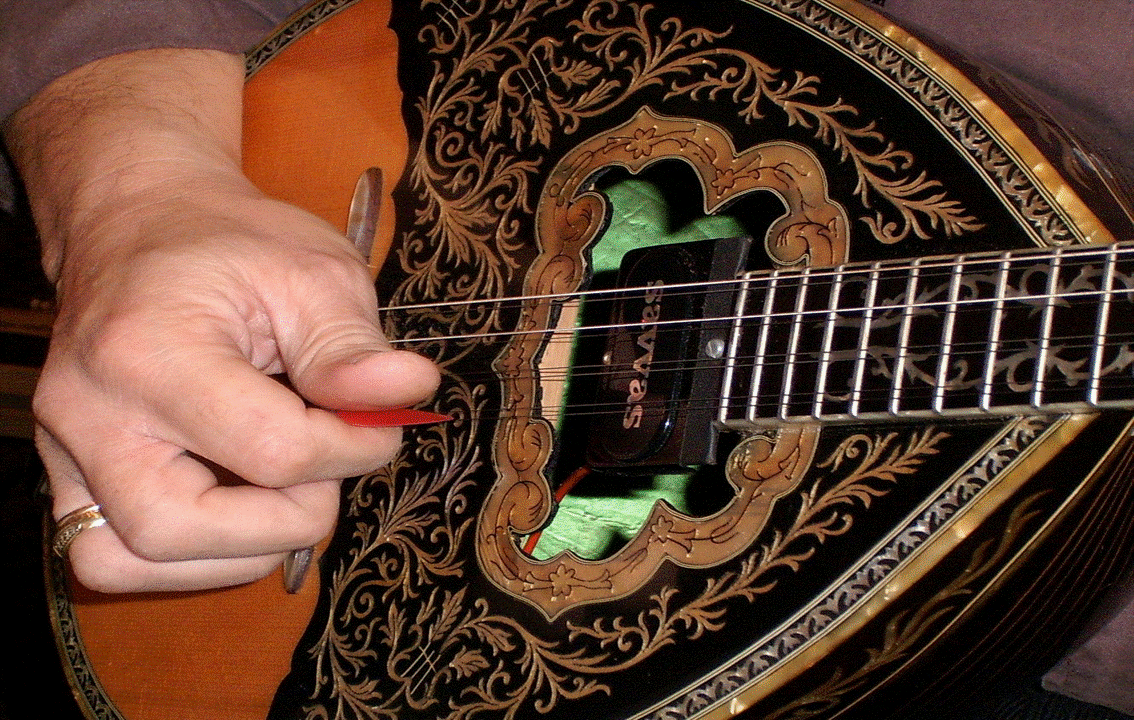
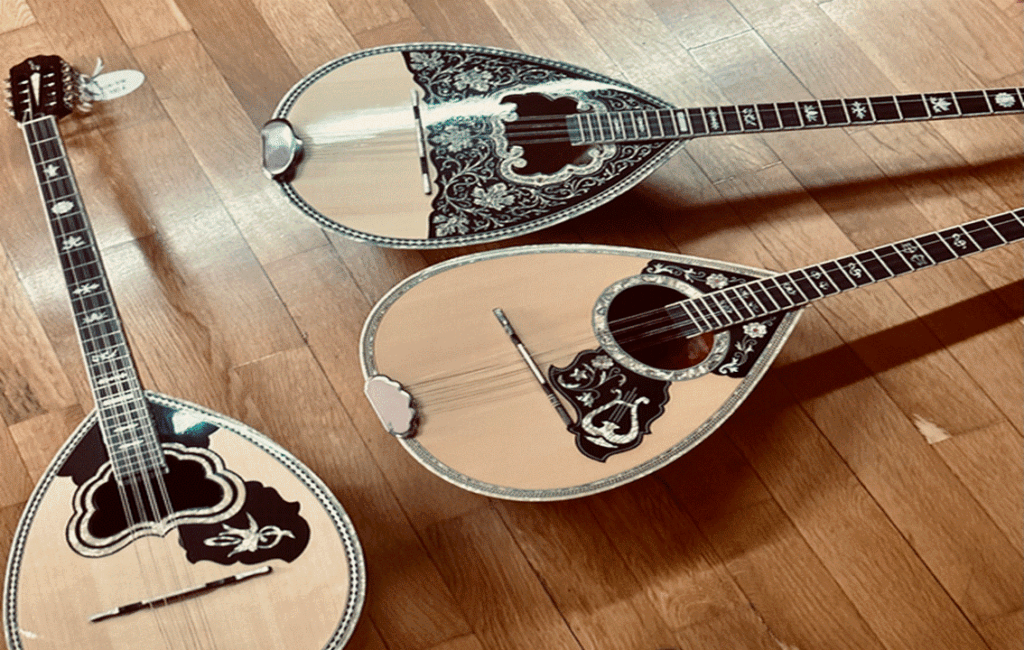
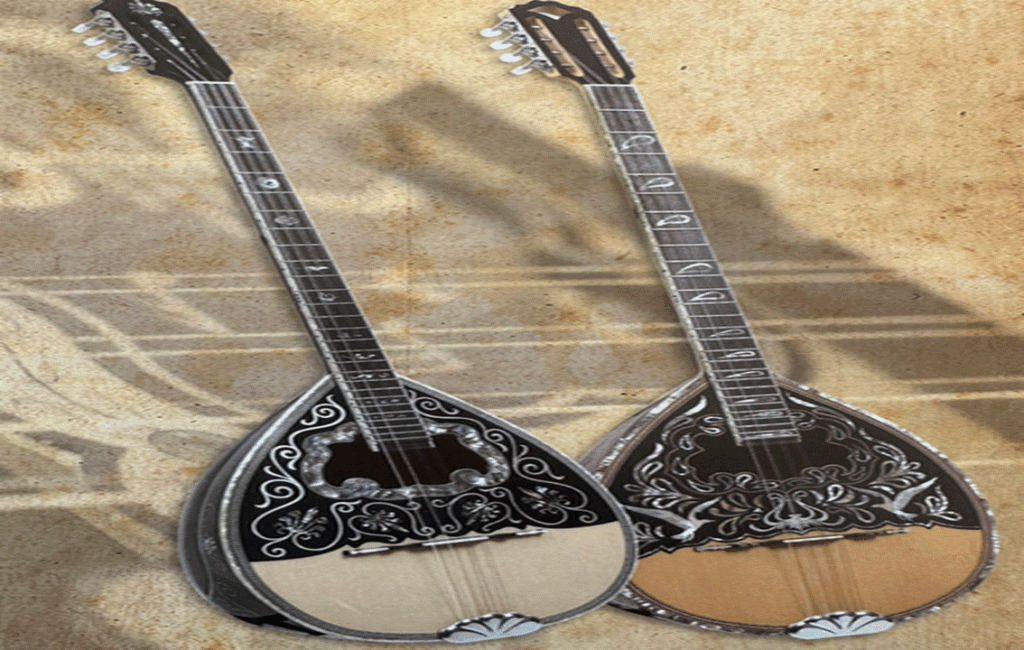
Traditional Greek bouzoukis feature a highly ornamental, staved, pear-shaped, rounded, bowl-backed body and a long neck that are both typically made of high-quality woods. Featuring metal strings arranged in pairs or courses, it produces a distinct bright, sharp, metallic ringing sound that is perfect for fast lead melodies and percussive tones. The bouzouki is normally held across the body in an upright position, and the steel strings are normally plucked using a plectrum. The paired strings create a rich chorus or octave effect, much like a 12-string guitar. Central to the Greek rembetiko and laïkó musical styles, the bouzouki is used in both a traditional and popular Greek music sense.
DIFFERENT TYPES OF BOUZOUKI
Trichordo Greek Bouzouki: This lower-range, earlier version of the bouzouki is considered a traditional classical rembetiko instrument. Known as the ‘trichordo’, it directly translates to ‘three strings’ in Greek. As its descriptive name suggests, it uses three pairs of strings instead of four. Traditionally tuned to D-A-D, the lowest pair of strings utilises an octave string setup to generate a rich, distinct drone effect that has become synonymous with the overall rembetiko sound.
Tetrachordo Greek Bouzouki: Designed and modernised during the 1950s, the ‘tetrachordo’ bouzouki directly translates to ‘four strings’ in Greek. As its descriptive name suggests, this bouzouki uses four pairs of strings instead of the three of earlier versions of this instrument. This quite revolutionary design accommodates more expressive playing with faster melody lines and more complex chord combinations. Also featuring electric pick-ups, the extra strings also allow for a longer scale length, which often incorporates up to 27 frets. This more modern version of bouzouki is usually tuned to C-F-A-D, which is one step lower than the top four strings of a guitar. It also uses octave tuning on its lower two courses.
Tzouras: Featuring a smaller body and a neck nearly as long as a standard bouzouki, the tzoura produces a tighter, more hollow, and distinctively metallic bite.
Baglamas: The smallest member of the bouzouki family features a tiny bowl back and an ultra-short neck. The baglama is usually tuned the same as a trichordo bouzouki, but an octave higher. Historically, its pocket-sized design made it easy for outlawed rembetiko musicians to conceal it under their jackets.
Irish Bouzouki: Developed in the late 1960s for Celtic folk music, this variant of the bouzouki trades the rounded bowl back for a flat or slightly arched back. Resembling a large mandolin, this instrument is built to accommodate heavier string tension, which makes it ideal for heavy rhythmic chord accompaniment. In light of this, Irish folk musicians tend to use it in this way rather than for fast lead melodies. This also suits its shorter neck that offers up to 24 frets. Although traditionally tuned using a G-D-A-E format, some musicians prefer a modal open interval like G-D-A-D instead. This instrument also offers a different stringing option to the traditional octave stringing on the lower bass notes. Unison stringing, which uses identical string gauges paired together to reinforce deep bass frequencies without the high-pitched shimmer, is also sometimes used to create a slightly different sound.
THE BEATING HEART OF GREEK MUSIC
Revered throughout Greece and Cyprus, the distinctive sound of the Bouzouki has enabled it to remain at the heart of Greek music for over a century. This is enhanced by the fact that the iconic stringed instrument still holds a profound place in the Greek cultural and musical landscape today. As a result, to most Greek-speaking peoples, the Bouzouki is not just a musical instrument, but a stoic symbol of the Greek spirit and the rich Hellenic traditions that come with it.
BOUZOUKI ORIGINS
Today, the bouzouki is closely related to both the Iranian and Turkish ‘Saz’, which both share elements of its design and purpose. The direct ancestor of these instruments is the long-necked fretted plucked string instrument known as ‘Buzuq’. This is further emphasised by the fact that the name of the ‘Bouzouki’ directly derives from the Arabic word Buzuq. This also acts as another reference to its origins.
FORMING A FOUNDATION
The Buzuq, which originates from Persia, evolved as it made its way west towards the Byzantine Empire. Once it reached Greece, it was combined with other stringed instruments of the time. As a result, the Buzuq is thought to have provided the groundwork for the foundation of the modern-day Bouzouki.
AN ESSENTIALLY GREEK INSTRUMENT
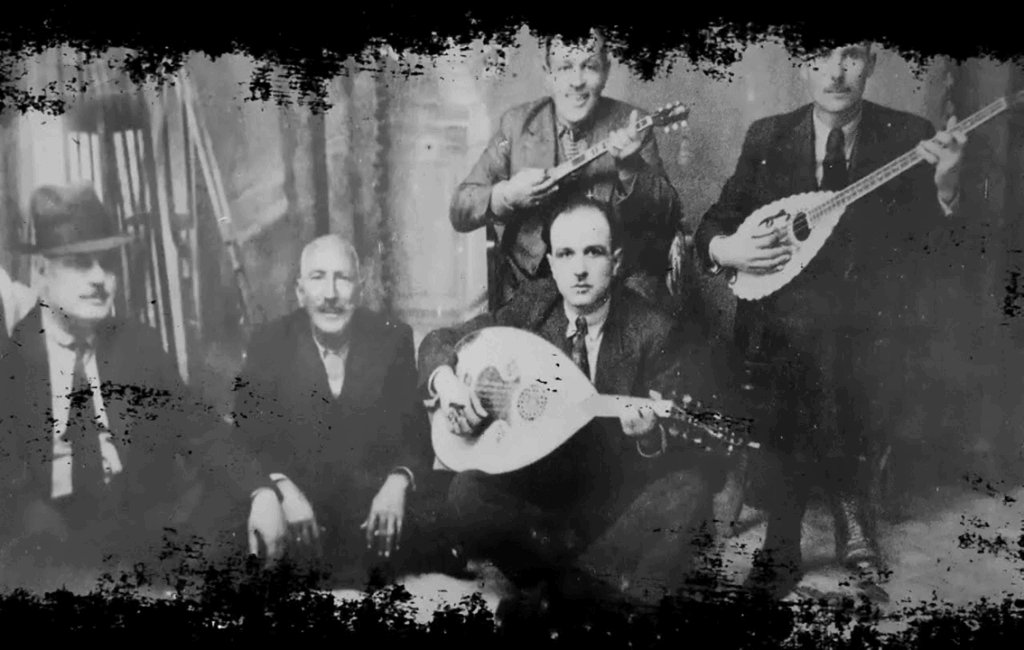
By the beginning of the 19th century, the Bouzouki emerged as an essential musical instrument for playing Greek music. Its defining factor was particularly relevant among the Greek working classes. This became a key component of its popularity. It went on to form a crucial part of the urban culture of the time and became the instrument of choice to learn for most prison populations across Greece and Cyprus.
BORN IN PRISON BUT RAISED IN TAVERNS
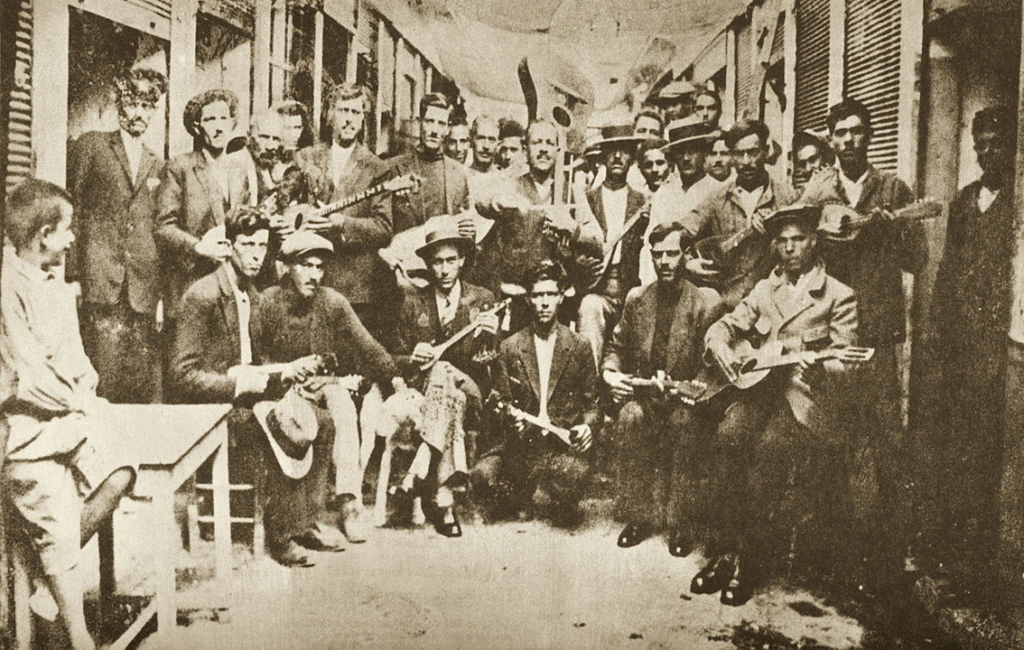
Crude versions of the instrument were made out of broken wooden furniture and strings from uncoiled bedsprings. Prisoners, as well as guards, would play the instrument night and day to pass their time. Several inmates, after leaving prison, then became full-time musicians, plying their trade in several taverns, coffee shops, and nightclubs across Greece and Cyprus.
THE MODERN BOUZOUKI
The cultural exchange and the adaptations made to the instrument have allowed the Bouzouki to assume its contemporary form. The modern Bouzouki is a carefully crafted, hand-made, pear-shaped instrument. It has four pairs of strings that are typically played with a plectrum. It is usually ornately decorated, mainly using mother-of-pearl, and in most cases, each design is often indicative of the maker or, in some cases, the player.
STRINGS ARRANGED IN COURSES
The original Bouzouki only featured three pairs of strings, arranged in courses. Later versions, however, adopted the instrument to four pairs of strings. This, in turn, improved the musical range of the instrument and contributed further to its unique and vibrant sound.
A GREEK NATIONAL ICON
The transition from a mere folk instrument to a national icon began in the late 19th and early 20th centuries. The Bouzouki became widely recognised in the urban centres of Greece and across the whole of Cyprus. It was here that it was embraced by the ‘Rembetiko’ musical movement.
A LEAD INSTRUMENT
Becoming central to this movement, the Bouzouki’s integration allowed its unique sound to flourish amongst its peers. Prominent musicians of the time, like Markos Vamvakaris and Vassilis Tsitsanis, became advocates of the Bouzouki. They played a crucial role in popularising the instrument through their performances and recordings. The instrument also began to take hold across Cyprus, which at the time favoured the violin as a lead instrument.
THE REMBETIKO MOVEMENT
Often referred to as the ‘Greek blues’, the ‘Rembetiko’ movement expressed the struggles and life experiences of the marginalised and often impoverished lower classes within Greek society. This music style also strongly resonated with the general populace, effectively capturing themes of love, along with loss, and the harsh realities of life at the time.
A SURGE IN POPULARITY
This surge in the instrument’s popularity led to the instrument featuring in most venues for live music performances at the time. The Bouzouki, as the main lead instrument, attracted audiences eager to listen to and enjoy the evocative tunes of the popular ‘Rembetiko’ genre that it had embraced.


A BROADER AUDIENCE
The popularity of the Bouzouki continued to grow post-Second World War. The Bouzouki’s sound began to reach broader audiences. This came with the advent of commercial recordings and the radio broadcasts of the time. This directly led to a new music genre taking hold. This more vibrant modern sound became known as the ‘Laiko’ movement.
THE LAIKO MOVEMENT
The Bouzouki’s popularity meant that it became central to a new form of Greek popular music genre. Emerging in the mid-20th century, this new modern music form, characterised by its catchy melodies and relatable lyrics, is still relevant to Greek music today. The ‘Laiko’ movement, with the Bouzouki. at its centre, revolutionised Greek music, making it more relevant on the international stage.


EMBRACED INTERNATIONALLY
The instrument’s profile was also extended further when Greek music began to transcend beyond its cultural and physical borders. Greek immigrant communities the world over have kept their musical traditions alive.
EMBRACED INTERNATIONALLY
Greek communities the world over often hold regular live music events featuring the Bouzouki. These include most Greek cultural festivals, weddings, and social events. This, along with international recognition through film and media, has enabled the Bouzouki to be embraced internationally.
A TRADITIONAL INSTRUMENT IN A MODERN WORLD
Contemporary Greek artists, such as Yiannis Parios, Giorgos Dalaras, and Glykeria, amongst a whole host of others, have gained world recognition for their modern takes on traditional Bouzouki music. This has pushed the ‘Laiko’ movement further into the mainstream, helping to ensure the Bouzouki’s relevance in today’s musical landscape. As a result, the bouzouki continues not only to innovate but in some ways to dictate various Greek music styles.
A REPRESENTATION OF HELLENISM
Serving as a representation of Hellenism, the instrument’s historical trajectory exemplifies the resilience and adaptability of Greek culture as a whole. In recent years, it has continued to evolve and adapt to contemporary musical trends. Its distinctive sound has garnered interest among international musicians the world over.
INNOVATIVE FUSIONS
The bouzouki today can be found in several diverse musical styles. Several musicians have successfully incorporated the Bouzouki into various international genres. These include pop, rock, classical, and ethnic world music. This has allowed the instrument to feature in innovative fusions, which have made the instrument a sought-after addition to global music collaborations. All of this illustrates the Bouzouki’s versatility and its ability to resonate with people beyond Greek culture.
A GREEK CULTURAL UPBRINGING
It is also important to note that the Bouzouki is not exclusively confined to professional musicians. Every Greek child from a young age has the opportunity to learn the instrument. This often forms part of their education and Greek cultural upbringing.
A GREEK IDENTITY
This has meant that the instrument has also found its way into family gatherings and social events. This has helped to infuse everyday life with popular Bouzouki music. With this, its significance has extended beyond mere musical enjoyment and has allowed the instrument to intertwine with the social and cultural fabric of Greek life. The Bouzouki, as a result, is emblematic of a Greek identity that not only represents Greek history but also Greek values.
A RICH MUSICAL HERITAGE
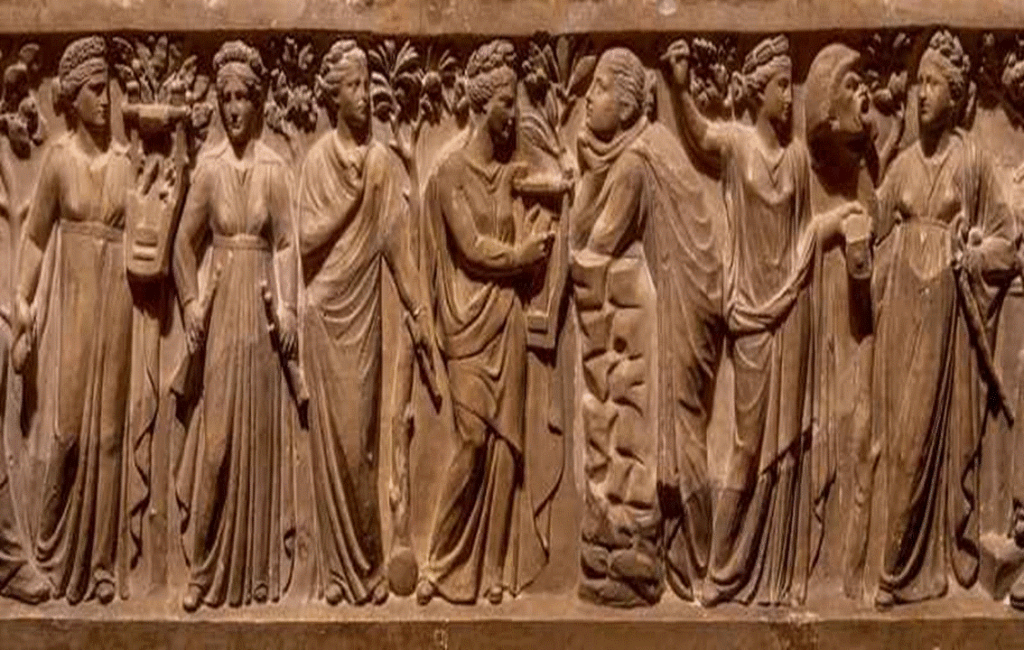
The Bouzouki stands as a testament to a rich musical heritage. From its origins, rooted in ancient stringed instruments, to its modern adaptation, it has become an integral part not only of Greek music but also a Greek identity. Illuminating its significance in the context of a Greek lifestyle, the Bouzouki remains a beloved national instrument.
A GREEK LEGACY
Playing a vital role in defining the Greek cultural landscape, the Bouzouki often embodies both the struggle and joy of the Greek people. Acting as a cultural bridge between past and present, the instrument also evokes a sense of nostalgia and longing. As the Bouzouki continues to influence and inspire world music today, its sweet, yet vibrant sound continues to resonate in the hearts of both Greeks and those who appreciate the beauty of its music.