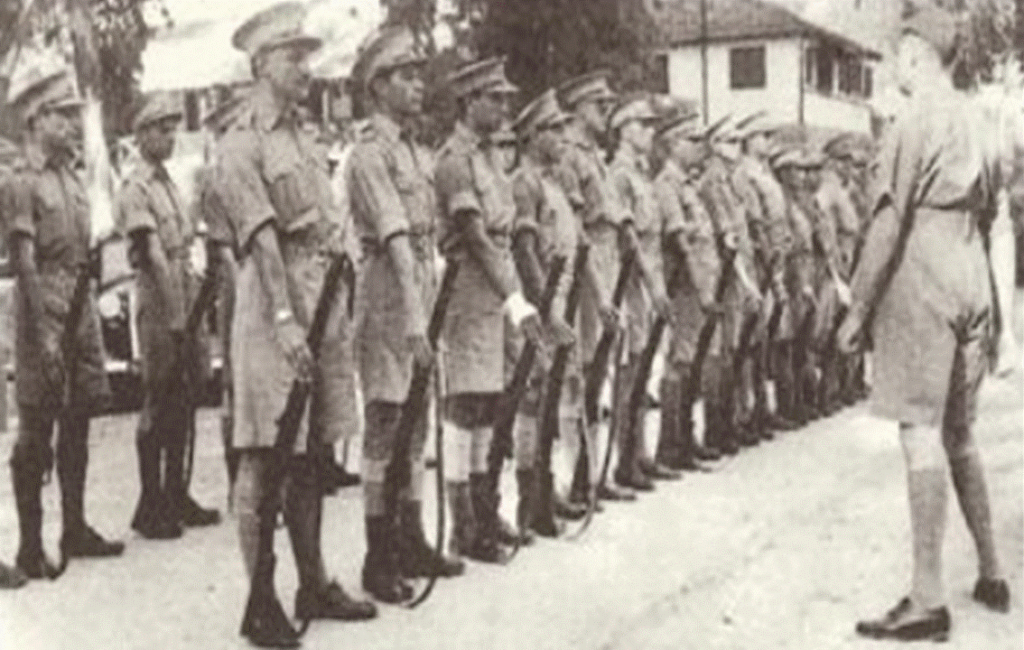
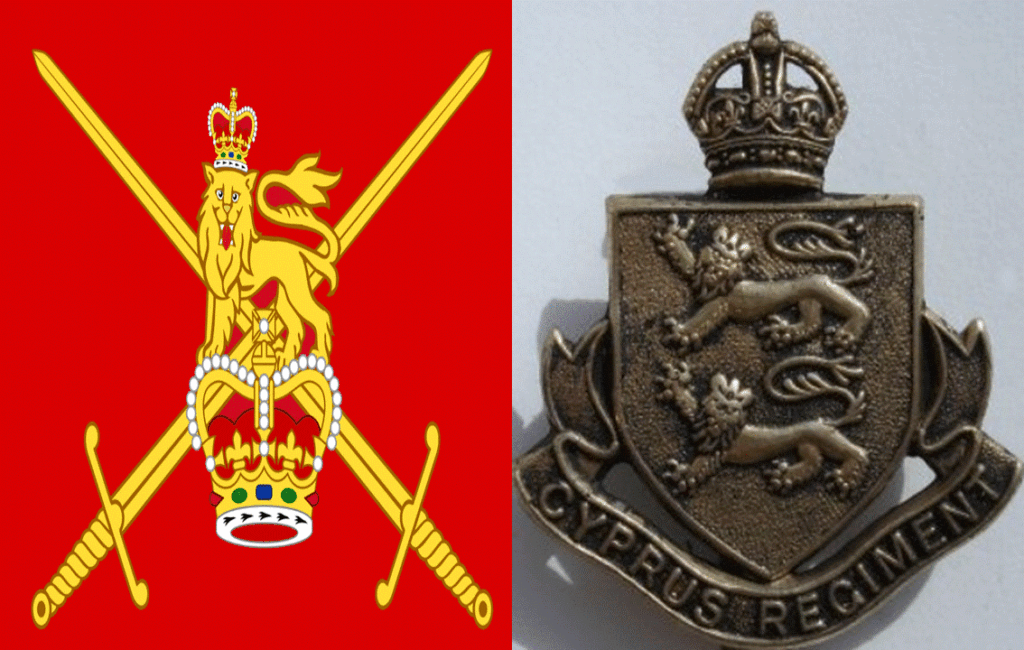
Cyprus found itself at risk at the beginning of World War 2. This was because of its strategic importance. It was agreed because of this that the island would soon need its own defensive force. The idea of forming the Cyprus Volunteer Regiment also arose from a Cypriot desire to actively protect their island, even though it was under British control at the time. The British, who were by this time in retreat from rampaging German forces, welcomed the idea. They then took steps to help form a new regiment that would comprise solely of Cypriots. Although this force was initially created to protect Cyprus from any potential threats, it was later mobilised in an offensive capacity and proudly served in several theatres of war.
A VOLUNTEER REGIMENT
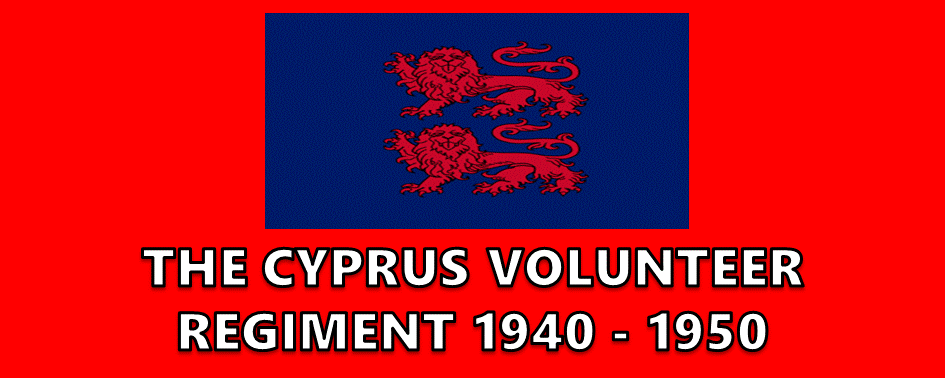
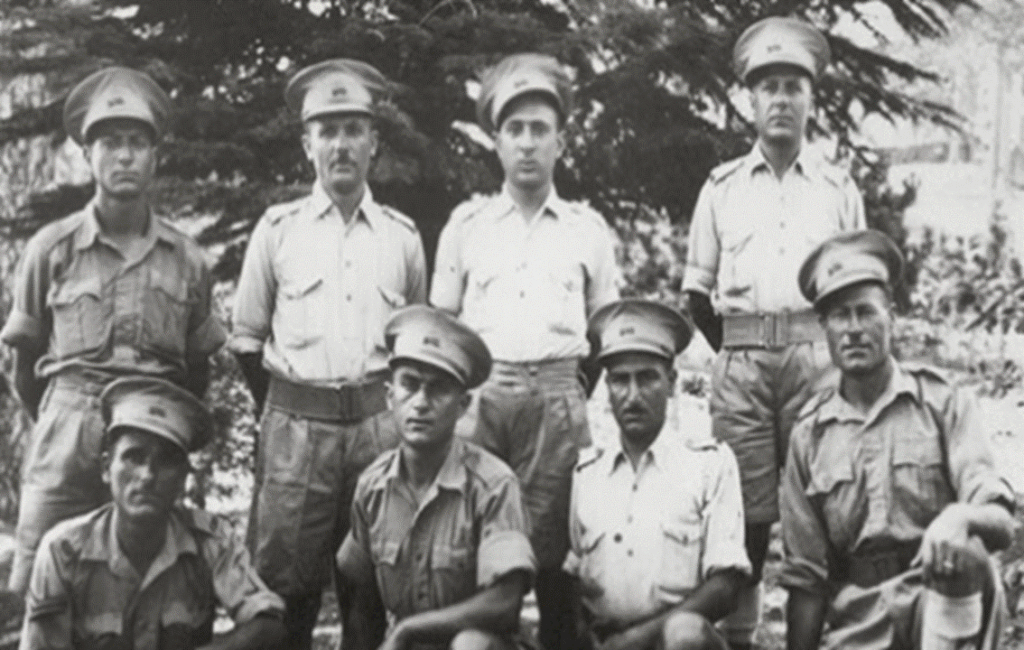
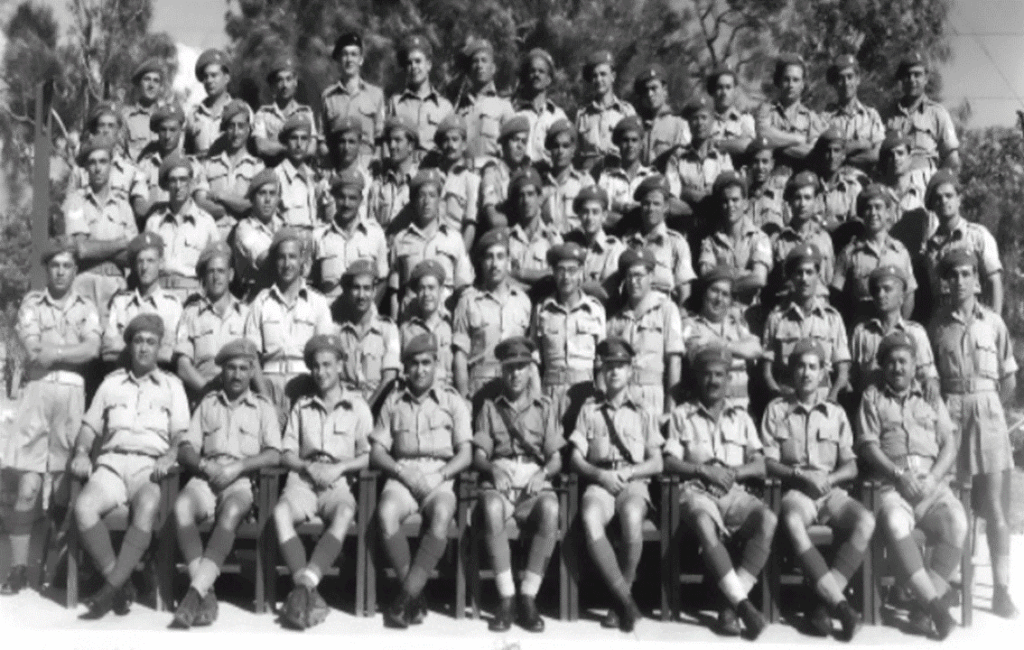
The Cyprus Volunteer Regiment was founded by the British Colonial Government on April 12th 1940. Although recruitment was voluntary, several Cypriots from all walks of life answered the call to join, and the CVR, as it became known, was solely made up of Cypriot volunteers. This included both Greek and Turkish Cypriots who volunteered in droves to help defend their homeland. The regiment, which numbered approximately 30,000 at its peak, initially policed and guarded the island’s infrastructure. The regiment, in its defensive capacity, was later also used to defend elements of the Suez Canal, as well as Cyprus.
SEVERAL OVERSEAS CAMPAIGNS
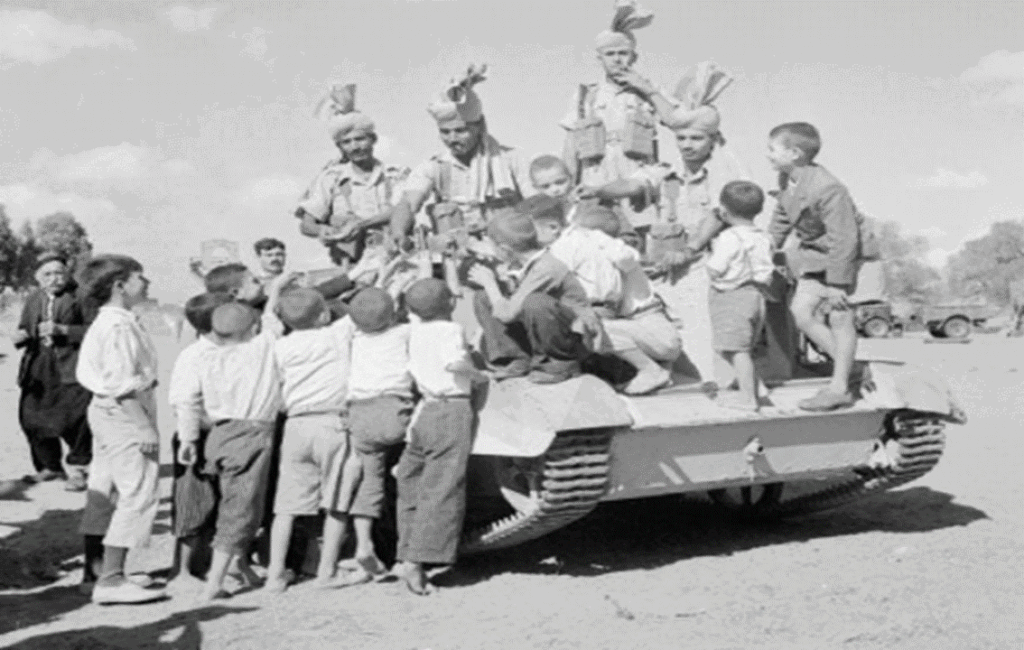
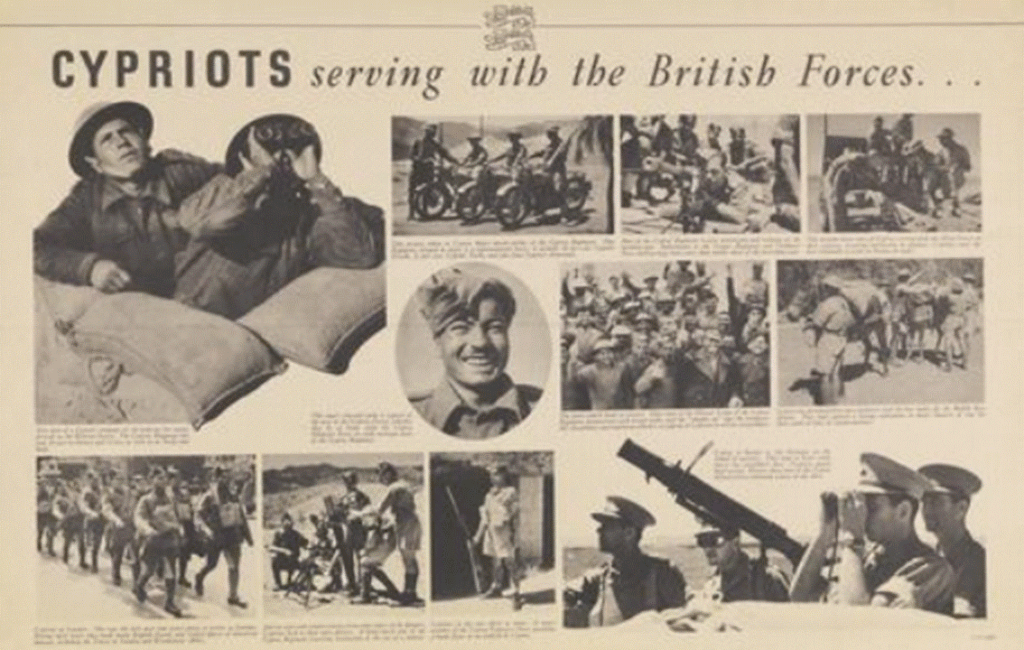
As the war progressed, the soldiers of the CVR became eager to fight for the Allied cause in an offensive capacity. This meant that in 1941, their role dramatically changed. The regiment went through rigorous training in preparation for offensive combat. Its ranks, as a result, comprised highly skilled mobile infantry, which included both mechanical and pack transport companies. After the CVR joined other British Commonwealth forces overseas, it would go on to serve in several theatres of war throughout the Middle East and North Africa, actively participating in several overseas military campaigns.
PRAISE FROM A PRIME MINISTER
It was firmly acknowledged later that the regiment fought bravely in several battles throughout World War 2. Winston Churchill, on a brief visit to Cyprus in 1943, acknowledged this by praising the soldiers of the CVR. He did this during an address to the nation. He stated that the regiment had already served honourably and stated that their combined efforts had already made a significant difference to the overall war effort. It was also acknowledged after the war that the brave and dedicated CVR had shown a determination like no other to help defeat the enemy. It was acknowledged that they had also made a significant contribution to the Allied cause. Mostly forgotten today, their contribution and sacrifice still live on in the memories of several Cypriots. The regiment’s legacy, as a result, remains a testament to the courage and resilience of all of the Cypriots who served.
KEY DETAILS
The Cyprus Volunteer Regiment, also known as the CVR, was a World War II military unit of the British Army formed by volunteers from across the diverse communities of Cyprus.
Composition: Although the CVR was mainly composed of Greek Cypriots and Turkish Cypriots, its ranks also included Cypriot Armenians, Maronites, and some Latins, alongside other Commonwealth personnel.
Strength: Approximately 30,000 Cypriots served in the regiment during the war.
Structure: The CVR included infantry, mechanical transport, and pack transport companies.
Mule Drivers: Cypriot muleteers were the first colonial troops sent to the Western Front in 1940, operating in rugged terrain inaccessible to vehicles.
Casualties: Around 650 soldiers died, and 2,500 were held as prisoners of war in camps like Stalag VIII-B and Stalag IV-B.
Disbandment: The unit was officially disbanded on March 31, 1950.
Key Fronts: The CVR actively served in the following theatres of war
The Battle of France
The Greek Campaign
North Africa
The Middle East
Ethiopia
Italy (including support at Monte Cassino)
A NEW CAUSE
The Cyprus Volunteer Regiment continued to serve after the end of the war, but was then disbanded on March 31st, 1950. It was firmly acknowledged at the time that the CVR had fought with both courage and honour, and although all serving Cypriots had pledged loyalty to the British Empire, they were quick to remind authorities that they also pledged loyalty to their homeland and self-determination. Enlisted men, who had quietly slipped back into civilian life after they were retired from active service with honours, were then called upon to take up a new cause. This led to the formation of EOKA, which was instrumental in the island’s struggle for independence, which began just five years later.