A NEW RELIGIOUS ORDER
THE RELIGIOUS, ECONOMIC, & CULTURAL SHIFT IN 1571
The Ottoman quest to conquer Cyprus was finally realised in 1571. This came after the final defences of the Republic of Venice fell after LENGTHY SEIGES in both Nicosia and Famagusta. Their victory, after a bitter war that lasted the best part of a year, was a stark turning point for the island. Cyprus was then almost immediately wrenched away from conventional Western European norms after the island was integrated into the greater Ottoman economic, religious, and cultural system.
THE MEVLEVI ORDER IN CYPRUS
Ottoman Islamic orders, such as the ‘Dervishes’, then established a presence across the island. Becoming the most prominent among other Dervish brotherhoods, which included both the Bektashi and Naqshbandi Dervish orders across the island at the time, the Sufi Mevlevi order was founded in the 13th century by followers of the Persian poet and mystic Mevlana Jalaluddin Rumi. This dervish brotherhood, which was widely known as the Whirling Dervishes, emphasised the soul’s separation from God in earthly life and its return to divine love after death. Although the order’s most prominent cultural and spiritual centre was established in Nicosia, they went on to create a whole series of new institutions that included several Mosques and Tekkes across Cyprus. Renouncing all worldly pleasures in pursuit of spiritual perfection, their teachings proudly advocated asceticism and meditation.
A NEW RELIGIOUS REPRESENTATION
Roughly translating to beggar or poor one, the word ‘Dervish’ originates from Persia and reflects the order’s teachings and the way of life that it represents. Dervish practices can be compared to Christian mystics in their dedication to spiritual quest, asceticism, and closeness to God. With this in mind, however, differences in religious traditions, practices, and social roles make this comparison largely conditional.
THE ROLE OF THE TEKKE
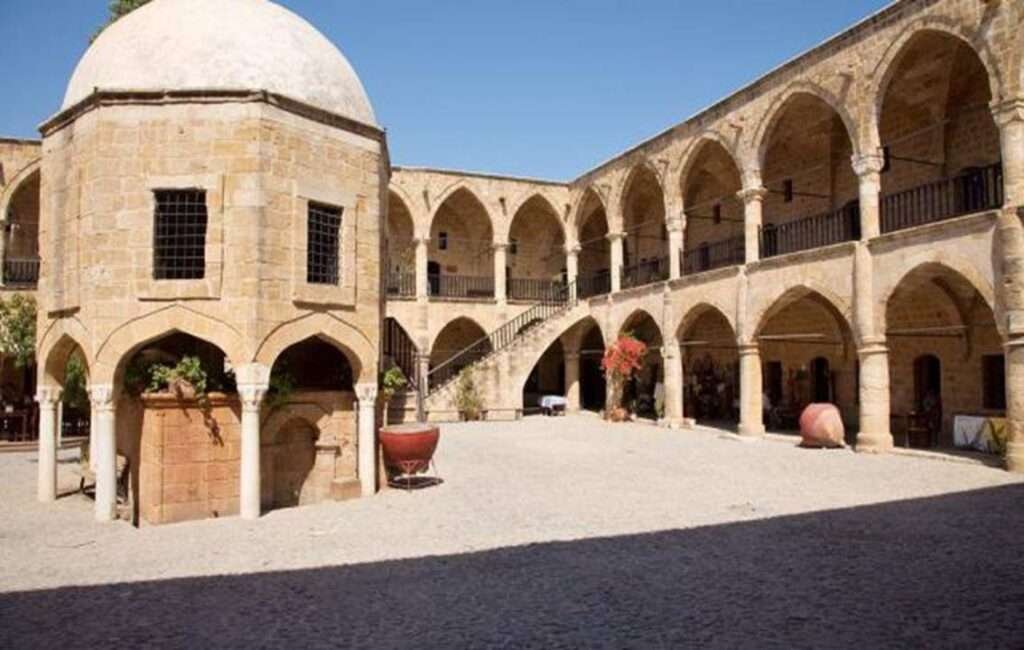
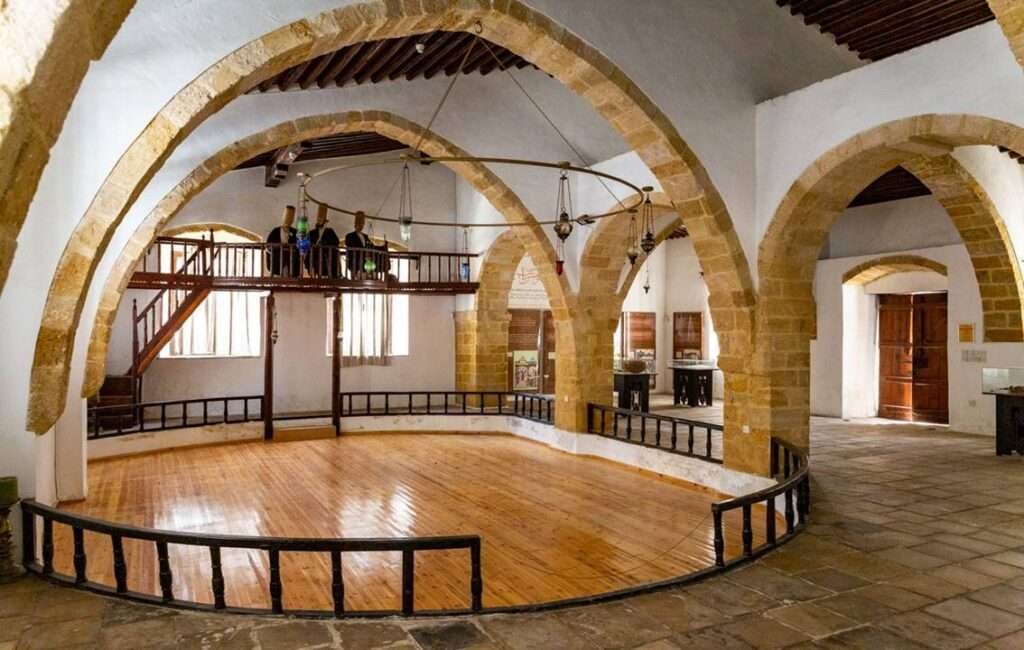
Similar to a Christian monastery, a Tekke is a Sufi monastery or lodge. This is where members of a brotherhood, such as Dervishes, pray, meditate, study, and, in most cases, live according to their order’s teachings. Functioning as centres for education, Tekkes were also charitable and served as shelters, providing food and lodging for the needy. A Tekke typically includes a ritual hall, as well as a mausoleum. This is also known as a Türbe and is used as a burial ground for sheikhs and other significant figures of a particular Muslim order. Most also had living quarters, a kitchen, and a garden with a well.
THE MEVLEVI TEKKE IN NICOSIA
The Mevlevi Tekke in Nicosia was the central hub for the order on the island. In 1873, the Tekke had 36 members who held regular rituals every Sunday. The complex included living quarters for Dervishes and a garden with several fruit trees. This Tekke also served as a social centre and provided food and shelter for anyone who needed it.
THE WHIRLING DERVISHES
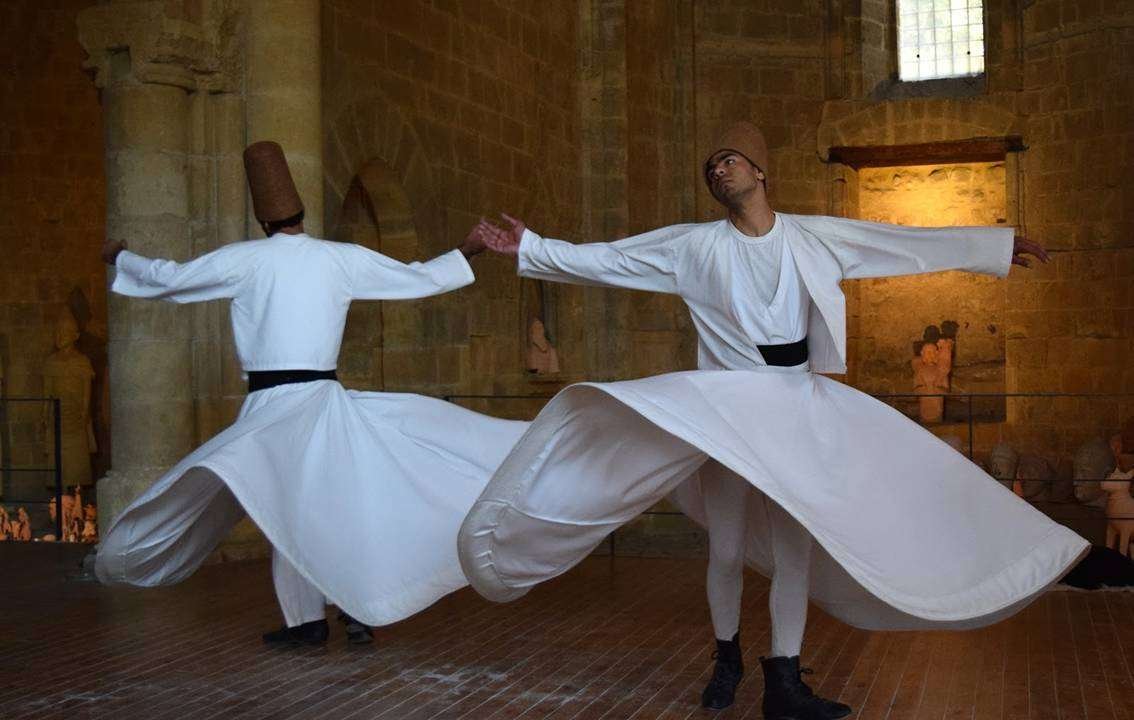
The most famous Mevlevi Dervish practice is its famous hypnotic circular dance. Also known as the Sema in Turkish, this form of spinning meditation symbolises the rotation of the planets, the ascent to spiritual perfection, and the bridge between heaven and earth. The constant rotation also creates a state of mystical ecstasy that is closely aligned with the soul’s spiritual journey to God. For this reason, members of the Sufi Mevlevi order are known as the ‘Whirling Dervishes’. Their Sema has also been recognised by UNESCO as an intangible cultural heritage of humanity.
A TRANCE-LIKE STATE
Music also plays a significant role in the Sema ritual, but only instruments with a sacred significance for Dervishes are used. These include the tambourine or flute. Poetry recitals often accompany the music, and these sometimes induce a trance-like state, which creates a profound effect on their participants. Notably, verses from the Holy Quran are never used during the Sema dance.
THE TURKISH REFORMS OF 1925
Most Tekkes across Turkey by the early 20th century had become carriers of several opposing political ideas to the Atatürk regime that had swept the country at the time. In light of this, sweeping Turkish reforms, introduced in 1925, saw all Tekkes across Turkey closed. This then prompted some members of the Turkish Cypriot community across the island to urge the boycott and closure of these institutions across Cyprus. The British colonial administration, however, decided to preserve them, appointing community leaders or sheikhs from Syria after they were shunned by their Turkish Cypriot counterparts. The Cypriot Dervish community persisted through to the first half of the 20th century, with the last resident Dervish in Cyprus passing away in 1954.
THE MEVLEVI TEKKE

THE ORIGINAL MEVLEVI DERVISH ORDER
THE MEVLEVI TEKKE MUSEUM