ETEO-CYPRIOTS
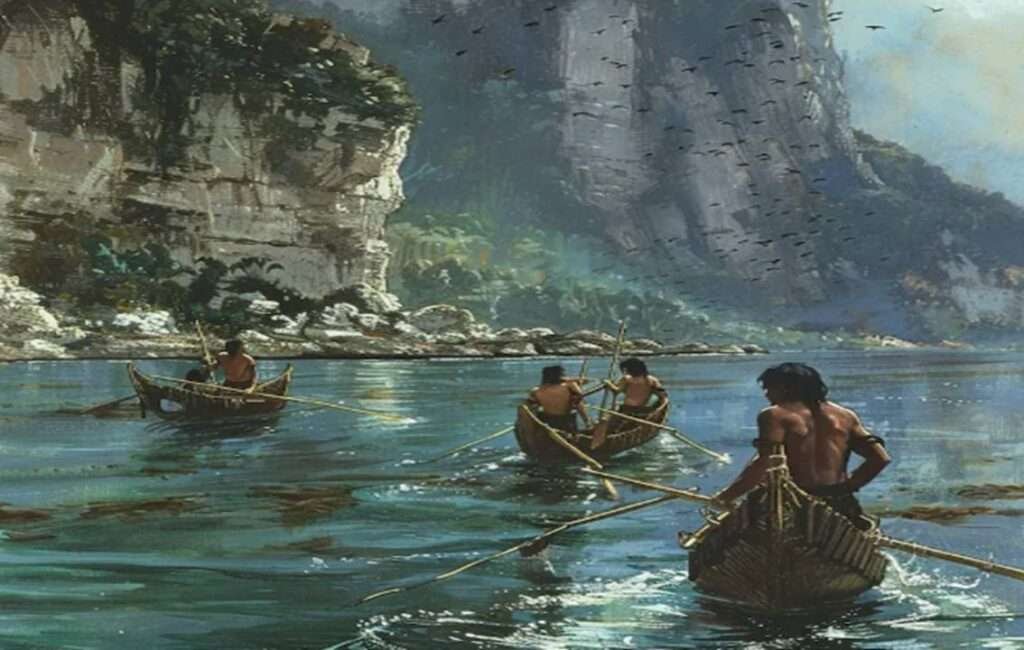
With trade at its core and its unique position, serving as a bridge between Europe, Asia, and Africa, the recent history of Cyprus is mainly defined by its trade routes and its strategic Eastern Mediterranean location. Before this, however, artefacts, including early tools and animal bones recovered near the southern coast of Limassol, suggest that Cyprus was dominated by prehistoric hunter-gatherers, who existed across the island during the Stone Age Palaeolithic period. These early people, who were known as Eteo-Cypriots, are thought to have lived on the island for thousands of years before any major outside groups arrived.
CYPRIOT HUNTER-GATHERERS
Although not much is known about these early indigenous groups of Cypriot hunter-gatherers, evidence suggests that they were active across the island as early as the 12th century BC. It is also known that these early Cypriots, who did not yet produce pottery, also coexisted with various dwarf animal species that now no longer exist. These include Dwarf Elephants (Elephas Cypriotes) and Pygmy Hippos (Hippopotamus minor). It is thought that Eteo-Cypriots largely hunted these animals to extinction before establishing any structured settlements and large farming communities by around 10,000 BC.
THE SETTLEMENT AT SHILLOUROKAMBOS
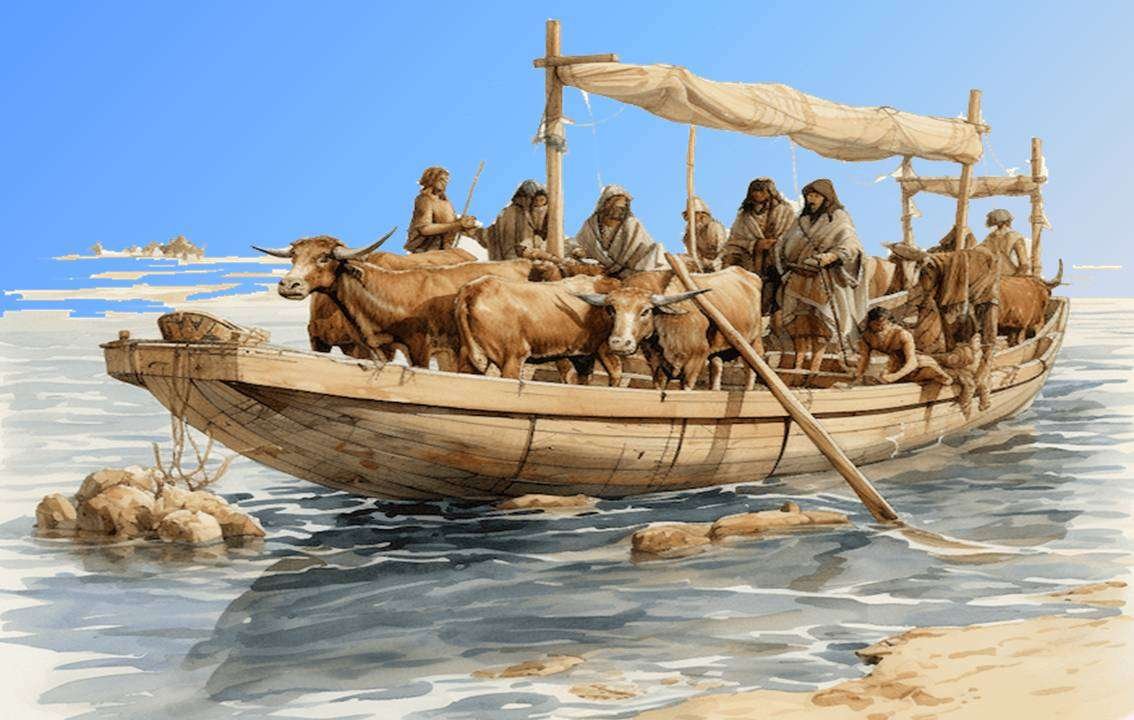
One such settlement, established around the 10th century BC, is SHILLOUROKAMBOS. Early settlers there built circular dwellings with floors made of terrazzo of burned lime. It is thought that these settlers were the first to domesticate animals on the island. Evidence suggests that these include the dog, sheep, goats, pigs and possibly cattle, as further evidence suggests that most of their cattle died out by the 8th century BC. Cattle are then thought to have been reintroduced later during the ceramic Neolithic period. Along with cattle, other wild animals are thought to have also been introduced to the island after ancient trade routes were established. These include wild foxes (Vulpes vulpes) and Persian fallow deer (Dama Mesopotamia) that were previously unknown on the island.
THE SETTLEMENT AT MYLOUTHKIA
Mylouthkia is an early prehistoric site providing key archaeogenetic clues about the origins of Cypriot people. Located on the southwest coast of Cyprus, near the modern city of Paphos, it dates back to the Pre-Pottery Neolithic B period, with initial occupation layers spanning from approximately 8000 to 7000 BC, alongside later Chalcolithic use. The site is famous for containing some of the oldest known water wells in the world, which were carved deep into the ground. Excavations by the Lemba Archaeological Project have also uncovered ancient plant remains, which indicate some of the earliest cereals on the island, animal bones that include both cattle and deer, early human burials, and early artefacts like picrolite pendants. Findings at Mylouthkia proved that maritime colonists reached Cyprus much earlier than previously thought, bringing with them domesticated animals and farming techniques across the sea from the mainland Levant, Greece, and Anatolia.
THE SETTLEMENT AT CHOIROKOITIA
The Neolithic settlement of Choirokoitia is an exceptionally well-preserved prehistoric archaeological site in Cyprus. Dating back roughly 9,000 years to the 7th millennium BC, it remains the most famous and well-preserved UNESCO World Heritage Neolithic village in Cyprus. This settlement is thought to have been active all the way up to the 4th millennium BC, representing the peak of the Aceramic, pre-pottery, Neolithic period on the island. Founded by early farming settlers arriving from the nearby Middle East mainland, who brought unknown plants and animals to the island, this settlement demonstrates an early, highly organised collective society with complex communal fortifications and controlled access points. The early Cypriots who settled here are known to have cultivated early crops like wheat and barley, and they are also known to have domesticated sheep, goats, and pigs. Houses were built with a circular ground plan using a combination of stone, rammed earth, and sun-dried mudbrick, featuring flat roofs made of branches and mud. A typical home consisted of several circular structures clustered tightly around a small open courtyard used for domestic chores like grain grinding. The inhabitants here also practised unique funerary rituals that included burying their dead in pits directly beneath the earthen floors of their houses.
THE ARRIVAL OF GREEK SPEAKING SEAFARERS
The first outside settlers are thought to have arrived in Cyprus during the early Neolithic period. These Greek-speaking seafaring people are thought to have successfully integrated with the Eteo-Cypriots. Evidence suggests that they went on to create small farming communities across the island, leading to permanent settlements being formally established during the Aceramic Neolithic period. Cyprus was then continually settled further by these people, leading to Greek Mycenaean traders establishing fixed trade routes to the island by 1200 BC.
A WORTHY PRIZE
The discovery of huge copper and timber reserves then brought Greeks, mainly from the Peloponnese, to the island over the next 200 years, allowing them to firmly establish their presence by the Late Bronze Age. These Greek settlers introduced the Arcado-Cypriot dialect, distinct Greek art forms, and Greek religious traditions, which created a deep and lasting Hellenic culture. This became completely dominant across the island by the start of the first millennium BC. Cyprus, however, by this time, became a worthy prize for the revolving door of history’s greatest empires and civilisations of antiquity. Despite later rule by these various empires and larger civilisations, the predominant ethnicity and cultural identity of Cyprus has remained firmly Greek until today!