AN IMPORTANT NEOLITHIC SITE IN THE DISTRICT OF LIMASSOL
VALUABLE INSIGHTS
Shillourokambos is a defining Neolithic site in Cyprus. It remains an important archaeological ruin, providing valuable insights into early human settlements across Cyprus. The site, which is thought to have been occupied from the end of the 9th Century BC onwards, sits on a low plateau near the village of Parekklisia within the district of Limassol. Excavations there have revealed some ground-breaking facts about the Neolithic era in Cyprus, revealing new insights into both the agricultural and social organisation of the era in Cyprus.
VALUABLE INSIGHTS
First excavated after its discovery in 1992, the site has revealed new information that has had a profound historical impact. Perhaps the most intriguing revelation is the indication of early animal domestication. The site attests to the presence of cattle, which is thought to be a rarity in Neolithic societies. Several dog, sheep, goat, and pig bones have also been recovered from the site. Small numbers of fox and Persian fallow deer bones are also present, indicating that these animals were probably hunted by the early Neolithic inhabitants.
A REVOLUTIONARY DISCOVERY
Until recently, the oldest known domestication of the humble cat was attributed exclusively to Ancient Egypt, where it was considered a cult animal. Evidence of this is supported by several depictions of house cats in ancient Egypt from around 3,600 years ago. This has directly led historians to consider that Ancient Egypt was the earliest known place of cat domestication. A revolutionary discovery at Shillourokampos, however, has led to a change in the historical context of this.
THE OLDEST KNOWN CAT GRAVE
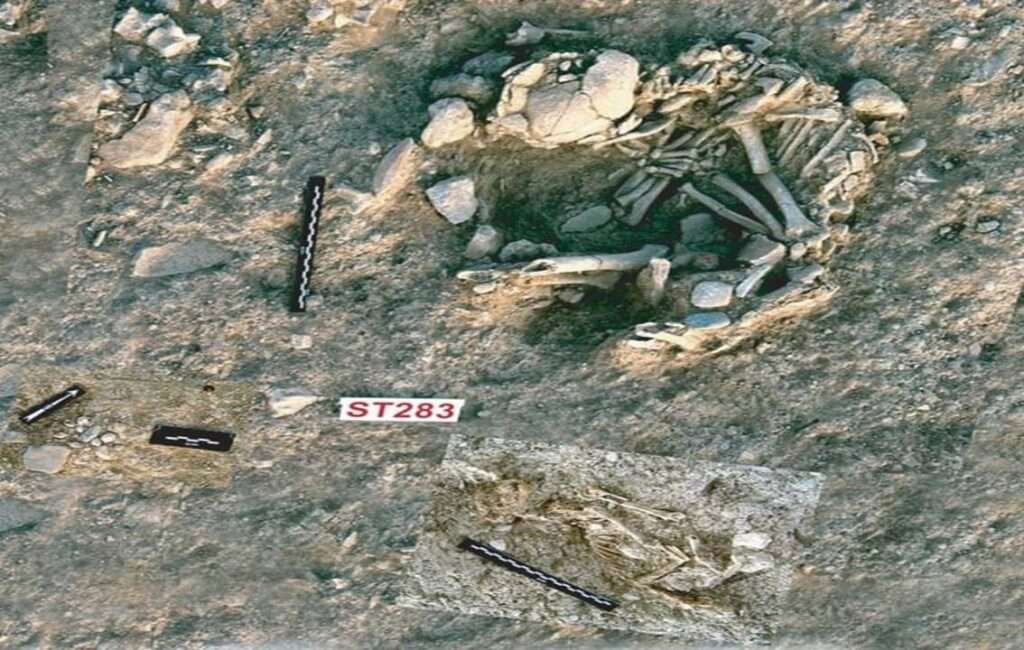
The remains of a cat buried with a human in a 9,500-year-old grave at Shillourokampos have changed both the Neolithic and Cypriot historical narratives. This has also pushed back the earliest known feline-human association, far preceding Ancient Egypt. Shillourokampos now represents the oldest known evidence of human domestication of cats, and together with some new genetic evidence, it places the domestication of the cat in a completely different context.
SOME UNIQUE CHARACTERISTICS
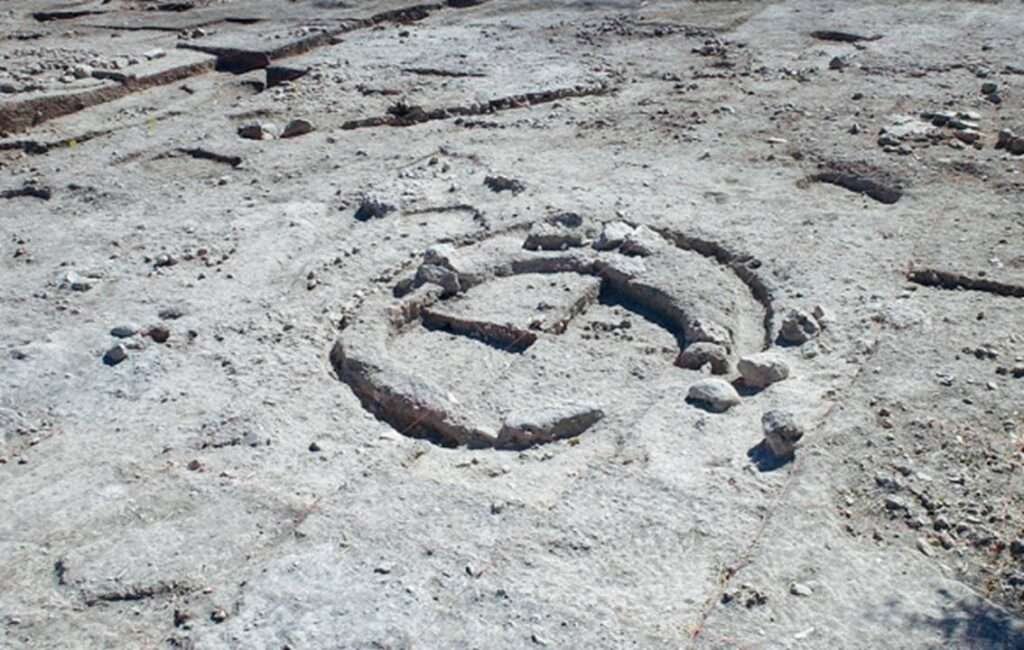
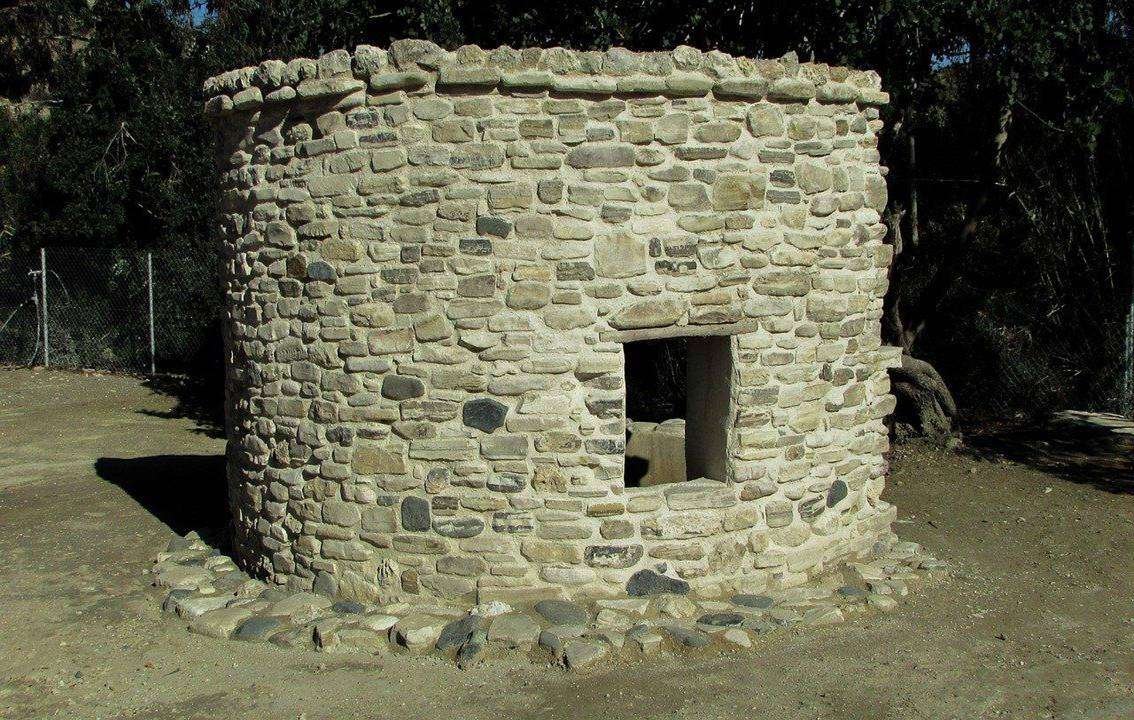
The site’s architecture is characterised by circular wattle and daub structures. These date from between the 9th and 8th centuries BC. Although comparable to those at Kastros and Choirokitia, these structures also include unique postholes cut into the bedrock along with rigid circular stone houses. There is also evidence of some deep pits that may have served as wells.
EARLY SYMBOLIC & CULTURAL PRACTICES
Other artefacts that include pottery and figurines found at the site show early symbolic and cultural practices. Several blades of Anatolian obsidian have also been unearthed. Although this points to advanced trade connections with the Middle East, imported obsidian of this age is rare in Cyprus. In addition to this, blades of this nature are usually made from a single robust blade. The blades, however, found at this site, are made of multiple parts that include projectile points made of bipolar blades, which again is very rare.
THE TRANSITION FROM HUNTER-GATHERER SOCIETIES
The various archaeological excavations have revealed complex architectural structures, storage facilities, and an array of artefacts, indicating a relatively advanced and organised community for its time. This site has also helped researchers understand the transition from hunter-gatherer societies to settled farming communities. The site also offers a range of insights into early Mediterranean agriculture and animal domestication.
KEY FACTS
Location: South Eastern Cyprus
Significance: This site is currently one of the most well-preserved and extensive Neolithic sites on the island.
Findings: The site has yielded dwellings, pottery, tools, and evidence of early farming practices.
Settlement features: The site includes multi-room houses with evidence of domestic activities, as well as communal areas.
KEY FEATURES & FINDINGS
Shillourokambos is a significant Pre-Pottery Neolithic site near Limassol, Cyprus. Occupied from the late 9th to the late 8th millennium BC, it is the earliest known settlement with animal domestication. The site, which also features the oldest known human-cat burial, has both circular wooden and stone buildings, various stone tools, and several agricultural and animal remains. Shillourokambos, alongside sites like Kissonerga-Mylouthkia, defines the Cypriot Pre-Pottery Neolithic era and serves as a vital bridge in understanding the movement of people and animals from the Levant to Cyprus.
Location and Dating: The site, which provides insight into the first colonisation phases of the island, is located just east of the City of Limassol, near the village of Parekklisia. It is believed that the site was occupied between 8200 and 7500 BC.
Cat Domestication Evidence: In 2004, researchers found a 9,500-year-old human burial site containing an 8-month-old cat. This highlights the earliest known intimate association between humans and cats.
Architecture: The settlement is characterised by four phases. These feature circular wattle and daub structures with post holes that later transitioned toward stone-based construction. The later building phases are similar to other Neolithic settlements found in other parts of the island.
Economy and Subsistence: The inhabitants were essentially a farming society with hunter-gatherer tendencies. Evidence shows that they were sea-faring as they brought non-native species, such as cattle, pigs, and sheep, to the island. They successfully cultivated Einkorn and other wild cereals.
Trade: The presence of approximately 300 obsidian blades indicates that Shillourokambos possessed trade connections with Anatolia.
Burials: The site yielded unique funerary practices, with both single and collective burials found inside and outside the dwellings. One remarkable grave included a human buried with two polished stone axes and a ball of ochre.