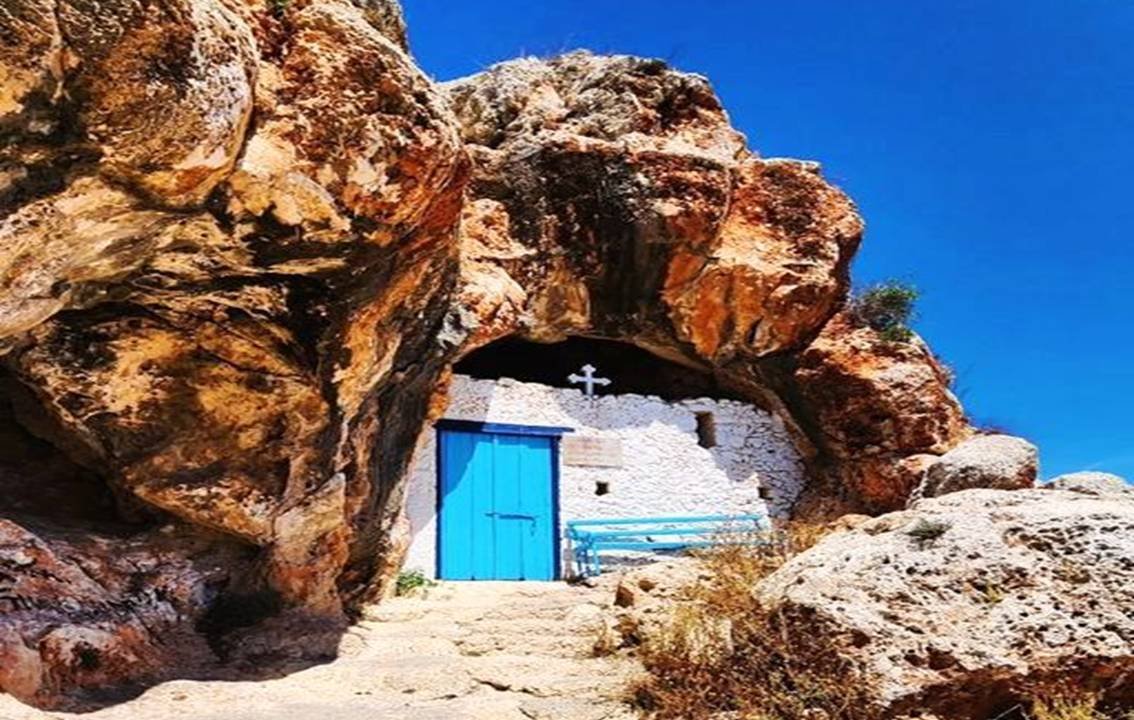
DEDICATED TO THE
40 CHRISTIAN MARTYRS OF SABASTE
A UNIQUE LANDMARK
Tucked away in the rugged hills of the Fanós area, between Protaras and Ayia Napa in the Famagusta district, is the unique Greek Orthodox chapel of Ayioi Saranta. Dominating the landscape in several ways, it offers visitors a stunning panoramic view of the nearby coasts of Paralimni and Cape Greco, and is one of the most uniquely original cave churches in the world. Considered a special place of worship by the Greek Orthodox church, the chapel, which is carved into an elevated rock face, is characterised by its elevated position and its simplicity in design.
A SINGLE STONE DOME
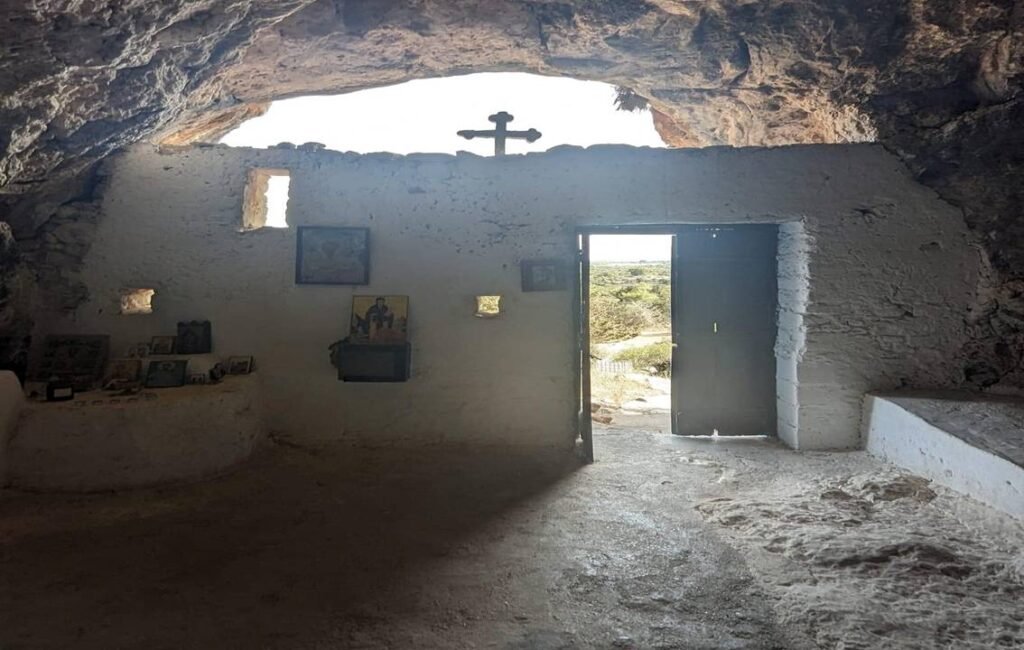
Crowned by a single white cross that dominates its entrance, its single stone dome is enclosed by a whitewashed wall. Remaining simple, the interior has a modest altar that is flanked by only a few icons. This helps to create an ambience of quiet reflection and a profound sense of peace and serenity. This is further enhanced by the natural sunlight and candles that illuminate the interior of the church.
40 STALACTITES
Although the chapel has been preserved by monks and locals for centuries, no definitive historical records pinpoint exactly when the cave was first consecrated as a place of worship. In a fascinating blend of nature and folklore, however, the 40 stalactites hanging from the cave ceiling traditionally symbolise the martyred saints of Sebaste.
DEDICATED TO THE FORTY MARTYRS OF SEBASTE
This unique chapel of the Greek Orthodox Christian faith is dedicated to the forty Christian martyrs of Sebaste. The name ‘Ayioi Saranta’, which derives from the Greek word for ‘forty saints’, is a direct reference to forty Roman soldiers of Christian faith. Located in Sebaste, in present-day Turkey, they were put to death after refusing to renounce their Christian faith in the year 320.
A VIOLATION OF IMPERIAL EDICTS
Rome at this time often demanded adherence to traditional Roman polytheistic worship. Those who refused to pay homage in this way to the empire would be severely punished. Christian monotheism came into direct conflict with this edict, and several Christians were persecuted because of this. This included forty Roman soldiers of Christian faith who were serving in the cohort stationed at Sebaste in modern-day Turkey.
EARLY CHRISTIAN DOCTRINES
Early Christian doctrines recount how these soldiers defiantly refused to renounce their faith. This was considered a direct violation of both imperial edicts and military discipline, and they were given an ultimatum to renounce their Christian faith or face death. Their fate was sealed when they were shackled and left to freeze to death by a lake. They were then elevated to saints after becoming martyred for their Christian faith.
STEADFASTNESS IN THE FACE OF ADVERSITY
Taking hold in several Christian circles thereafter, their story soon spread throughout the ancient world. Inspiring Christians in far-off lands, their story became a powerful symbol of Christian steadfastness under persecution, and their story is still used today to portray the idea that spiritual courage transcends fear of physical harm.
AN ANNUAL FEAST DAY
The feast day of the Forty Saints of Sabaste is celebrated on January 9th every year. The number forty is used during these celebrations to highlight that a community can uphold conviction and emphasise a collective witness together.
KEY FEATURES OF THE CHAPEL
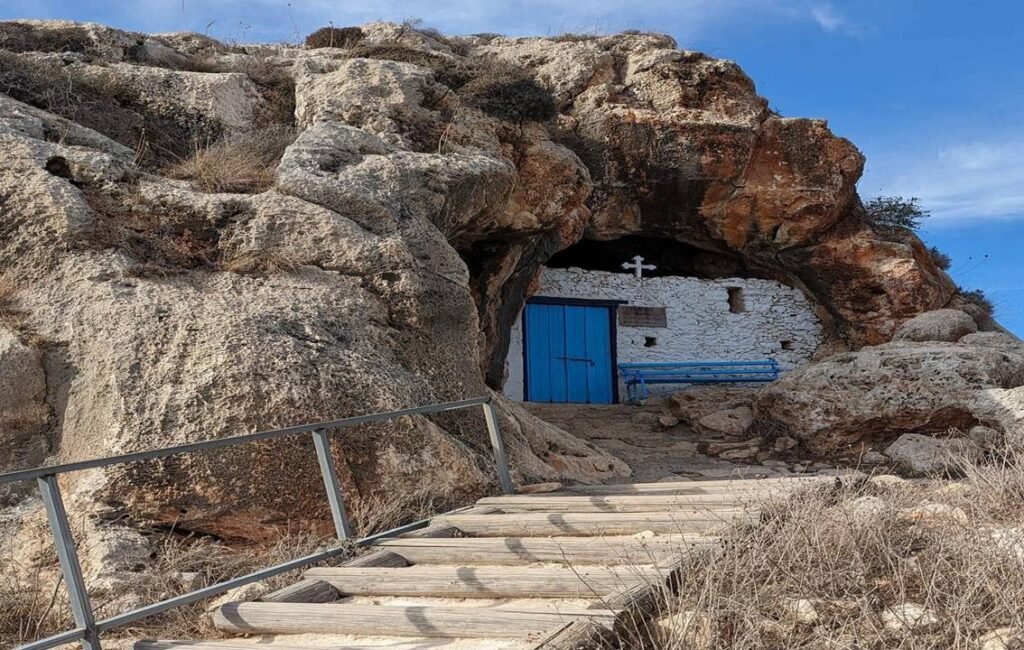
The Facade: The entrance of the natural cave is enclosed by a simple, whitewashed stone wall featuring a striking, bright blue wooden door and a stone cross.
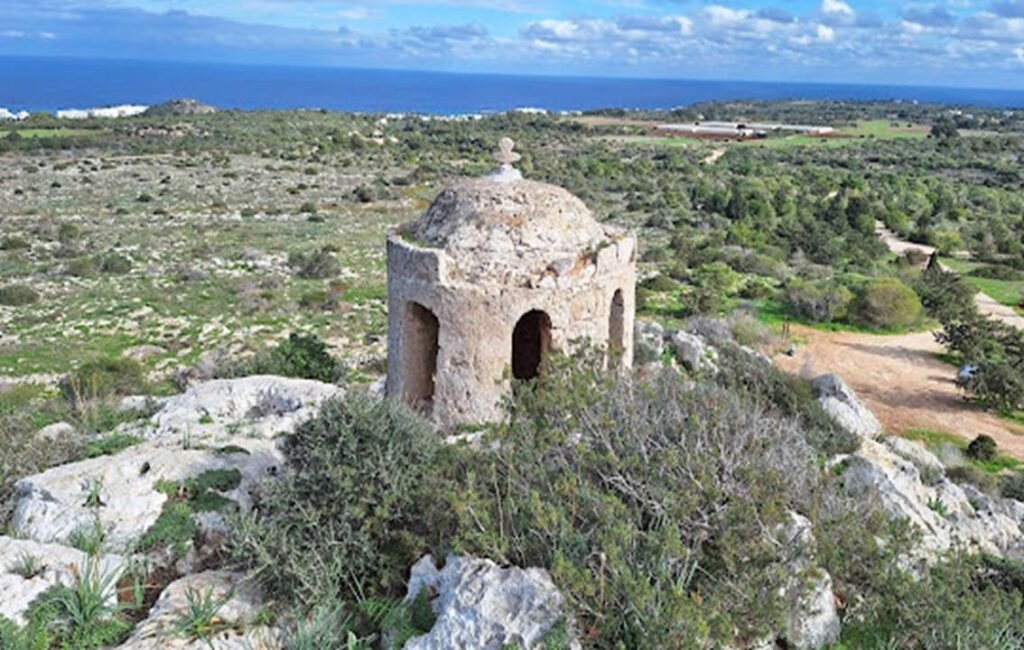
The Skylight Dome: On top of the hill, a small stone cupola/drum dome sits directly over an opening in the cave roof. This acts as a chimney-style bell tower and filters vibrant beams of natural sunlight directly into the dim interior.
The Interior: Inside, the chapel is raw, minimalist, and peaceful. There are no glass windows, no elaborate iconostasis, and very little furniture. Religious icons and candles are tucked simply into the natural crevices of the stone walls.
Location: The chapel sits in a secluded, wild valley near the more famous Church of Profitis Ilias. Reaching the chapel requires driving down an unpaved, heavily rutted dirt road. While some visitors drive standard rental cars carefully, many choose to park nearby and hike the final stretch to protect their vehicles.
Access: The chapel is never locked and has no entrance fee.
General Advice: There are no shops or facilities nearby. Bringing sturdy shoes and plenty of water is advised. Visiting the chapel in the morning, when the sun perfectly illuminates the cave interior is also advised.