A CULTURAL
& CULINARY MEDITERRANEAN ICON
A DELICIOUS WRAP
THE HUMBLE GYRO: Several culinary experts see the humble gyro as a testament to the rich culinary history of the Greek diaspora. Indeed, this perfect parcel of roasted meat has gone on to become a culinary icon all over the Greek-speaking world. Although most people simply see it as just a delicious wrap, to others, it represents something much more meaningful. The gyro, as a result, helps to form a delectable meal that has sprouted from the roots of the Mediterranean diet.
A FUSION OF FLAVOURS
NEW VERSIONS: The gyro remains relevant as new adaptations of it continue to emerge in contemporary kitchens worldwide. The fusion of the flavours and their traditions remains a good representation of Hellenism, and because of this, the simple, yet elegant fast food has remained synonymous with both Greek and Cypriot cuisines.
A BLEND OF SPICES, OLIVE OIL & VINEGAR
MARINATED FOR SEVERAL HOURS: The traditional Greek gyro consists of different meat products made mainly from pork and chicken. The meat is usually marinated for several hours, and this helps to infuse flavours that creates a unique fresh taste. The most common Greek marinade usually consists of a blend of different spices, olive oil, and vinegar. The Turkish döner, which primarily uses lamb or beef, uses different marinades, as does the Lebanese Shawarma, which typically uses chicken.
VERTICALLY ROASTED
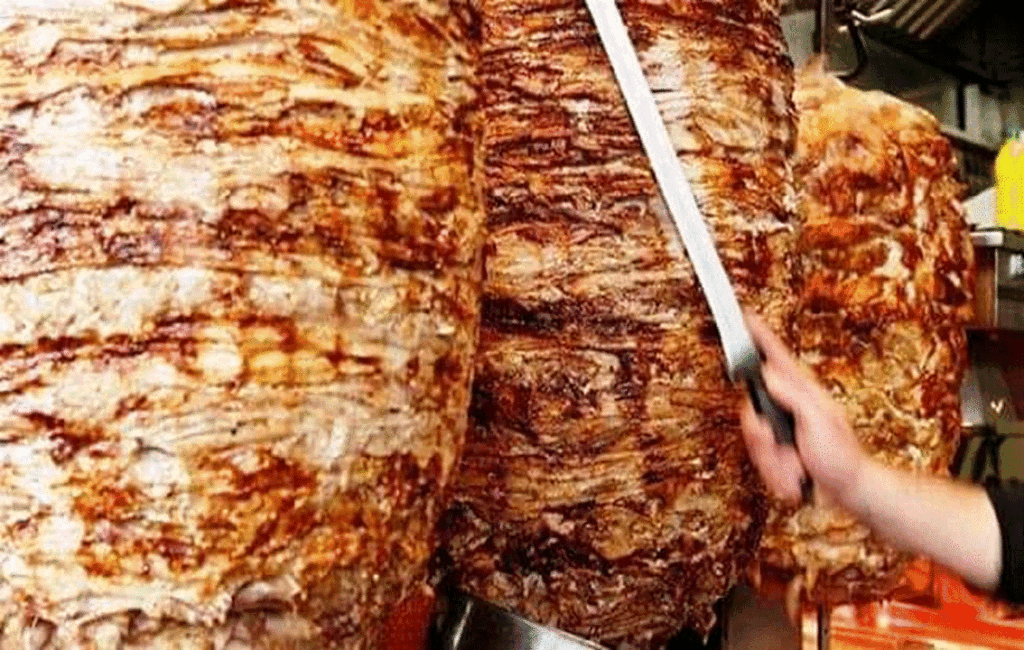
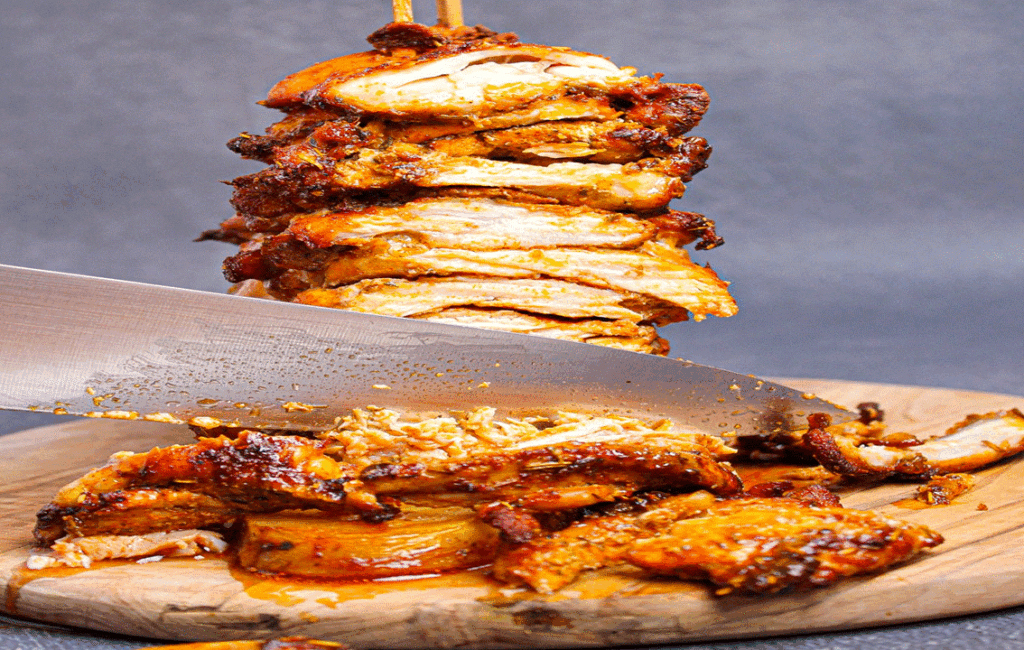
THE GREEK WORD FOR TURNING: The term gyro derives from the Greek word for ‘turning’. This directly refers to the method used for roasting the meat. A large rotisserie skewer is prepared by layering sections of marinated meat, which is then slowly vertically roasted by constantly turning.
A CRISPY OUTER LAYER
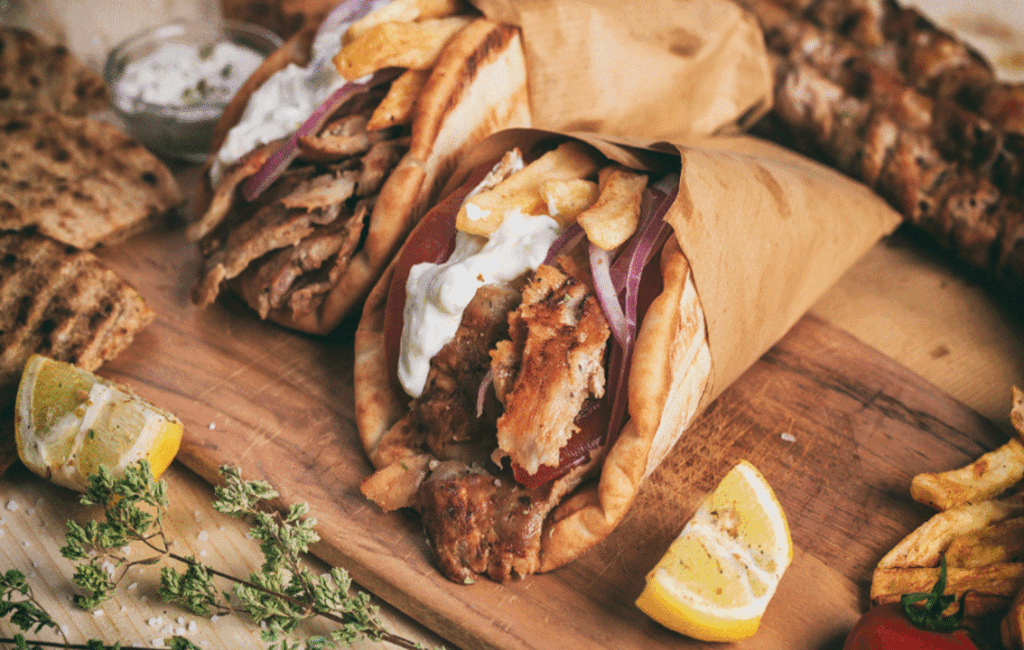
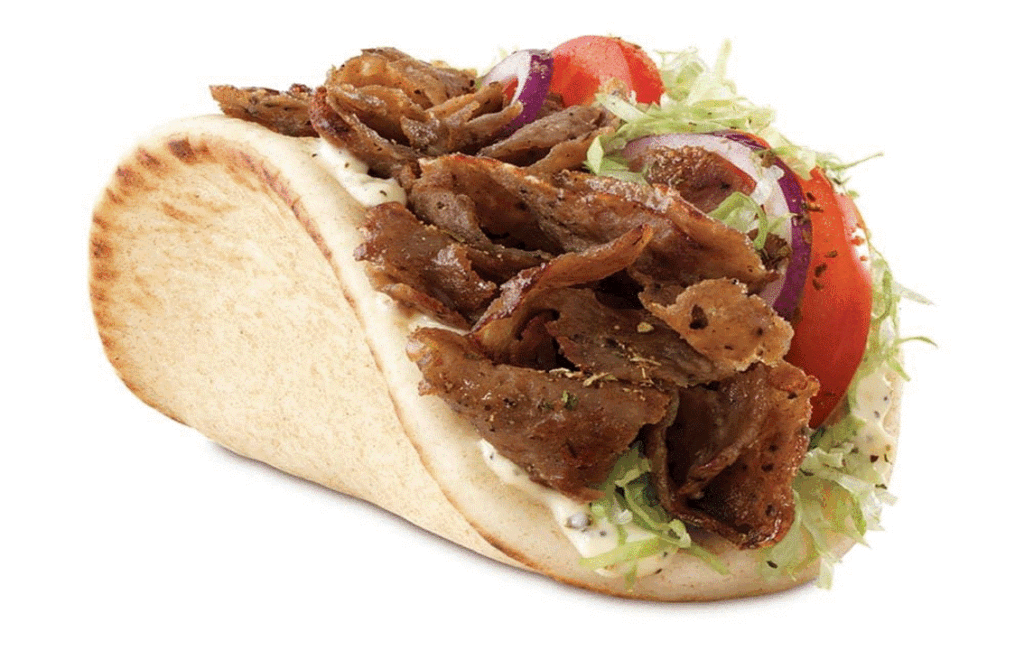
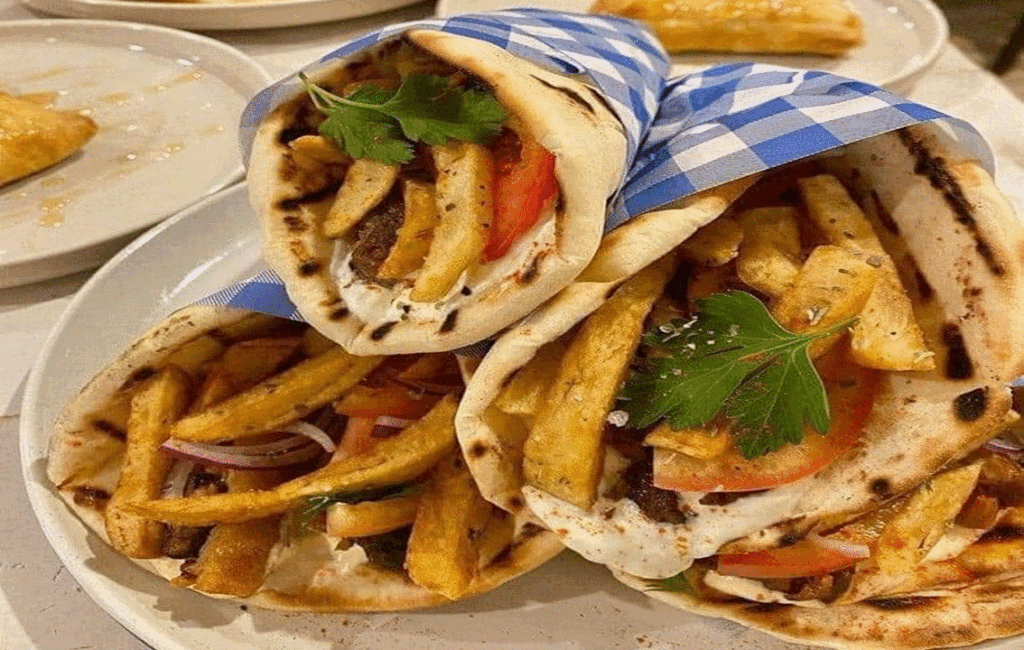
PERFECTLY COOKED SUCCULENT MEATS: The differing degrees of heat culminate in perfectly cooked, succulent pieces of meat. Once the meat forms a crispy outer layer, it is shaved off for serving. The shavings are then combined with fresh tomatoes, onions, and fries, along with a generous drizzle of rich creamy yoghurt-based tzatziki sauce. All of these simple ingredients are then tightly packed into a specific type of circular flat pita bread that resembles a wrap.
A FRESH HOMEMADE SAUCE
ENHANCING THE OVERALL GYRO EXPERIENCE: Typically containing fresh cucumber, garlic, and dill, the yoghurt-based tzatziki sauce is usually homemade. This sauce is usually served cold over the meat, offsetting the often-vibrant spices. This tends to add a refreshing contrast that enhances the overall gyro experience.
CONTEMPORARY COOKING METHODS
ROASTING MEAT ON OPEN CAMPFIRES: Contemporary methods of this type of cooking have existed throughout the ages. The roots of roasting marinated meat over open fires, as we know it today, trace back to ancient Greece. Historical documents suggest that ancient Greeks were practising cooking over open fires in an organised manner, as far back as the 5th century BC. Greek soldiers, mainly during campaigns of war, would butcher their allocated animal and then place sections of their meat onto their swords. They would then roast their meat on open campfires. Whilst this is mainly accepted for the conventional horizontal form of kebab preparation, the story of the vertical rotisserie is quite different.
A RAPID DEVELOPMENT
A CRUDE VERSION OF VERTICLE ROASTING: The Ottomans are thought to have been the first to introduce the vertical rotisserie. This is supported by the fact that Greek migrants, particularly from the Izmir region of modern-day Turkey, are thought to have introduced a crude version of this cooking method to Greece after they arrived as refugees. The vertical rotisserie continued to evolve throughout the late part of the 19th century and the early part of the 20th century, reaching its current form by the mid-20th century. This allowed it to establish itself as the main staple of the fast-food industry throughout the Greek disapora.
CULTURAL EXCHANGES BETWEEN GREECE & CYPRUS
A STAPLE OF CYPRIOT CUISINE: The vertical rotisserie was also introduced to Cyprus by Greek migrants from Turkey. While the exact individual or event that brought it to Cyprus is not documented, it is widely accepted that the Greek gyro became popular during the mid-20th century. It has since become a staple in Cypriot cuisine, enjoyed for its delicious flavours and ease of preparation.
SPREAD ALL OVER THE WORLD
AN AMERICAN DREAM: Further migration of Greek people away from Greece helped to spread the gyro phenomenon throughout the world. In 1970, a Greek immigrant, who adopted the name John Gyro, opened the first dedicated gyro fast-food outlet in the United States. Helping to mark a significant recognition of Greek cuisine globally, this was the first of many outlets serving gyro that followed.
OTHER VARIATIONS
CONNECTING PEOPLE FROM ALL OVER THE WORLD: Whilst the gyro’s significance in today’s food courts continues to be recognised as an embodiment of Greek flavours, other good examples of other variations of it are the Turkish döner kebab and the Middle Eastern shawarma kebab. These both resemble the gyro and share not only in its concept but also in its origin.
THE SPIRIT OF GREEK CULINARY CULTURE
A SIGNIFICANT FOOD IN TODAY’S FOOD COURTS: The gyro’s significance in today’s food courts continues to be recognised as an embodiment of Greek flavours. It also represents the spirit of Greek culinary culture, and in most ways, it also serves as a good example of modern Greek culinary innovation. In other ways, it simply provides wholesome fast food. Its popularity remains enduring, and as it continues to be adopted by various cultures, it remains a staple of global fast food culture.
CONNECTING PEOPLE FROM ALL OVER THE WORLD
A VERSATILE MODERN-DAY STATUS: From its ancient origins to its modern-day status, this versatile fast food continues to stand as a representation of the Greek people. Enchanting taste buds from all around the globe, it is fair to say that this food also holds the power to connect people. Ultimately, whether a gyro is enjoyed at a humble food stall in Athens or a trendy eatery in New York, it remains a delicious reminder of what Greek food is in all of its forms.
INTERESTING FACTS ABOUT THE GREEK GYRO
Originating from vertical spit-roasting techniques, the Greek gyro is a classic example of a street food that features thinly sliced, seasoned meat, and this method is not solely about cooking, but also about preserving the flavours and juiciness of the meal. Its growing stature has seen its rise, and today, it has successfully become one of the most popular street foods the world over. In light of this, the process of creating Greek gyro shares similarities with other traditional Greek practices, such as the process of making Greek souvlaki and other Greek kebab-based meals. Although the history of the Greek gyro is shrouded in debate, mispronunciation, and geographic shifts, it still features unique ingredients that carry an ancient legacy and some distinct cultural rules.
A DESCRIPTIVE NAME
Derived from the Greek word for turning, the term ‘gyro’ is a reference to the constantly rotating spit. This rotating stack is typically served wrapped in a warm wrap. This is generously garnished with fresh tomatoes, onions, and a cool, garlic-based tzatziki sauce. Authentic Greek wraps also often include a small amount of crispy, freshly fried potatoes. Placed inside the wrap, these tend to help soak up the meat drippings and tzatziki.
DIFFERING VARIATIONS
Although Greek gyro shares a cooking lineage with several Indian versions of gyro, Lebanese shawarma, and the original Turkish döner, it remains separated from these by maintaining unique differences. Its heavy reliance on distinct Mediterranean herbs and its signature yoghurt-based tzatziki sauce has seen it distinctively stand above all other versions that also incorporate different meats, spices, and bread. Although each version maintains these subtle differences, each one still uses a vertical rotisserie, which is the key signature of any gyro.
DIFFERING MEAT
Lamb is considered a delicacy in the Greek world, so it is rarely used for street food. With this in mind, authentic Greek gyros are most commonly made from pork or chicken. Other westernised versions of gyro, that are popular in both the United States and most of Europe, typically use a compressed blend of beef and lamb.
GYRO FUSION DISHES
Today, there are several interesting takes on this classic delicacy that, although they are wildly different, stay true to gyro roots. These include the ‘gyro bowl’ and the ‘gyro platter’, which are both served as plated main meals. Vegetable gyros have also become popular, creating vegan options for vegetarians. Other adaptations have replaced the pita bread with gluten-free wraps. In some culinary circles, the serving of this street food on conventional plates is a testament to its versatility and accommodating culinary grade, which has seen it rise from a street food to a more conventional meal.
HISTORICAL ORIGINS
Roasting methods for meat on open coals have existed in the Greek world for centuries, and the concept of skewering and roasting meat over an open fire dates back to antiquity. Some lore suggests that it began after Alexander the Great’s armies used their swords to roast cuts of meat over open fires during their campaigns of war. In comparison, however, the modern vertical rotisserie method is largely attributed to Ottoman sources and was extensively developed in the 19th-century Ottoman Bursa. In light of this, the Greek gyro is thought to have been adapted by Greek-speaking refugees fleeing Asia Minor after the GRECO-TURKISH WAR. The end of this war in 1922 saw Greek and Armenian refugees, mainly fleeing Smyrna and Constantinople, bring the vertical rotisserie method with them to Greece.
FULLY LOADED
A fully loaded gyro contains meat, French fries, tomatoes, onions, and tzatziki. A true Greek gyro does not feature any lettuce or shredded carrots.
TRADITIONAL SAUCES
Although tzatziki is considered the traditional gyro sauce, some chicken versions are usually dressed with a signature creamy mustard-mayo sauce.
A GLOBAL PHENOMENON
The gyro’s popularity has made it a common sight in many international food cultures today. Gyro fast-food outlets are now commonplace all over the world.
THE LARGEST GYRO
Weighing over 40 kilos, the Greek town of Katerini played host to the world’s largest gyro ever recorded.
A HEALTHIER OPTION
It is generally accepted that gyros are a healthier fast-food option than other conventional fast foods. This is because they are essentially filled with lean meats, fresh vegetables, and yoghurt-based sauces. The oils that the meat utilises are natural and are basically produced by the meat itself. The probiotics from the yoghurt-based sauces tend to offer digestive benefits, while the use of herbs and spices adds anti-inflammatory properties to each meal.
Cultural Significance: In Cyprus, gyros often symbolise communal dining. The act of sharing food, especially in the form of gyros, is a significant aspect of Cypriot hospitality.