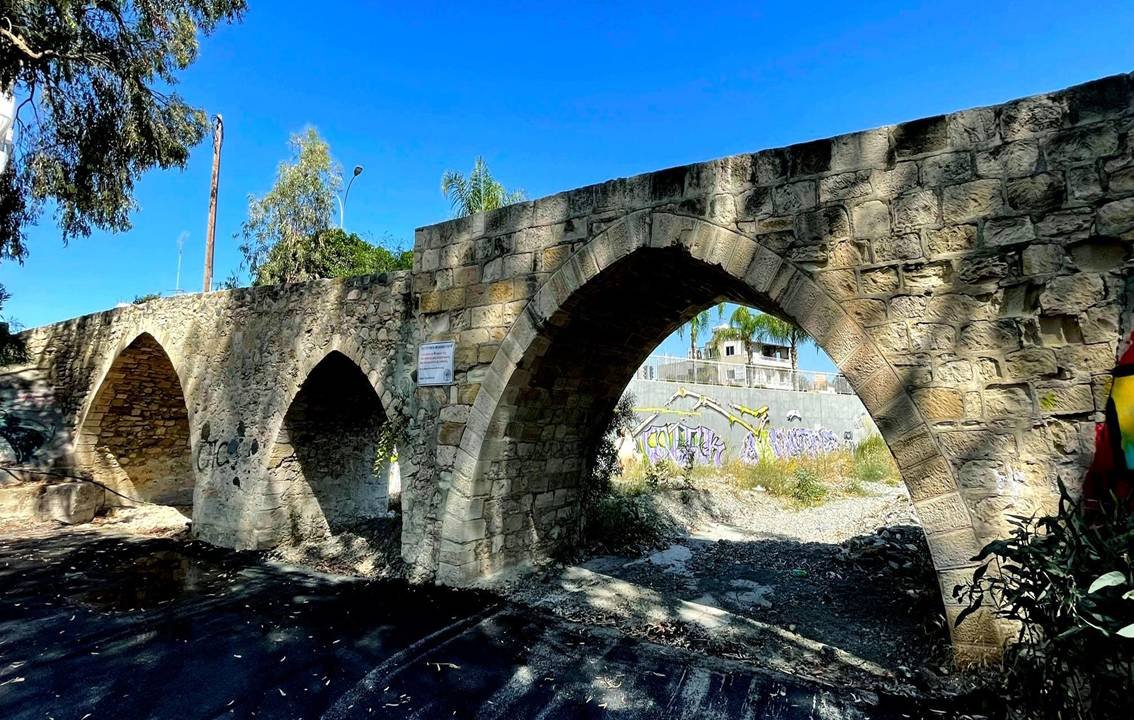
Forming part of a bustling, extensive camel trail, several stone-arched VENETIAN BRIDGES were built throughout Cyprus during the VENETIAN ERA, which began in 1489. These camel trails were used to transfer various cargoes from inland mountainous areas to all of the island’s major coastal ports. Crossing both large and small bodies of water, the presence of these medieval structures helped ensure uninterrupted movement. Mainly found in rural mountainous areas, these bridges also effectively connected various villages and small towns with the island’s larger cities.
PLACES OF INTEREST
Serving a completely different purpose today, as a somewhat tourist attraction, several VENETIAN BRIDGES can be found standing gloriously across the island. Several visitors often travel inland to experience them firsthand, often using them as a dramatic backdrop for photos. Others combine the experience with a picnic or a hike across a trail or two.
ONE OF THE OLDEST BRIDGES IN LIMASSOL
Although most of these bridges can be found inland, this particular Venetian bridge is quite unique as it stands unequivocally in the heart of Limassol’s main tourist area. Taking its name from ‘Potamos’, which translates to river in Greek, this bridge was once used to cross a large river, which once flowed all the way down from the inland village of Germasoyia to the city’s coast. Although the river today does not exist anymore, the bridge largely remains intact over a dry riverbed, which is sometimes used as a crude car park. Although often overlooked, this bridge is generally considered to be one of the oldest examples of this type of Medieval structure on the island.
A BYGONE RIVER
The Potamos riverbed sometimes still fills with water during the winter months. This allows the bridge, on occasion, to serve its original purpose, at least for pedestrians. This is because the bridge remains too narrow for cars and also has a set of impractical steps in the middle. This is because one of the sides was rebuilt at some stage.
STEPS IN THE MIDDLE
Unusually for a Venetian bridge, the whole structure consists of three arches. Two of the original arches still stand today, with the third added at some later time. Built from a different stone type, the third arch stands at a greater height than the original two. It is still not clear why it was constructed in this way, with steps at the end of the taller arch.
A PROTECTED STRUCTURE
Street artists, it seems, are respecting a sign that appeals to them not to use the medieval bridge for their creative talents. The concrete slopes of the riverbed, however, are another matter! Covered with street art, these walls, in a funny sort of way, tend to enhance the urban surroundings. This often helps to blend the old with the new, bringing the traditional structure firmly into a modern age.
OTHER NOTABLE VENETIAN BRIDGES WITHIN THE LIMASSOL DISTRICT
The Trimiklini Venetian Bridge: This well-preserved medieval Venetian stone bridge is one of the oldest and most famous of the island’s medieval Venetian stone bridges in the Limassol district. Built on the bank of the Kouris River, in the village of Trimiklini, this bridge is unlike most other typical Venetian bridges that feature a single arch. Constructed from local river stone, this bridge features three consecutive stone arches.
The Akapnou Venetian Bridge: This well-preserved medieval Venetian stone bridge located northwest of the village of Akapnou in the Limassol district. Unlike most other typical Venetian bridges on the island that feature a single arch, the Akapnou bridge is unique for its asymmetrical design, boasting two distinct arches