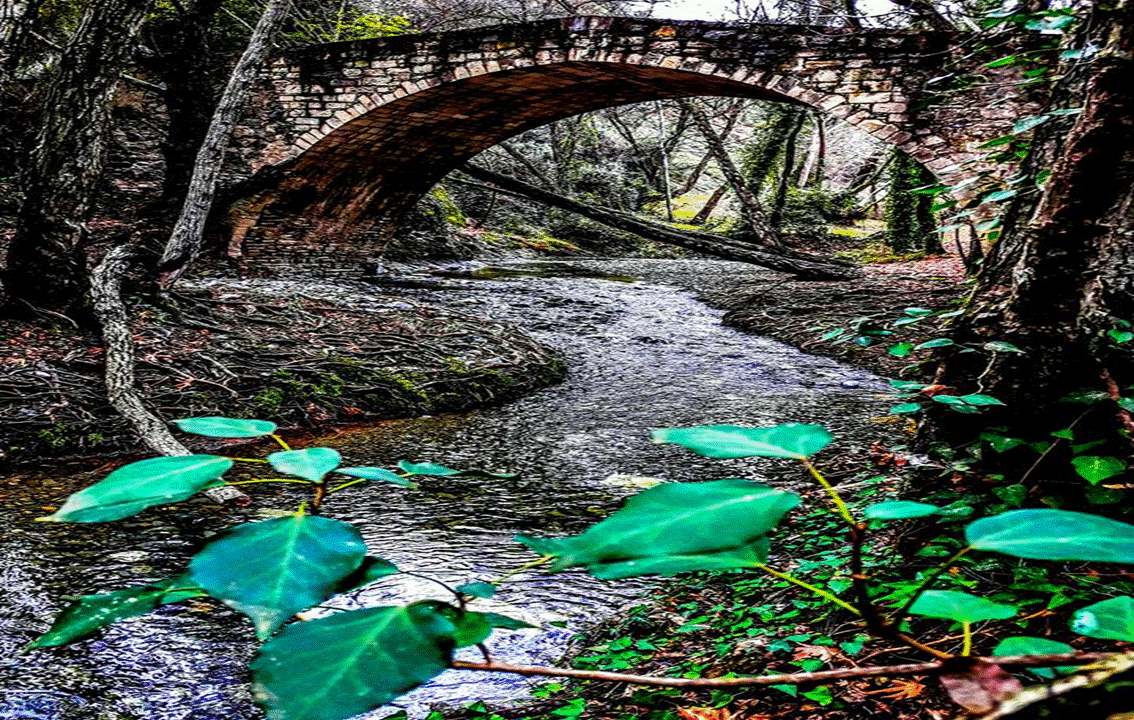
THE ARCHITECTURAL MARVEL OF THE RENAISSANCE
A TRADING EMPIRE AT ITS CORE
The Republic of Venice, during the latter part of the 15th century, was a rapidly expanding trading empire, and its interest in Cyprus became apparent after it sought to expand its influence across the whole Mediterranean. Seeking to strengthen its grip on eastern Mediterranean trade routes that had existed on the island for millennia, the Republic of Venice effectively used politics and diplomacy to gain control of the island by 1489. This reign would last for the best part of 82 years. until the Ottoman conquest of 1571.
A NEW ERA
The Republic of Venice took control after the Cypriot kingdom of the Frankish Lusignan came to an end. This came about after the last independent Queen of Cyprus, Catherine Cornaro, who was of Venetian descent, abdicated her throne. The end of the kingdom of Cyprus promptly ushered in a new, profound Venetian era on the island that saw them build and construct several bridges and buildings that reflected both the Gothic and Renaissance periods.
A HISTORIC CYPRIOT LEGACY
The Venetian era in Cyprus brought with it a general transformative period. To help secure their grip on the island, the Venetians immediately began improving infrastructure. In light of this, several areas were identified for the construction of new stone bridges, and Venetian architects set about implementing the design of these new bridges in quick succession.
A HISTORIC CYPRIOT LEGACY
The majority of these new bridges replaced wooden structures along ancient caravan routes and camel trails that had existed on the island for centuries. Others were also constructed in villages and towns to help form new trading routes. The Venetians would eventually use the new infrastructure to create an intricate network that would allow them to extract and then trade anything of value from the island. This not only changed the landscape but also the way of life for thousands of Cypriots, who also began to use these ancient trading routes to ferry their goods across the island. Because of this, the bridges that remain dotted throughout the island today help to create a lasting historic Cypriot legacy.
CONNECTING MINES TO PORTS
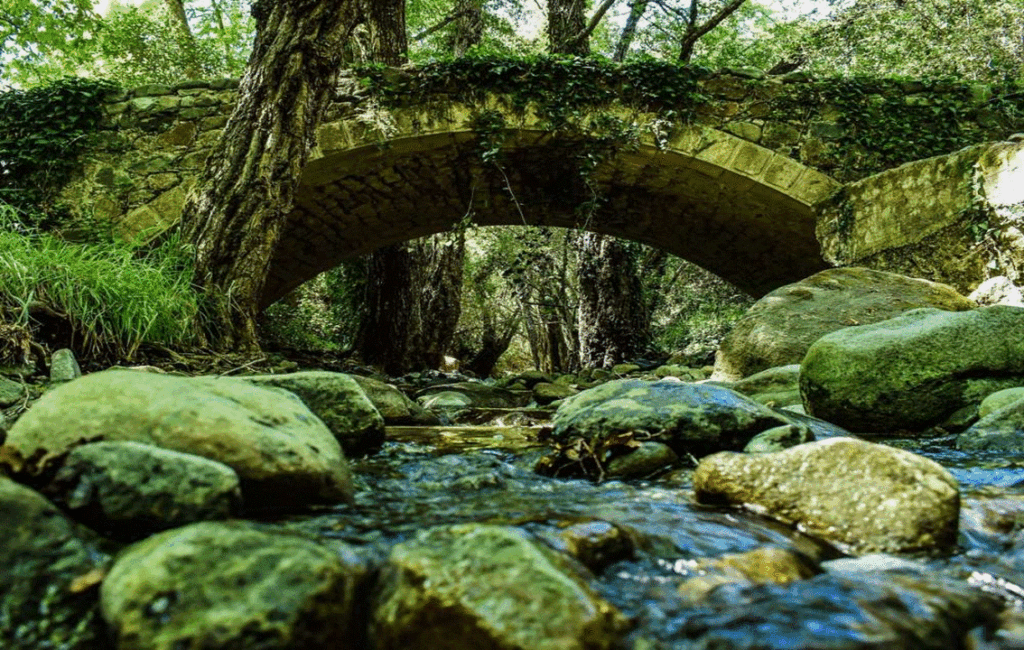
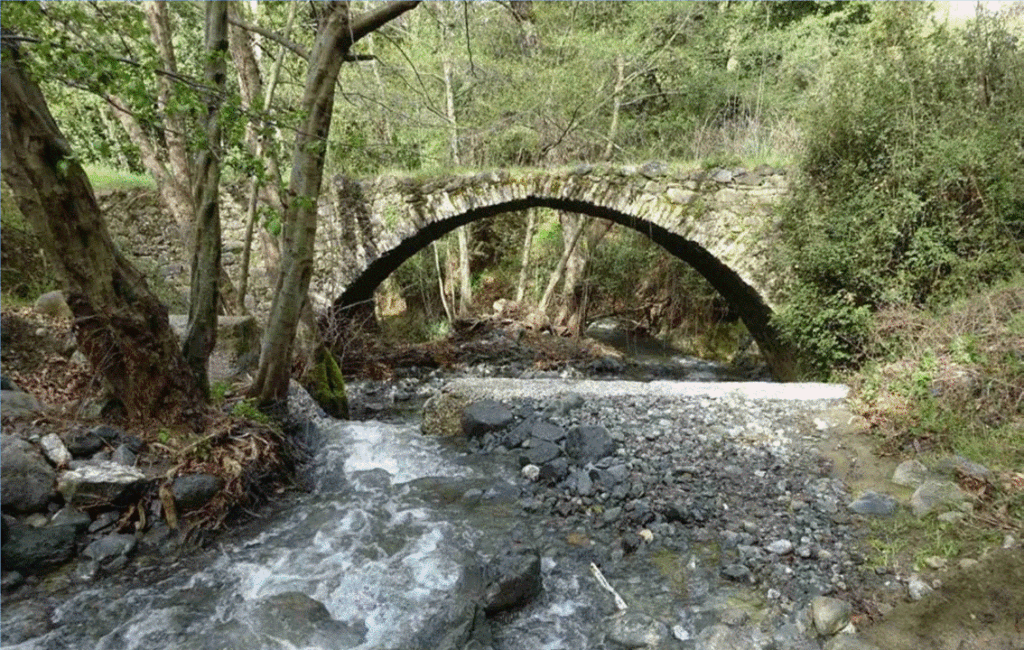
All Venetian bridges were constructed using local stone and were of a similar design across the island. Blending both Gothic and Renaissance elements, they are characterised by the same distinct architectural style. Employing the same functional single-arch design, the construction of several of these sturdy stone bridges facilitated trade in multiple locations across the island. The bridges that were constructed in the western Troodos and the Paphos Forest regions connected trails were mainly used to ferry copper from Troodos mountain mines to the island’s coastal ports. With this in mind, the bridges today are not only a testament to the Venetian era but also to their engineering prowess and their commitment to enhancing the island’s economy at the time.
A FLOURISHING TRADE
Trade began to flourish after the new bridge-building program was completed. A new bustling network of trails, linking rural agricultural areas and remote mines in the mountains to bustling coastal ports, was created. This further ensured the flow and transportation of various goods. The bridges also connected various villages and towns to the main cities, making the island much more accessible to several merchants and traders.
LOCALLY SOURCED STONE
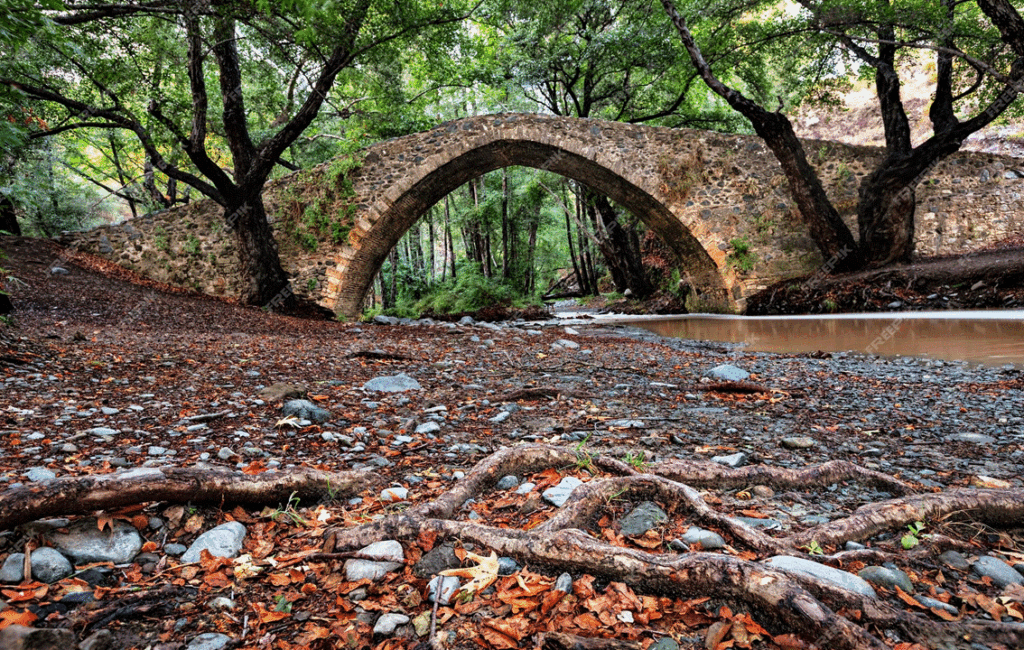
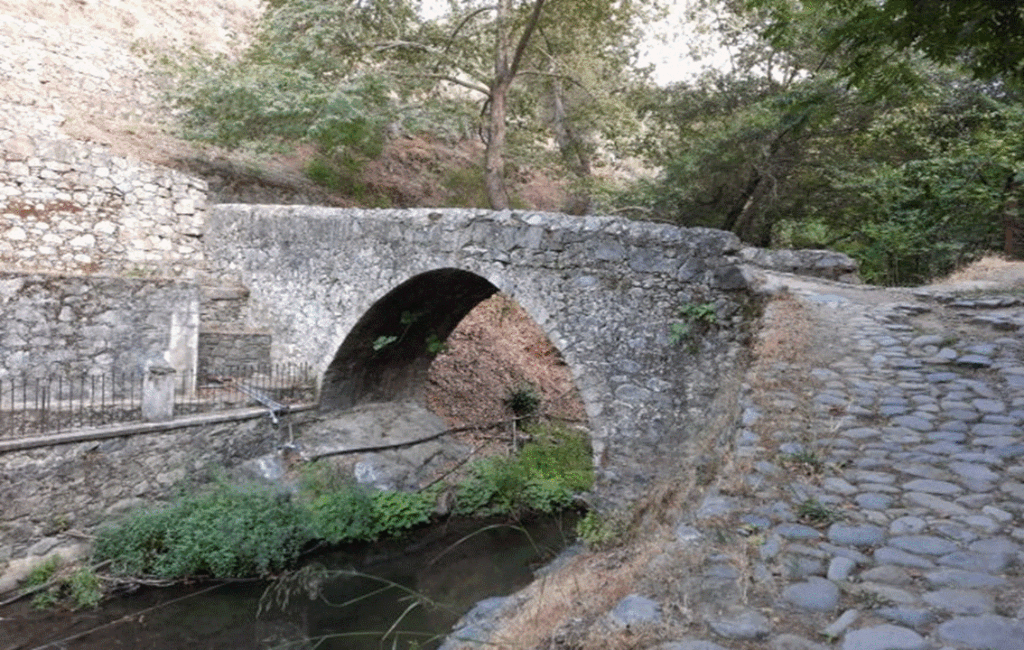
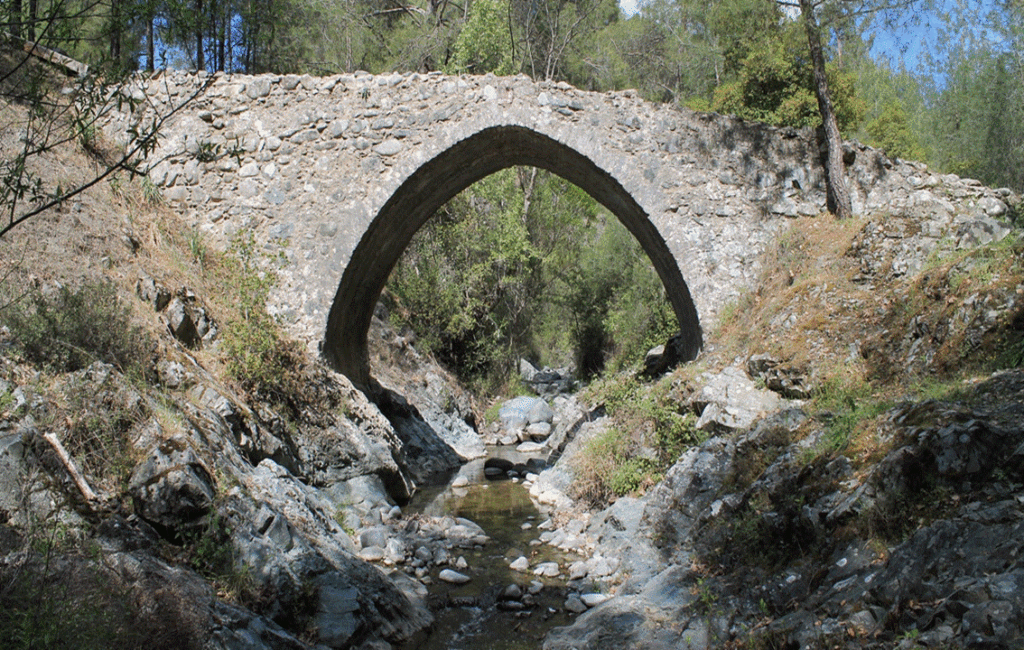
The Venetian bridges of Cyprus often feature several architectural elements that are indicative of their design principle. All of these bridges follow a similar pattern of design that consists of a single semi-circular arch at their centre. Their robust, sturdy design stems from the fact that they are all built from locally sourced stone. Their simple, but effective design also allows for both structural strength and aesthetic appeal. All of the bridges were built to distribute weight evenly, thus alleviating the pressure at their centre. This has been an essential factor for their survival through the centuries to this day.
PICTURESQUE LOCATIONS
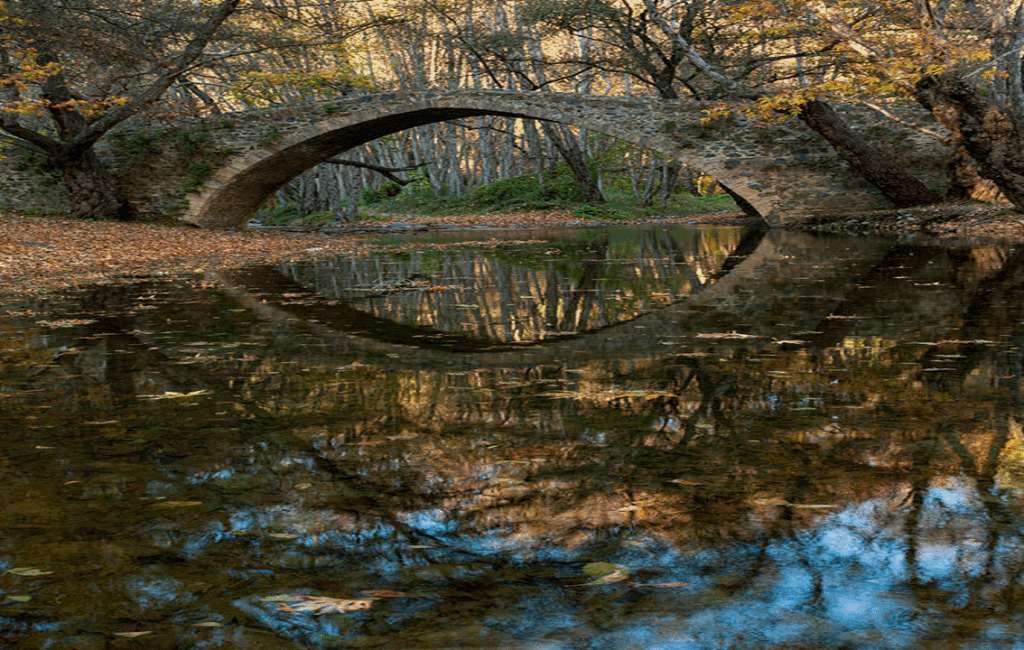
Several of these bridges are situated in often picturesque locations. Bridging rivers, gorges, and valleys, they also serve as focal points of the landscapes they inhabit. Their harmonious integration into the natural scenery also exemplifies the Venetian Gothic and Renaissance movements. These emphasised the blending of human creations with nature. Some of these bridges also reflect the wealth and status of some of the Venetian nobility who settled on the island at the time. Embellishments reflecting the power of the Republic of Venice are also found on some of these bridges. Others include decorative stonework, inscriptions, and, in some cases, carved coats of arms.
BRIDGING CULTURAL EXCHANGE
The significance of the Venetian bridges extends beyond their basic architectural merit. They have gone on to play a crucial role in helping to shape the social and economic landscape of the island. As well as encouraging the movement of both people and goods, they also enabled access to faraway markets. This facilitated the cultural exchange among the diverse populations residing on the island at the time. These bridges also elevated the prosperity of several towns and villages across the island.
A LASTING IMPACT ON CYPRIOT CULTURE
The Venetian bridges of Cyprus are more than just structures of stone. They offer invaluable insights into the island’s past and act as reminders of the intricate tapestry of cultures that have shaped the identity of this beautiful island. Moreover, they serve as reminders of a significant period that has left a lasting legacy on the island. These bridges, which enhanced a flourishing of trade during a vibrant period in Cypriot history, also helped to enhance Cypriot culture, architecture, and society at the time. Today, the bridges stand as beautiful examples of a bygone era. They act as cherished historical landmarks that specifically represent the ingenuity of Venetian engineering. As they continue to be studied and preserved, these bridges also serve as a connection between the past and present. The bridges today also help to promote both tourism and education by linking various cultural sites across Cyprus.

A LOVELY DAY TRIP!
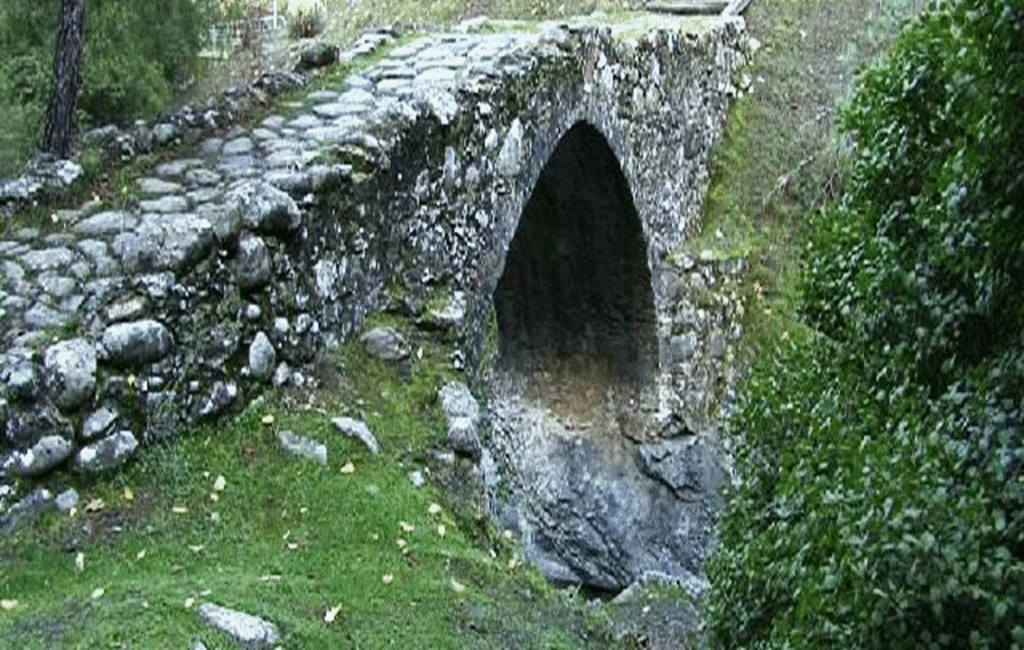
The Venetian bridges of Cyprus form a rarely celebrated island historical treasure. Crossing rivers and streams, across the island, these bridges are usually surrounded by pristine natural scenary and the unique peaceful sounds of nature.
Standing tall today, a visit to any of these bridges will form an enjoyable excursion into the Cypriot countryside. Most of these bridges are mainly built over several inland streams, creating a cooler climate during the scorching summer. The areas surrounding most of these streams often offer diverse natural environments to be explored.
Several hikers, tourists and even newlyweds often use these charming bridges as a backdrop for photographs, and following the Venetian Bridges Nature Trail is a good way to explore some of these bridges. Other excursions include various 4 x 4 jeep safari experiences.
Notable Venetian Bridges across the Republic of Cyprus
A list of some of the most significant Venetian bridges found throughout Cyprus
- Piscopou Bridge: Proved crucial for connecting various villages in the mountainous interior of the island, this bridge, located near the village of Foini, crosses the DIARIZOS RIVER. According to local legend, it took its name from a bishop of St. Anargyroi, who used the bridge every day as a resting place. The bridge has a semicircular opening bow of 8.90 meters and a width of 2.40 meters.
- Elia Bridge: This bridge also spans the DIARIZOS RIVER in the south-western corner of the Paphos Forest. Its main characteristics include a carving of crosses on rocks which are on both sides of the bridge. The name, as the word implies, comes from the Greek word for ‘olive trees’, which were plentiful in the area.
- Kalopanayiotis Bridge: Linking the village with the monastery, the school, and the surrounding farming area, this bridge is located in the centre of Kalopanagiotis village within the Nicosia District. It crosses the Setrachos River and is estimated to have been built in the 16th century. According to Christian tradition, the Apostles Paul and Barnabas baptised Saint Heraklion in the Setrachos River at a point close to the bridge. EPIPHANY, which is rigorously celebrated on the 6th of January each year, on this bridge, involves the baptism of the Cross that is then followed by local festivities that are held in the Monastery Square.
- Mylos Bridge: Making up part of the Marathasa Nature Trail in the Marathasa valley of the Troodos mountain range within the Limassol district, this bridge connects the villages of Treis Elies and Kaminaria. Standing at an altitude of 800 metres, this bridge spans the Drakontas River, which branches off of the larger DIARIZOS RIVER.
- Oikos Bridge: This bridge that crosses the Setrachos River is located just off the road between the villages of Oikos and Kalopanagiotis in the part of the Marathasa Valley located within the Nicosia district. The rich green undergrowth along the banks of the river tends to enhance the appeal of the bridge.
- Kelefos Bridge: This bridge, which also spans the DIARIZO RIVER, is located 6 kilometres north of the village of Agios Nikolaos. This bridge was a main conduit for copper that was mined in Cyprus and then traded with Egypt by the Venetians for silk and gold.
- Koursoum Bridge: Near Paphos, this lesser-known bridge is representative of the numerous small pathways utilised during the Venetian period.
- Nicosia Bridge: This bridge retains urban significance as it connects important districts within the capital city, showcasing the legacy of Venetian engineering amidst modernisation.
- Agios Georgios Bridge: Situated near the village of the same name, it reflects the blend of nature and architecture emblematic of the Renaissance period.
- Zivani Bridge: An impressive example of a Venetian bridge located in mountainous regions, it has become a popular subject for photographers and historians alike.
- Karkotis Bridge: Known for its historical inscriptions, this bridge provides insight into the era and the Venetian influence in this part of Cyprus.