THE OUTBREAK ON DECEMBER 21ST
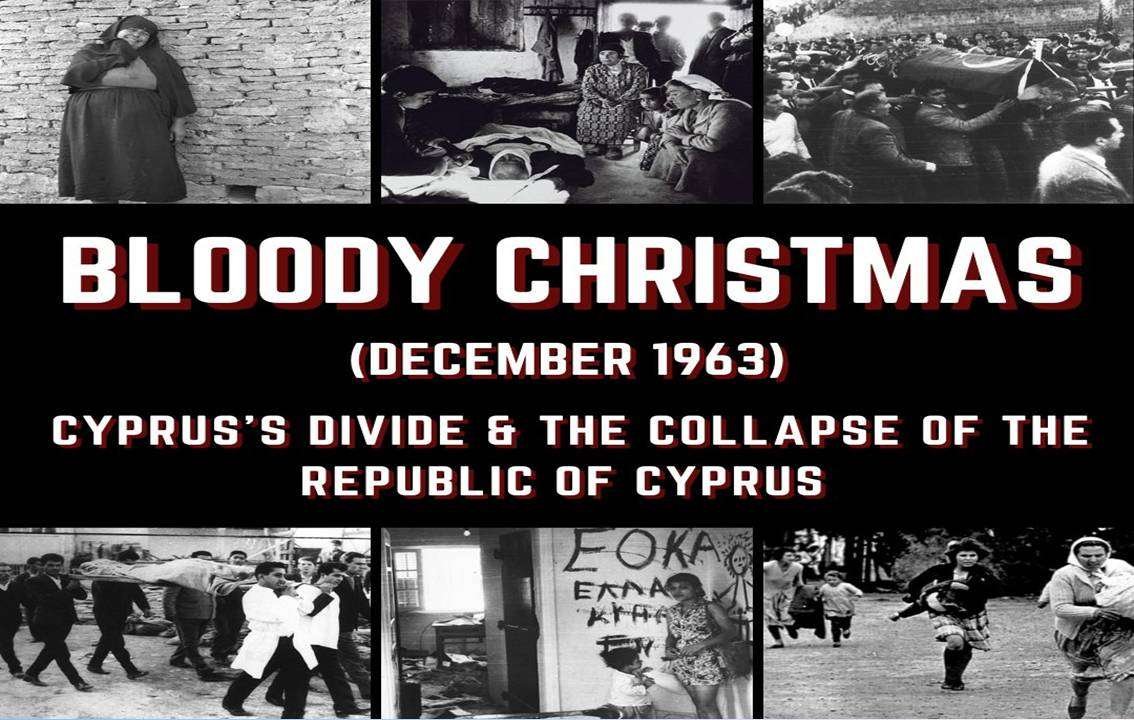
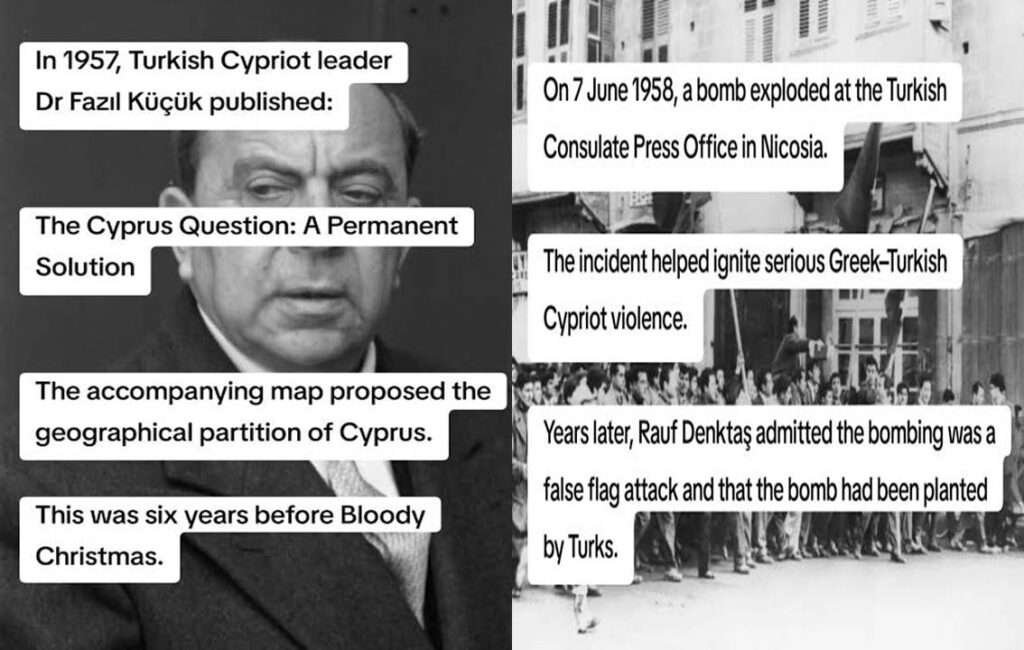
The outbreak of severe intercommunal violence between Greek and Turkish Cypriots that began on December 21st, 1963, will forever be known as Bloody Christmas in historical archives held across the island. The pivotal crisis that marked the collapse of the 1960 power-sharing Republic of Cyprus government and precipitated a decade of civil strife also initiated the geographic and political division of the island that occurred later in 1974.
THE CATALYST
Tensions on the island had escalated significantly after the President, Archbishop Makarios III, proposed 13 constitutional amendments in the Cypriot parliament late in 1963. This was part of a Greek Cypriot scheme, known as the Akritas plan, which was designed to initiate a union with Greece. Turkish Cypriot representatives argued that these amendments would guarantee political dominance for the Greek Cypriot majority and that, if accepted, would strip away their institutional veto rights. They then, ironically, used the very same veto rights to dismiss all 13 amendments.
THE OUTBREAK
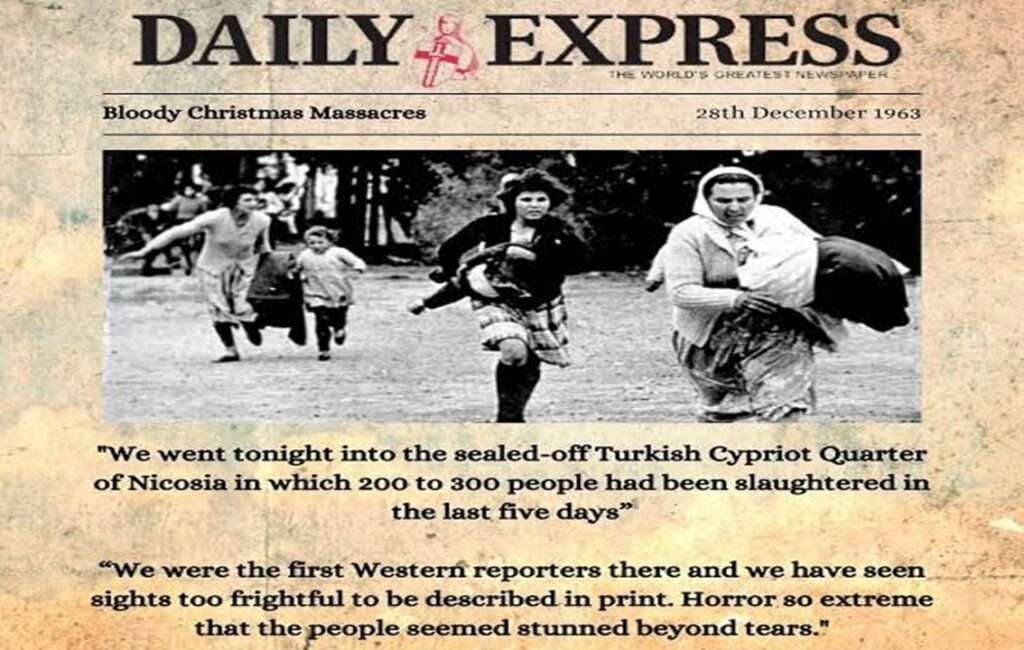
With frayed relations, a flashpoint occurred in Nicosia early on the morning of December 21st, 1963. This is when Greek Cypriot police officers stopped a taxi carrying Turkish Cypriots. A dispute then erupted when the officers attempted to search all passengers. Two Turkish Cypriots were then killed, alongside several others who were wounded after shots were fired. The incident acted as a catalyst, quickly transforming into island-wide paramilitary warfare. Both Greek and Turkish nationalist groups then launched a series of systematic attacks against one and other after several ethnic neighbourhoods were targeted. Power sharing effectively ended after Turkish Cypriots boycotted parliament in protest. The Turkish Cypriot leadership then openly encouraged the movement of all the outnumbered Turkish Cypriots by creating a series of Turkish Cypriot-controlled enclaves, completely altering the demographic and political landscape of Cyprus thereafter.
SEGREGATION
The events of Bloody Christmas directly laid the groundwork for a decade of segregation, eventually culminating in the 1974 Greek-engineered coup and subsequent Turkish military intervention that then solidified the island’s partition.
KEY FACTS
Political Shifts: All Turkish Cypriots withdrew or were forced out of all state institutions, effectively ending the joint Republic.
Casualties: The conflict claimed 364 Turkish Cypriot and 174 Greek Cypriot lives over the broader period.
Displacement: Approximately 25,000 Turkish Cypriots fled or were driven from 104 mixed villages into armed Turkish Cypriot enclaves.
The Green Line: On December 30th, 1963, a truce was brokered between Greek and Turkish Cypriots, and this is when British Major General Peter Young drew a ceasefire line across a map of Nicosia using a green pencil. Turkish Cypriots largely retreated to the north of this line, whilst Greek Cypriots remained in the south of the city. This line would later be used to establish the Green Line buffer zone that permanently divides Nicosia today.