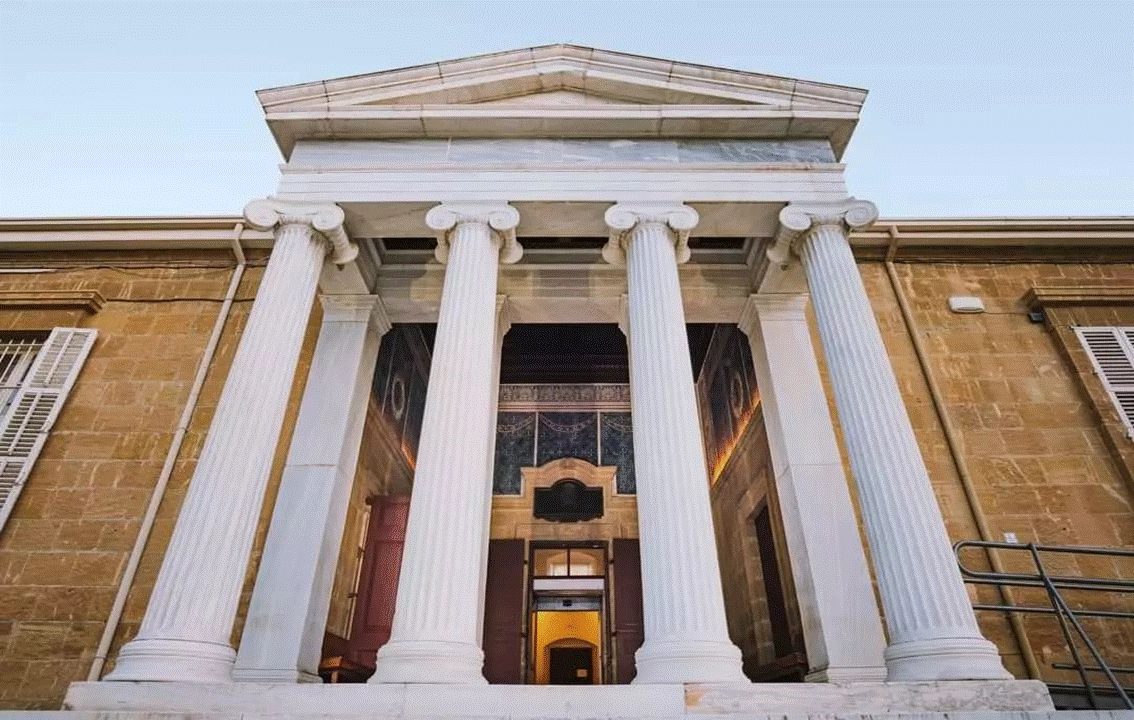
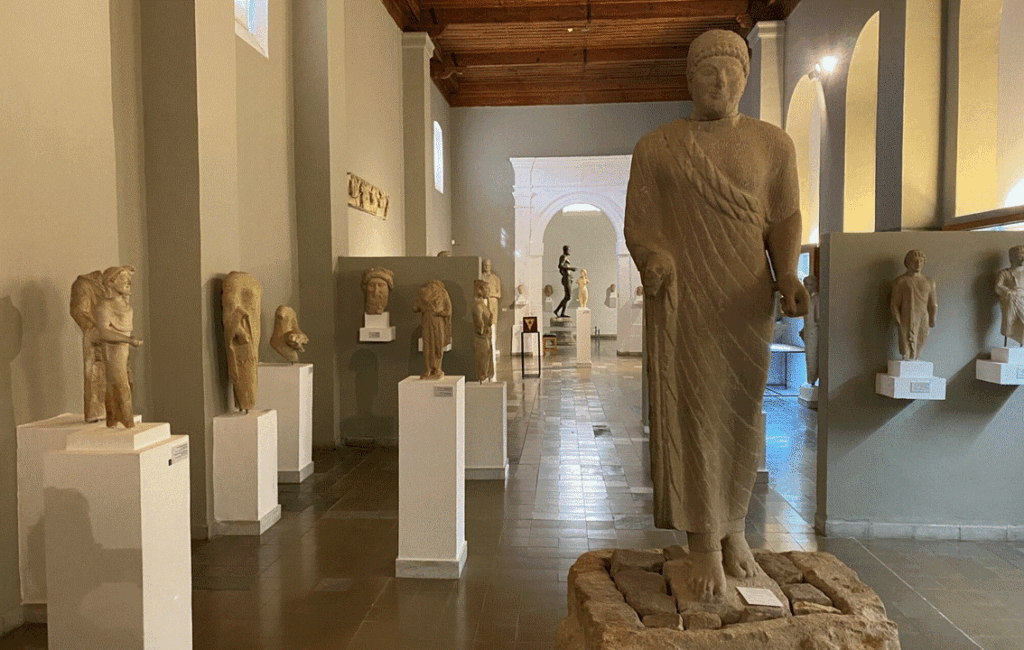
The Cyprus Archaeological Museum, situated in the heart of Nicosia, provides a treasure trove of ancient artefacts and exhibits, that offer a fascinating glimpse into the rich history and culture of the people who once inhabited Cyprus through the ages. The museum outlines and brings to life the long history of the various civilisations that made Cyprus their home. The museum’s collection spans thousands of years and includes a wide variety of artefacts that details both their ancient history and their vivid cultures. The exhibits include artefacts that range from the Neolithic period all the way up to the Roman period.
A COLLECTION THAT SPANS THOUSANDS OF YEARS
Exhibits at this museum include sculptures, jewellery, tools, and pottery. One of its most prominent artefacts is the famous Aphrodite of Soli. This marble statue of the goddess of love and beauty, Aphrodite, dates back to the 1st century BC. Other rare examples of ancient Cypriot pottery, which are considered some of the finest in the world, are also on display. Every day, ancient tools from the past and elegant, aged jewellery made from gold and silver are also on display.
CAPTIVATES & INSPIRES
The Cyprus Museum captivates and inspires its visitors by hosting temporary exhibitions and special events throughout the year. These exhibitions cover a wide range of topics, from ancient Greek mythology to the history of Cyprus under Roman rule. These exhibitions provide visitors with a deeper understanding of the island’s rich cultural heritage.
EDUCATIONAL PROGRAMS
The museum also offers a range of educational programs and activities for visitors of all ages. These include guided tours, workshops, and lectures. All programs and exhibits are designed to engage and educate visitors about the history and significance of the artefacts on display. Some are also designed to help inspire a love of archaeology and history in people of all ages.
KEY FACTS
This Museum is the oldest and largest archaeological museum in Cyprus. Located on Museum Street in central Nicosia, it houses only artefacts discovered locally, creating the world’s most extensive collection of Cypriot antiquities, which showcases the island’s unique cultural evolution.
Logistics: The historic neoclassical building is situated a short walk from central Nicosia and the Paphos Gate. Paid parking is available roughly 100 metres from the building.
Collection & Highlights: The museum’s exhibits are spread across 14 chronological and thematic rooms wrapping around a central square. The collection spans a 9,000-year history, tracking from the Neolithic period up to the Early Byzantine era.
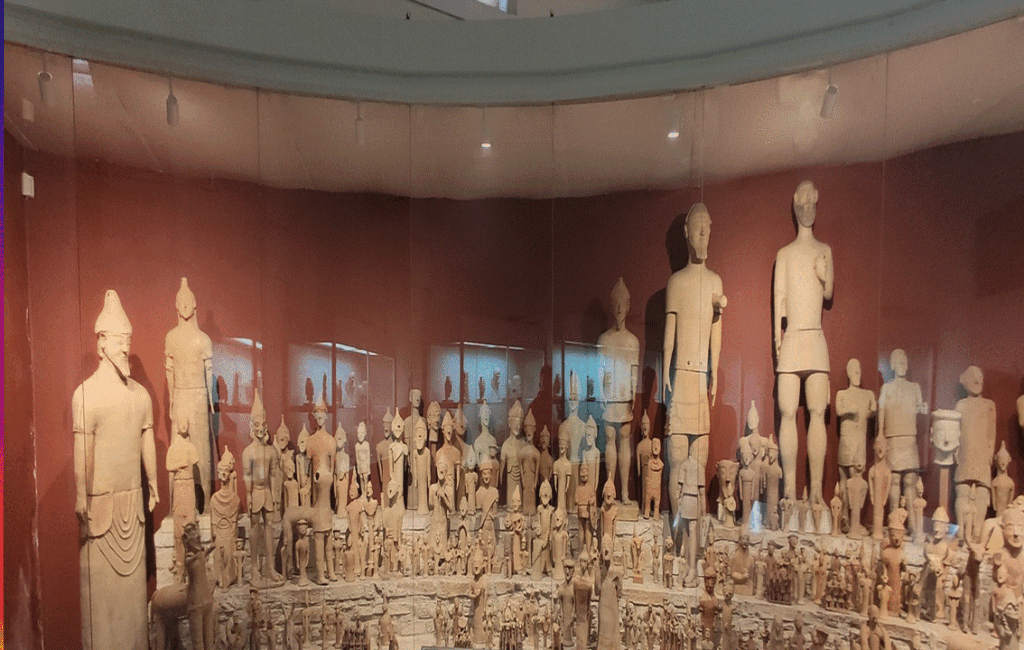
Key archaeological treasures: The museum features iconic cross-shaped idols from the Chalcolithic period, exquisite late Bronze Age gold jewellery, excavated mainly from Egkomi, the famous 1st-century BC marble statue of Aphrodite of Soloi, and an expansive room filled with intricately detailed terracotta votive figures.
Modern Developments: The museum has recently completed a permanent exhibition upgrade, that has allowed it to implement enhanced display lighting. The museum has also recently debuted rare repatriated items, such as an ancient copper talisman shaped that is shaped like an ox hide.
The museum consists of 14 rooms surrounding a central square
The museum consists of fourteen rooms surrounding a central square. Each room contains a rich collection of specific exhibits
ALL ROOMS ARE NUMBERED & CONTAIN DIFFERENT EXHIBITS & ARTEFACTS
1
Tools, stone vessels and figurines from the Neolithic period.
2
A collection of Pottery from the early Bronze Age.
3
Pottery from the Middle Bronze Age to the Roman period.
4
Clay figurines and statues that were found around a circular altar in the archaic sanctuary at Ayia Irini.
5
Artefacts displaying the strong Egyptian and Assyrian influences on the island from the Classical period.
6
Marble and bronze statues from the Hellenistic and Roman periods.
7
Artefacts are divided into three sections.
Section 1: A rich collection of copper and bronze objects, featuring the wide use of copper for which Cyprus was famous in antiquity.
Section 2: A rich collection of seals and coins, which represent all the mints of the Cypriot kingdoms, as well as the royal mint featuring the Ptolemaic rule on the island.
Section 3: A rich collection of jewellery, silver vessels, glass objects and lamps dating from the Early Bronze Age to Roman times.
8
Reconstructed tombs dating back to the 4th century B.C.
9
Grave monuments such as carved tombstones, painted clay sarcophagi and limestone sarcophagi decorated with intricate carvings.
10
Retrospection of the evolution of writing in Cyprus.
11
Magnificent finds from the royal tombs of Salamis that include a bed decorated with pieces of ivory and coloured glass, two thrones and a bronze cauldron supported on an iron tripod and decorated with four busts of sirens and eight gryphons.
12
Follows the ancient process of mining and smelting of copper.
13
Sculptures that once decorated the gymnasium in Salamis during the Roman period.
14
Clay figurines from the early Bronze Age until the Roman period, including the bronze statue of the Roman Emperor Septimius Severus.