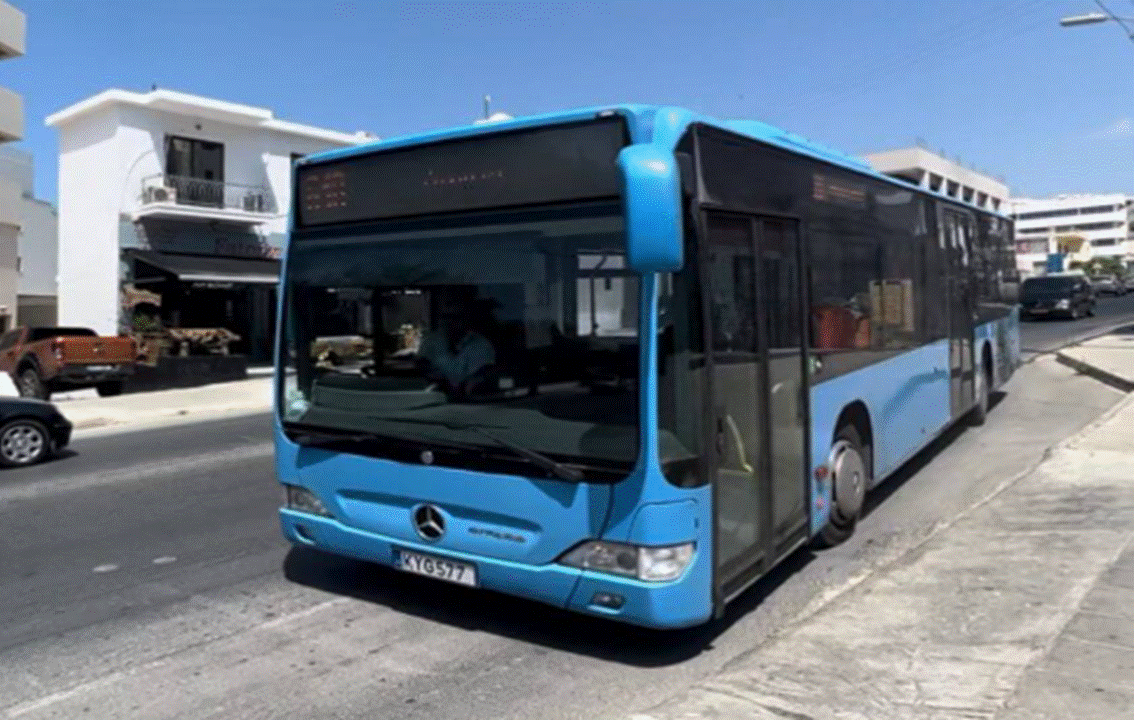
A SIMPLE MODE OF TRANSPORT
Cypriot locals often consider the bus system in Cyprus to be a simple mode of transport for commuting. Others, however, often utilise the bus service to explore the island at ground level. These people use the bus network in a very different way and often embarking on journeys of discovery and adventure.
A JOURNEY OF DISCOVERY
Discovering Cyprus by bus offers an insight into the local culture. It offers passengers a unique perspective of everyday life on the island. This simple mode of transport is also a cost-effective way to traverse scenic landscapes, ancient ruins, town and city centres and picturesque villages. Buses also help to reduce the island’s carbon footprint, which in turn helps preserve Cyprus’s natural beauty.
THREE MAIN SERVICES
Three main bus services link the bus network that spans across the whole of the island. Each one works in conjunction with each other to form a reliable, regular and convenient overall bus service.
The three main bus services are
WORKING IN UNISON
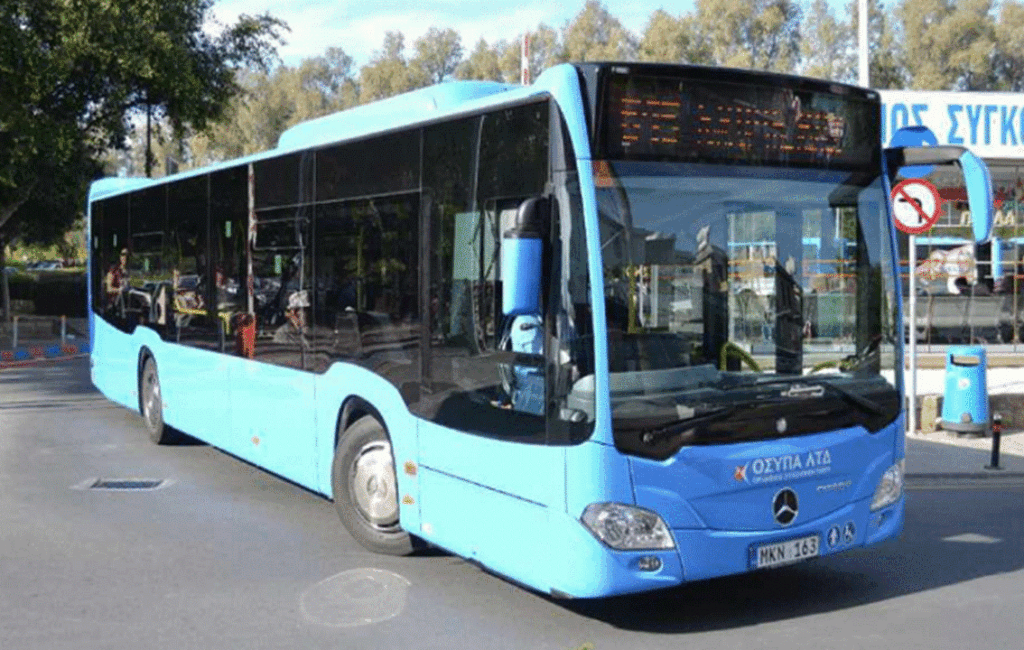
All buses provide journeys with comfort and service in mind. Each bus is fully air-conditioned and offers free Wifi and spacious seating. The airport bus service generally ferries people to and from the two main international airports. The local municipal buses and the intercity bus service work in unison to connect all of the major towns and villages. Each local municipal zone runs its bus services that generally encompass the local area in which they operate.
THE SMARTPHONE BUS APP
There is also a reliable bus app, ‘Cyprus Bus’ by Motion, which can be easily installed on most mobile phone devices. This smartphone app accurately displays all bus stops, timetables and routes. Buses can also be tracked in real-time using the app.
TICKETS & PASSES
Single or return tickets or an all-day bus ticket can be obtained from the driver when boarding. It is also advisable to have the correct amount of change, as large banknotes may not be accepted. For regular travellers, a reloadable smart card bus pass, much like a credit card, can be purchased and then used multiple times. This is known as a MOTION BUS CARD and can be registered against an owner or can remain anonymous.
Three different fare periods are supported
7-day weekly pass
30-day monthly pass
365-day annual pass
The MOTION BUS CARD also includes an e-wallet facility. This offers the user a cashless pay-as-you-go option. Single fares, regardless of payment type, are accepted for up to two buses within 60 minutes.
The MOTION BUS CARD can be obtained and re-charged from the following ticket offices
- Solomou Square
- Makario Stadium Station
- General Hospital Station
- Tamasos Station
- Alampra Station
- Larnaca Central Station
- Larnaca Airport
- Kofinou Station
Motion Bus Card Sale Points – Tel: 1416
The MOTION BUS CARD can be recharged online using the following links
kiosk vending machines also sell E-wallet, 7 and 30-day on-the-spot digital top-up vouchers that can be installed and used almost immediately.
- Solomou Station (Accepts cash or credit card payment)
- Larnaca Central Station. (Accepts cash or credit card payment)
- General Hospital (Accepts credit card payment only)
- Larnaca Airport. (Accepts credit card payment only)
E-Wallet card balance information can be checked online or obtained from any driver or operator at a MOTION BUS CARD SALE POINT.
THE DIFFERENT BUS SERVICES AVAILABLE ACROSS THE ISLAND
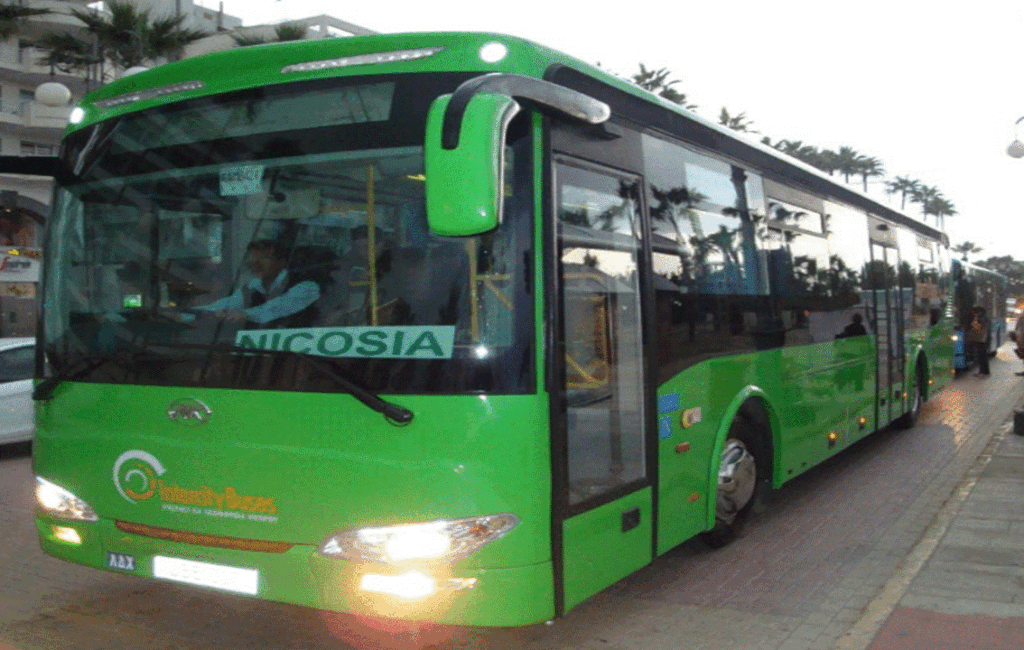
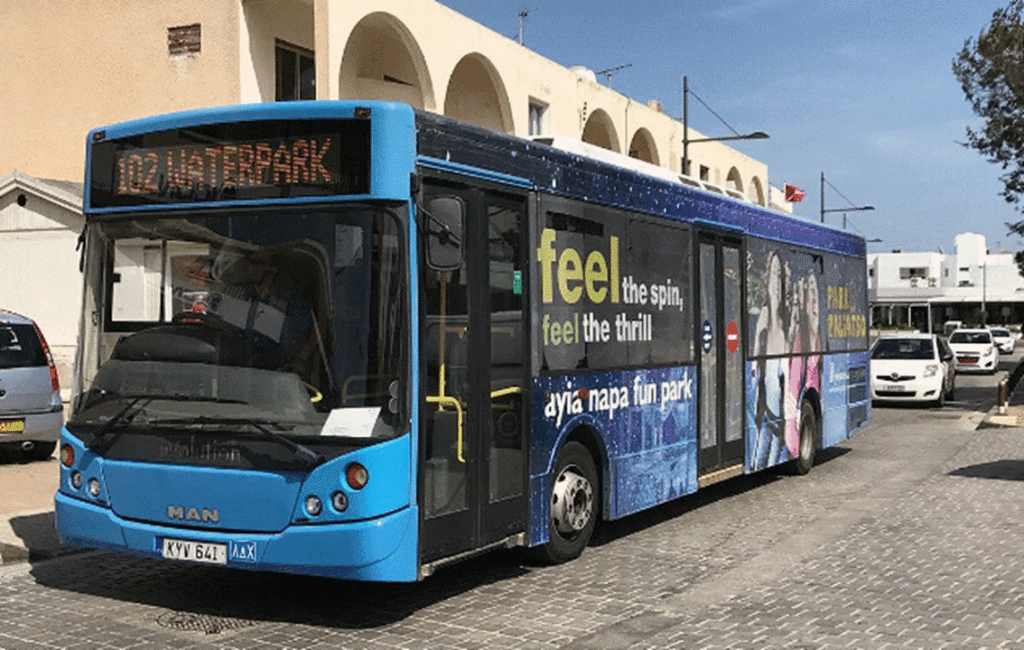
Depending on their use, buses in Cyprus today come in many forms
Airport Bus Service: This is a public bus service that offers visitors a cost-effective, stress-free way of reaching any destination. This eliminates the need for complicated transfers or expensive taxi rides. This service includes both of the island’s main international airports. Visitors can use the AIRPORT BUS SERVICE to get to the respective town centre and then use the intercity or local city urban bus network to get to their final destination.
City Urban Bus: These are public buses running at regular, frequent stops. They interconnect different areas of the same urban region and also service the island’s two international airports. LOCAL MUNICIPAL BUSES are run locally by each local municipal council. These regular buses often boast an efficient and reliable comprehensive service that connects all neighbouring villages to their respective town and city centres. These buses run regularly all day long, with a restricted night service.
Intercity bus: They are public buses which run regularly with infrequent stops. This service interconnects different cities and the main resorts across the island. INTERCITY BUSES boast an efficient and reliable comprehensive network, which connects all major towns, city centres and some villages. Each connection starts and ends in the respective town or city centre. These buses run regularly all day long, with a restricted night service. This service also operates a restricted night service.
Tourist Buses: They are private vintage buses that are booked for special excursions through travel agencies.
Transfer Buses: They are private buses that are booked mainly through travel agencies. These buses transport mainly tourists from airports to hotels.
A GOOD SERVICE OVERALL
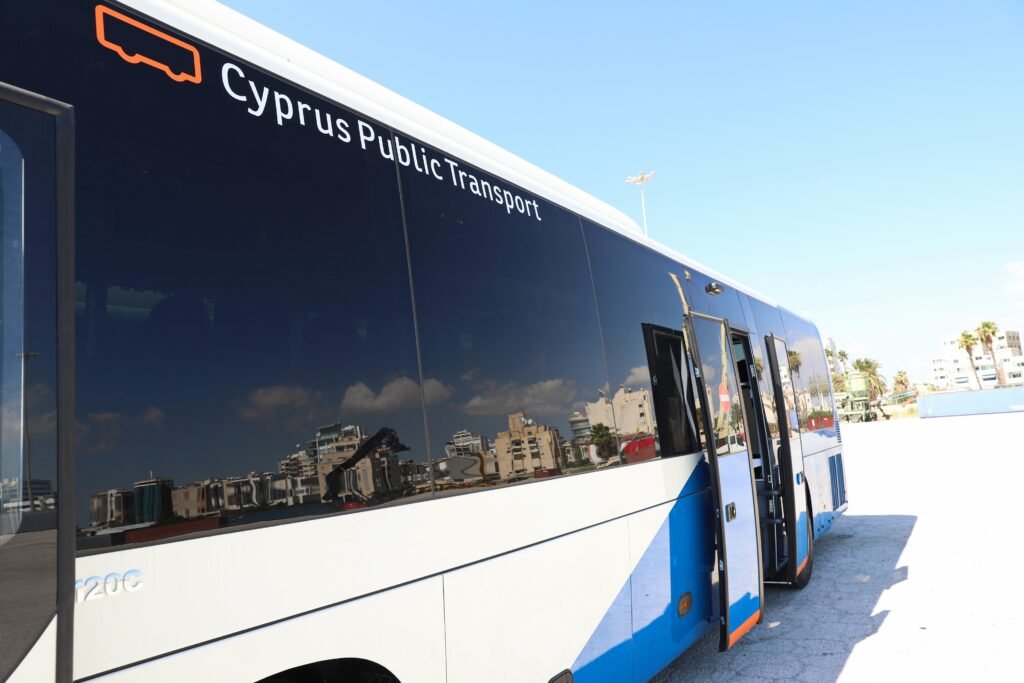
Regular bus services operate throughout the island. They connect cities, major towns, and tourist centres, with smaller villages within all municipal zones. These services do not operate on a 24-hour basis. Although night buses operate in some areas, most buses stop running at approximately midnight in tourist areas and at around 7 pm everywhere else. Bus fares are paid directly to the bus driver, and the exact change is required. Bus timetables, as well as schedules and routes, are available from tourist offices or directly from the bus companies. There is also a Cyprus bus smartphone app that offers real-time information, which can be downloaded to most smartphones.
GENERAL INQUIERIES
Cyprus (CTO)
Tel: 22 691 100
PAPHOS DISTRICT
Paphos Bus Station
Tel: 26 934 252
Polis Bus Station
Tel: 26 321 11
FAMAGUSTA DISTRICT
Paralimni Bus Station
Tel: 23 821 318
Ayia Napa Bus Station
Tel: 23 821 318
LIMASSOL DISTRICT
Limassol Bus Station
Tel: 25 370 592
NICOSIA DISTRICT
Nicosia Bus Station
Tel: 22 665 814
LARNACA DISTRICT
Larnaca Bus Station
Tel: 24 650 477
NEW BUS STOPS
BUS STOP UPGRADES ACROSS THE ISLAND
The Department of Public Works constantly strives to upgrade the public transport infrastructure of Cyprus, and one of its latest initiatives is the significant upgrade of the island’s bus stops. The installation of new state-of-the-art smart bus stops at key locations across the island is helping to improve the quality and accessibility of bus services for all users. The upgrades have seen the excavation of pavements to create solid foundations, followed by the installation of new proper bus shelters. The construction work will focus on various urban roads, with specific upgrades planned in several districts.
A SERIES OF MODERN FEATURES
New state-of-the-art bus stops, equipped with modern features, are being installed across the island. Considerations have been given to European standard specifications, so all include provisions for earthquakes and wind forces of up to 120 km per hour. They also all come with telematics that display real-time bus arrival information. The new bus stops also herald improved on-time performance, better crowd management, and reduced vandalism.
NEW BUS STOPS FOR SMALLER RURAL ROUTES
The upgrades include new bus stops for smaller rural routes as well as in major cities. The expected benefits for passengers from the new bus stop include clearer information and a safer waiting environment. Once a bus has arrived, it is expected that the new bus stops will also allow for faster, more efficient boarding. The phased rollout aims to improve accessibility, safety, reliability, and the overall passenger experience. As well as offering a new experience to the travelling public in the area, the placement of the new bus stops is also expected to help promote the use of public transport services. This, in turn, is proven to reduce both traffic and pollution.
Key Features of the New Stops
Accessibility: Low-floor designs, tactile paving, audible ground indicators for the visually impaired, ramps, and wheelchair-friendly layouts.
Real-time Information: Digital display boards showing next bus arrival times, route numbers, service alerts, and multilingual options.
Safety & Comfort: Shelter with weather protection, seating, CCTV coverage, lighting, and emergency call buttons.
Connectivity: USB charging ports, Wi-Fi hotspots, and clear route maps.
Sustainability: Solar-powered signs, energy-efficient lighting, and eco-friendly materials.
WHY DO CYPRIOT RESIDENTS SHUN PUBLIC TRANSPORT?
A DEEPLY INGRAINED CAR-CENTRIC CULTURE
It is claimed that people living in the Republic of Cyprus often shun public transport. This is due to a deeply ingrained car-centric culture that has existed on the island SINCE CARS WERE FIRST BROUGHT TO THE ISLAND. High car ownership rates across the island seem to be driven by a preference for convenience. This has helped to create an environment that has seen public transport usage mostly limited to non-natives and tourists.
KEY REASONS FOR SHUNNING PUBLIC TRANSPORT
Several car users are often quick to highlight the several factors that see them largely avoid public transport. Many of them claim that the system is plagued by infrequent routes, lack of dedicated bus lanes, limited weekend services, delays, and poor, unreliable, or non-existent scheduling information.
Culture of Convenience and High Ownership: Driving is seen as essential for daily life across the island. Cyprus has one of the highest car ownership rates in the world because of this.
Poor Service Frequency and Reliability: Except for some routes, local buses in cities mainly run every 45 minutes. They also stop early in the evening, making them largely impractical.
Lack of Infrastructure: The absence of dedicated bus lanes means buses get stuck in the same traffic as private cars. This creates an environment that makes commute times long and unpredictable.
Unreliable Information: Although new smart bus stops have been largely introduced across the island, there are still some that often lack schedules, making it difficult for users to rely on the service.
Limited Coverage: Although this is improving, poor connectivity between residential areas and main commercial hubs often forces a reliance on cars or expensive taxi services.
Poor Service: Drivers skipping stops and bus overcapacity have been highlighted as key reasons for avoiding public transport. Drivers refusing to give change for fares have also created a negative impact.
Despite this, the government has entered into long-term concession agreements with bus companies across the island to keep fares down. They have also overseen several new initiatives aimed at improving its public transport system. Smart traffic light systems, which allow buses to pass through traffic, have seen overall improvements to bus schedules, and the introduction of smart bus stops has also improved schedule information.