SOWING THE SEEDS OF THE 1974 CYPRUS DISASTER
CYPRUS INDEPENDENCE 1960
Although the charismatic religious and political leader, Archbishop Makarios III, was elected as the first president of an independent Cyprus on December 13th, 1959, he never officially took office until August 16th, 1960. This date is hence remembered as the official date as to when Cyprus officially gained independence from the United Kingdom. This came after a long anti-British campaign that was spear-headed politically by Archbishop Makarios III, and militarily by General Giorgos Grivas, who headed the Greek Cypriot EOKA organisation, also known as the National Organisation of Cypriot Fighters. Although both desired a political union with Greece, also known as the enosis movement, they had to settle in the end for independence after a brutal 5 year campaign that saw political unrest and great insurgency across the island. Cyprus then became the 99th member of the United Nations the following year.
THE ZURICH AGREEMENT
Cyprus independence was reached after the Zurich agreement was ratified in 1959. This agreement, however, failed to succeed in establishing cooperation between the Greek and the Turkish Cypriot communities on the island. Greek Cypriots would later argue that the complex mechanisms introduced to protect Turkish Cypriot interests were obstacles to efficient government. Turkish Cypriots, on the other hand maintained that these mechanisms were in place to to protect them as a minority on the island and was the only obstacle in place that ensured the sovereignty of the Republic of Cyprus.
THE AKRITAS PLAN
The Greek Cypriot leadership then drafted the Akritas Plan in 1963, which largely undermined the Zurich agreement by stripping the Turkish Cypriot power of veto. This is known because the secret document was leaked and published in the newspaper Patris in 1966. The Akritas Plan, which was orchestrated by a secret Greek Cypriot ministerial group with awareness from President Archbishop Makarios III, had a primary goal that would bypass or alter the power-sharing provisions of the 1960 Constitution of Cyprus. This would by default, remove Turkish Cypriot veto powers and political participation, and pave the way for a union of Cyprus with Greece.
A CHANGE TO THE CYPRIOT CONSTITUTION
The plan outlined a staged approach that would unilaterally propose constitutional amendments designed to reduce Turkish Cypriot rights. Known as the ‘Thirteen Points’, these would eventually nullify or challenge the Treaty of Guarantee, which involved Greece, Turkey, and the United Kingdom, so that any international legal objections to a union with Greece could be dismissed politically. The plan also stipulated the preparation of paramilitary forces to swiftly suppress any Turkish Cypriot reaction or resistance if they objected to the changes.
A TURKISH BOYCOTT
Although the Akritas Plan employed a subtle approach, it ultimately hinged on a series of subtle changes to the Cypriot constitution. These were first introduced to parliament in November 1963, by President Makarios. Turkish Cypriot leaders, however, heavily rejected any proposition of any such changes. Their extensive use of their power of veto substantially, caused a severe escalation of political tensions. These growing tensions then led to the entire Turkish Cypriot leadership then staged a boycott by withdrawing from all government positions by December 23rd, 1963. This included the lowest civil servants to the highest ranking ministers, which included the then Turkish Vice-President Dr. Fazıl Küçük.
AN OUTPOURING OF VIOLENCE
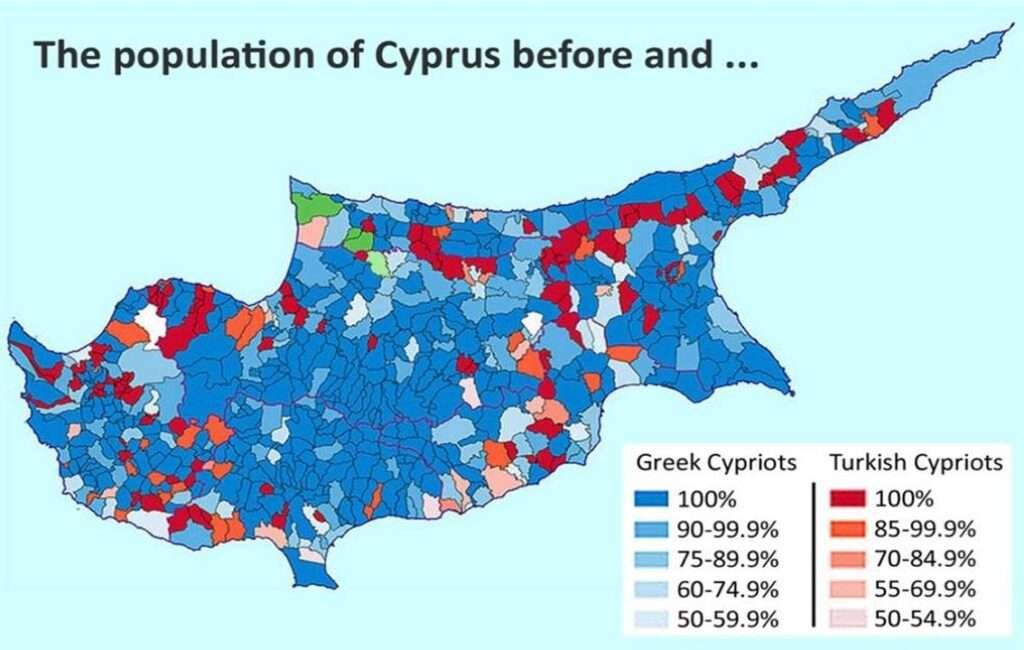
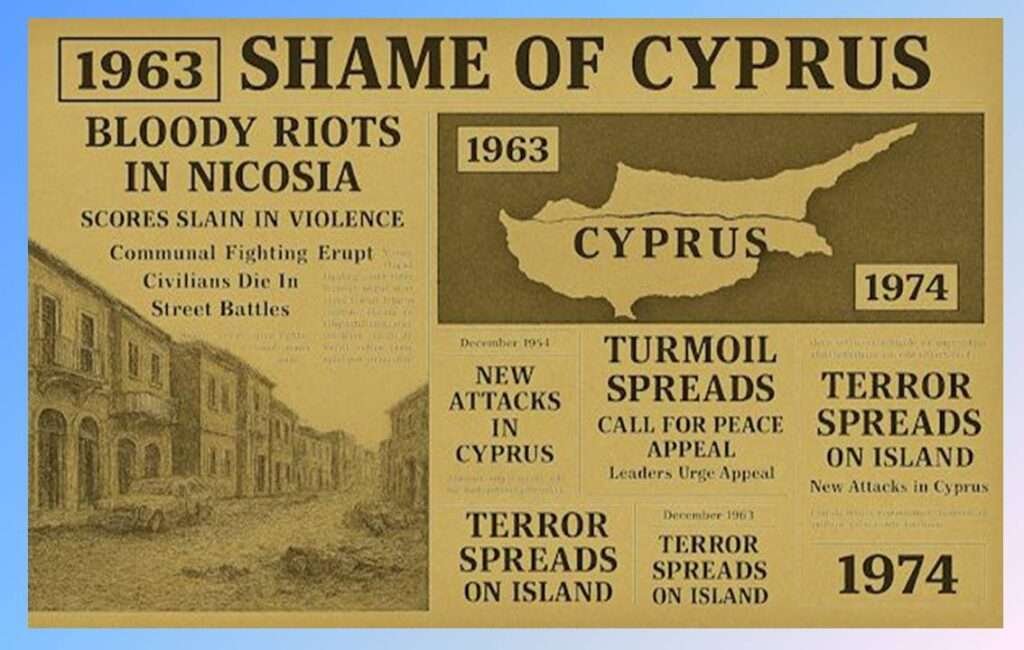
The political tensions then spilled onto the streets, causing widespread intercommunal violence. Makarios ordered a cease-fire after Turkey threatened to intervene on the island. The Turkish Cypriots then created, and withdrew into a series of isolated enclaves that were established across the island.
AN APPEAL TO THE UNITED NATIONS
Archbishop Makarios III then addressed the issue to the United Nations, who then deployed United Nations peacekeepers to the island in 1964. Its mandate was to prevent fighting, and help to maintain law and order. This effectively recognised the remaining Greek Cypriots, in office, as the government of the Republic. The Turkish parliament in 1964 voted in favour of an intervention in Cyprus because of this, but the lack of support from both the United Nations and other North Atlantic Treaty countries prevented any further action.
REVEALED IN 1966
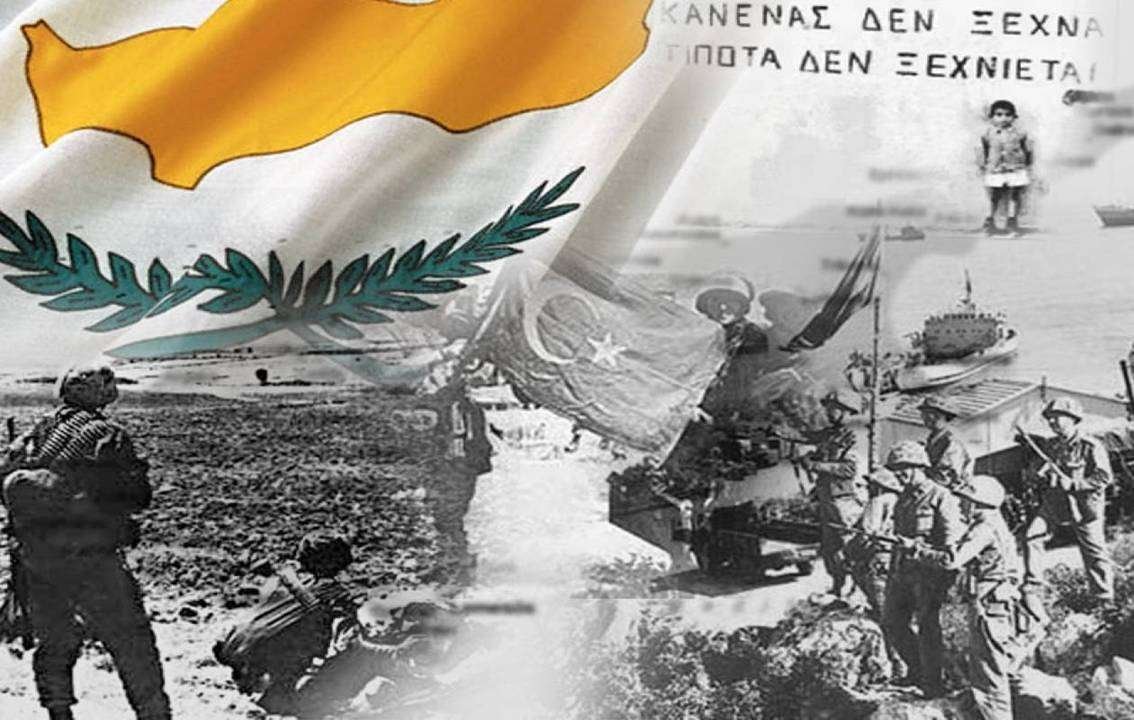
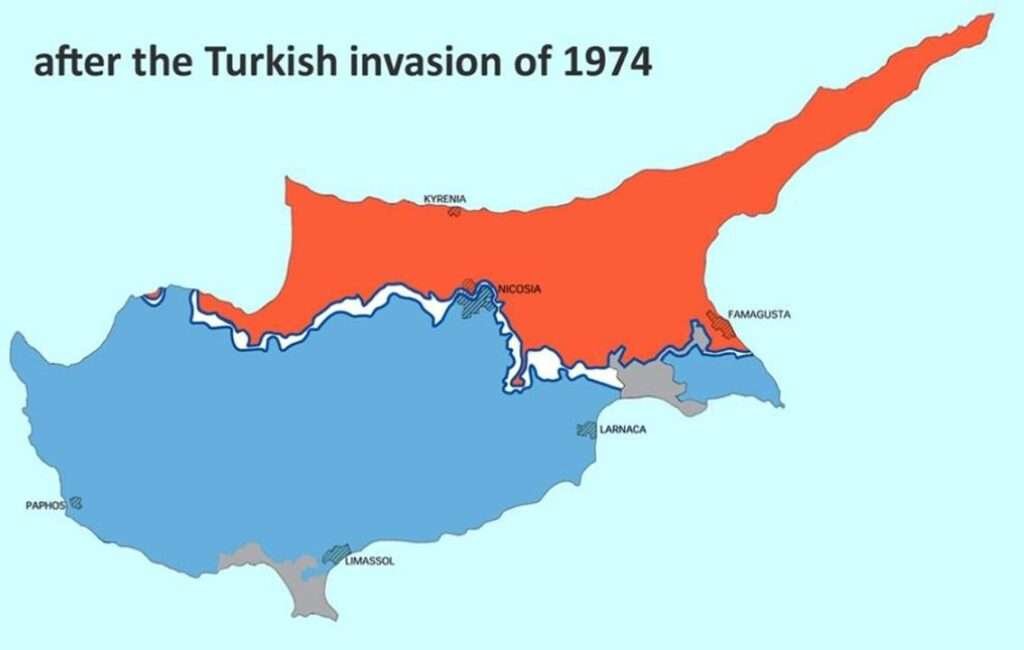
The public disclosure of the Akritas Plan in 1966 once again severely deepened mistrust between both communities across the island. As tensions rose, this helped to spark another outbreak of inter communal violence in 1967. A Turkish Cypriot provisional administration was formed as the violence continued into 1968. The Akritas Plan became a central piece of historical contention leading up to the 1974 Cyprus crisis, which saw Turkey invade and then occupy one third of the island under the auspices of a peace operations following a Greece inspired coup-de-tat that had designs on unification with Greece.