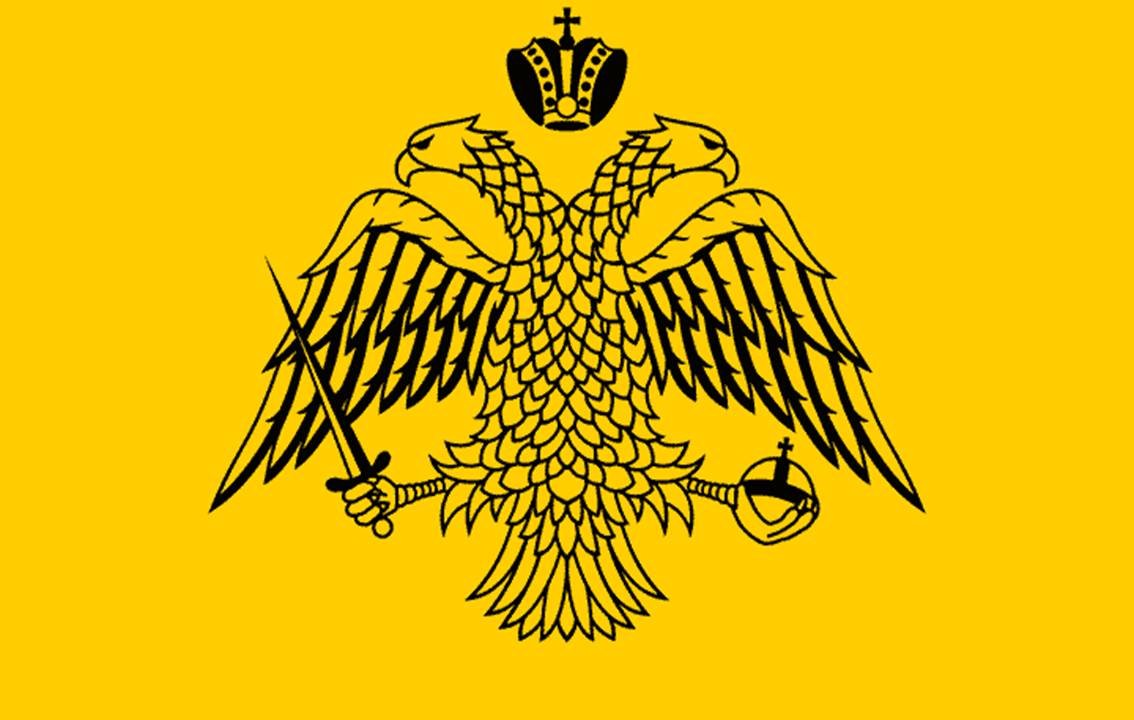
A COMPREHENSIVE HISTORICAL OVERVIEW
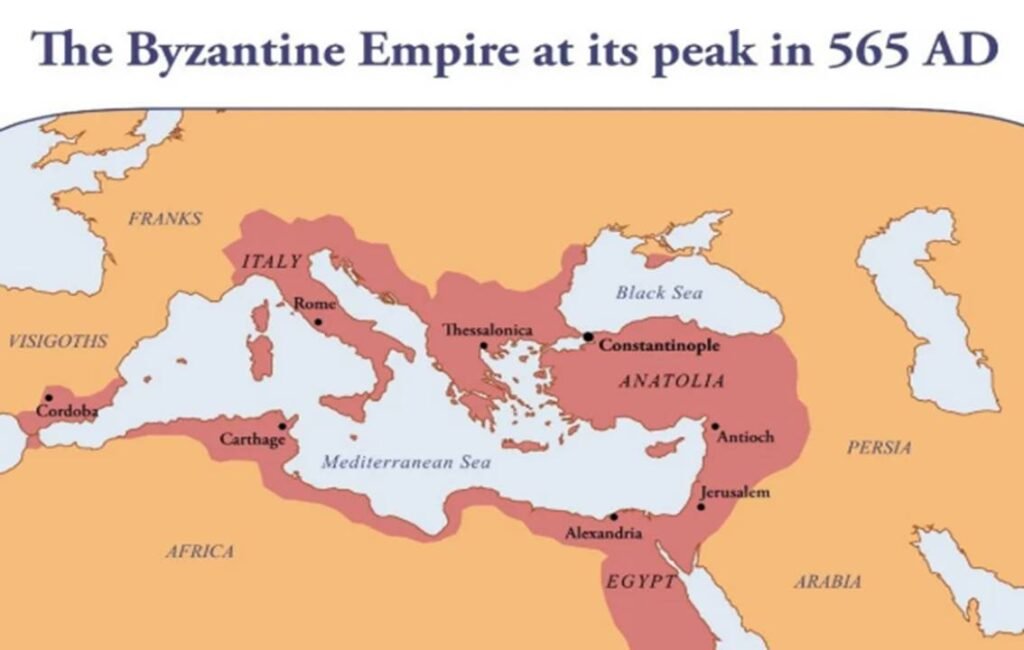
THE DAWN OF THE BYZANTINE ERA
The Roman Empire, after several extensive power struggles and a civil war, found itself divided from west to east in the year 330. CONSTANTINE THE GREAT, who was the first openly Christian Roman ruler, presided over the Eastern Roman Empire, which included Cyprus. This marked the beginning of a new Roman era in the east, which eventually would become known as the Byzantine Empire, and which continued its unabated rule in Cyprus.
THE BIRTH OF CONSTANTINOPLE
This transformation was complete when Emperor Constantine re-founded the city of Byzantium. He renamed his new capital city Constantinople, and the former name of this city was instead elevated to describe his new empire. Part of his reasoning for this was that he wanted complete autonomy from the empire’s western counterpart. His new empire, with Constantinople at its heart, would go on to flourish all the way until the latter part of the 15th century, outlasting its Western contemporary.
A MILITARY OUTPOST & MAJOR TRADING LINK
Cyprus by default, became part of the new Byzantine Empire. From the outset, the Byzantine administration kept old Roman political structures, legal frameworks, and economic systems in place. They allowed Cyprus to develop its economy further, and the island continued to serve as a strong military outpost and major trading link. The Byzantine administration took full advantage of the island’s geographical position, strengthening its trade routes in the region. The island would go on to serve as a crucial stop for merchants travelling between the new Byzantine capital city and other neighbouring Eastern Mediterranean trading posts.
SEVERAL EXTERNAL CULTURAL EXCHANGES
Cyprus thrived economically under Byzantine rule. Although the island’s fertile lands fuelled its mainly agricultural economy, other industries, such as pottery and textiles, also began to flourish under Byzantine rule. Cyprus at this time became known for its high-quality wine and olive oil products. The exploitation of its abundant natural mineral resources also contributed to the island’s wealth. The economic interconnection of the island facilitated several external cultural exchanges. Varying outside influences, because of this, began to enrich Cypriot society at this time more than ever.
A NEW SEAT OF POWER
The governance of Cyprus under the Byzantine administration was characterised by a complex structure of local and imperial authority. The seat of power and capital city was transferred from Paphos back to Salamis in the east of the island. This allowed the new capital city to retain its position as the island’s main administrative and commercial hub. The Emperor appointed a local governor to oversee the island’s affairs directly. This position allowed Byzantine authorities to maintain control over all local affairs while ensuring loyalty to their emperor.
AN ORTHODOX RELIGION
The complexity of the political landscape meant that Byzantine authority in Cyprus was often contested by the local Cypriot population. Byzantine governance, however, persisted, and it heavily influenced the subsequent policies of its rulers. This formed several social dynamics of the island, and this included religion. One of the most profound contributions the Byzantines made to the island was when they established Greek Orthodox Christianity. The religion became pivotal after it was fully embraced by local Cypriots and the Orthodox Church as a whole went on to play a vital role in shaping a new social Cypriot fabric on the island. It mainly did this by fostering a collective identity among its inhabitants by providing not only spiritual leadership, but also forming a centre for education and culture.
RELIGIOUS SIGNIFICANCE
The construction of churches and monasteries throughout the island followed during this period. This reflects the flourishing religious characteristics of Byzantine influence at the time. As a result, the Church of Saint Lazarus in Larnaca and the Monastery of Kykkos in the Troodos Mountains stand today as significant Byzantine religious sites. Both structures symbolise the architectural and artistic achievements attributed to Byzantine culture. Today, these structures not only hold religious significance but also feature iconic examples of Byzantine art, intricate mosaics and orthodox iconography.
THE CHALLENGES OF RULE
Although the island was benefiting from cultural and economic prosperity, Byzantine rulers constantly faced huge military challenges. The threat of emerging powers in the East presented a significant threat to the island’s stability and sovereignty. The strategic importance of Cyprus was constantly underscored during frequent conflicts with pirates and various arab raiders. The Seljuk Turks and later the Ottomans, also launched several ambitious raids on the island.
NEGOTIATED TRUCES
The Byzantine Empire held a fluctuating dominance over its territories during the subsequent centuries. Cyprus, however, which remained pivotal to their empire mainly for military and economic reasons, was protected at all costs. Although the Byzantines suffered other territorial losses, they managed to successfully repel several invasions of the island throughout the reign. The rapid expansion of Islam, however, led to Muslim forces briefly capturing the island in the year 649. The Byzantine,s however, managed to retake control of Cyprus and other captured areas after several diplomatic negotiations.
ISAAC DOUKAS KOMNENOS
In 1185, Cyprus found itself being ruled by self imposed independent Byzantine Emperor. This occurred after Isaac Doukas Komnenos landed on the island with a large troop of mercenaries. Fleeing the Byzantine court in Constantinople, he promptly installed himself as the new ruler of the island after falsifiing imperial letters. These letters ordered local Byzantine administrators to accept Komnenos as their new governor. After consolidating his power on the island, Komnenos set about disposing of all rivals. He then created a new independent patriarch of Cyprus who then formerly crowned him Emperor of the island. Komnenos then went on to tyrannically rule the island in all but the Byzantine name. His reign, however, proved short. Stormy weather, just six years later, forced Richard the Lionheart’s fleet towards the coast of Limassol. King of England, on his way to the third crusade was forced to act after recieving a hostile reception from the self imposed emperor of the island. He subsequently conquered the island, bringing Byzantine dominion on the island to an abrupt and quite brutal end.
A BYZANTINE LEGACY
Byzantine rule was pivotal for the island, and it firmly shaped its future. Remaining as a crucial chapter in the broader narrative of the island’s history, the Byzantine legacy persists until today. Byzantine rule also illustrates the enduring significance of Cyprus in the Eastern Mediterranean world at this time. The enduring impact of Byzantine culture, religion, and governance continued to shape the island’s identity and can be found in most facets of Cypriot life today. The Greek Orthodox Church is perhaps the most prominent example of this, as it remains hugely influential. In some ways, it still ensures the continuity of Byzantine traditions and practices in today’s changing political landscape.
A BYZANTINE LEGACY
Byzantine rule began with the final division of the Roman Empire in the year 330. Spanning nearly nine centuries, it lasted until the arrival of ANGLO-NORMAN CRUSADERS in 1191. Cyprus became a heavily fortified military Byzantine province after it became a prized target, mainly because of its abundant natural resources and vital trade links.
The Byzantine presence on the island is historically divided into three distinct phases
Early Byzantine Period (330–649 AD): Enjoying relative peace and modest economic prosperity, the Byzantines paved the way for the rise of the Independent Church of Cyprus in the year 488. This defining milestone of this era was triggered after the discovery of Saint Barnabas’s tomb, which led to Emperor Zeno granting full autonomy to the Church of Cyprus. This helped to cement an enduring Christian legacy across the island, which oversaw a building program that constructed huge Christian basilicas. The Emperor also bestowed exclusive imperial privileges upon the Archbishop of Cyprus, which persist to this day. Heavy Byzantine investment also helped fuel the relatively new silk production and silversmithing industries that took hold across the island during this period.
The Arab-Byzantine Condominium (649–965 AD): Although the island transformed into an endeared Christian society, Cyprus also weathered periods of co-rule with Arab caliphates. Prompted by early Muslim conquests, Emperor Justinian II and Caliph Abd al-Malik signed a unique treaty in the year 688. Standing for nearly 300 years, this treaty made Cyprus a neutral zone. Although the Byzantines maintained their administration of the island, its population paid taxes equally to both empires. Military garrisons from either side were also not permitted on the island.
The Theme of Cyprus (965–1191 AD): Byzantine Emperor Nikephoros II Phokas sent a huge Byzantine military fleet to decisively reclaim the island in the year 965. Cyprus was then reorganised into a military province and was governed directly from Constantinople.
Cultural, Artistic & Religious legacy
Cyprus became a major centre for Eastern Orthodox art, religion, and architecture during the Byzantine era. Serving as a mountain refuge for several Orthodox religious communities, the island became a Greek Orthodox religious centre. The island’s Orthodox clerics made subtle changes, which helped to define Greek Cypriot Orthodoxy. The Archbishop wore a purple imperial cloak instead of standard clerical vestments, and carried an imperial sceptre rather than a traditional pastoral staff. Purple ink was also used to sign official documents. The Byzantines constructed vital mountain fortifications along the Pentadaktylos range, including the castles of St. Hilarion, Buffavento, and Kantara. The interior Troodos mountains became home to historic monasteries like Kykkos and Machairas. These structures preserved world-renowned wall paintings and mosaics, linking Cypriot regional art directly to the court of Constantinople.
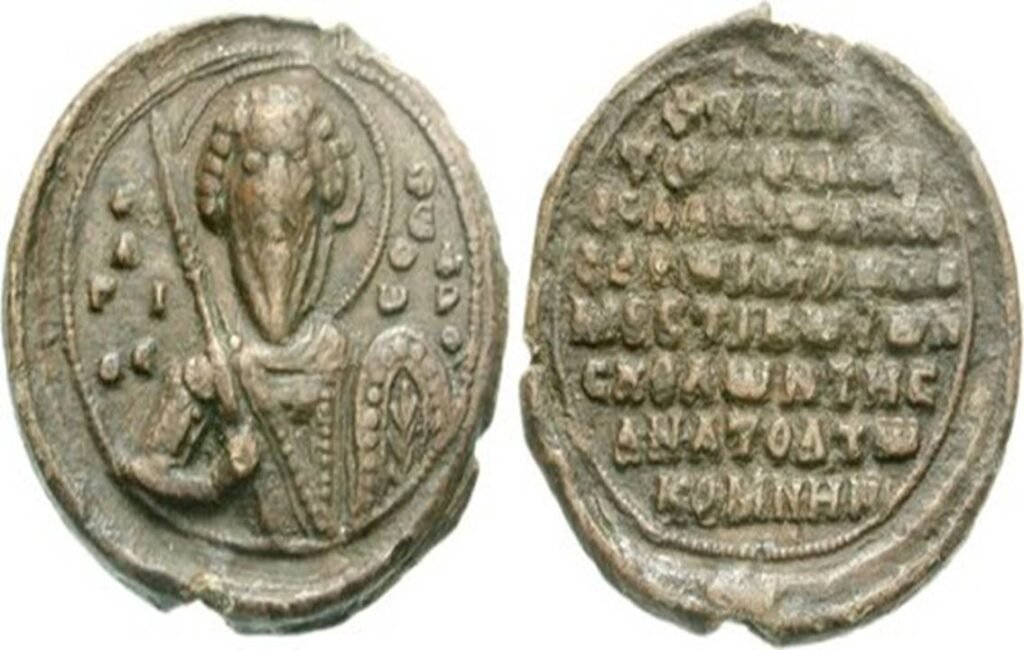
TYPICAL BYZANTINE COINS FROM THE PERIOD
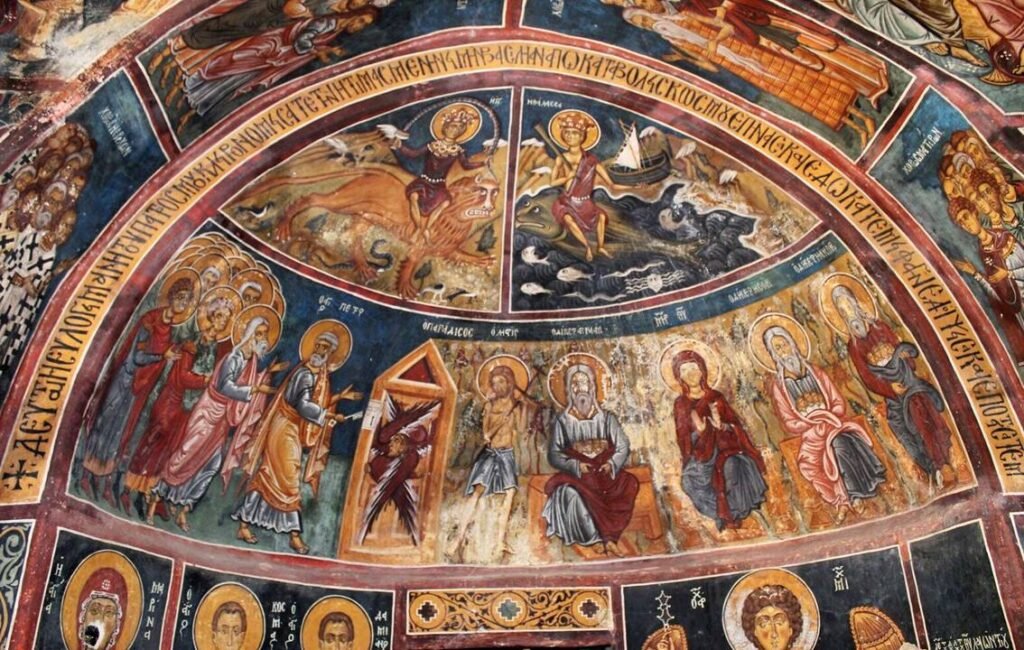
GREEK ORTHODOX ICONOGRAPHY

A DEPICTION OF EMPEROR CONSTANTINE