A UNIQUE ETEOCYPRIOT HERITAGE
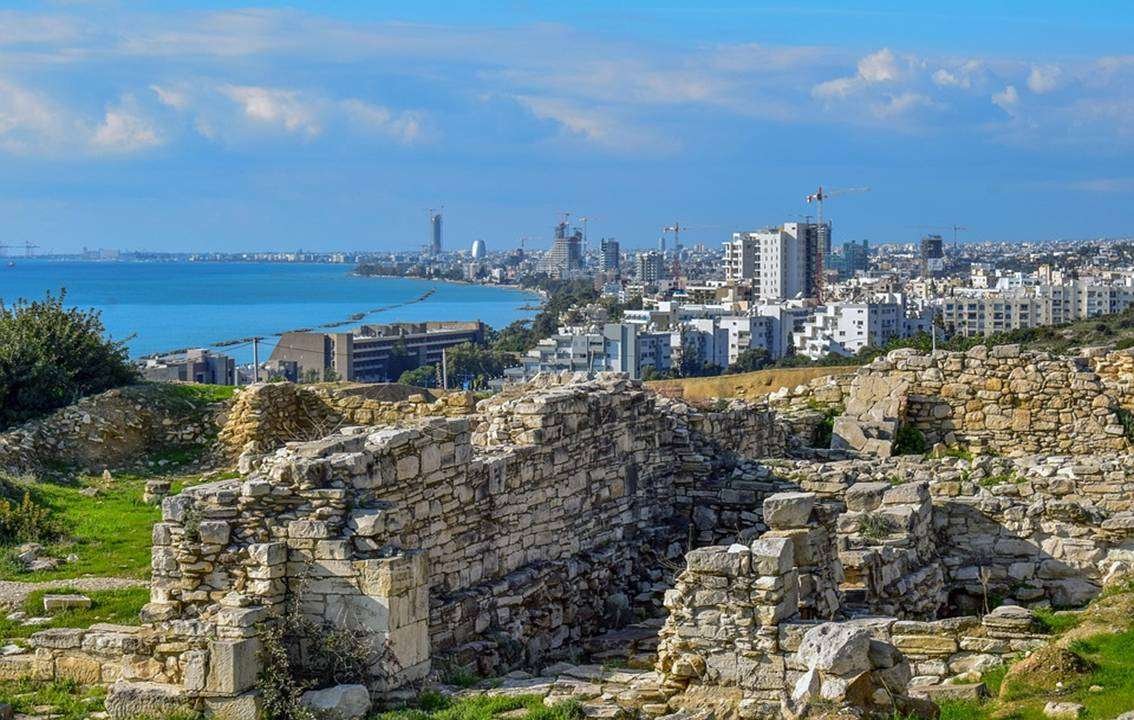
Dating back to around 1100 BC, this settlement served as a vital Mediterranean trading hub, allowing it to become one of the most powerful ancient royal city-kingdoms of Cyprus. Located approximately 11 kilometres east of the centre of modern-day Limassol on the southern coast of the island, the site is legendary for its deep-rooted cult of Aphrodite and its unique indigenous Eteocypriot heritage.
History & Rise of the Kingdom
Unlike the majority of other Cypriot City-Kingdoms that were founded by Aegean Greeks, ancient writers link Amathus to Eteocypriots, who were the island’s true indigenous inhabitants. These people are said to have preserved their own traditions and distinct, undeciphered language long into the Hellenistic era.
Strategic Wealth: Trading heavily with Phoenicians, Egyptians, and Greeks, the kingdom of Amathus amassed immense riches by exporting grain and exploiting nearby copper mines.
Pagan Resistance: The city remained a stronghold for traditional pagan customs. It was one of the last Mediterranean strongholds to accept Christianity, resisting the shift until the 5th century.
Decline and Fall: An earthquake in 365 devastated the settlement and caused its iconic harbour to gradually silt up. 7th-century Arab raids caused the population to dwindle, and the settlement was permanently abandoned by the 12th century after staging an open REBELLION against Richard the Lionheart. Stones from the settlement were famously repurposed by the latter to reconstruct LIMASSOL CASTLE, and 19th-century British engineers used them to build sections of the Suez Canal.
Key Archaeological Highlights
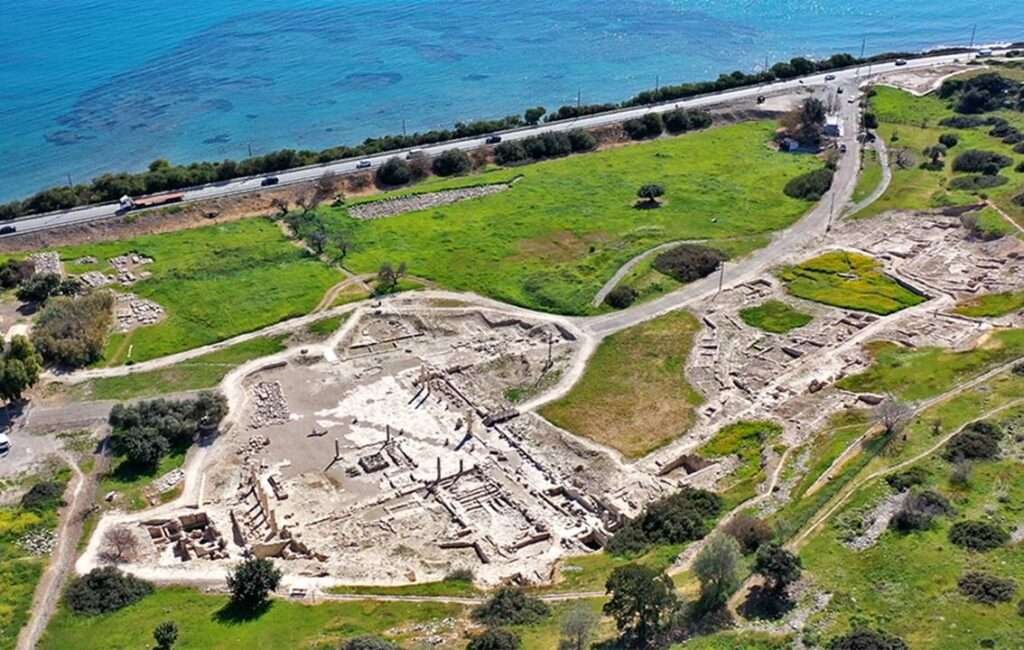
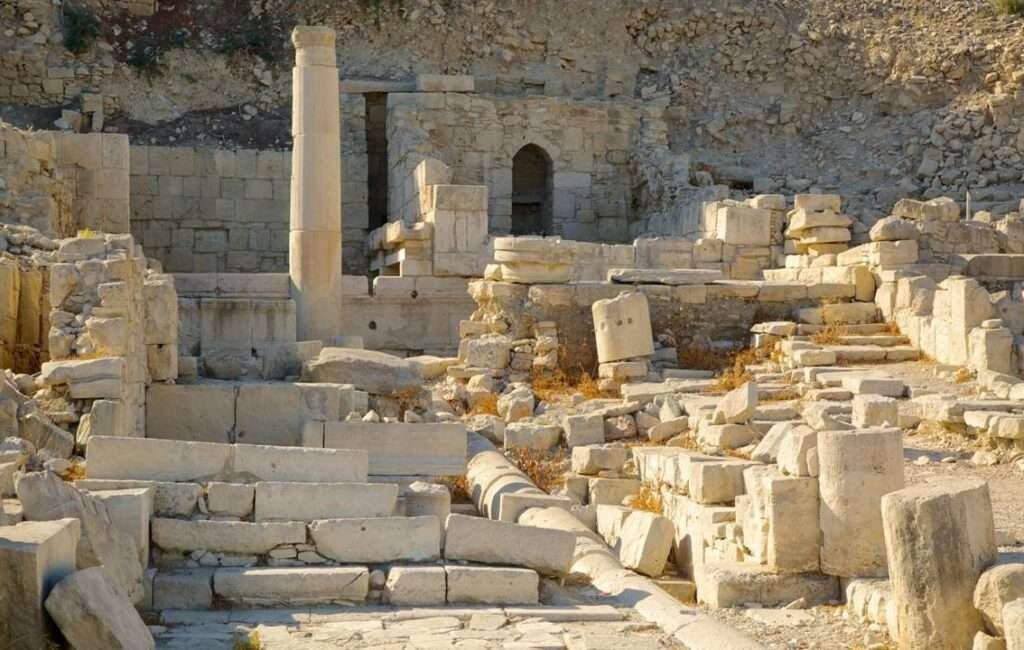
Today, the vast open-air Amathus ruins span a prominent hillside and the low-lying shoreline, offering a tangible walk through history.
The Upper Acropolis and Temple of Aphrodite: Perched high on the hill, this natural fortress housed the second most important sanctuary of Aphrodite in Cyprus. The site once featured two legendary, massive 14-ton monolithic stone limestone jars that were used for religious rituals. The original, complete jars were taken to France in 1862 and remain in the Louvre Museum, while a modern replica stands on the acropolis today.
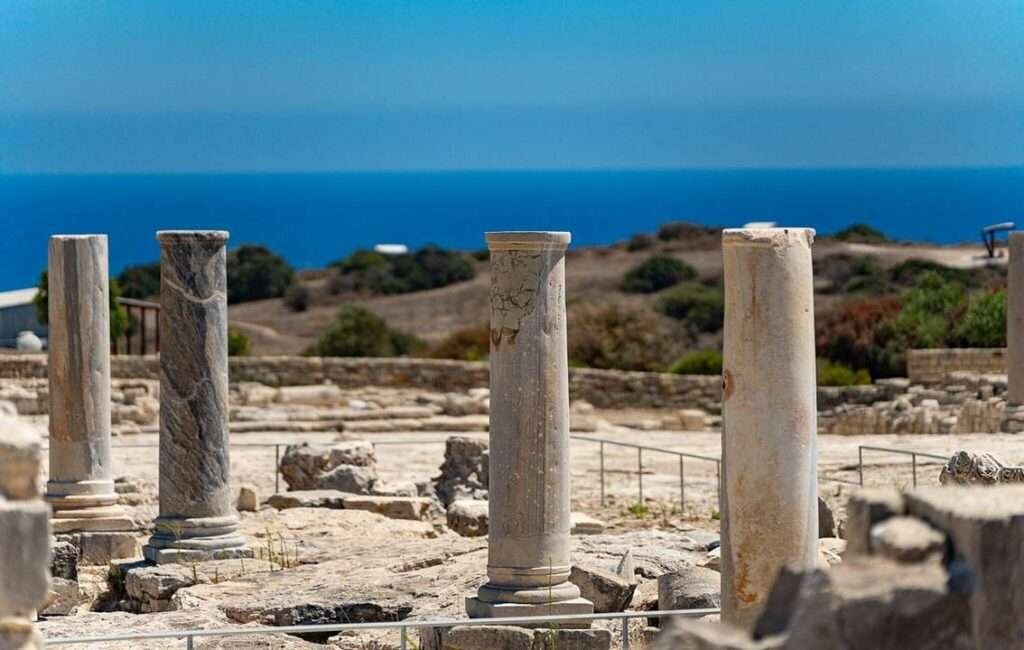
The Lower City Agora: The Roman marketplace features a large stone-paved central court enclosed by monumental Doric column porticos, public baths, complex water storage systems, and a fountain.
The Sunken Ancient Harbour: Just offshore lies a well-preserved, 2,000-year-old underwater naval and trading port. Now submerged due to rising sea levels, it has transformed into a thriving natural reef.