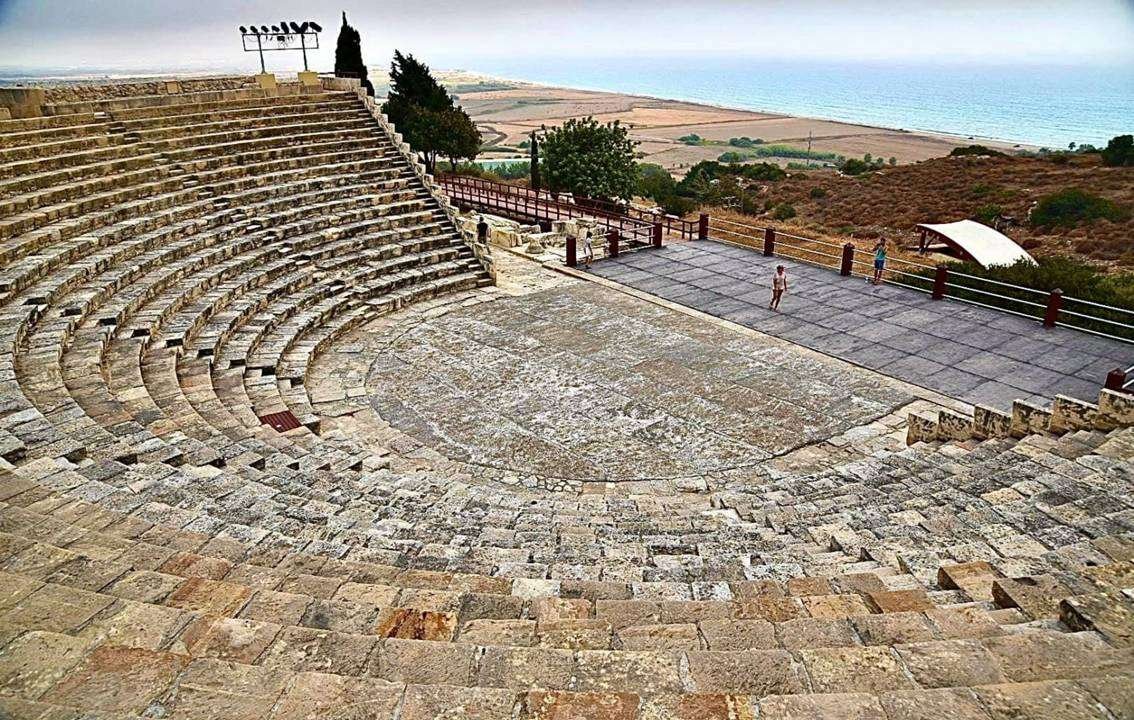
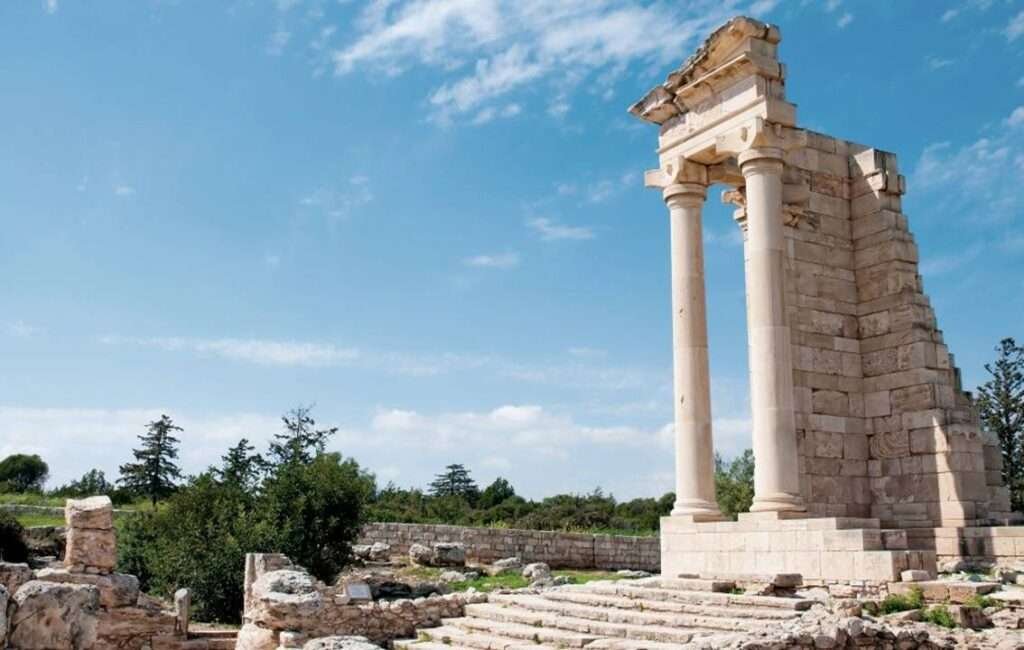
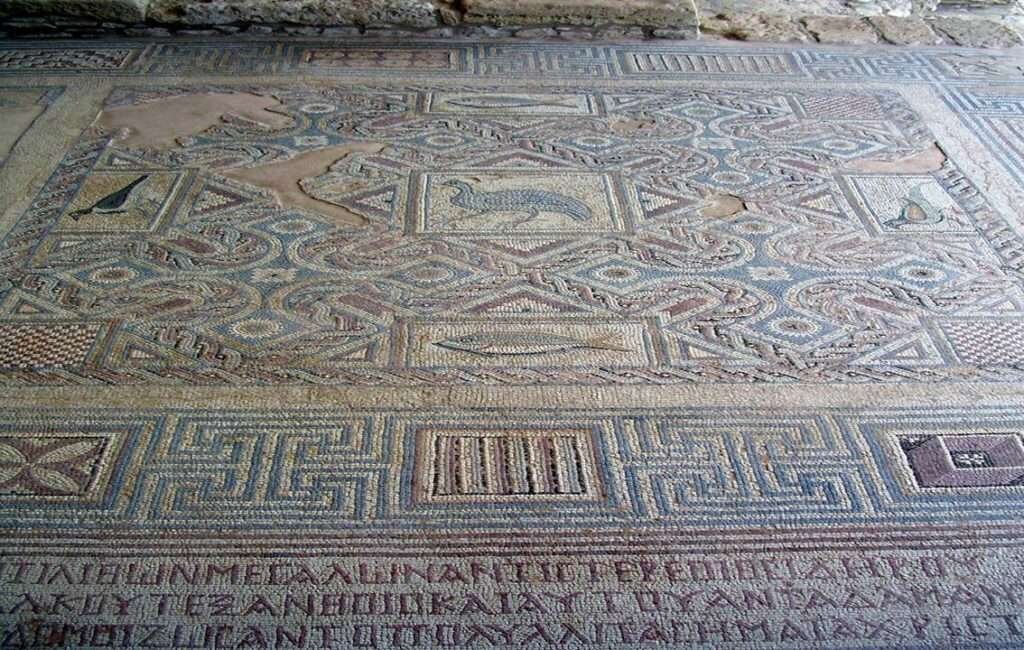
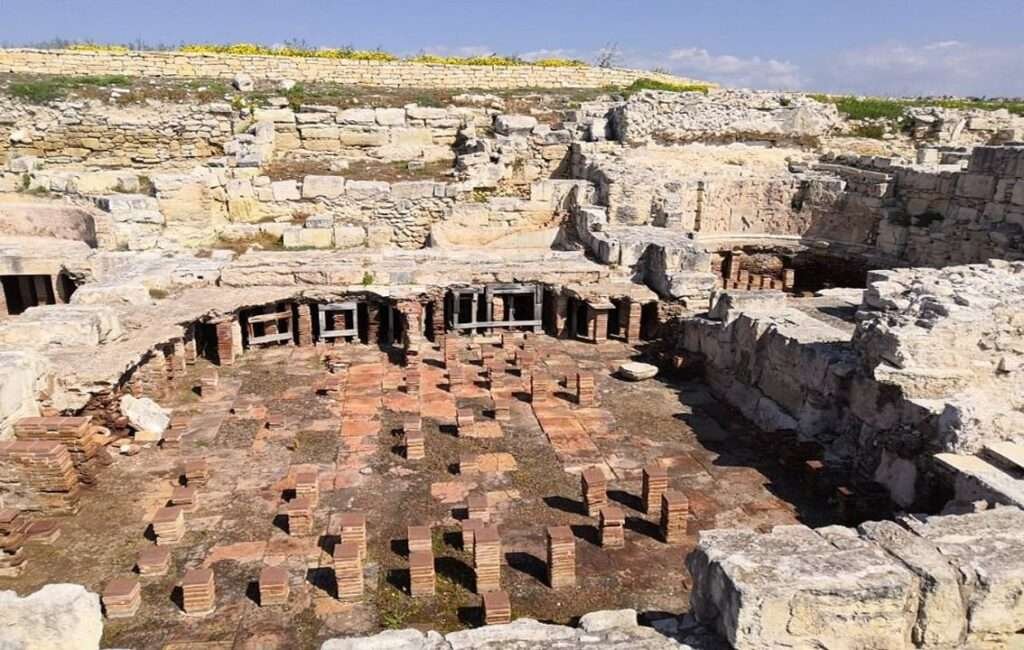
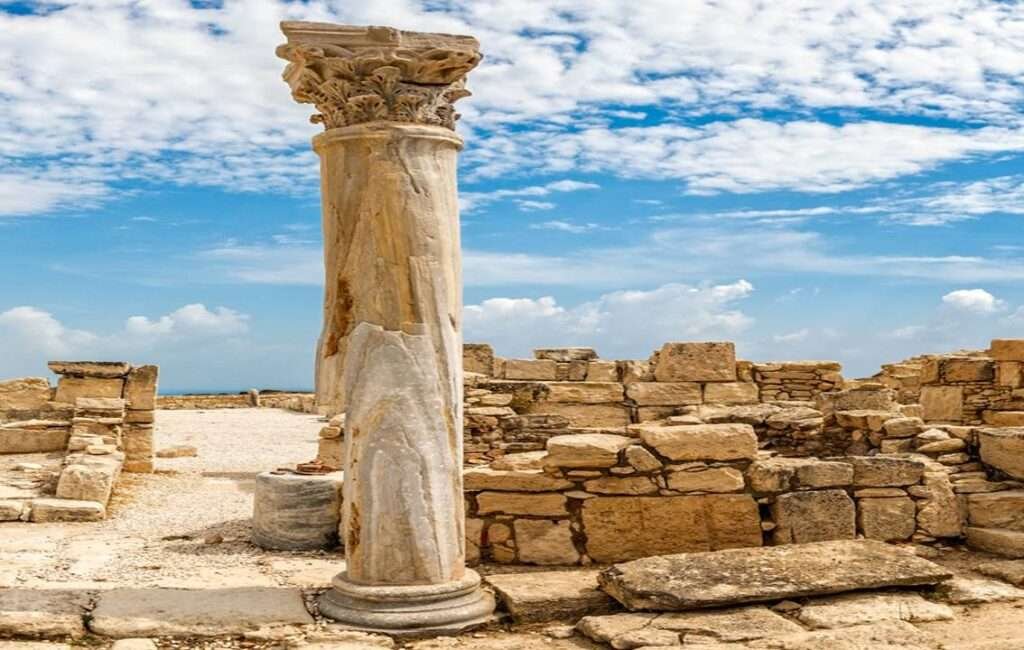
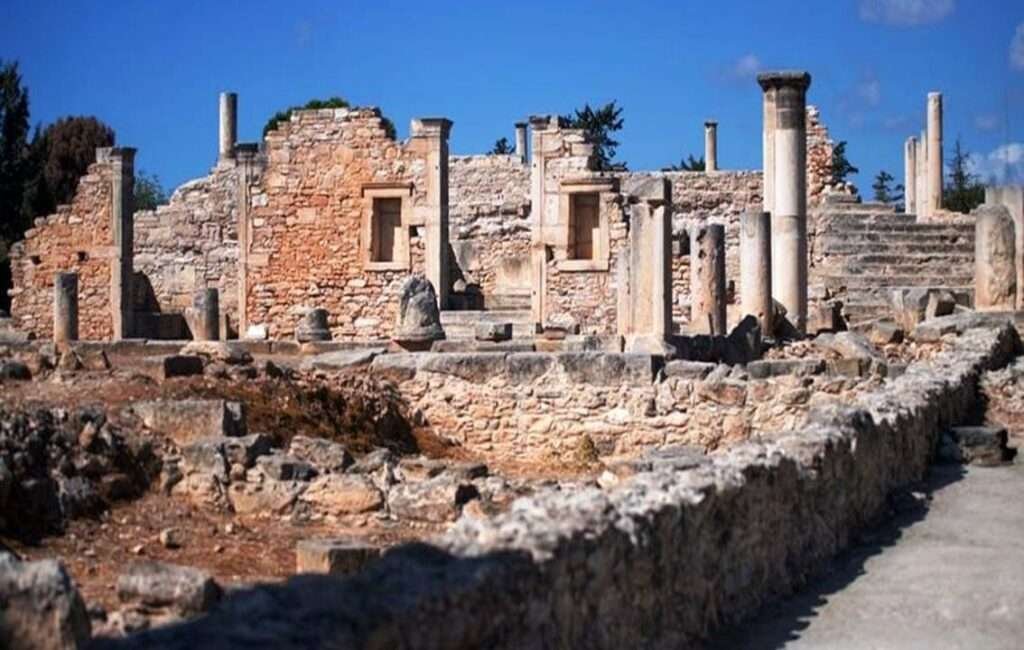
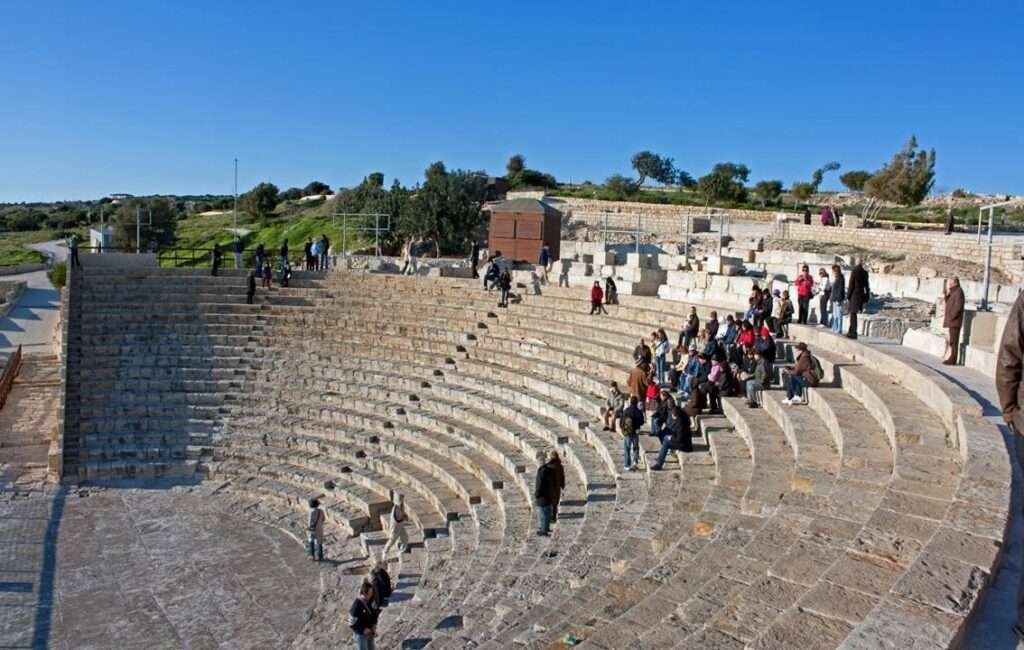
Located on the south-western coast of Cyprus, in the vicinity of today’s Limassol district, Kourion was one of ten major ancient Greek city-kingdoms of Cyprus. Today, the majestic ruins of its eponymous centre are perched high atop a hill overlooking the pristine Episkopi Bay. For lovers of history and culture, these ruins are highlighted by its magnificent amphitheatre, which is still used to stage events today.
Although the earliest traces of human presence in the broader area date back to at least 5500 BC, it was Greeks from the Peloponnese, returning home after the end of the Trojan War, who founded the city-kingdom around 1184 BC. Once established, it became both a centre of trade and had a military that befitted its Spartan heritage at the time.
The presence of Kourion’s founders also formed part of the greater Mycenaean civilisation that was dominant in the Greek world at the time. This is confirmed by several archaeological discoveries found at the site. These include the golden sceptre of Kourion, which today is housed in the Cyprus Archaeological Museum in Nicosia.
After becoming a prominent city-kingdom, Kourion then suffered several conflicts. This then led to the city-kingdom shifting through a series of outside rulers. Kourion then came under Assyrian, Egyptian, and Persian control during the Archaic and Classical periods. Alexander the Great eventually restored a Greek Cypriot ruling presence in Cyprus, and the king of Kourion, Pasicrates, in tribute, pledged his support to Alexander, supplying aid during the siege of Tyre in the 4th century BC.
Kourion remained relevant during the Roman era, and its epicentre had already stood for over a thousand years by this time. In light of this, Kourion’s original architecture was later blended with contemporary classic Hellenistic and then Roman traditions.
At the beginning of the 4th century, Kourion was flourishing under Roman rule. The cliff side amphitheatre was expanded to cater for the city’s growing population, and several new impressive public monuments, including the iconic Sanctuary of Apollo Hylates, were constructed, along with several luxurious private homes.
This, however, changed by the end of the century after the city was abandoned. This came about after a series of massive earthquakes devastated the whole region. Archaeological finds, which include unburied victims, suggest that these quakes struck suddenly late at night or early in the morning. This was confirmed when excavations revealed a family that was crushed under stone blocks and heavy plaster. These skeletons included two adults and an infant, locked in a protective embrace. Kourion was then largely rebuilt following these 4th-century disasters, transitioning into a Christian city.
The Arab raids that swept across Cyprus during the 7th century saw many of the island’s coastal cities, including Kourion, plundered. In 649, an Arab fleet under the command of Muawiya, the future caliph, saw Kourion sacked and left in ruins. Arabic inscriptions that bear witness to this invader’s presence are still visible at the site today.