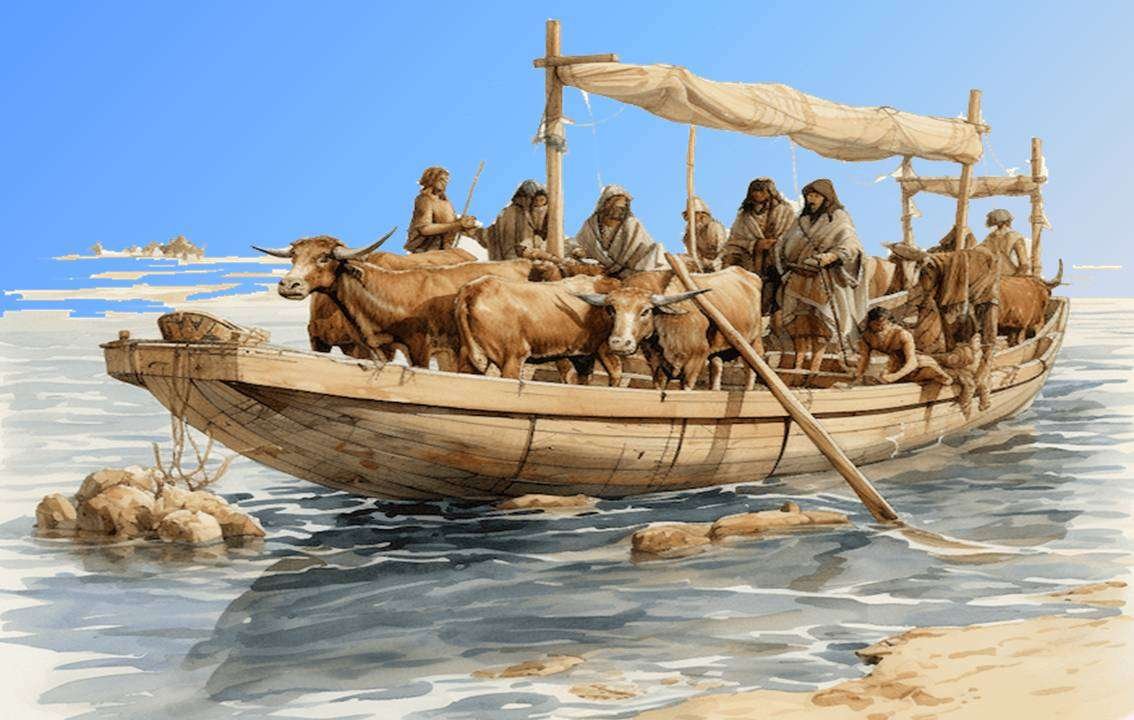
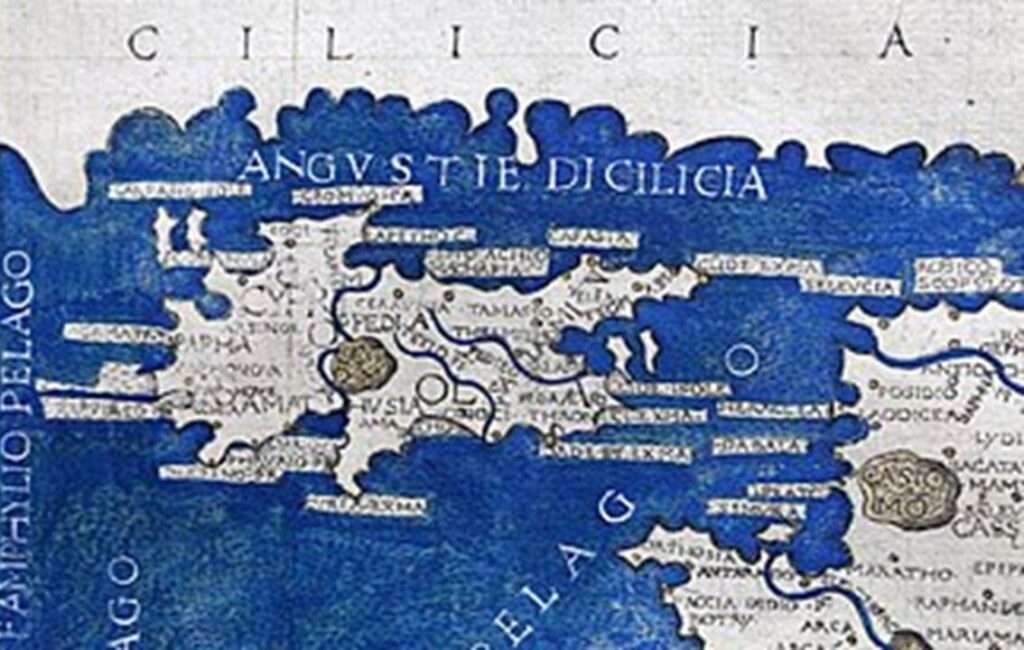
Evidence suggests that Cyprus was first settled by people in the Palaeolithic period, which is also known as the Stone Age. Artefacts from foragers near Limassol on the southern coast of Cyprus suggest that these people were active on the island as early as the 11th century BC. These people are thought to have arrived on the island from the Near East and the Levant areas. There is also evidence that suggests that these early Cypriots coexisted with various dwarf animal species. These include Dwarf Elephants (Elephas Cypriotes) and Pygmy Hippos (Hippopotamus minor) that no longer exist.
THE FIRST PERMANENT SETTLEMENT
The first permanent settlement in Cyprus is thought to have occurred around the 10th century BC. These first settlers were agriculturalists and did not yet produce pottery. It is thought that they were the first to domesticate the dog, along with sheep, goats, pigs and possibly cattle. They are thought to have also introduced numerous wild animals to the island. There is evidence that suggests foxes (Vulpes vulpes) and Persian fallow deer (Dama Mesopotamia) that were previously unknown on the island also coexisted with these early Cypriots.
THE SETTLEMENT AT SHILLOUROKAMBOS
These early settlers built round houses with floors made of terrazzo of burned lime. This is known because of the discovery of SHILLOUROKAMBOS. Although pigs, sheep, goats and cattle were kept, they remained, for the most part, behaviourally wild. Evidence also suggests that most of their cattle died out during the 8th century BC and were not reintroduced until the later ceramic Neolithic period.