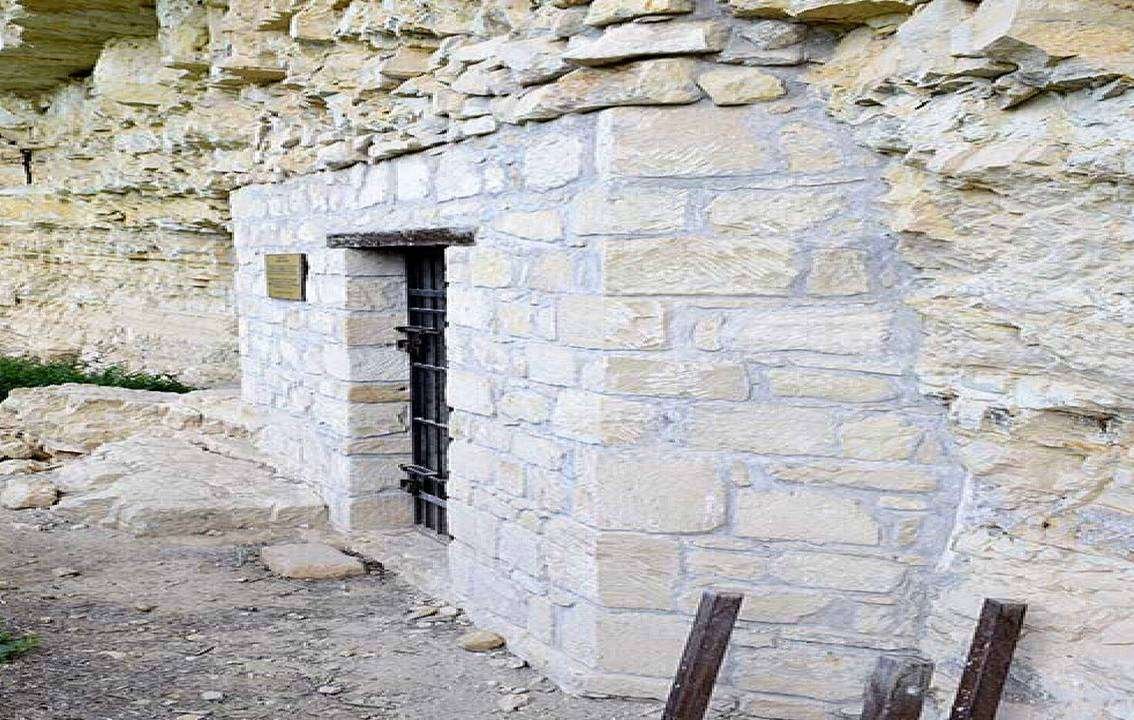
A SMALL CHAPEL HOUSED IN A CAVE
SEVERAL REMARKABLE FRESCOES
Made up of three caves that have been carved into a limestone rock face, the Palaea Enkleistra Chapel, also known as the Old Hermitage Chapel, is a historic rock-cut cave chapel located north of the village of Kouklia in the Paphos district. The first resident of these caves is believed to have been a hermit who lived there during the 14th century. It is believed that monks then took up residence after the hermit’s death and burial at the site. These monks proclaimed the caves a holy site and subsequently gave the chapel its current name. The monks then used the chapel as a place of solitude for prayer and reflection.
All three caves contain frescoes that have been painted directly onto their walls. Although two of the caves are significantly eroded, they still preserve fragments of some unique examples. However, the third cave, which includes the chapel, in contrast, is remarkably well-preserved. These depictions are strikingly clean and vivid, suggesting that candles were rarely burned inside, and with much of its interior still intact, its walls depict several remarkable frescoes that have stood the test of time.
WELL PRESERVED DEPICTIONS
On entering the chapel, visitors are greeted by a depiction of Saint Onuphrius. The niches on either side feature both Saints Cosmas and Damian. Saint Hieromartyr Hermolaus is also depicted immediately above on the ceiling, which also has a depiction of the Holy Trinity surrounded by a triple aureole. The walls on either side of the entrance include scenes of the Fiery Furnace, Saint George and the Dragon, Saint Mary of Egypt, Saint Zosimas, and Saint Anastasia. Other depictions include the Evangelists Mark and Luke, along with Saint John the Theologian, and the Saints Prochorus and Matthew. There is also evidence that some of the designs were inspired by Western traditions. This hints that the site might have been converted to a Latin monastery at some point, although no texts indicating this currently exist.
Please note: Although photos are allowed, flash photography is strictly prohibited to protect the images.
OVERVIEW & HISTORY
Location: The Palaea Enkleistra Chapel is situated north of the village of Kouklia, roughly 400 metres away from the Church of Constantine and Helena.
Origin: Carved into a limestone cliff, the site consists of three interconnected caves, with the third cave remaining remarkably well-preserved.
Name Meaning: Palaea Enkleistra translates to old retreat in Greek. This directly refers to an unknown 14th-century hermit who first lived in the caves.
Structure: Featuring a built-in burial alcove in the east wall, the largest cave measures up to 5 metres wide and 2 metres high.
Artwork: The caves offer a series of remarkably vivid and clean 15th-century frescoes that feature rare western-style Holy Trinity representations across the central ceiling, Saint Onuphrius near the entrance, and local saints like Anastasia, Cosmas, and Damian.