EUROPEAN MEMBERSHIP FOR A DIVIDED ISLAND
A UNIQUE SITUATION
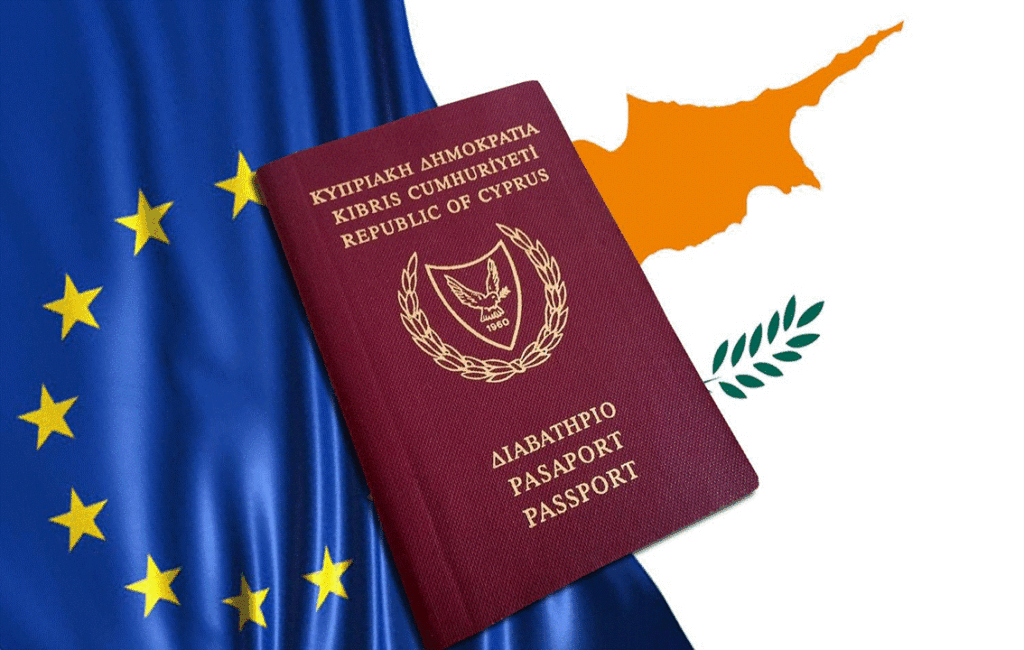
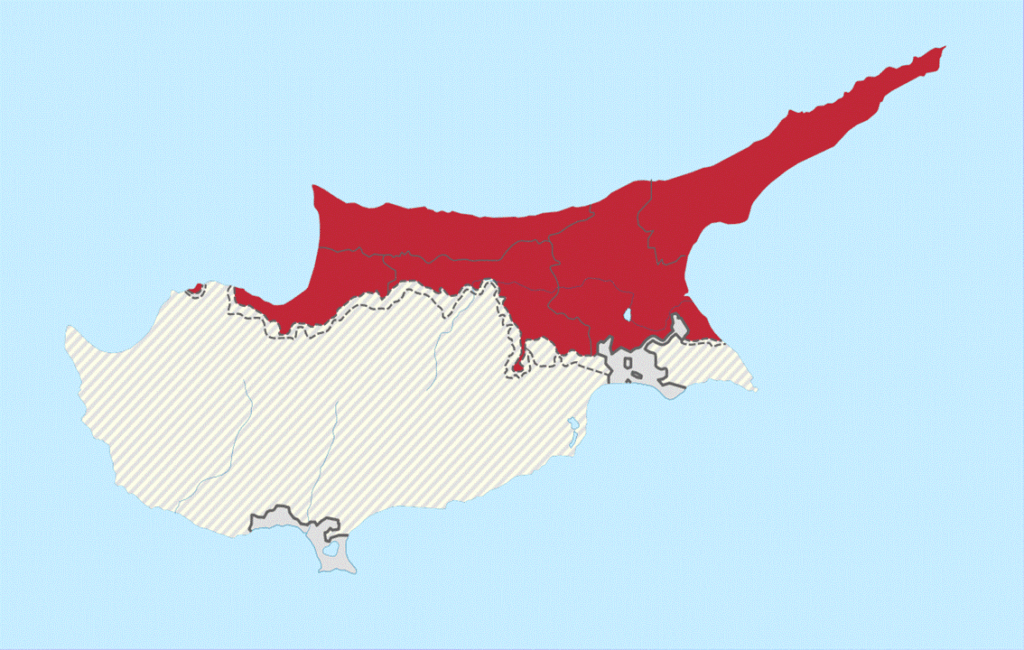
Although the entire island is legally considered European Union territory, membership remains suspended for the de facto self-proclaimed Turkish-controlled Northern Cyprus, which has existed since the island’s division after the 1974 Turkish invasion. In light of this, European Union legislation is suspended in areas not under the effective control of the internationally recognised Republic of Cyprus, which maintains its presence in the south of the island. Although negotiations between representatives of both the Republic of Cyprus and the Turkish regime in the north have frequently fluctuated, the European Union still actively supports United Nations-led efforts to achieve a bi-communal and bi-zonal reunification of the island.
EUROPEAN OBLIGATIONS
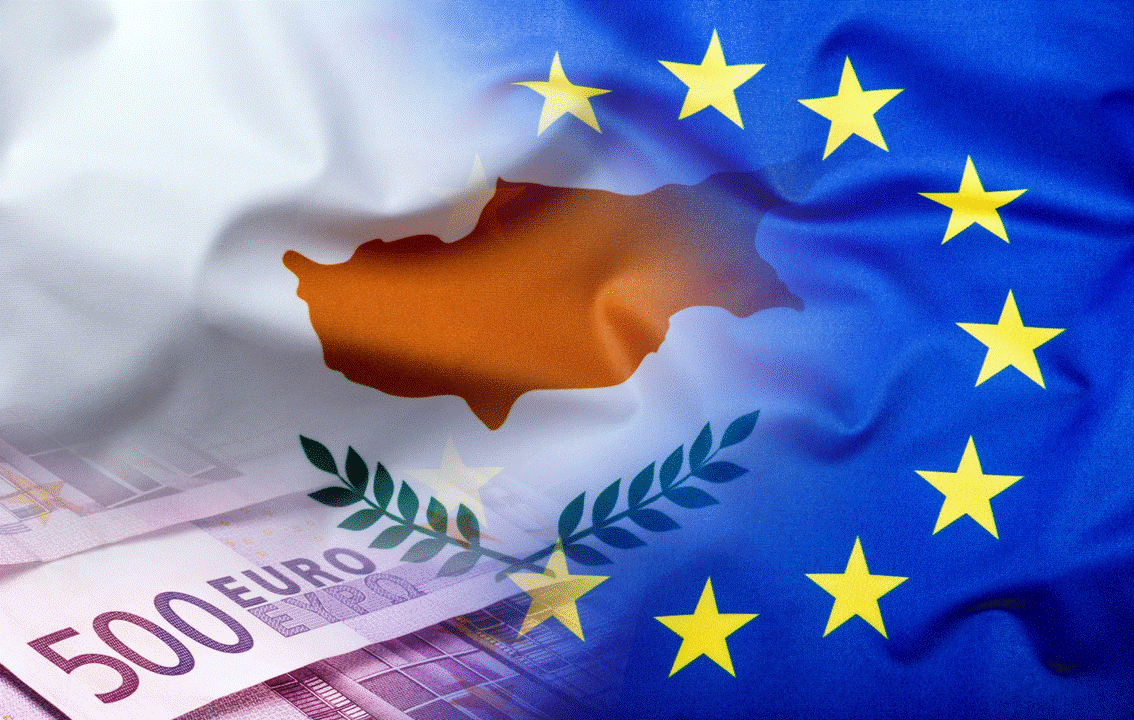
Cyprus has actively assumed all of its European obligations since its accession on May 1st, 2004. The island has effectively held the rotating presidency of the Council of the European Union, and it fully adopted the euro as its currency in 2008. Cyprus holds 6 European Parliamentary seats and operates as a key geopolitical European frontier in the Eastern Mediterranean. It is only one of four European Union nations that is not a member of NATO, however. This is primarily due to ongoing political complexities involving Turkey.
AN IMPORTANT COLLECTIVE ACHIEVEMENT
Today, it can be said that the majority of Cypriots regard the European Union as the most important collective achievement in Europe since the age of enlightenment. With this in mind, many believe that the island’s accession remains its most important political and diplomatic success, and many regard membership of the European Union as undoubtedly the greatest achievement of the Republic of Cyprus since its inception in 1960.

A EUROPEAN IDEA
A FOUNDATION LAID 75 YEARS AGO
The pioneers of the idea of a European Union, Robert Schuman and Jean Monnet, laid the foundation of the European edifice in the aftermath of two world wars. The main incentive at the time was to create an environment that would repel any future European conflict. Many believe that this has largely been achieved. Today, the union of European states represent a political union that is based on thorough cooperation. In light of this, the union today advocates unity and solidarity through action.
UNBREAKABLE TIES
The achievements that have been made on the island because of its accession to the European Union are numerous, and these can be observed in everyday life on the island. The island’s European membership has created some unbreakable ties between Cypriots and the rest of the peoples of Europe. It has also institutionally and politically strengthened the Cypriot state, which has unequivocally embraced the union. This has strengthened the island’s position at both the regional and international levels, giving Cyprus a voice concerning both regional and international affairs.
A SERIES OF ACHIEVEMNTS
It is apparent that Cyprus, since its accession, has both modernised and upgraded its infrastructure using mainly European funds. The island nation has also introduced several European derivatives to its legal system, strengthened the rule of law and the rights of its citizens across the island. Free unlimited access to European markets has also resulted in the promotion of the island’s rapid entrepreneurship. Key sectors, such as health, have also improved. This has directly led to the island’s first government-sponsored health service, known as GESY.
AN ELEVATED CYPRIOT POLITICAL AGENDA
The European Union has also elevated the Cypriot political agenda. Cyprus, as a result, is currently using its European status to strengthen relations with the countries of the wider Middle East. As the union’s easternmost bastion, Cyprus not only has an important role to play moving forward as a stable and reliable partner, but also as a bridge between the European Union and the greater Middle East.
EUROPEAN IDEALS & CYPRUS WILLS
THE REPUBLIC OF CYPRUS
The island’s relationship with the European Union has continued to evolve and develop constantly. The European Union has had a profound impact on the island’s economy, political landscape, and society. Although several challenges and some unique complexities have required both careful management and strategic engagement, the country’s membership of the European Union has provided numerous opportunities and benefits.
ONGOING DIVISION
Cyprus has been a divided island since the Turkish invasion and subsequent occupation in 1974. This ongoing division and the unresolved Cyprus problem continue to be a source of tension within the European Union. It is not easily forgotten that the Republic of Cyprus vetoed the European Union’s solution to the problem. Brokered by the European Union, this resolution came in the form of the posthumous 5-point Annan Plan. This was later rejected by the Republic of Cyprus using its right to veto, and this is how the situation has remained ever since.
A EUROPEAN ECONOMY
Since joining the European Union, Cyprus has undergone significant economic reforms and modernisation. The island has become an important financial and business hub in the Eastern Mediterranean. One of the most significant benefits of European Union membership has been its access to the European single market. This has facilitated its trade and investment and has promoted economic growth and development across the island.
BROADER FOREIGN POLICY INTERESTS
Cyprus has had to navigate some complex geopolitical dynamics and regional tensions in its relationship with the European Union. The country’s proximity to the Middle East and its strategic location in the Eastern Mediterranean have made it a key player in regional politics and security. It has also had to balance its European Union commitments with its broader foreign policy. The discovery of NATURAL GAS reserves in the Eastern Mediterranean has also raised questions about energy cooperation. This has added a new dimension to its relationship with the European Union and its neighbours.
ADDITIONAL CHALLENGES
Cyprus has recently faced additional challenges. These are directly related to the global economic crisis, which has led to a stark increase in migration, an influx of asylum seekers, and the COVID-19 pandemic. These problems have had a significant impact on the country’s economy, social standing, education, and public health system. These collective issues have all tested the resilience and capacity of Cypriot institutions and governance. The European Union, in response, has provided support and assistance to Cyprus by addressing these challenges head-on, advocating for greater cooperation and solidarity with the island.
EUROPEAN FUNDING
The European Union has also promoted the modernisation of Cyprus’s public sector. It has done this by strengthening the country’s institutions and regulatory framework, ultimately boostiing the island’s economic development. The European Union has also provided extra funding for several Cypriot infrastructure projects. It has also funded environmental protection and regional development across the island.
POLITICAL & SOCIAL DEVELOPMENT
Membership of the European Union has also had a significant impact on the island’s political and social development. The country has adopted European laws and regulations, and it has implemented various reforms to align its legal and administrative systems with European standards. The European Union has also promoted the protection of human rights, the rule of law, and democratic principles in Cyprus. It has also supported efforts to strengthen the country’s democratic institutions and civil society.
COMMON EUROPEAN CHALLENGES
The European Union has supported Cyprus’s efforts to address common European challenges. These include migration, security, and environmental protection. The European Union has promoted dialogue and cooperation between Cyprus and its neighbours in the Eastern Mediterranean and has facilitated greater cooperation and integration between Cyprus and other European Union member states. As a result, the country has participated in various European Union programs and initiatives, exchanging partnerships with a number of other European countries.
THE EUROPEAN PROJECT
Cyprus’s European Union membership has been a transformative and dynamic process that has shaped the country’s identity. European Union membership has also forged a new future for the island within the European family. Cyprus’s relationship with the European Union is likely to continue to evolve and develop in response to ever-changing geo-political, economic, and social dynamics. Cyprus has managed to navigate its relationship with the European Union in a way that has promoted its national interests and values while contributing to its broader goals and objectives. This has allowed Cyprus to firmly become an intricate part of the European project and find itself at the forefront of European affairs.