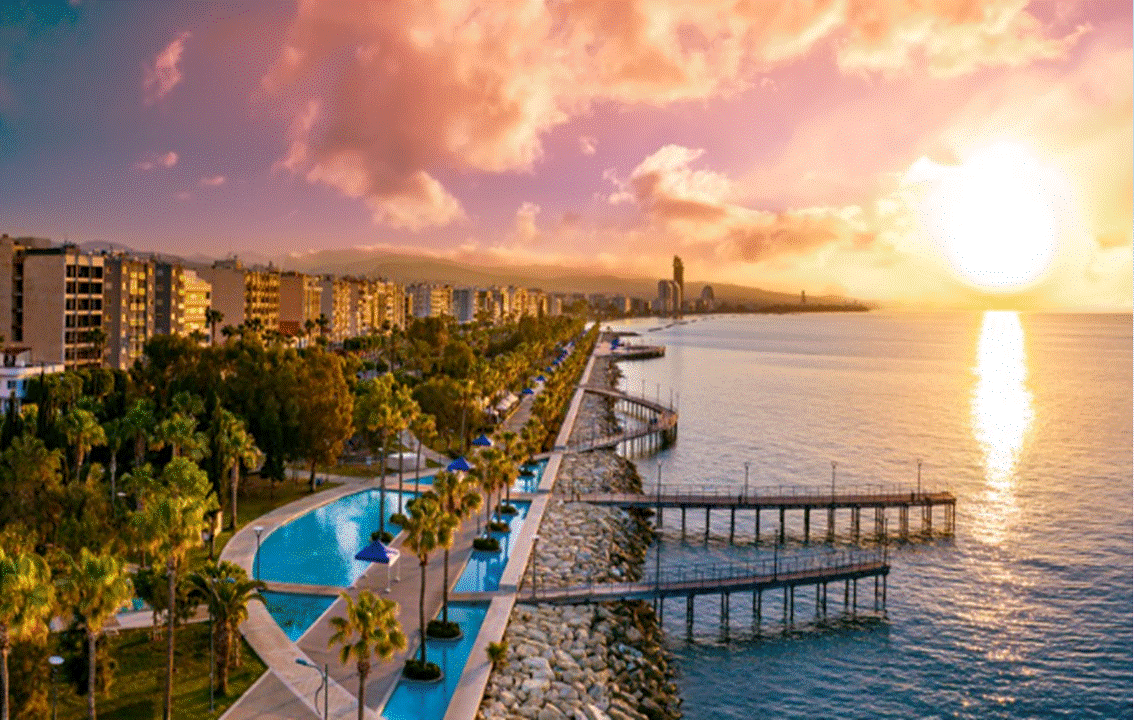
Cyprus has always been strategically and commercially important, and various civilisations throughout history have sought to control the island because of this. The history of Limassol reflects this and has a rich and quite remarkable story that dates back thousands of years. Various nations have ruled the island, and several different European and Middle Eastern civilisations have inhabited the Limassol region throughout the ages. All have contributed and moulded the city’s history, but as with all of Cyprus, Limassol has always managed to maintain its Hellenism.
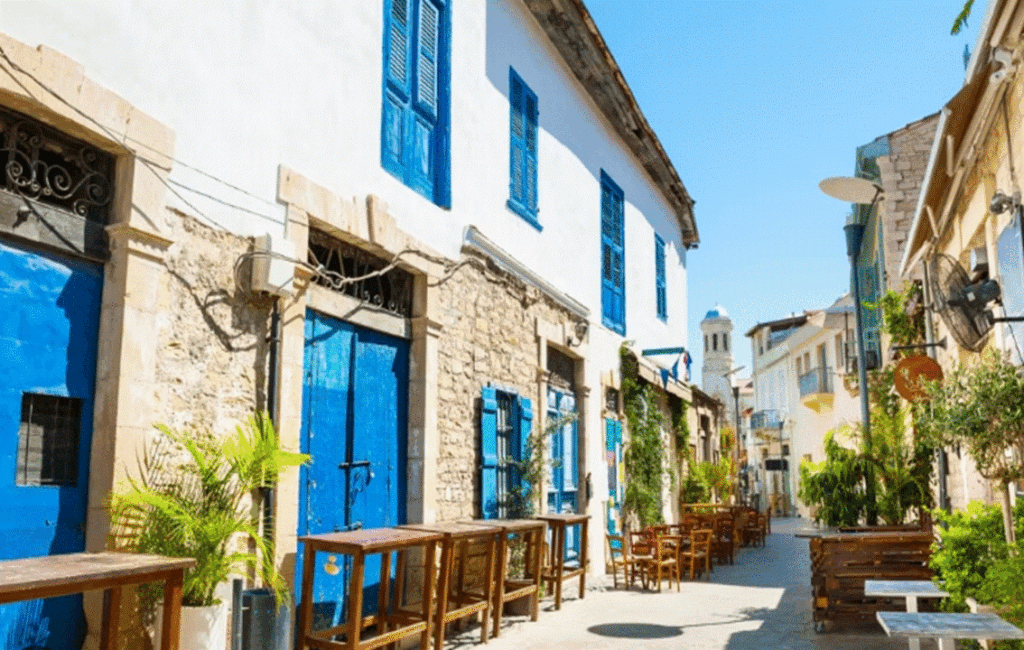
OLD TOWN LIMASSOL
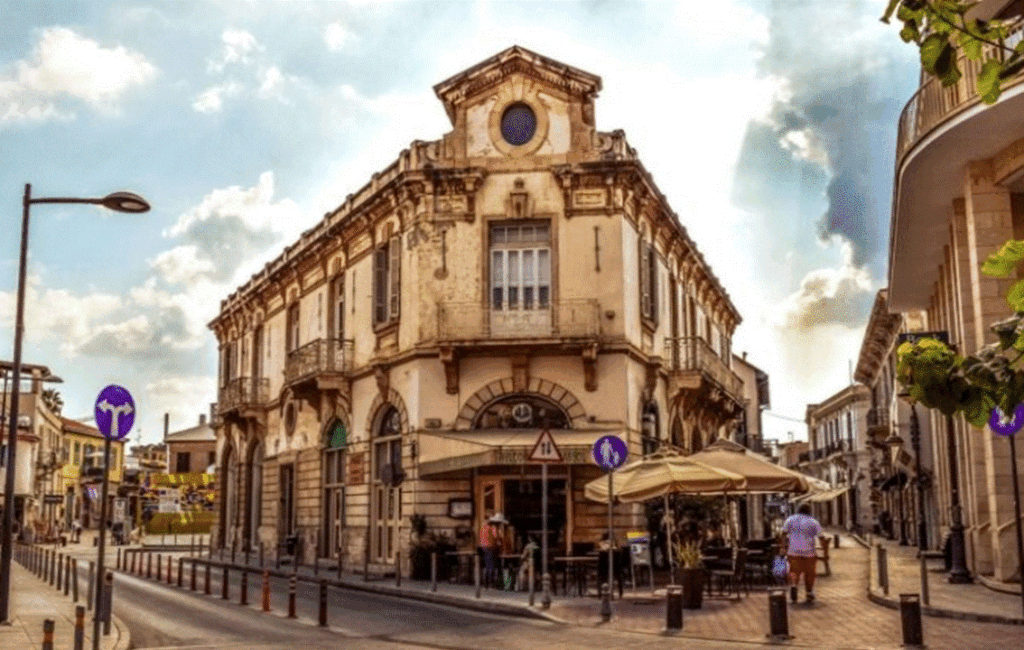
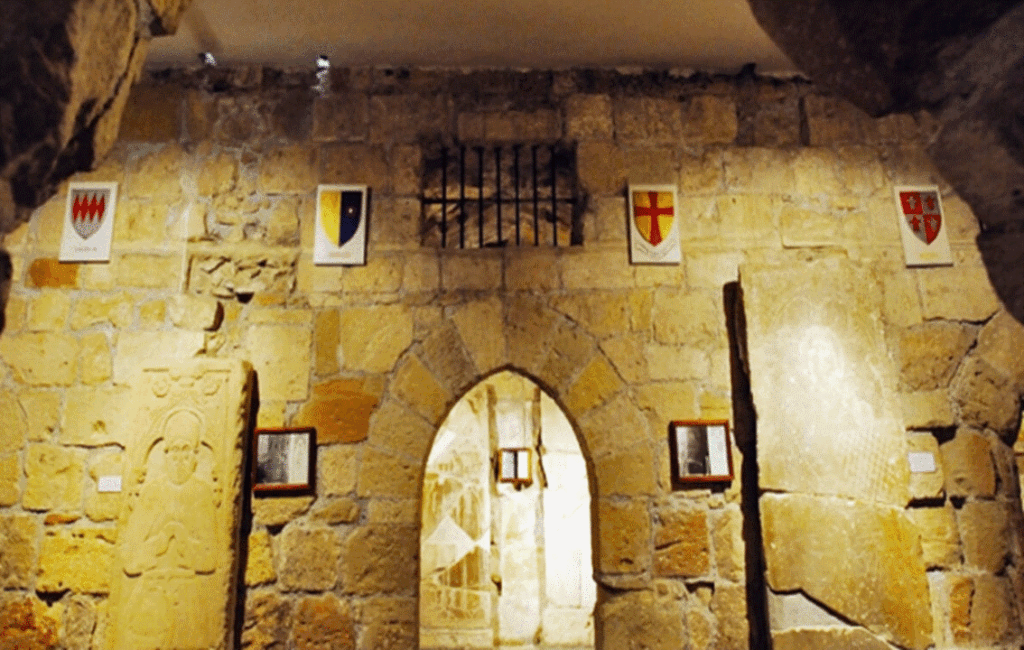
GOTHIC ARCHITECTURE LIMASSOL
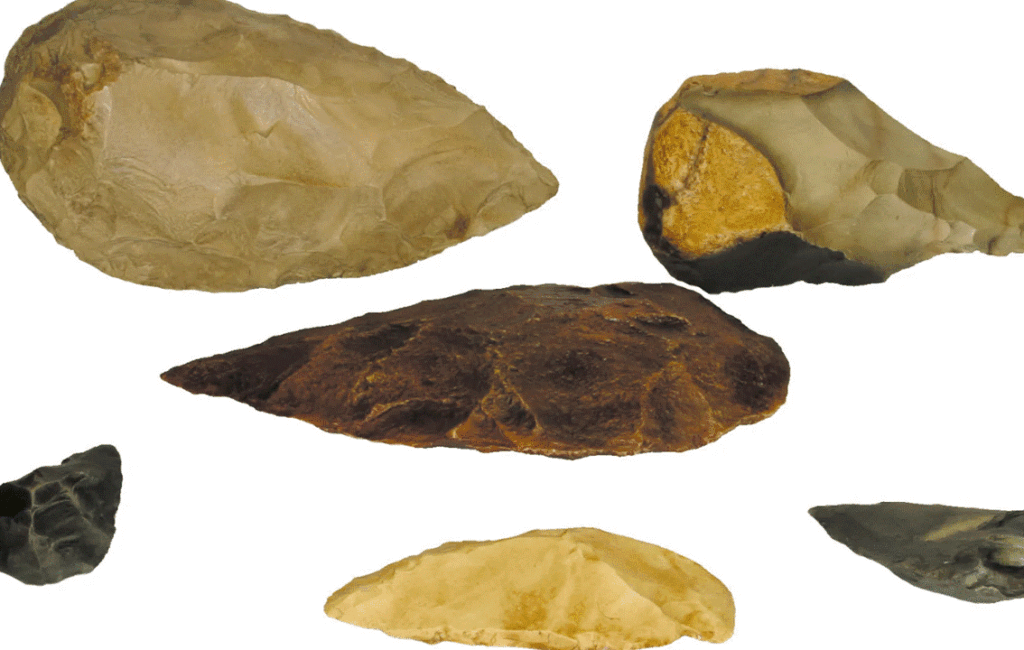
PALEOLITHIC HUNTER GATHERERS
The history of Limassol stretches back for thousands of years. Evidence has revealed that Paleolithic hunter-gatherers were active in the Limassol area as early as the 12th century BC. The establishment of the first permanent settlement in the Limassol area was in the Neolithic period. The first recorded permanent city was the ancient city of AMATHUS. The ruins of AMATHUS can be found today on the eastern coast of the city, and it contributes greatly to the history of the whole Limassol region.
A DEPICTIONS OF A PALEOLITHIC HUNTER GATHERER IN CYPRUS
PALEOLITHIC FLINT HEADS
TWELVE CITY KINGDOMS
It is known that several Greek veterans, returning from the Trojan war, eventually settled in Cyprus. Some Greek generals arrived with small contingents of their armies and immediately sought to take control. Their clamour for power helped to form the TWELVE ANCIENT KINGDOMS OF CYPRUS. One of these City Kingdoms was AMATHUS, which is said to have been named after one such general.
THE ANCIENT CITY OF AMATHUS
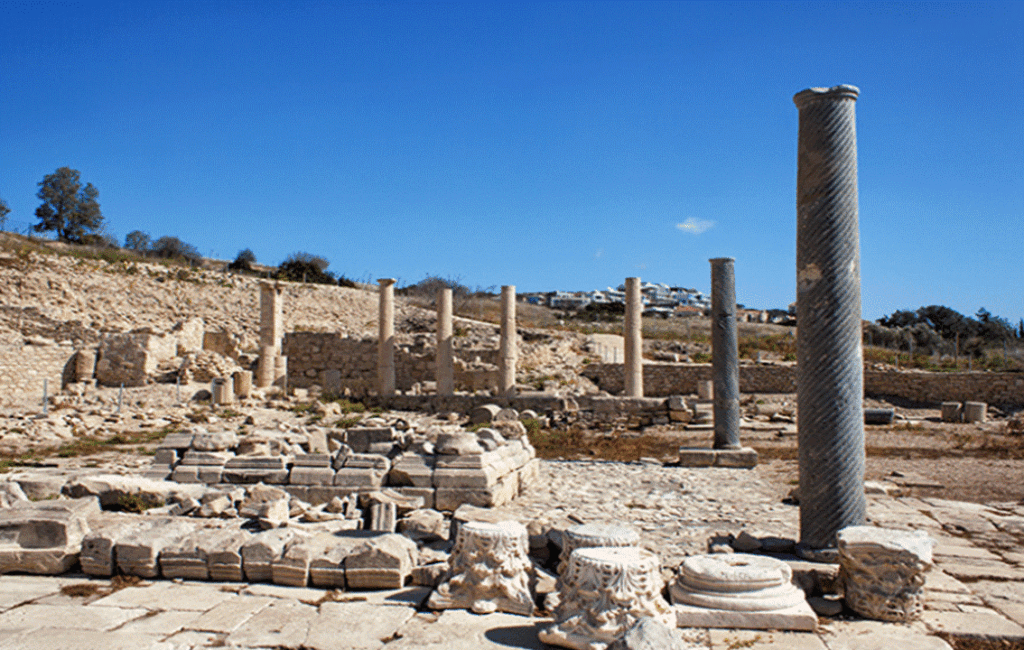
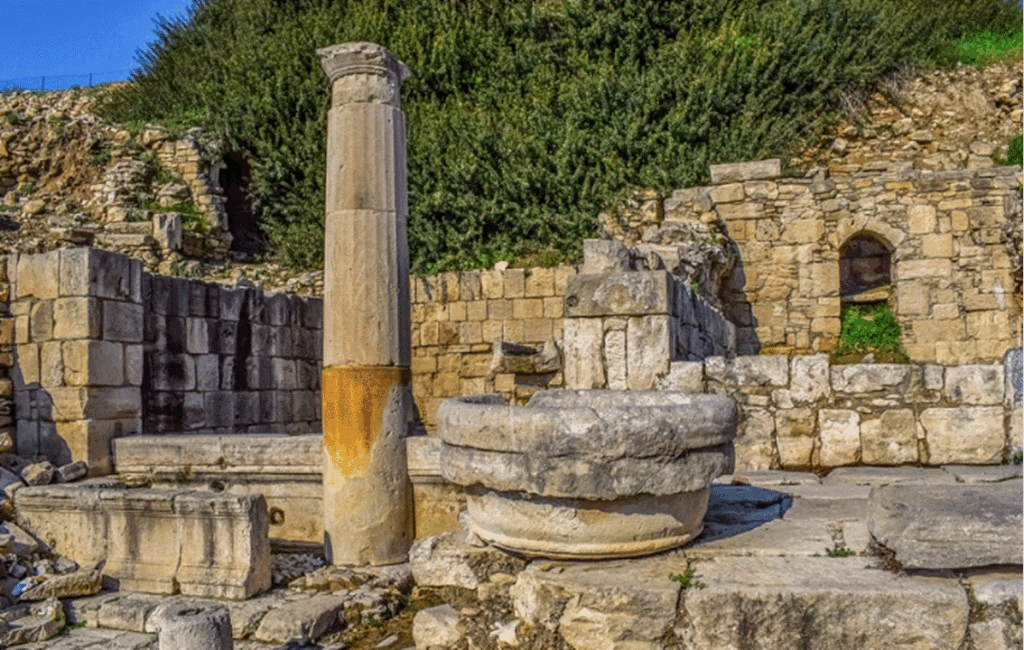
AMATHUS is one of the first recorded settlements in the greater area of the Limassol district. Today, it forms part of the history of the City of Limassol. Excavations from its ruins have revealed Greek Euboean pottery. These date back as far as the 10th century BC. Graves, dating back to the 8th century BC, have also been discovered there. Built on coastal cliffs, AMATHUS remained one of the ancient royal cities of Cyprus until about 300 BC. Densely populated, it became very wealthy through its natural port, which served as one of the island’s main trading hubs at the time, along with its abundant agriculture. At its height, the ancient city boasted a grand palace, an acropolis, a temple dedicated to the goddess Aphrodite, an agora, city walls, a basilica and of course its port.
NEW GREEK SETTLERS
As the ancient City of AMATHUS developed, it later attracted several Greek settlers. Copper miners arrived in droves, and several of them, along with copper merchants, would have settled in AMATHUS permanently. This was because the port city was instrumental to the export of the alloy. Cypriot copper would eventually become so renowned throughout the ancient world that it would give the island its name.
THE ANCIENT CITY OF AMATHUS
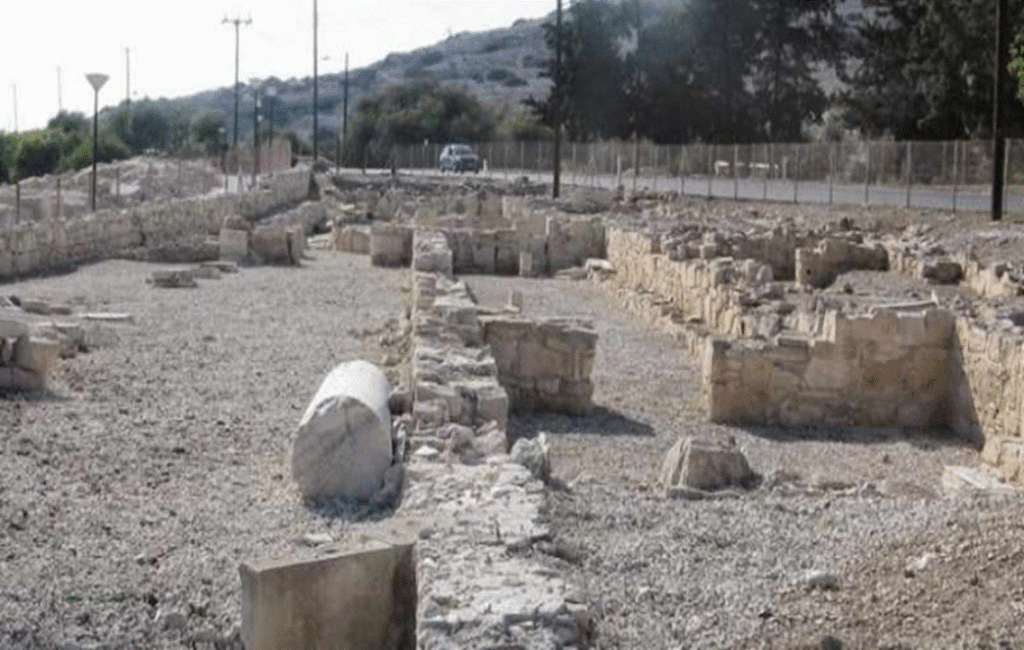
THE RUINS OF AMATHUS
THE ROMANS
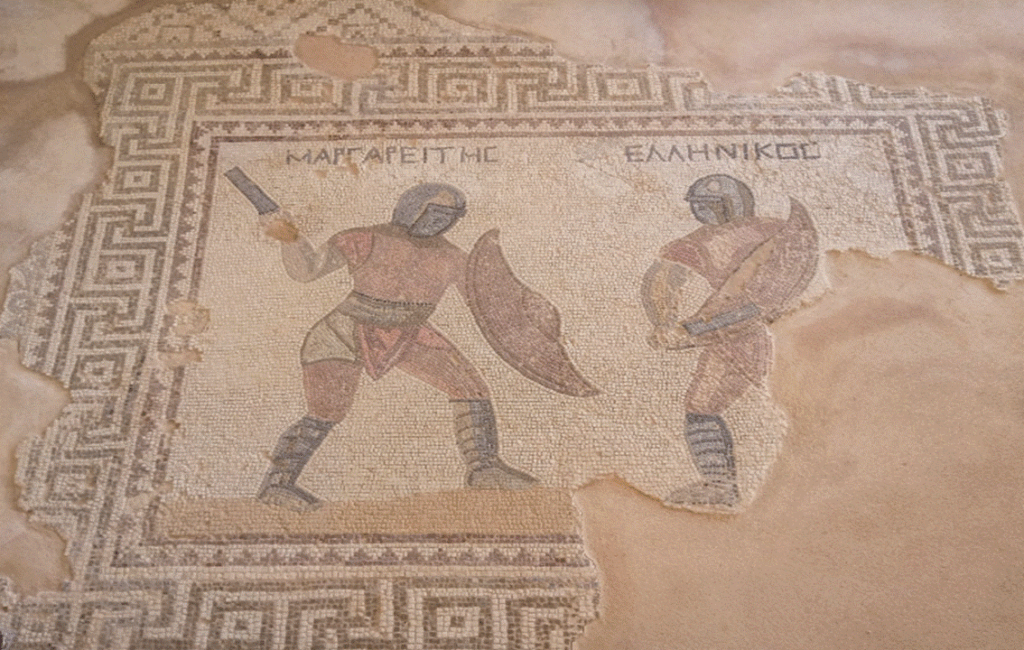
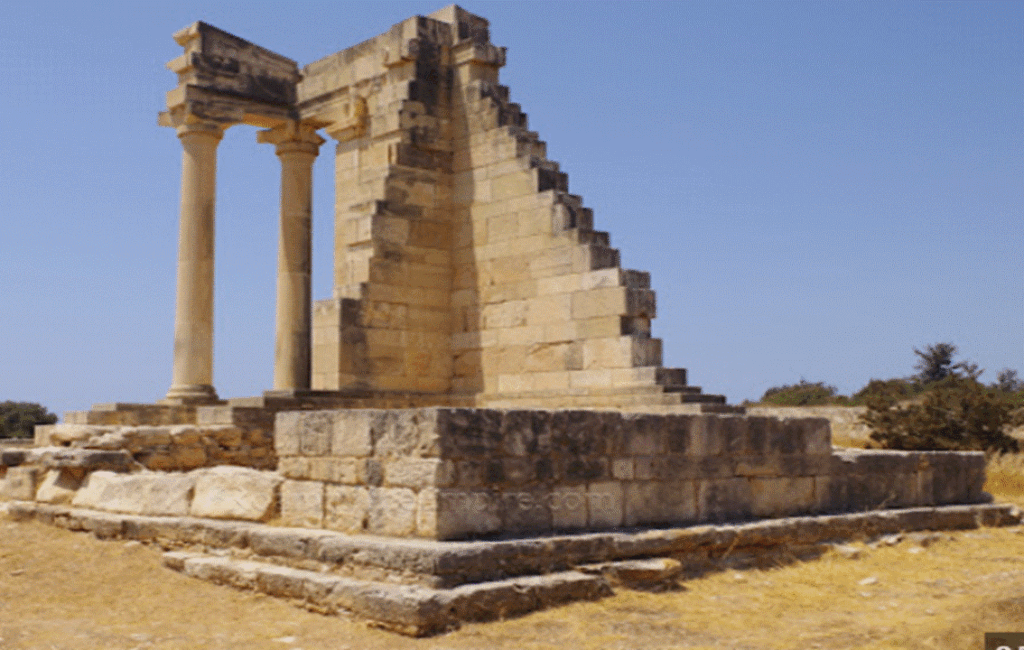
Roman rule lasted seven centuries, and they are major contributors to the history of the whole Limassol region. The Romans loosely kept in place the twelve kingdoms of Cyprus, but administered them within four larger administrative regions. The city of Amathus became the capital of one of the four administrative regions of Cyprus under Roman rule. A Roman temple replaced the Hellenistic Aphrodite temple and AMATHUS under Rome, featured as a major eastern Mediterranean trading centre. The port of AMATHUS traded mainly Cypriot copper from the nearby Kalavasos mines.
CYPRUS ROMAN MOSAICS
ROMAN TEMPLE AT KOURION
TWO NEW SETTLEMENTS
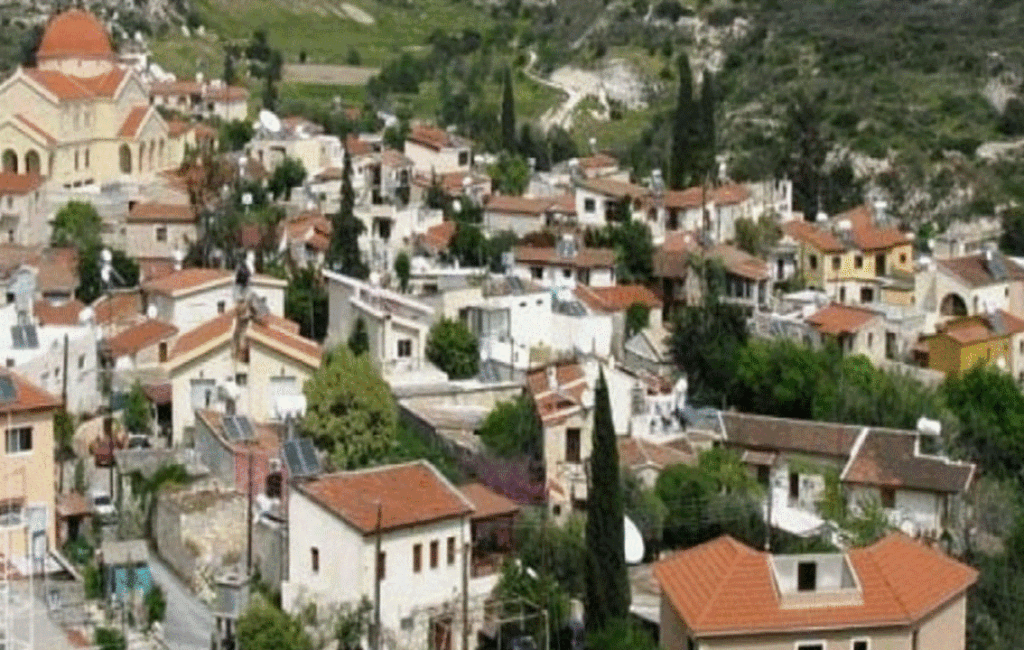
The city of Amathus continued to prosper under Byzantine rule, which lasted nearly seven centuries. The city expanded westward, resulting in the formation of two notable new settlements. The village of Ayios Tychonas, formed just north-west of the city of Amathus, adopted the name of its main founder, the bishop Saint Tychon of Amathus. Today, the ruins of Amathus lie within the municipal borders of the village. Another new settlement called Neapolis was also established to the west of Amathus. Neapolis was further inland and is modern-day Limassol’s first incarnation. Neapolis Later became known as Nemesos, and then Lemesos and eventually Limassol.
MEDIEVAL LIMASSOL
During the medieval period, Limassol overtook Amathus as the premier port city on the island’s southern coast. The port of Limassol has served as a main hub for trade between Europe and the Middle East ever since. Limassol at this time also became a centre of culture and learning. A number of scholars and artists from Europe and the Middle East settled there. In the early part of the twelfth century, Cyprus came under the control of a local Byzantine despot named Isaac Komnenos. The new ruler broke away from the Byzantine Empire and declared himself a self-styled emperor. The now independent Cyprus loosely held ties with the Byzantine Empire, but lost its protection.
AYIOS TYCHONAS VILLAGE TODAY
EXCAVATIONS AT AYIOS TYCHONAS
RICHARD THE LIONHEART
Richard the Lionheart, on his way to the Third Crusade, sought refuge in Limassol after a storm forced his fleet towards Limassol’s coast. The King of England lost ships, and much of his army washed up on the shores of Limassol. The self-styled ruler of Cyprus at the time ordered his forces to plunder treasure from the shipwrecks and took a number of the Lionheart’s fleet prisoners. The ship carrying Richard’s fiancée, Berengaria of Navarre, had taken shelter from the storm in the port of Limassol. Komnenos. however, did not allow the passengers to disembark, effectively keeping them as hostages after blockading the ship in the port.
TOTAL WAR
After the Lionheart’s ship landed on the coast of Limassol unopposed, he immediately demanded that Komnenos release his men and his ships. Diplomacy having failed, the Lionheart set about forcing Komnenos’s hand. After rounding up his remaining forces, the King of England set about besieging the City of Limassol. His superior forces, although outnumbered, eventually captured the whole region, forcing Komnenos and his forces to flee to other parts of the island. He then ordered his forces to take control of the entire island, leading a brutal war on all who resisted.
AN OPEN REVOLT
An enraged Richard the Lionheart ordered his army to lay a complete waste to the city of Amathus, after it openly revolted against his crusaders. The destruction of the settlement was swift and concise, and its people fled after it was completely plundered. The tombs of Amathus were also pillaged, and the stones from the edifices were later brought to Limassol to be used for new construction projects. Most of the refugees of Amathus were resettled in Limassol thereafter. Meanwhile, Komnenos and his diminishing forces remained at large with the Lionheart’s crusader army constantly pursuing them.
A LAST STAND
The crusaders, after capturing Komnenos’s banner, hunted down and destroyed the remnants of his Byzantine army. Komnenos, with a small force, then fled to the walled City of Nicosia. The Lionheart’s army marched on to Komnenos’s last stronghold, setting the stage for a showdown. After a brief siege, the Lionheart accepted Komnenos’s surrender, and with this, Byzantine dominion on the island came to an abrupt end. The Lionheart would go on to spend the rest of the year on the island, celebrating his marriage with Berengaria of Navarre, who was crowned queen consort of England in the Limassol castle before finally embarking on his crusade.
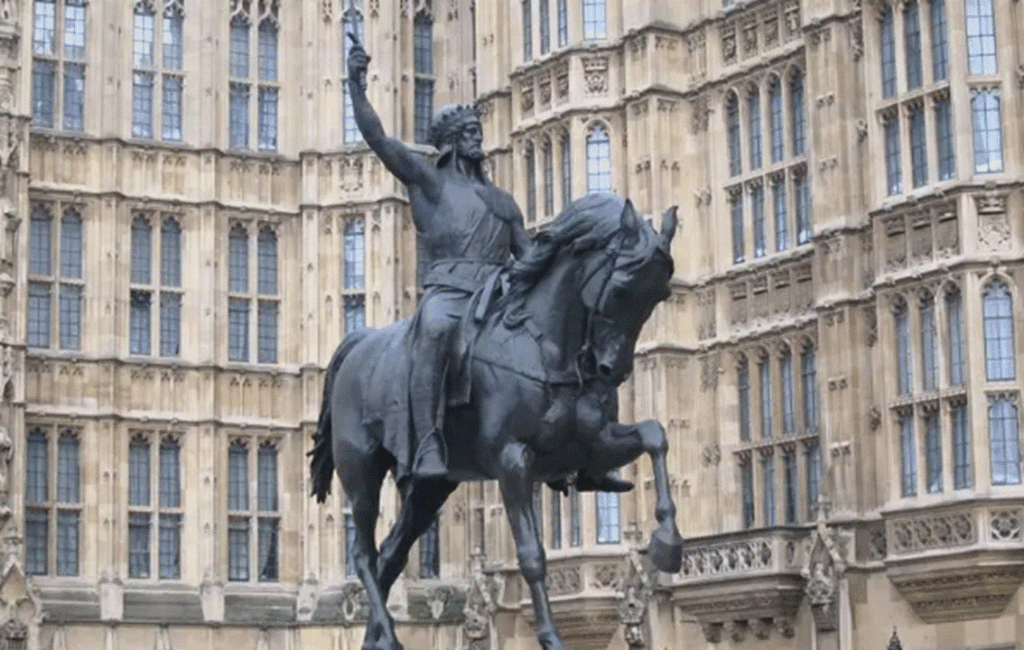
THE STATUE OF RICHARD THE LIONHEART
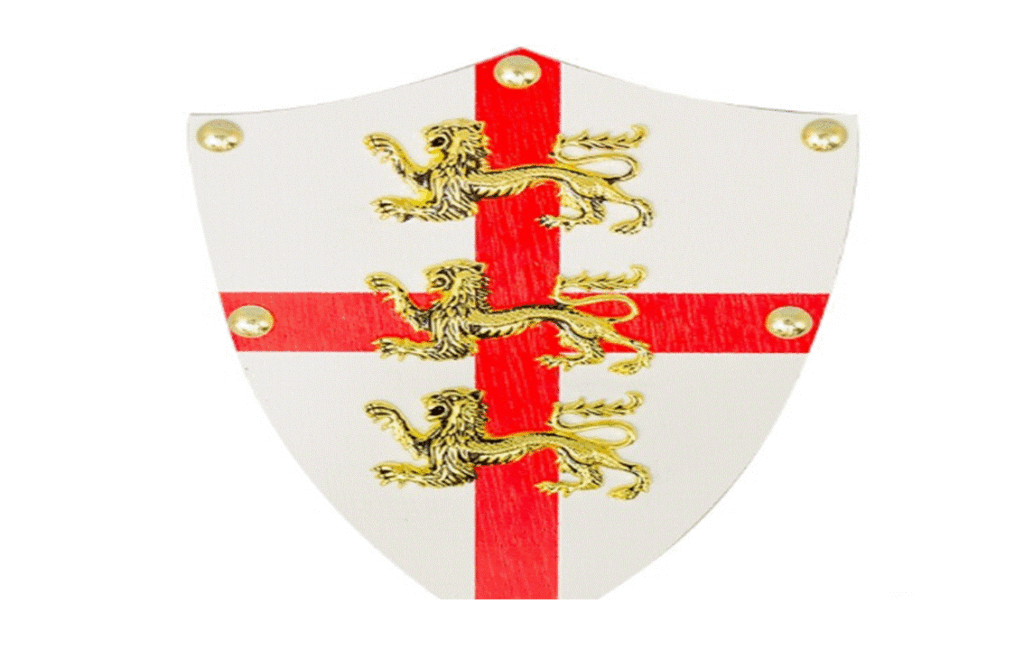
RICHARD THE LIONHEART COAT OF ARMS
THE ANGLO-NORMANS
The Anglo-Normans rule was very short, but in this short time they not only contributed greatly to the history of Limassol, but also left a lasting legacy all over the island. The Anglo-Normans transferred all administrative duties from Nicosia to Limassol and introduced a new feudal system. This meant that the whole of Cyprus had became a feudal kingdom. The Anglo-Normans ruled with an iron fist and their troops plundered most of the island’s wealth. Their administration also imposed heavy taxes on the general population to help fund their eagerly amticipated crusade. Cypriots often rebelled, but each uprising was crushed and their leaders were often publicly executed. The Lionheart eventually sold Cyprus to the Knights Templar before setting off to his crusade a year after his conquest of the island and this marked the end of the short Anglo-Norman rule in Cyprus.
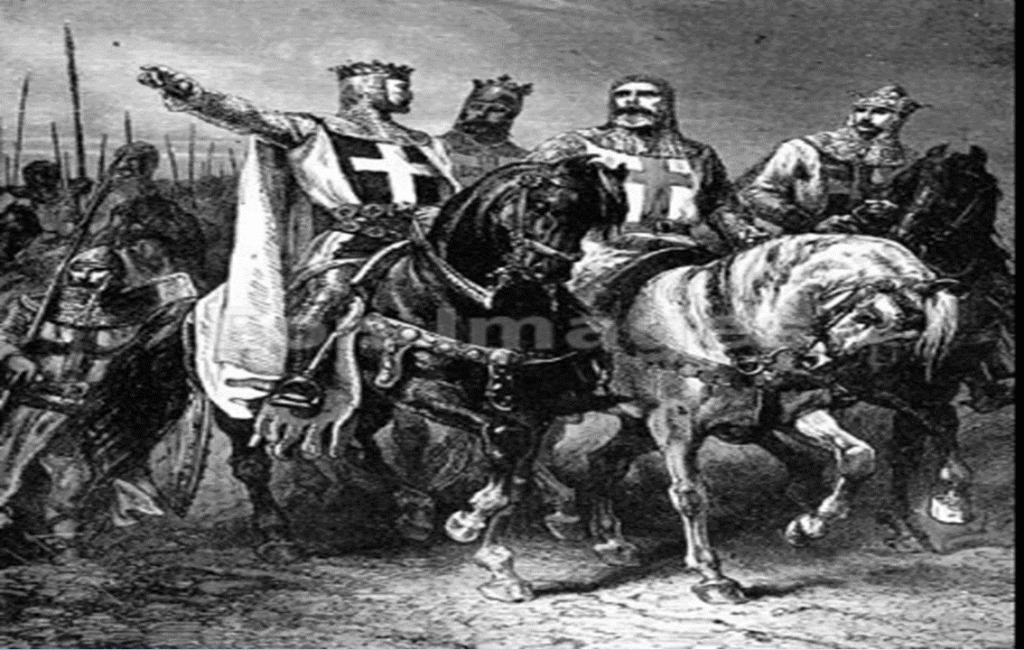
A DEPICTION OF ANGLO-NORMANS IN CYPRUS
THE LIMASSOL CASTLE
THE KNIGHTS TEMPLAR
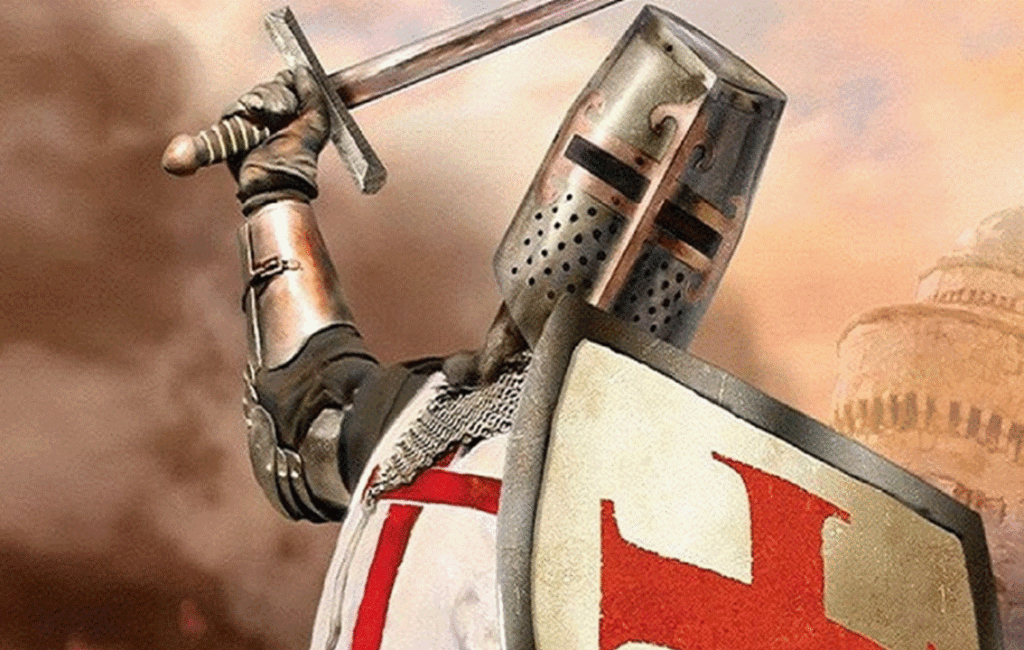
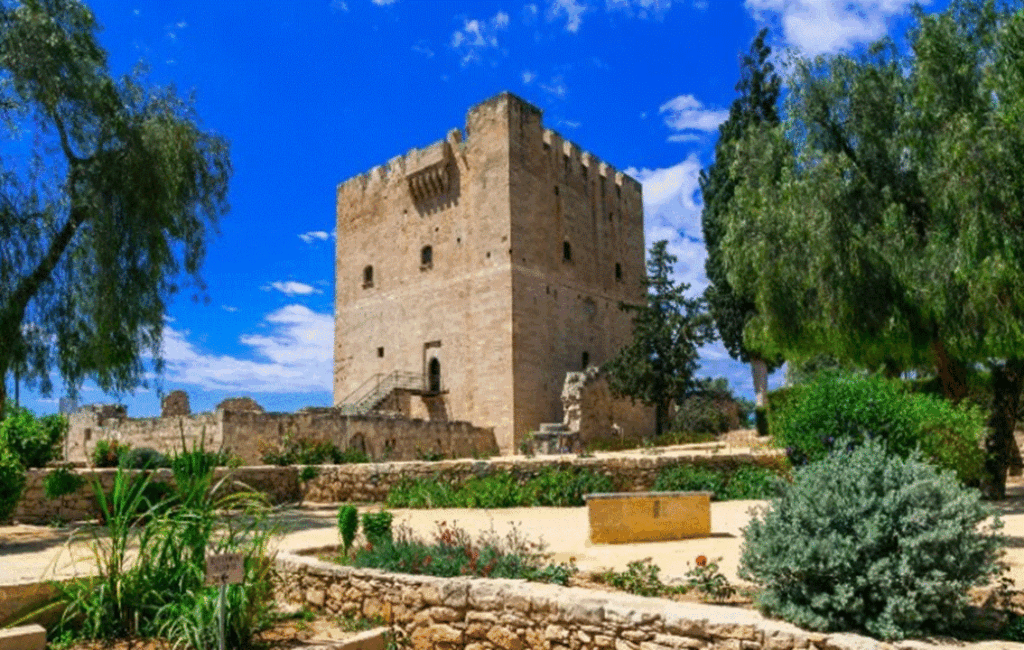
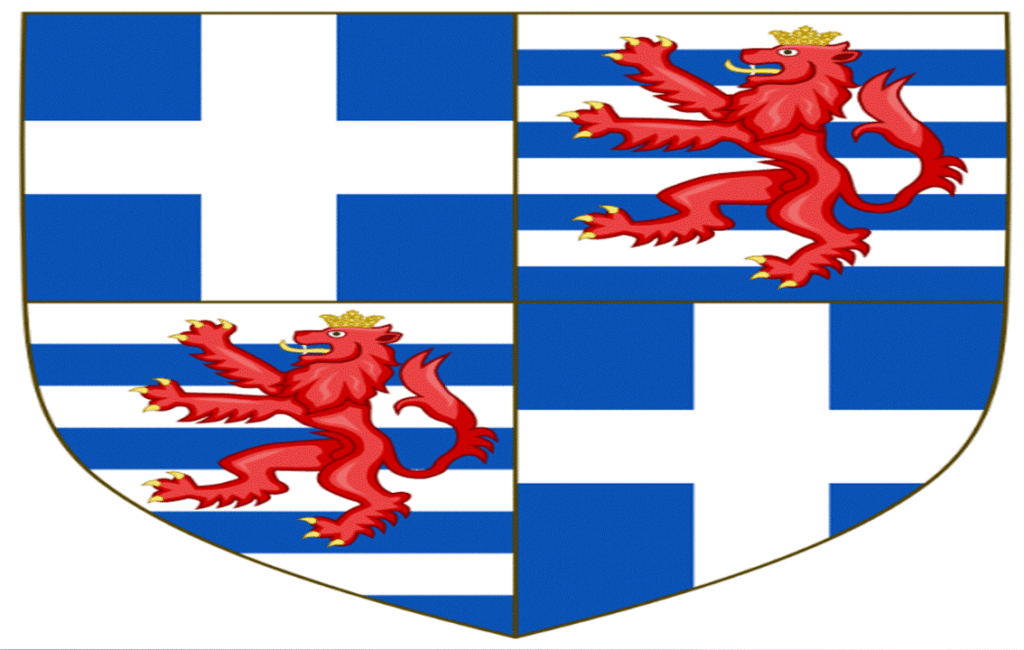
The Knights Templar set up their administrative headquarters east of Limassol in Kolossi and used the imposing fort as their main base of operations. They kept the Anglo-Norman’s feudal system in place and this allowed them to continue to enforce extremely high taxes on the populace. The Knights Templar numbers on the island were fewer than than the Anglo-Normans and the Cypriots took advantage of this by increasing their rebellious campaigns, striking in multiple locations all at the same time. This tactic led to whole situation soon becaming unmanageable for the Templars and after heavy losses, they passed on the island to Guy de Lusignan. The Franks had just lost the city of Jerusalem to the forces of Saladin and they saw Cyprus as an ideal place to settle after their defeat. The Franks arrival on the island marked the end of the short reign of the Knights Templar and ushered a new Frankish dynasty that would last close to three centuries.
A DEPICTION OF A KNIGHT TEMPLAR
KOLOSSI CASTLE
THE FRANKS
The Franks moved all administrative activity inland back to Nicosia, but Limassol still enjoyed remarkable prosperity under Frankish rule. The Franks kept the feudal system in place, but they administered it with a much fairer tax system. All rebellions halted almost immediately, and the Cypriots embraced the tolerant Frankish rule. Cyprus by this time was exporting high-quality sugar, excellent wine and a whole host of other fine agricultural products. Textiles, which included weaving and lace production, along with glazed ceramic ware, were also being exported through Limassol’s port.
A NEW RELIGION
Although the Greek Orthodox church remained prominent, the Franks installed the Catholic church as the main religion on the island. This saw them introduce several new Latin monasteries across the island by the latter part of the 15th century. As time wore on, the Franks found themselves in a weakened state, and this, as well as extreme economic issues, led to the last queen of Cyprus, who had Venetian connections, abdicating. This power vacuum was aptly filled by the Republic of Venice, which effectively gained control of the island, ending Frankish rule altogether.
THE COAT OF ARMS OF GUY DE LUISIGNAN
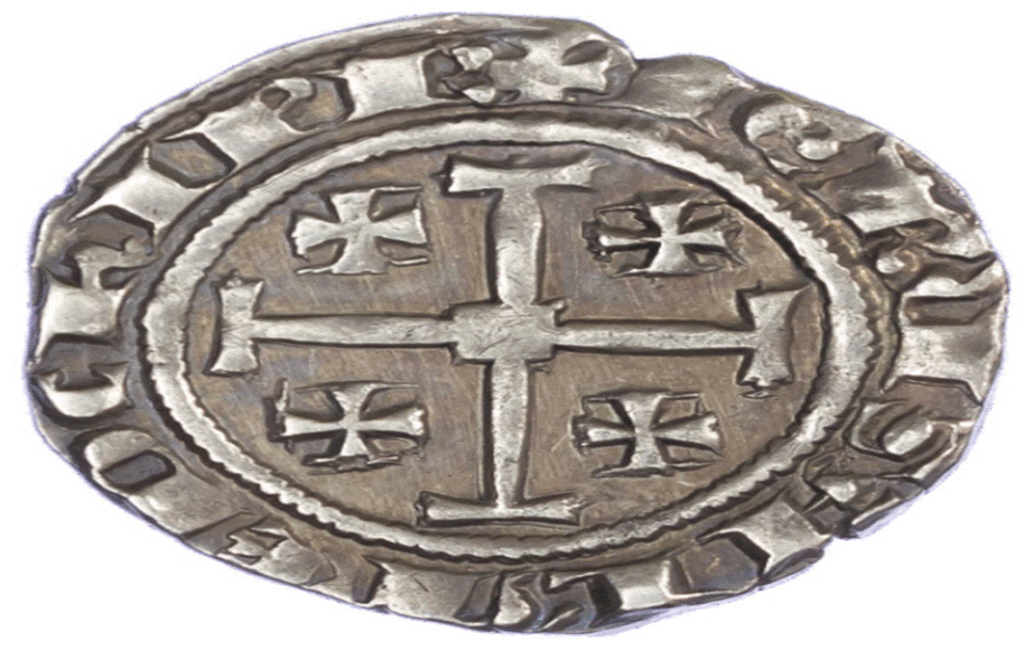
A CYPRIOT COIN FROM THE FRANKISH PERIOD
THE REPUBLIC OF VENICE
The Republic of Venice was a very powerful seafaring trading empire that had begun expanding into the Eastern Mediterranean. The Venetians had been trading with Cyprus for centuries, and they saw the island not only as a trading partner but also as an ideal military base. They then took full advantage of the ever-weakening Franks, who were in control at the time, after the opportunity for them to take control soon presented itself. They became the new rulers of Cyprus in the latter part of the 15th century after Catherine Cornaro abdicated her throne.
THE THREAT FROM THE EAST
The Ottomans were another expansionist power, emerging from the east. They had already conquered much of Greece by this time, and they had firmly set their sights on Cyprus. The Republic of Venice sought to protect their newly acquired territory, and it had set about preparing for the inevitable confrontation with the Ottoman Turks. In light of this, the Venetians undertook an ambitious plan of fortification and maintained a heavy military presence across the island. Venetian military architects went about strengthening Limassol’s defences, and they reinforced both the Castle and its walls. They regularly fought off several minor Ottoman incursions successfully for the best part of nearly 100 years.
THE OTTOMAN INVASION
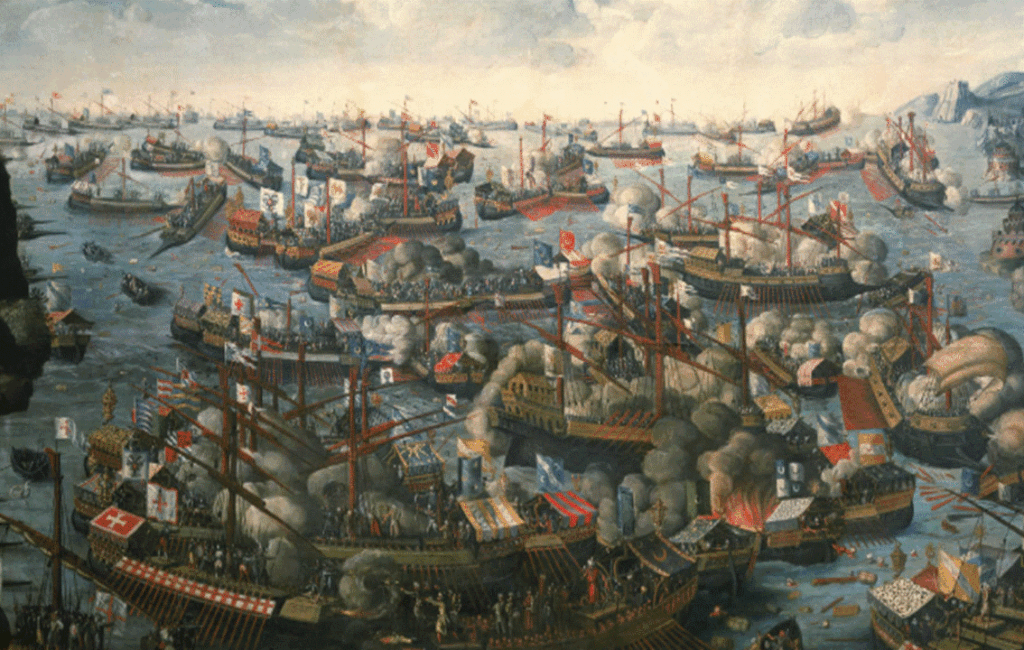
Their fortunes of the Venetians changed, however, when a huge Ottoman fleet attacked and destroyed Limassol and its castle as a precursor to a full-scale invasion in 1570. This occurred after 60,000 highly skilled Ottoman troops, including cavalry and artillery units, landed unopposed on the coast of Limassol. They would go on to conquer the whole island within the coming year. This conflict sets the historical setting for Shakespeare’s Othello, which portrays the story of the play’s title character commanding a Venetian garrison defending Cyprus against the Ottomans.
A DEPICTION OF VENETIAN SEAFARERS
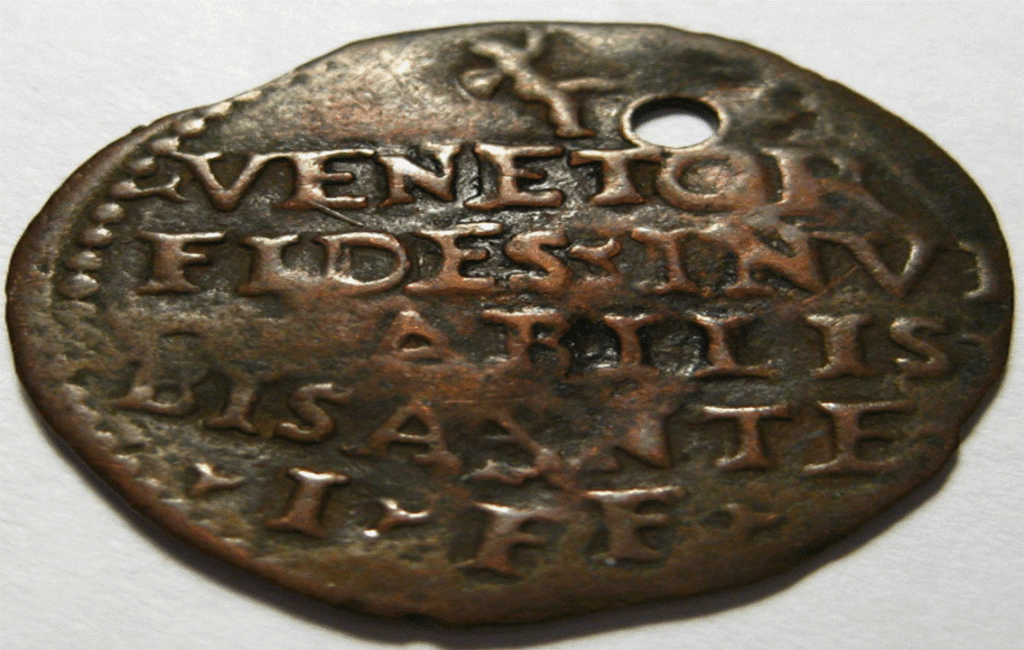
VENETIAN COIN MINTED AT THE FAMAGUSTA MINT
A DECLINING TRADE WITH EUROPE
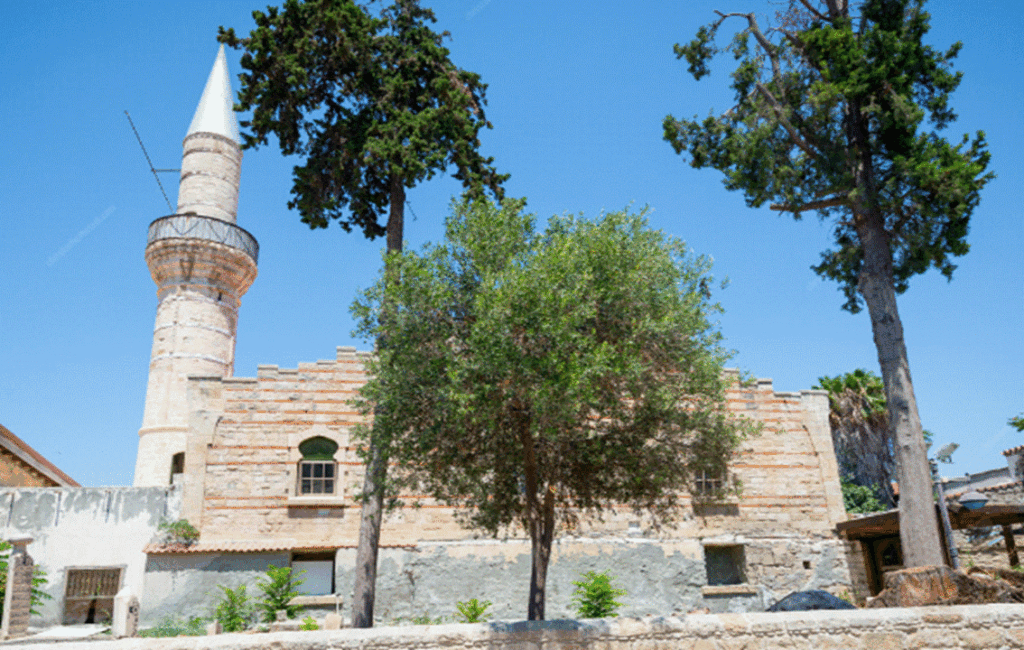
The Ottomans took control of Cyprus in the latter part of the 16th century. They would go on to rule the island for just over three centuries. Limassol and its economy suffered because of the declining trade with Europe, but benefited from an Ottoman building program. This saw the installation of the grand mosque of Limassol. The Ottomans also rebuilt the castle, which was now in a dilapidated state.
OTTOMAN REPIRISALS
The Archbishop, who headed the Greek Orthodox Church, was recognised as the sole representative of the Greek Cypriot population. His institution was allowed to continue practising its religion as long as its clergy collected taxes on behalf of the Ottomans. Greece eventually led an organised armed resistance against Ottoman rule that began in 1821. This led to severe reprisals in Cyprus that led to the execution of thousands of Greek Cypriots in Limassol.
THE GRAND MOSQUE IN LIMASSOL
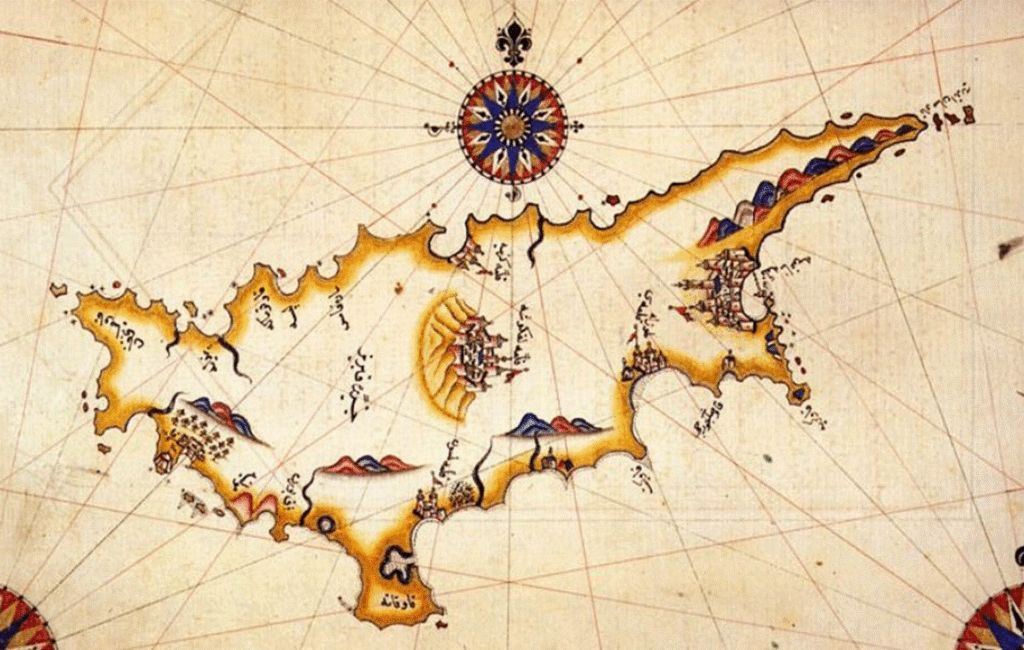
OTTOMAN MAP OF CYPRUS
THE BRITISH EMPIRE
The protection of British interests in the Suez Canal highlighted Cyprus’s strategic importance in the late 19th century. This led to the British seeking an agreement regarding the island with the Ottoman Empire, which was waging a war with Russia at the time. The Ottomans granted the British Empire administration rights over Cyprus in exchange for support against the Russians. This effectively ended Ottoman rule on the island, and Cyprus would eventually become a British colony.
A THRIVING CITY
Cyprus, under British administration, soon began to flourish again. Limassol in particular experienced renewed growth and development, once again becoming a major centre of trade and commerce. Limassol became a key textile producer, and a new shipbuilding program restored its ailing port, which was subsequently expanded. The British also initiated a new building program, repairing and constructing several new roads. They also introduced the first proper postal service, a telegraph office, the first printing press, and for the first time installed a proper hospital. They also introduced the first road vehicles to the island. As the city of Limassol continued to grow it became a fashionable tourist spot and by the end of the 19th century, the city’s very first hotels began to operate.
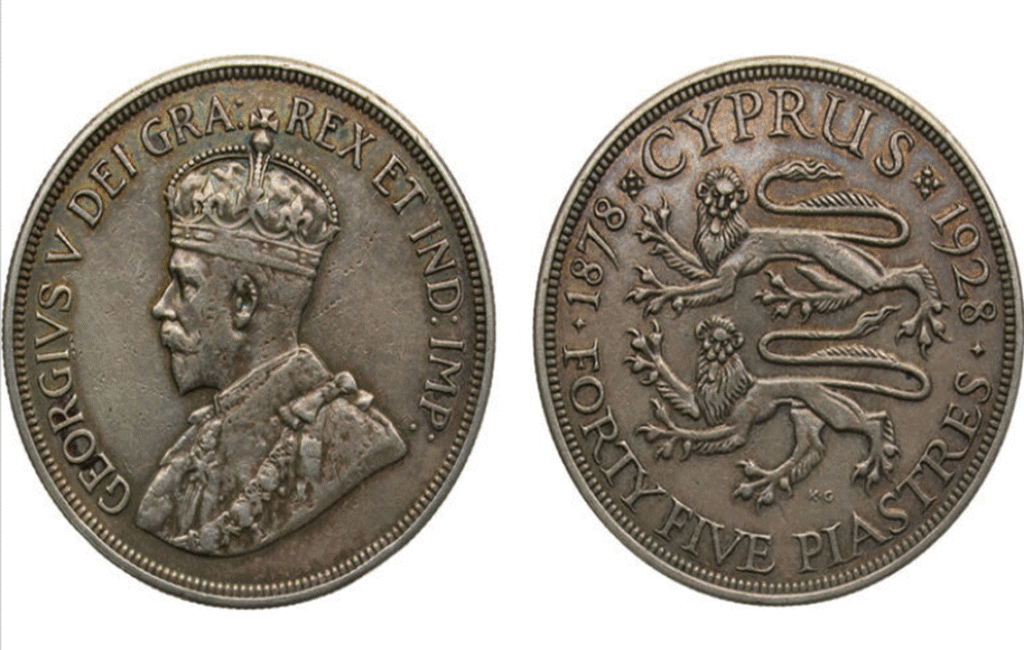
BRITISH COLONIAL CYPRUS COINAGE
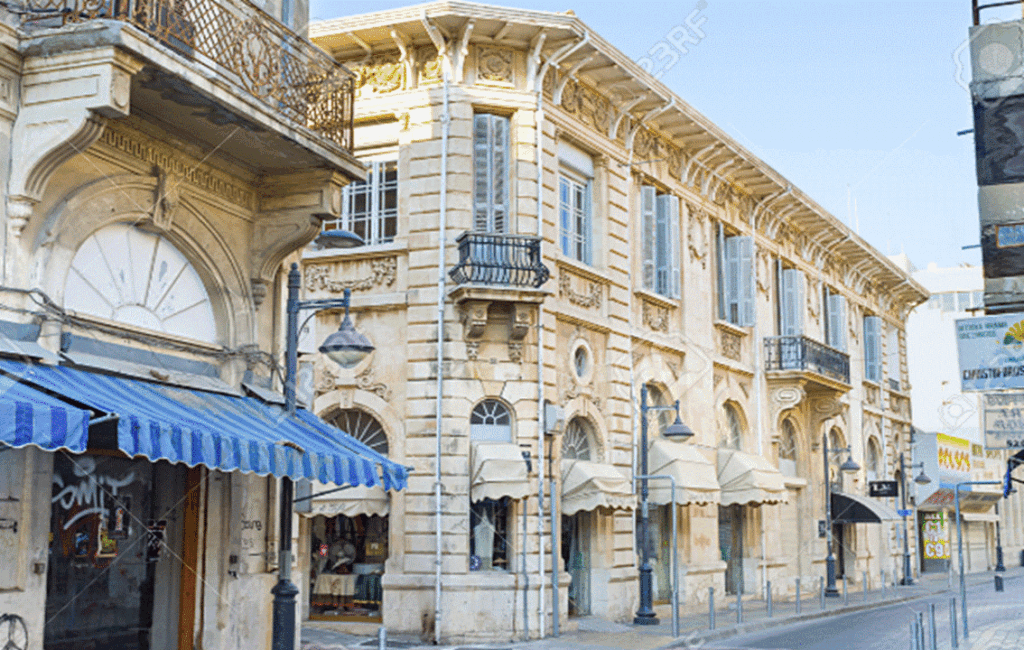
BRITISH COLONIAL ARCHITECTURE IN LIMASSOL
THE STRUGGLE FOR INDEPENDENCE
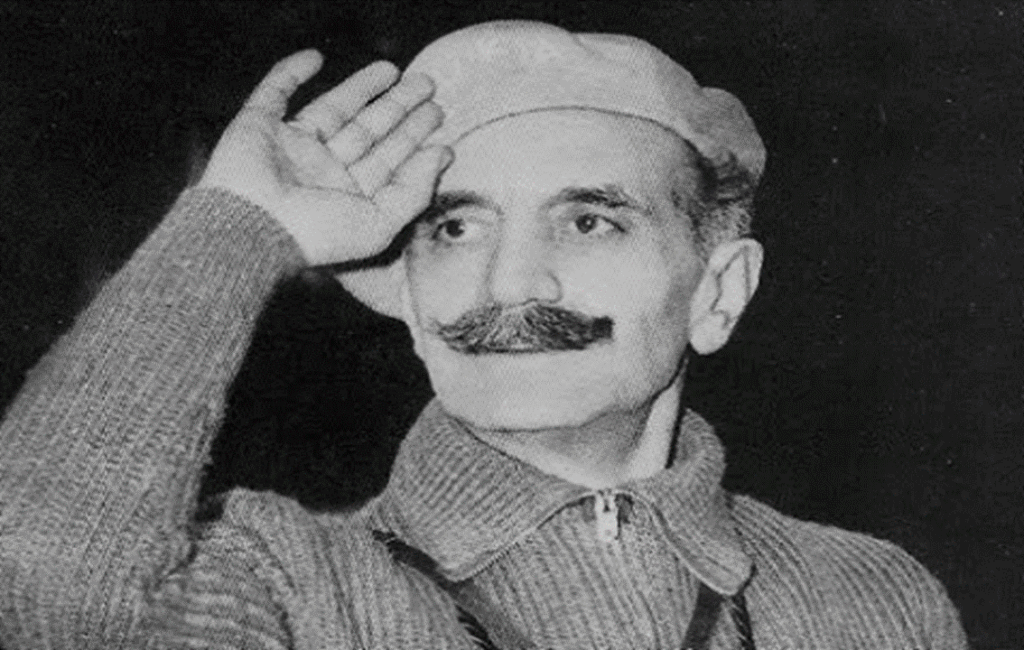
Post World War 2 saw the seeds of freedom and self determination firmly sewn into the Cypriot psyche and an armed struggle against British rule began. EOKA, a Greek Cypriot nationalist military resistance organisation, led the struggle under the leadership of General George Grivas. This brought violence and curfew to the streets of Limassol. The struggle would last for five years until Cyprus gained its freedom and independence.
GENERAL GEORGE GRIVAS
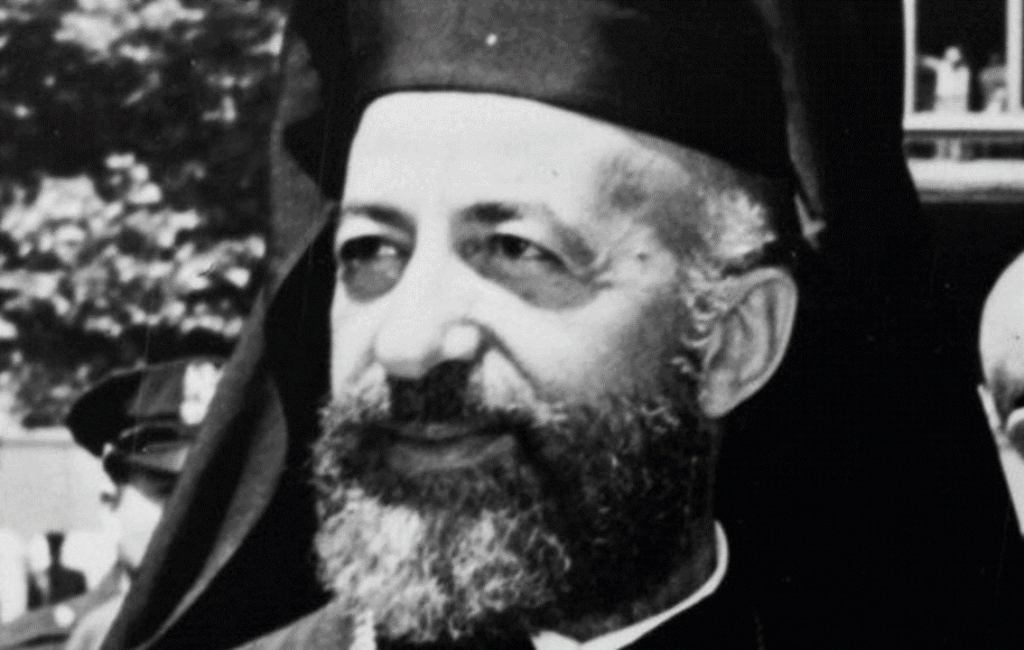
ARCH BISHOP MAKARIOS III
A NEW REPUBLIC
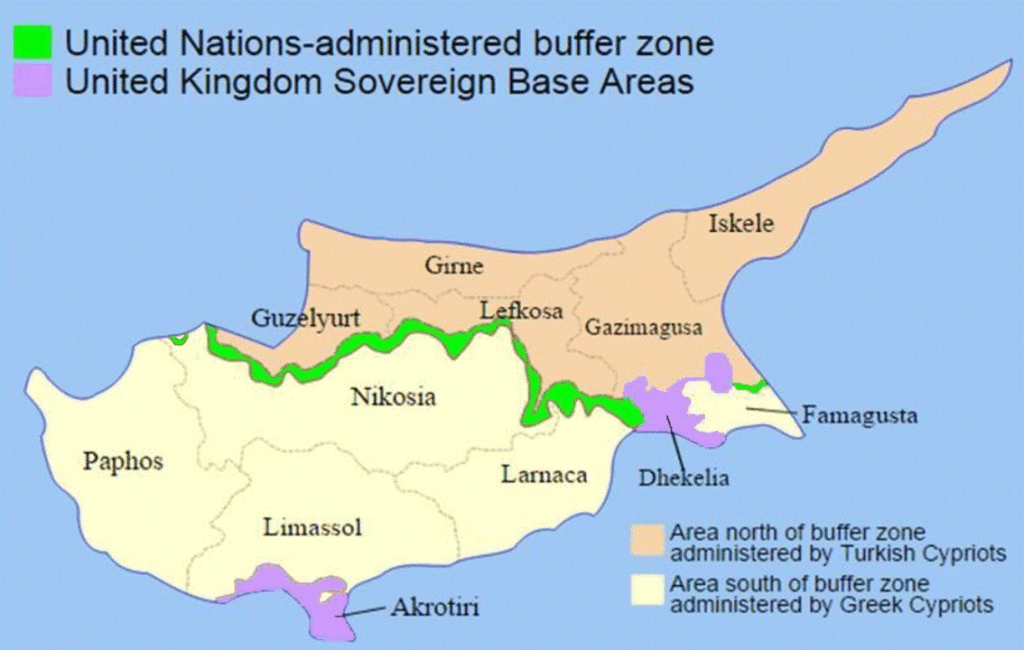
Cyprus gained independence from British rule and formed an independent presidential republic in 1960. The agreement reasched meant that the British retained 13% of the island for the use of military bases. The Akrotiri and Episkopi areas in the Limassol region are still British military bases today. The island’s aspirations for freedom and self determination soon turned to turmoil, when inter-communal violence broke out between Greek and Turkish Cypriots. The fledgling republic saw a political dispute erupt and this resulted in Turkish Cypriots withdrawing from the government and creating segregated communities in and around Limassol. This did not alter Limassol’s economic course however, and city leaders continued to develop its coastline to accommodate the emerging tourism industry.
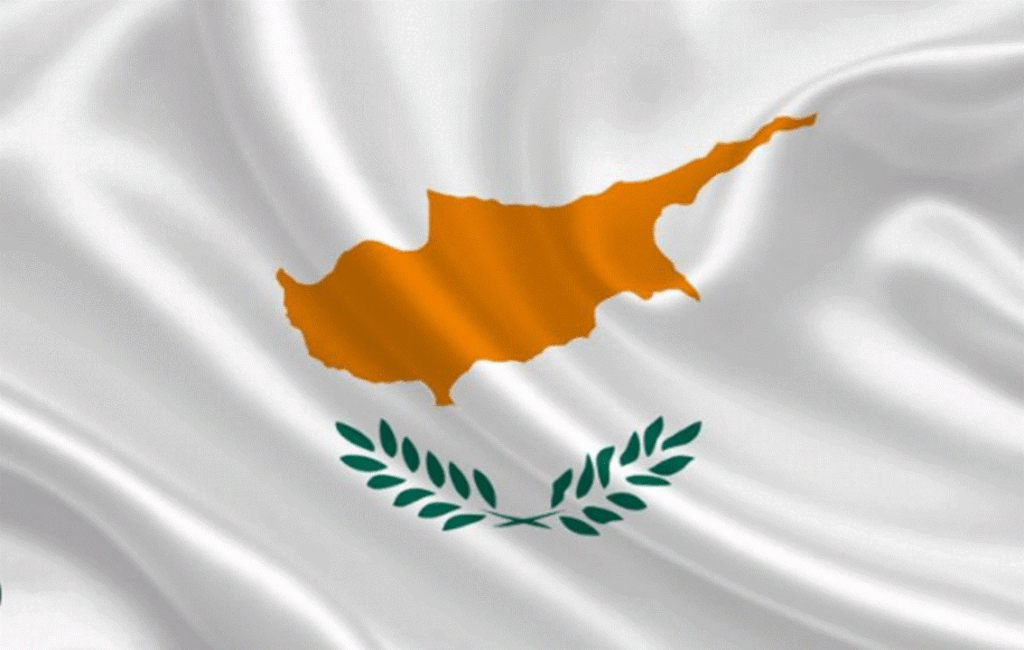
THE FLAG OF THE REPUBLIC OF CYPRUS
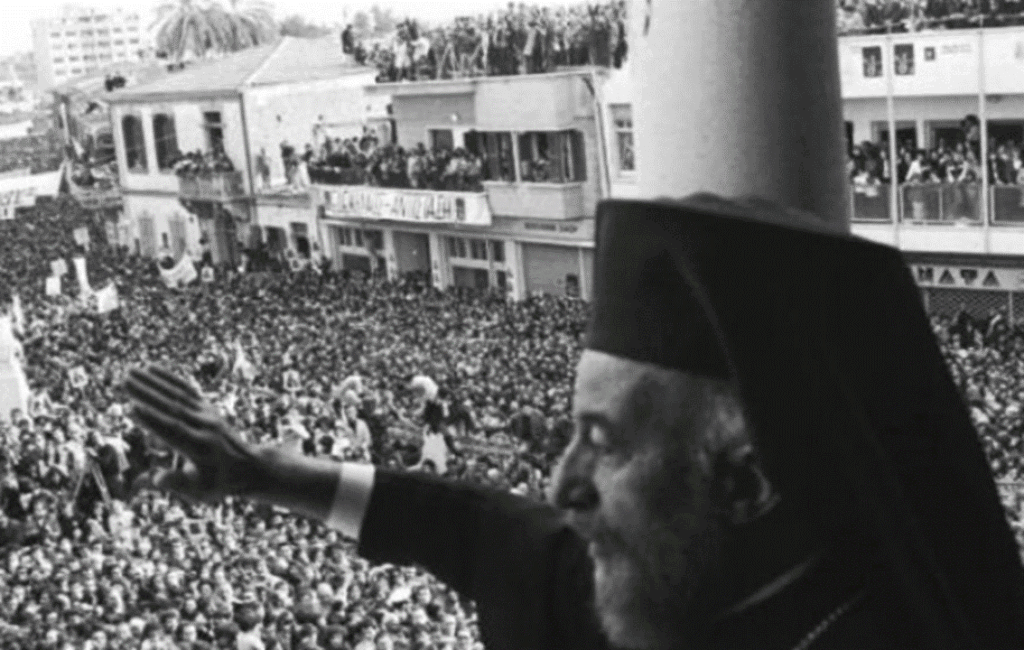
ARCH BISHOP MAKARIOS III BECOMES THE FIRST EVER PRESIDENT OF THE NEW REPUBLIC OF CYPRUS
THE TURKISH INVASION
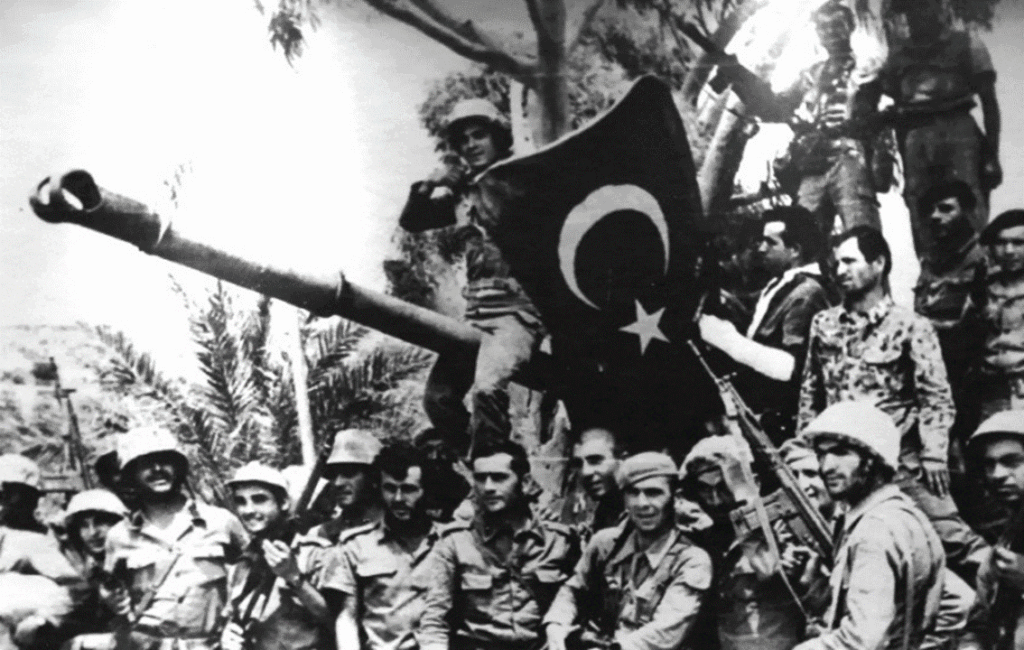
The Turkish invasion of Cyprus in 1974 was precipitated by a coup d’état that saw the legitimate president of the republic ousted. Limassol became divided at this time between supporters of the coup and the republic and tensions remained high throughout the region. The invasion of Cyprus resulted in the occupation of 37% of the island, but Limassol remained intact apart from the exodus of Turkish Cypriot refugees from the Turkish quarters. After the war, Limassol accepted Greek Cypriot refugees from the north in droves that mainly took up residence in the abandoned Turkish quarters.
THE TURKISH INVASION OF 1974
THE GREEN DIVIDING LINE
LIMASSOL TODAY
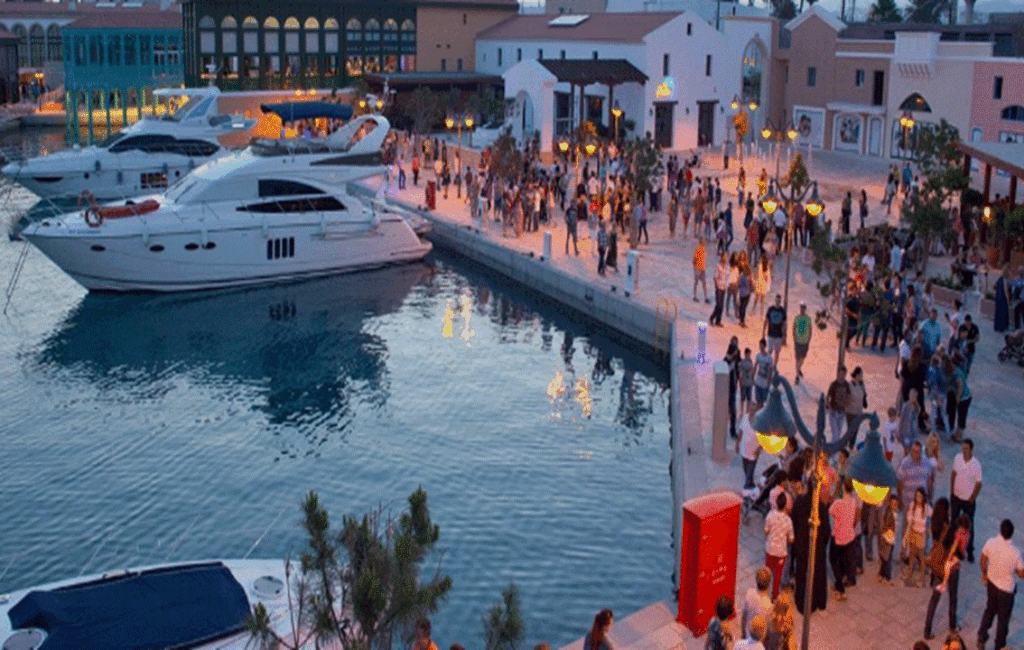
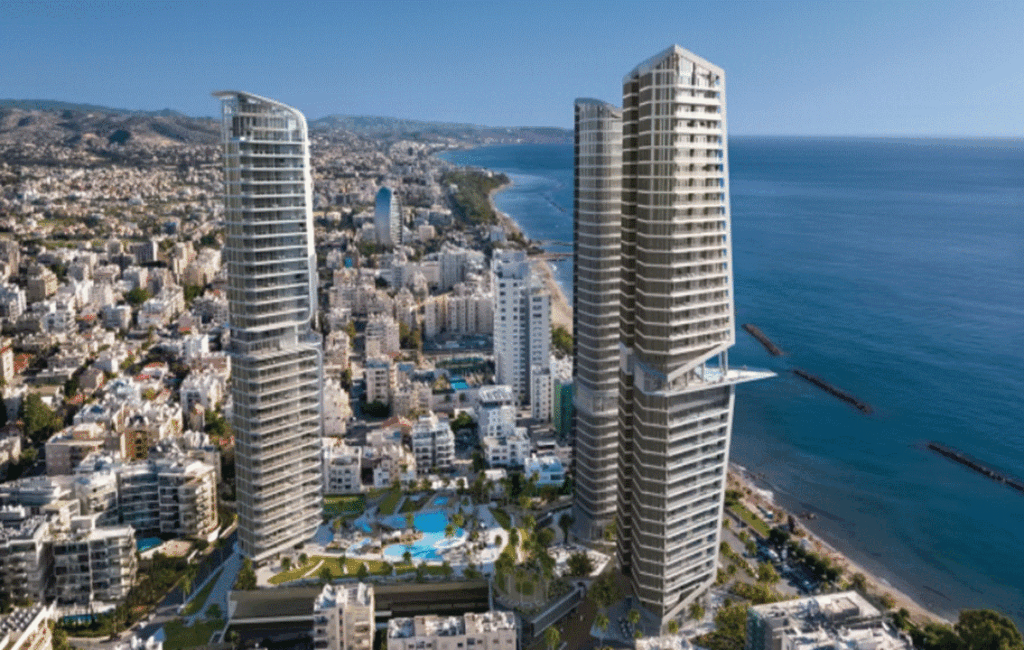
Today, Limassol is a modern and dynamic city, with a rich history and a vibrant diverse culture. The city’s economy is still driven by trade, but also industry, and tourism. The port remains an important hub for shipping and commerce in the Eastern Mediterranean. Limassol has become a unique off-shore base for international companies and many have chosen to establish their regional headquarters there. Limassol has also become a centre for new online markets stretching from gaming to international trading including Forex.
LIMASSOL’S MODERN MARINA
LIMASSOL'S MODERN SKYLINE
KEY FACTS
Artefacts show that people lived at sites that sat between AMATHUS and KOURIONfrom 2000 BC onwards.
The first settlement that forms the modern City of Limassol was known as Neapolis during the Byzantine era.
Richard the Lionheart destroyed nearby Amathus in 1191 AD, then married Berengaria of Navarre at theLIMASSOL CASTLE, where she was crowned Queen of England.
Limassol flourished under medieval Lusignan Frankish rule, bringing great wealth and trade in wine and sugar from 1192 to 1489.
Celebrated by the famous LIMASSOL CARNIVAL, the city flourished under medieval Venetian rule.
Limassol’s growth slowed down considerably under Ottoman rule from 1570.
Limassol flourished again under British rule from 1878.
The Limassol district was key when Cyprus gained independence in 1960.
The 1974 conflict shifted trade from Famagusta to Limassol, transforming the city’s port into the island’s primary commercial port after 1974.