THE ORIGINS OF GREEK MUSIC
It is agreed that the founders of Greek music are not just a specific set of individuals, but also a series of influential movements that have reflected the Greek diaspora at different times throughout history. Largely instrumental in the development of this unique art form, each one has often shared a range of philosophical ideas that have been merged with several cultural practices. This, along with notable theorists and influential composers, has all gone on to play their part in helping to develop the broader evolution of the cultural Greek musical context throughout the ages. Greek music today, as a result, remains an integral part of Greek and Cypriot cultural heritage.
GREEK MYTHOLOGY
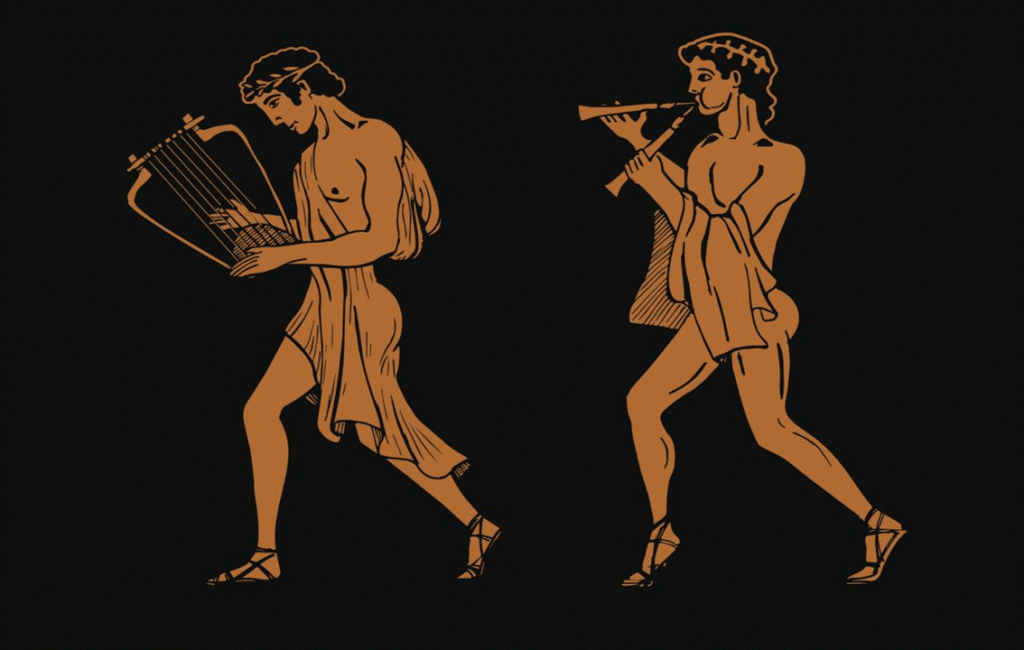
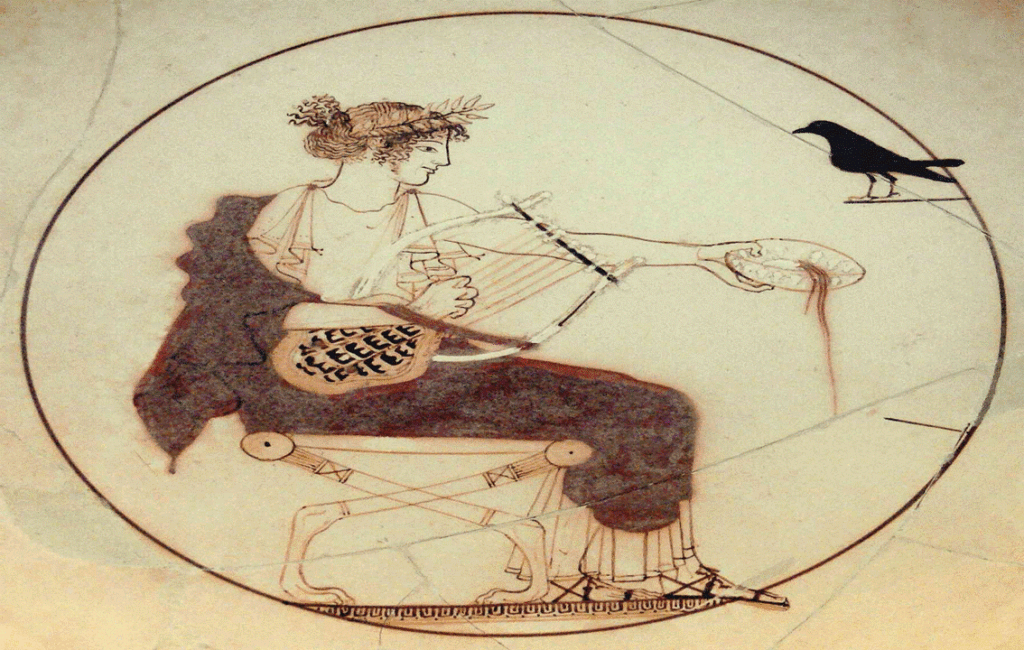
The early roots of this lively form of expression stretch back to antiquity, and the ancient Greek diaspora considered music an important part of its society. The consensus was that this art form was a gift from the gods and this helped to form a foundation cornerstone for the art form’s origins. With several references to it, Greek musical tradition, firmly lies with notable elements of Greek mythology. Apollo, who is the god of music, poetry, and prophecy is a good representation of this within a mythological context.
A CULTURAL FORM OF EXPRESSION
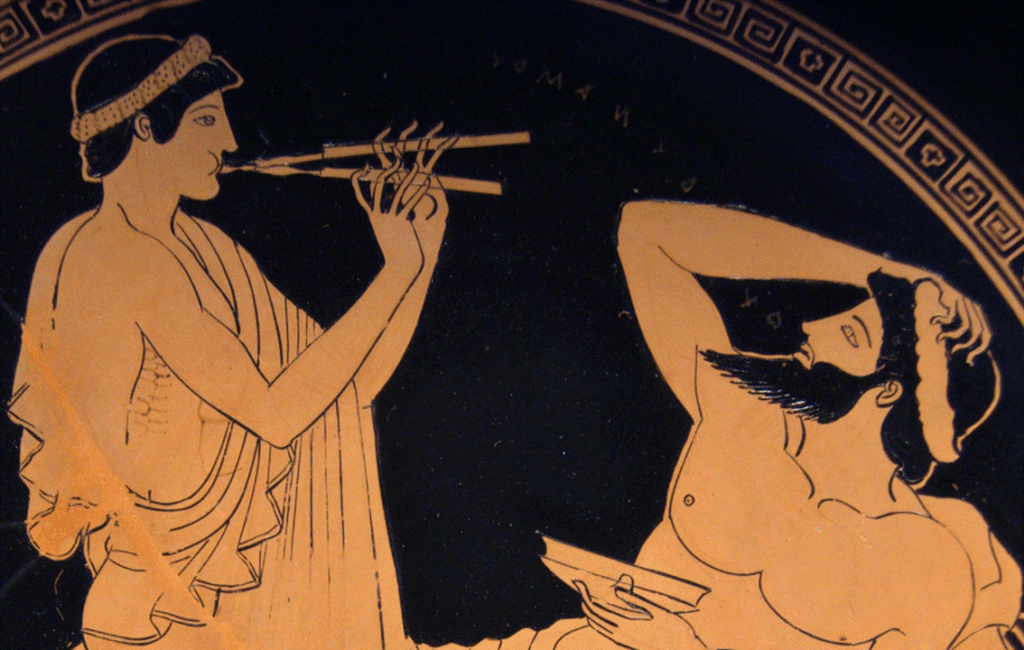
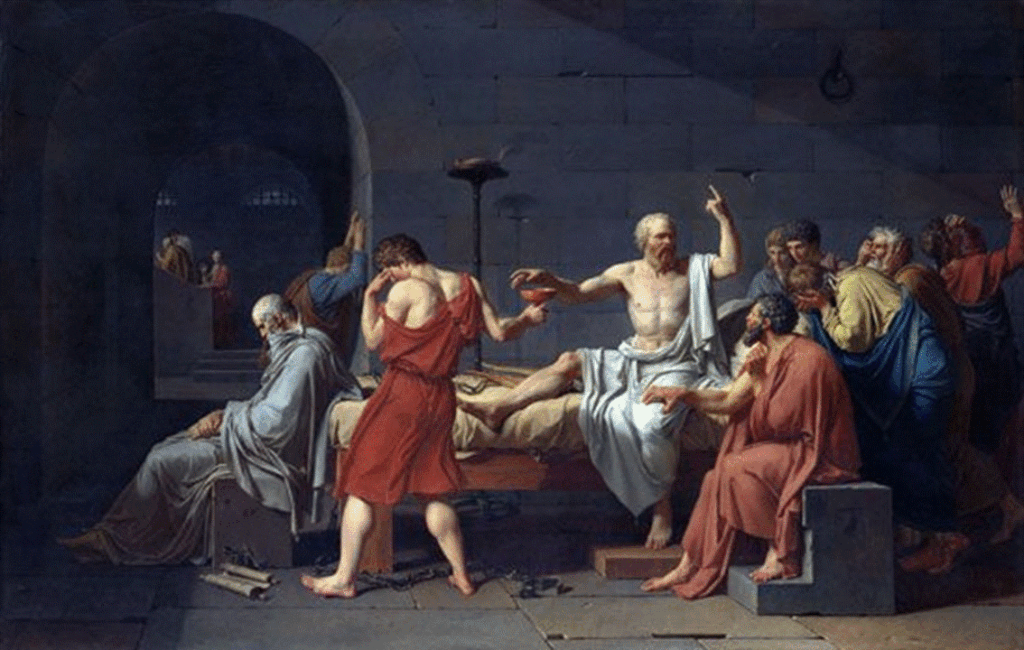
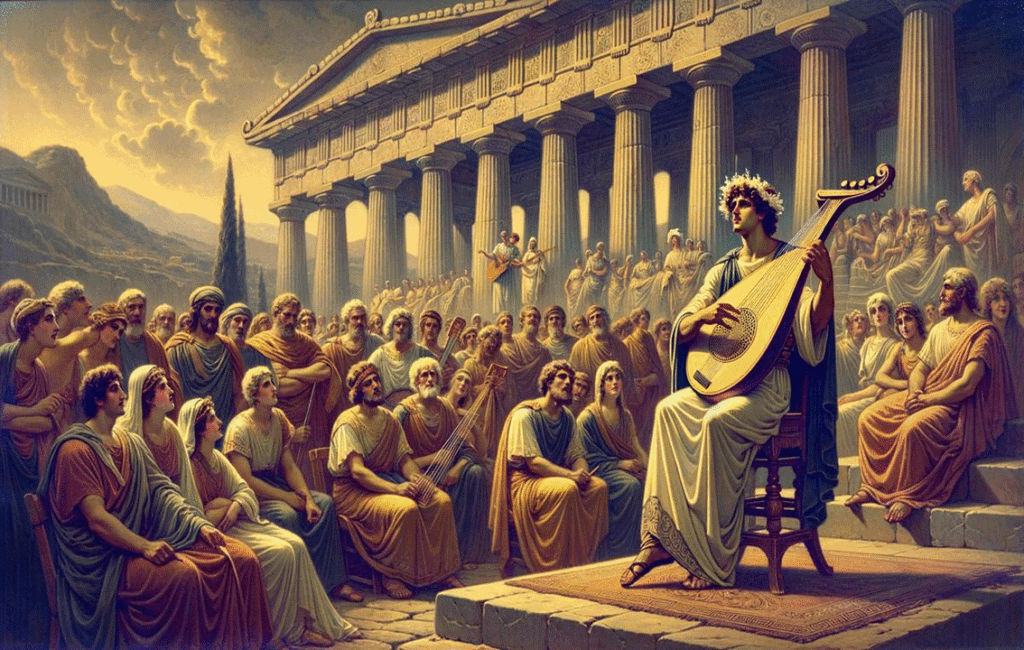
Several notable philosophical thinkers also had a major influence on early Greek music at the time. They went on to make important contributions to the art form, and poetry, dance, and drama were first embraced and then intertwined with the art form. Music also often accompanied religious rituals and social gatherings across the ancient Greek diaspora, collaborating well with most public ceremonies and festivals at the time.
PYTHAGORAS
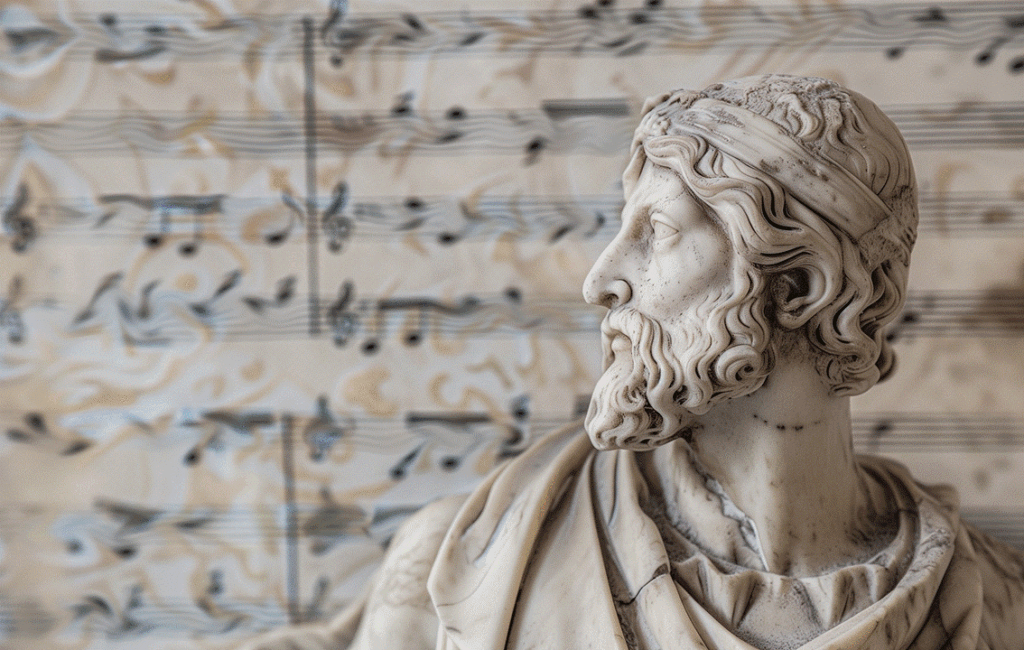
Pythagoras was crucial in shaping several theoretical aspects of Greek music. He believed in the relationship and influence of mathematics on music. As a result, he extensively explored the relationship between numbers and the timing of musical intervals. He was also instrumental in the development of the concept of the ‘Harmony of the Spheres’. The suggestion that celestial bodies produced music through motion directly fed into his narrative. This led him to believe that music had both a mathematical and cosmic significance.
ARISTOXENUS
Embracing the Pythagorean mathematical approach, Aristoxenus went on to prove that music required a subjective understanding of both melody and rhythm. He emphasised the importance of not only perception, but also an auditory experience of music. Aristoxenus’s teachings later laid the foundation for musical theory that would influence Western world music for centuries thereafter.
TERPANDER
Terpander is often referred to as the father of lyrical poetry. Known for systematising existing musical styles, his poetic compositions also often used extremely simple rhythmic patterns. He also simplified the rules of the modes of singing. These formed out of syncopated variants that created a new conceptual musical system. This directly led to a new era of music that used systematised musical styles. These originated not only from Greece, but also from greater Anatolia.
ARION
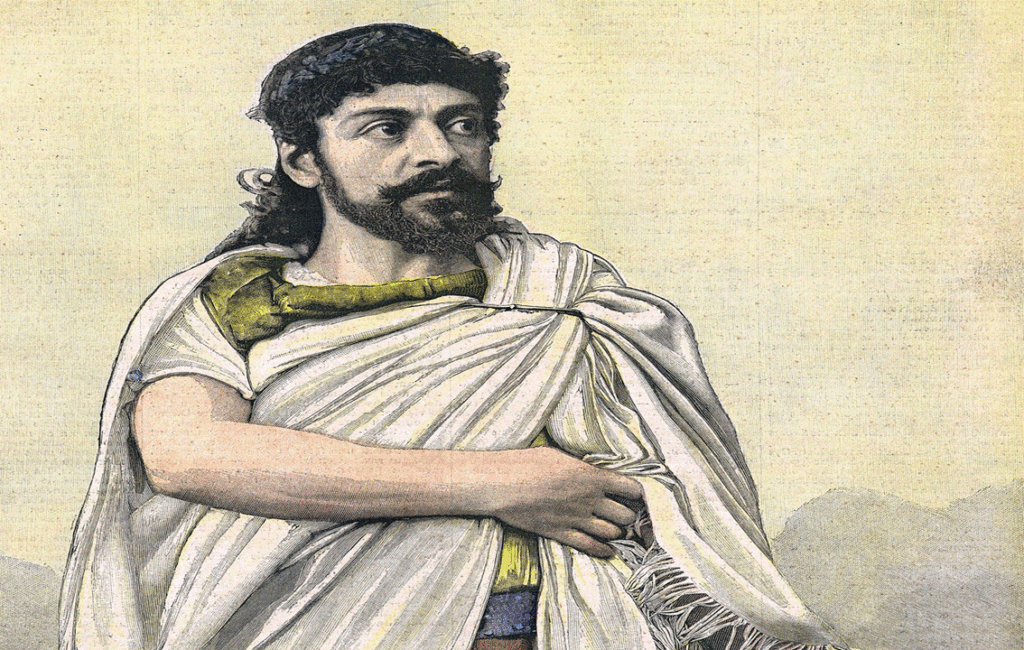
Arion is credited with transforming improvised processional songs into a formal art form. Helping to bridge music with drama, his works are also considered to be a direct step towards the development of a more modern Greek tragedy. One particular work that he is famous for is a mythological account of his own life. This was recounted several times by the historian Herodotus, who often stated that Arion was placed at the mercy of his own ship’s mutinous crew. He was then allowed to sing a final hymn before his pending execution. A dolphin, charmed by his music, then appeared. After leaping into the sea, Arion was carried on its back to safety. A bronze monument depicting him on the back of the dolphin was later dedicated to Arion at Taenarum, in Corinth. Arion’s lyre was also placed among the stars as a constellation.
SOPHOCLES & EURIPIDES
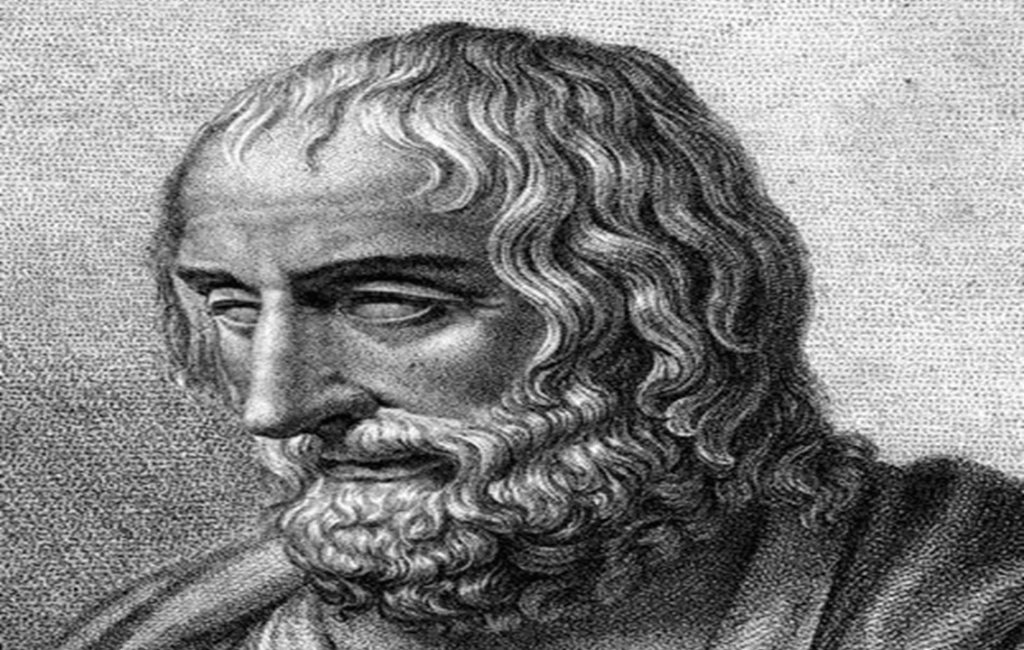
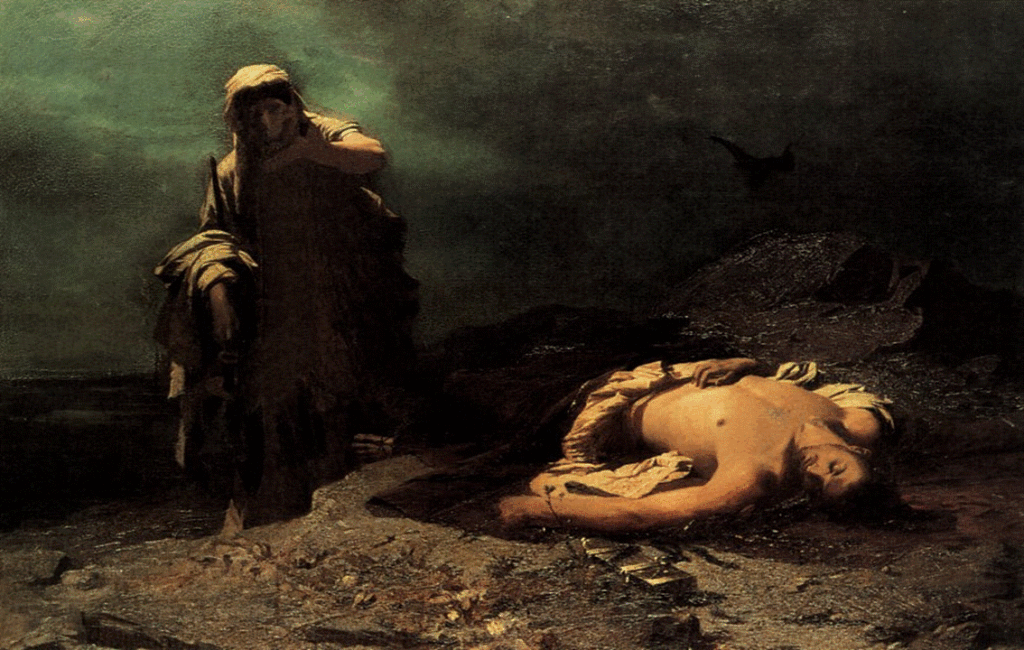
The Greek classical period allowed music to evolve further. Composers, such as Sophocles and Euripides, had by this time successfully integrated music into their popular plays. They effectively used music to set the emotional tone to support the narrative of their plays. This largely made the art form central to all theatrical performances. The use of music in this way also allowed it to establish a strong relationship with storytelling. This directly led to the creation of the first music notation systems that preserved the dissemination of musical works of this era. The ‘Seikilos Epitaph’, dating back to the 1st century, is one of the oldest surviving examples of written music in existence.
A BYZANTINE INFLUENCE
Greek musical traditions continued to evolve in Greece during the Byzantine era. The Byzantine musical system predominantly introduced new scales, modes, and rhythmic patterns to Greek music. The music of the Byzantine Orthodox Church, in particular, also became extremely relevant at this time. Characterised by its extensive mix of both eastern and western hymnography, this mix of vocal harmonies and modes would dominate Greek music during this era.
BYZANTINE HYMONOGRAPHY
St. John of Damascus and St. Romanos the Melodist are both celebrated for their ability to convey profound theological themes through their hymns and music. They were significant in developing Byzantine hymnography as a result, and they were also noted for their theological writings. Several of their compositions are still performed in liturgical contexts by the Greek Orthodox Church today.
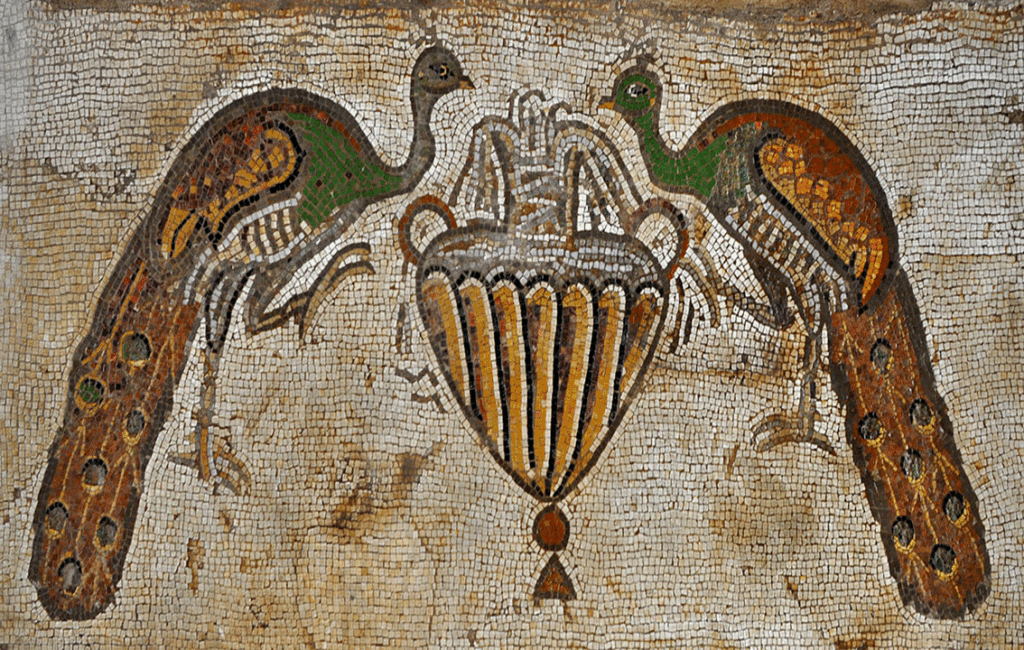
THE BOUZOUKI
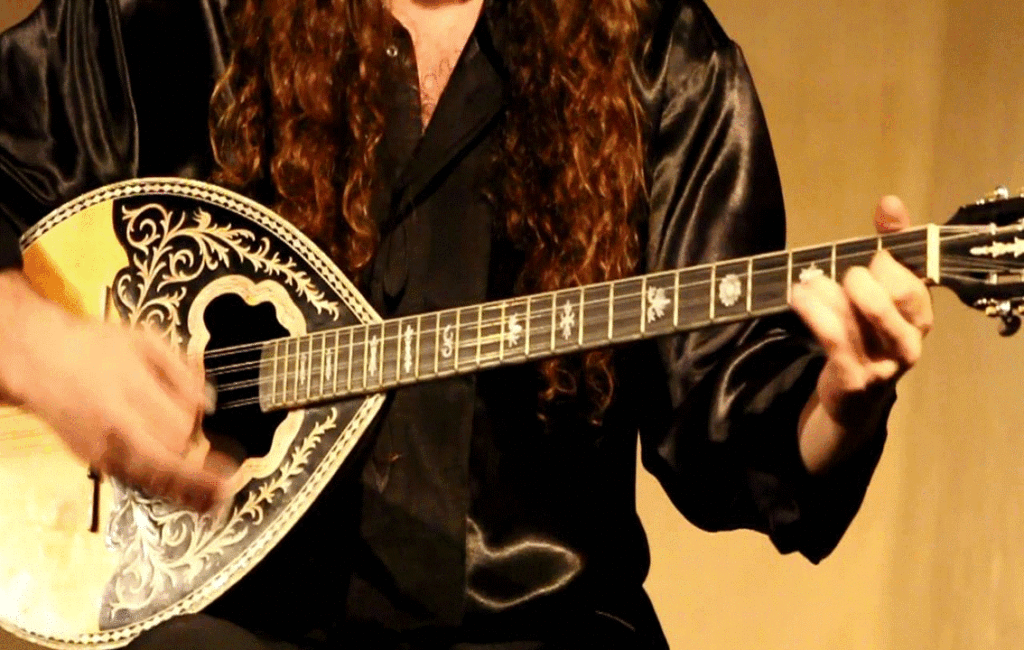
The Greek national instrument took prominence in the late 19th century. It has played a significant role in the development of Greek music ever since. The relevance and significance of the BOUZOUKI, in an ever-changing modern Greek musical scene, is so prominent that it deeply influences various modern genres of the art form to this day. In light of this, the traditional stringed instrument is not only a representation of Greek music but is also an essential part of a Greek identity. The influence of the BOUZOUKI today is so strong that most agree that without it, there is no Greek music!
AN EASTERN INFLUENCE
The Ottoman conquest of Greece and the majority of the Greek diaspora during the 15th century had a significant impact on the evolution of Greek music. This period saw the introduction of mainly Turkish musical traditions that included new genres and instruments. These were subsequently blended with Greek music, and this led to the emergence of several new genres that include probably the most notable forms of Greek musical representation today.
MODERN CULTURAL FESTIVALS
Although Greek music continues to evolve, it still manages to retain its essential unique qualities that retain both its historical roots and its capacity for innovation. The introduction of new modern Greek musical genres and the introduction of modern technology, which includes new recording techniques and global connectivity, have allowed Greek music to flourish and reach new audiences. This has helped to develop Greek music further. The contributions of modern musicians, theorists, and composers all highlight the rich tapestry of influences that all reflect the complexities of Greek identity, societal values, and artistic expression.

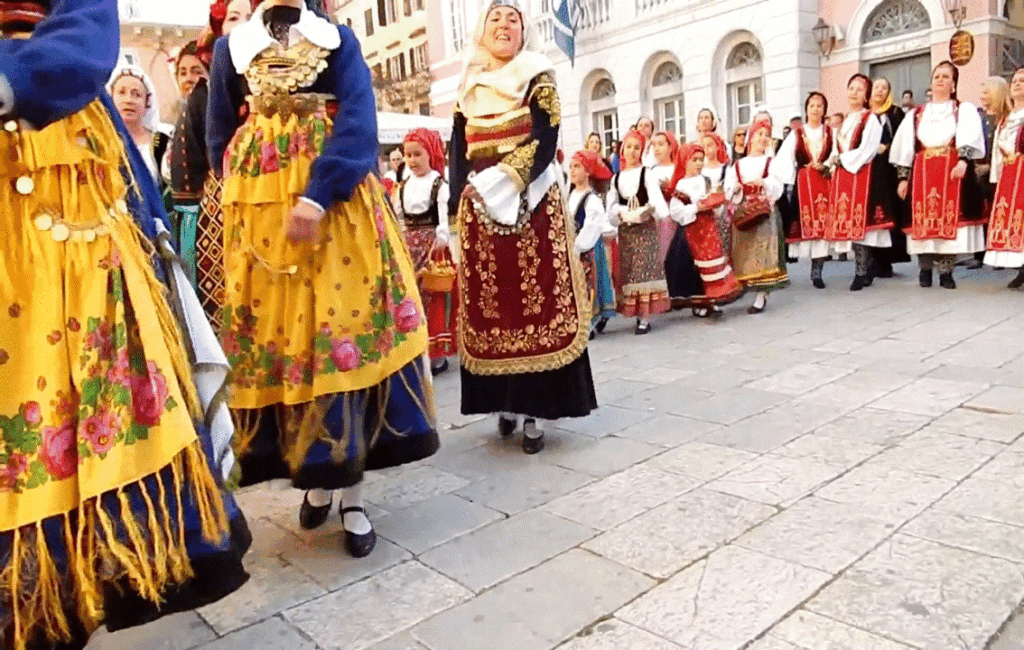
THE REMBETIKO MOVEMENT
The REMBETIKO movement, which is largely characterised by its themes of love, loss, and social struggle, is regarded as one of the most poignant periods in the development of modern Greek music. Often regarded as the music of the marginalised working class, it emerged from urban Greece in the early 20th century.
MARKOS VAMVAKARIS & VASSILIS TSITSANIS
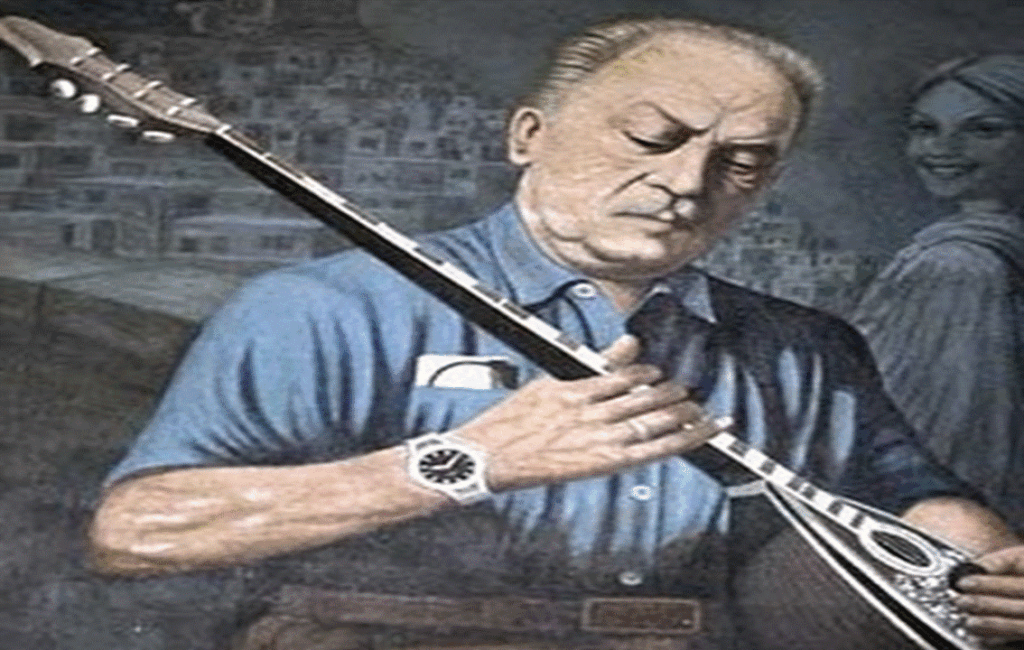
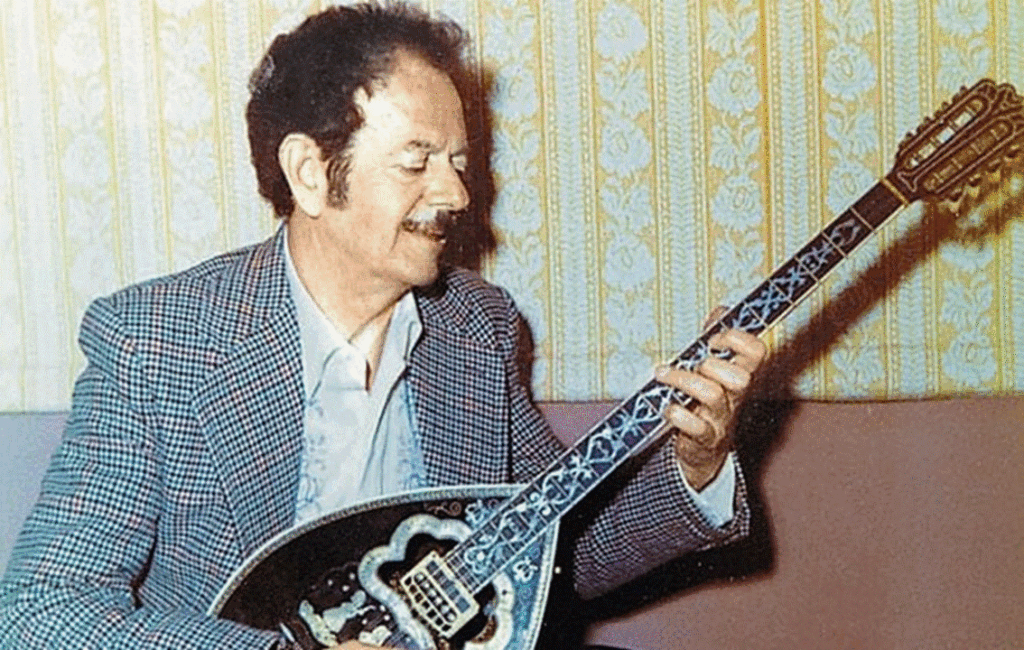
Prominent figures of the wider REMBETIKO movement include MARKOS VAMVAKARIS and VASSILIS TSITSANIS. Both played significant roles in popularising the genre, which mainly took hold throughout urbanised areas all over Greece. Their songs reflected the socio-political realities of the time, often addressing issues of poverty, exile, and hardship. This deeply resonated with Greek people all over the Greek diaspora. The REMBETIKO movement became a powerful form of expression because of this at the time. The REMBETIKO movement today is regarded as an essential part of the development of modern Greek music that represents the Greek national identity during times of turmoil.
MIKIS THEODORAKIS & MANOS HADJIDAKIS
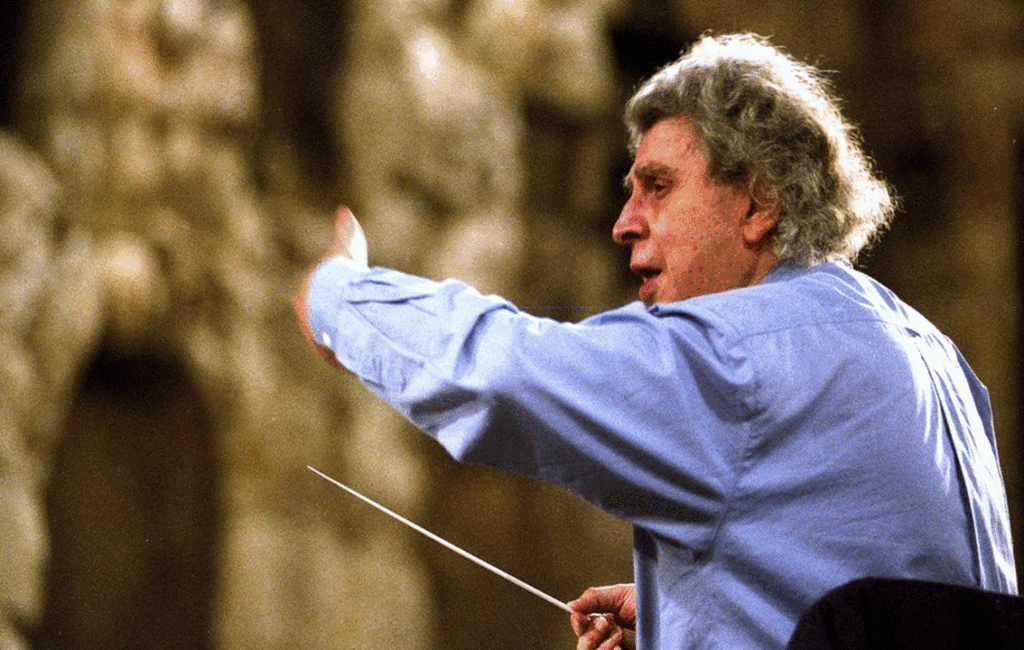
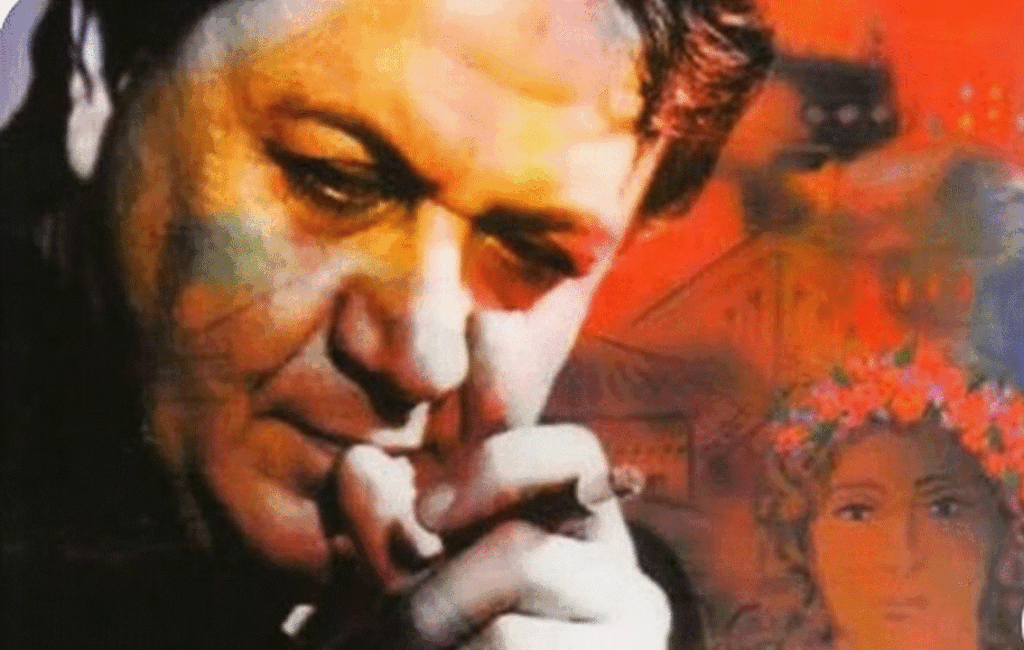
The 20th century also witnessed a resurgence of interest in Greek music. This was mainly fuelled by national identity movements and a desire to preserve traditional Greek art forms. Composers such as MIKIS THEOTHORAKIS and MANOS HADJIDAKIS, as a result, successfully fused traditional Greek music with more modern contemporary styles. This went on to contribute greatly to a global appreciation of Greek culture. MIKIS THEOTHORAKIS is particularly known for works like ZORBA THE GREEK, which incorporated elements of folk music into popular mainstream global cinema at the time.
WHAT MAKES GREEK MUSIC SO SPECIAL?
Greek music is special because of its rich blend of both Eastern and Western influences. Its foundation is rooted in Ancient Greek antiquity. Heavily influenced by the Byzantine Empire, its microtonal scales form an inseparable link between its melodies, lyrics, and traditional folk dances.
Greek music has well-travelled unique genres like REMBETIKO and LAIKO. These use key signature instruments like the BOUZOUKI and PAGLAMA. These instruments are often used to tell deep, emotional stories of everyday life.
Here is a breakdown of what makes the Greek musical tradition stand out
Eastern & Western Fusion: Because of its geographical position, Greece has absorbed musical traditions from Africa, Asia, and Europe. This results in complex, exotic compound rhythms and tropic modes that are not typically found in Western classical or pop music.
Microtones & Ornamentation: Unlike the evenly spaced notes in Western music, Greek melodies, particularly found in folk and REMBETIKO styles, often use microtones. These are intervals that are often combined with rich vocal and instrumental ornamentation. These features give Greek music a deeply expressive, soulful, and sometimes melancholic quality.
Unity of Melody, Word, and Dance: In Greece and Cyprus, music is not just background entertainment, but an active, communal experience. Traditional folk songs, also known as Dimotika, are inextricably linked to poetry and communal dances such as the Kalamatianos or Syrto, which rely on irregular, leaping, and free-flowing rhythms.
Expression of the Human Condition: From the early Byzantine church hymns to the urban working-class REMBETIKO movement, Greek music serves as a profound emotional outlet. It is often used to process profound joy, love, loss, and a version of mourning, also known as miroloyia.