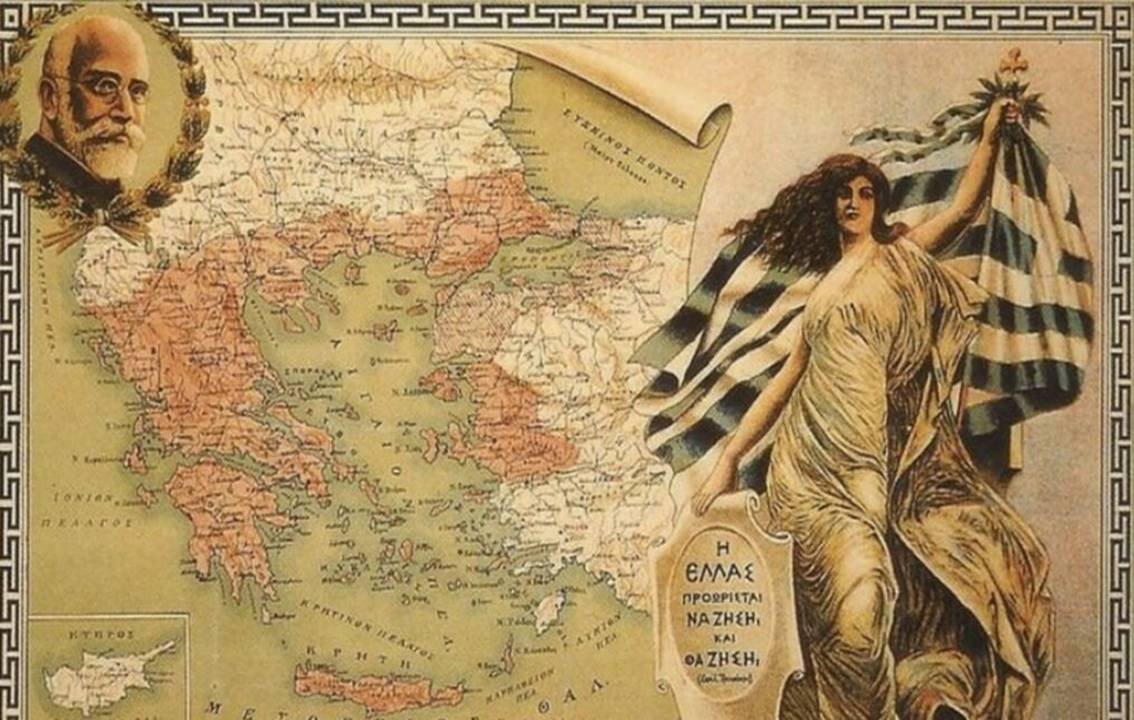
A NATIONAL HOLIDAY IN CYPRUS
REMEMBERING A HELLENIC REVOLUTION
BETTER ONE HOUR OF FREE LIFE THAN FORTY YEARS OF SLAVERY
Greek Independence Day is celebrated throughout the Greek diaspora every year on March 25th. The public holiday acknowledges the Greek War of Independence of 1821. This conflict liberated Hellenism from four centuries of Ottoman occupation. First spoken by ‘Rigas Feraios,’ a writer and revolutionary who played a key role in the national liberation movement, the famous phrase ‘Better one hour of free life than forty years of slavery’ emerged. This phrase became a powerful motive and symbol for the fight for the freedom of Greeks throughout the Greek diaspora.
HONOURED BY SEVERAL PARADES
This public holiday is rigorously celebrated throughout Cyprus, and all government offices, banks, schools, and kindergartens remain closed on this day. The Greek Orthodox Church, which was crucial to this cause in 1821, also holds well-attended special church services commemorating the anniversary on March 25th. Celebrations in Cypriot schools usually begin on the eve of the public holiday, when students prepare to honour the occasion in the form of several parades and marches on the following day. Various student clubs, along with the military, also partake in various parades and marches across the island.
THE GREEK REVOLUTION OF 1821
The Greek Revolution of 1821, also known as the Greek War of Independence, was a pivotal event in the history of all Greek people. It led to freedom from the Ottoman Turks, and it had significant implications for the broader region of the Balkans and Eastern Europe at the time. Most Greek-speaking people had been under Ottoman control since the mid-15th century. During this time, the majority of these Greek-speaking people were subjected to cultural oppression by the Ottomans.
RISING NATIONALISM
The late 18th and early 19th centuries saw a rise in nationalist sentiments throughout Europe. This was influenced by the ‘Enlightenment’, and it led to other successful revolutions in America and France. Greek intellectuals, inspired by these movements, began to advocate for independence from Ottoman rule. This nationalist movement gained momentum in the latter part of the 19th century. coming to a head in 1821.
INITIAL UPRISINGS
The revolution’s early spark can be traced back to several smaller uprisings and revolts that then led up to the uprising of 1821. The most notable was the Orlov Revolt of 1770. Later movements in 1814 included the founding of the ‘Filiki Etaireia,’ which translates from Greek to the ‘Friendly Society’. This group became the main driving force leading up to the uprising of 1821, coordinating efforts for independence at any cost.
A CALL TO ARMS
The revolution was officially declared by Bishop Germanos of Patras on March 25th, 1821. His call to arms was specifically chosen to coincide with the Feast of the Annunciation. This led to several clashes beginning in the Peloponnese in southern Greece. Serious armed conflicts then quickly spread to other regions throughout Greece. The first National Assembly was then convened, leading to the establishment of a provisional government in 1822. Although the lack of unity among Greek factions complicated revolutionary efforts, the struggle for independence continued unabated. Several hard won significant battles followed over the next few years, culminating in freedom and independence for several Greek speaking regions across Eastern Europe.
INTERNATIONAL SUPPORT
The plight of the Greeks drew support from the great powers of the time. Britain, France and Russia openly pledged support to the Greeks, and figures like Lord Byron, who provided both financial support and fought alongside Greek revolutionaries. This support proved fundamental to the success of the Greeks.
THE BATTLE OF THERMOPYLAE
The Battle of Thermopylae in 1822 was the first major battle won by the Greeks. This victory galvanised the Greek resistance and was used a platform to launch further attacks on the Ottomans. The significance of Thermopylae was also used to great effect as it was also the stage for the last stand of the 300 Spartans who fought the entreity of the Persian Army in 480 BC.
THE BATTLE OF NAVARINO
The Battle of Navarino in 1827 was a pivotal naval battle. Greece was supported by the combined fleets from Britain, France, and Russia, and went on to defeat the Ottoman fleet. This battle significantly tipped the scales in favour of the Greeks.
THE ESTABLISHMENT OF THE MODERN GREEK STATE
The great powers of the time also intervened diplomatically following the years of conflict. This directly led to the Treaty of London, which was agreed in 1827. This treaty, which became the cornerstone of the establishment of the modern Greek state, sought to establish a settlement in favour of Greek independence. This materialised three years later when a Greek state with limited borders was initially recognised internationally. Further territorial gains were achieved through subsequent treaties.
THE KINGDOM OF GREECE
The Kingdom of Greece was then established in 1832. King Otto of Bavaria was officially recognised as the King of Greece. The monarchy proved pivotal to the resurgence of Greek culture and identity. This led to a flourish of arts and sciences that reflected a renewed national Greek pride. His monarchy, however, faced numerous other challenges, which included economic struggle and several internal divisions.
RESHAPING THE LANDSCAPE
The Greek War of Independence set a precedent for other nationalist movements, especially in the Balkans. The Ottoman defeat at the hands of the Greeks contributed to the decline of the Ottoman Empire and helped to reshape the political landscape of the region.
MARCH 25TH FACTS
- Greece began its fight for independence after nearly 400 years under Ottoman rule on March 25th, 1821.
- The revolution was declared by Archbishop Germanos of Patras at the Agia Lavra Monastery near Kalavryta.
- The struggle for freedom involved over 100,000 Greek fighters who took up arms in several Greek-speaking regions across Eastern Europe.
- The ‘banner of freedom,’ eventually became the flag of Greece with the 9 blue and white stripes representing the ‘Freedom or Death’ slogan for all Greek patriots.
- The Treaty of London, which formed the cornerstone of a new Greek state, was signed in 1827.
- The Ottoman Empire recognised an independent Greece with limited borders in 1829.
- In 1830, the London Protocol formally established Greece as a sovereign state.
- In 1832, Otto of Bavaria became the King of Greece after a new monarchy was established.