A NEW OVERSEAS TERRITORY
JULY 22ND 1878
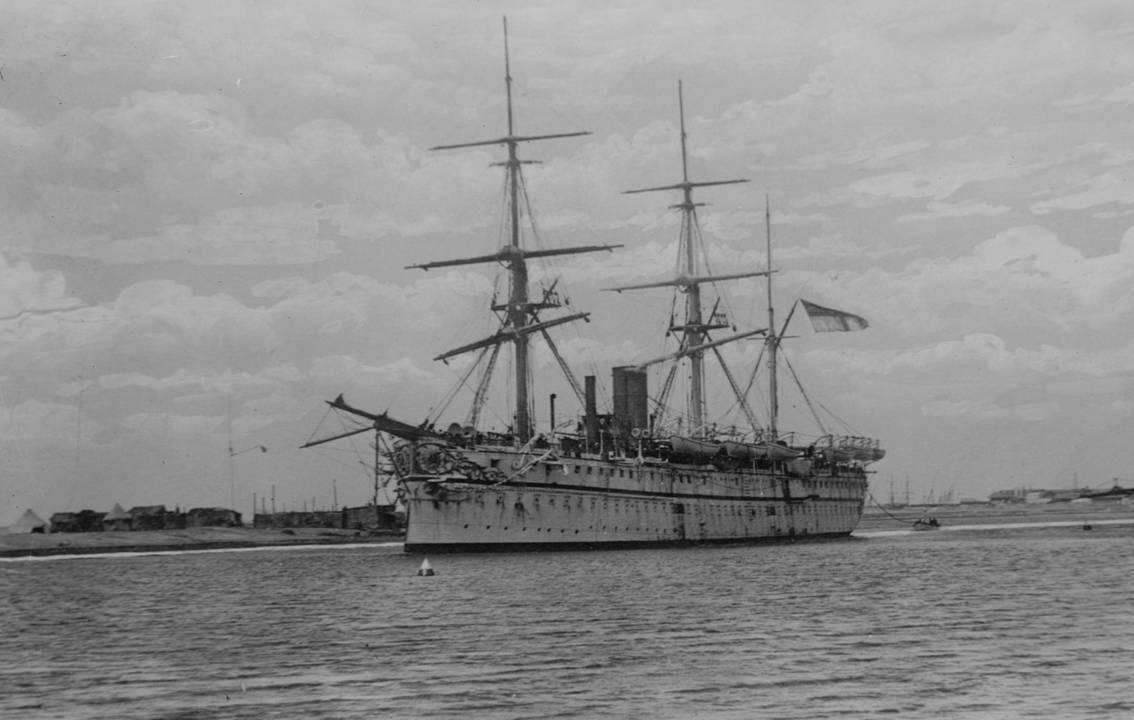
THE ARRIVAL OF HMS HIMALAYA
Although largely uneventful, the story of the HMS HIMALAYA’S arrival in Cyprus on July 22nd, 1878, remains poignant. This is when Cyprus became an unofficial overseas territory of Great Britain. Marking the beginning of a new era in the history of Cyprus, this largely tumultuous rule lasted for the best part of 82 years.
THE TREATY OF BERLIN
British rule over Cyprus was secured after the ‘Treaty of Berlin’ was agreed upon and signed on July 13th, 1878. It was the final act of the Congress of Berlin, where major European powers, such as Great Britain, Austria-Hungary, France, Germany, Italy, and the Ottoman Turks, agreed to rearrange Balkan territories to limit Russian influence following the previous Treaty of San Stefano. This agreement not only ceded Cyprus to the British but also recognised the independence of Serbia, Montenegro, and Romania. It also placed Bosnia-Herzegovina under Austro-Hungarian administration.
AN UNCONVENTIONAL LEASE AGREEMENT
This agreement would see Great Britain take control of Cyprus using an unconventional lease agreement from the Ottoman Empire. It stipulated that, although the Ottoman Empire would retain ownership of the island, it would cede full control to the British Empire in exchange for diplomatic and military support. This event marked a poignant new era for the island and brought Cyprus firmly into the 20th century.
A WAVE OF CHANGE
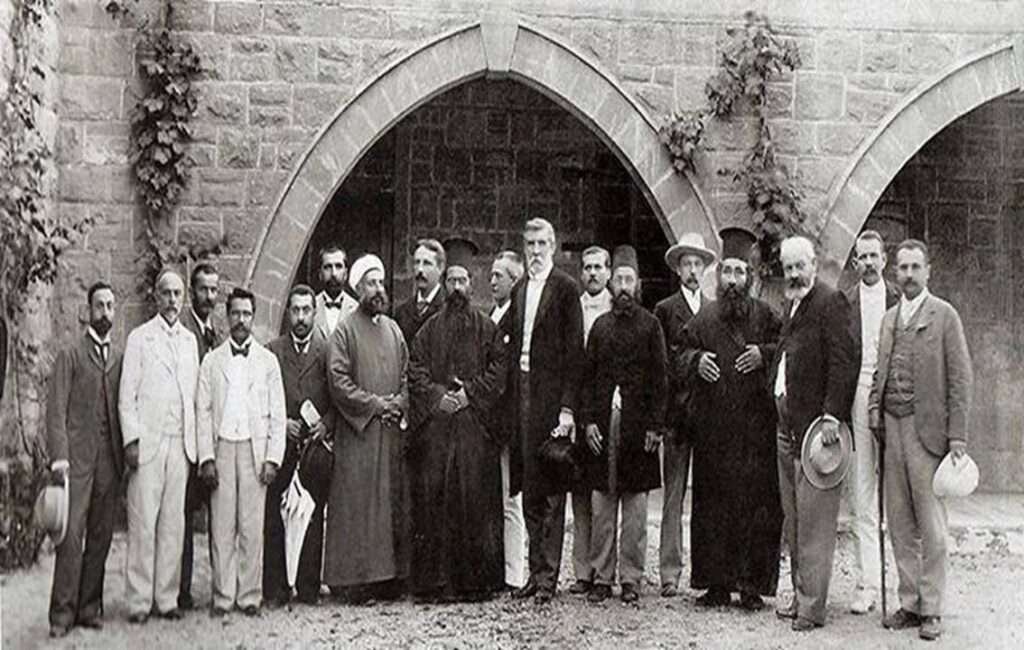
The island underwent several positive changes under the stewardship of Great Britain. Administrators oversaw modernisation, and the island as a whole benefited from several new infrastructure projects. The British oversaw the construction of several new roads, and they would eventually introduce a NEW RAILWAY. This mainly served the north and east of the island. They also introduced new structures to governance and law that brought several advantages that everyday Cypriots did not enjoy under the Ottomans. Excessive taxes and a yearning for self-determination, however, eventually led to political upheaval. This all came to a head when the majority of Greek Cypriots openly called for ‘Enosis’. This movement called for a union with Greece, which Britain strongly opposed. On APRIL 1ST, 1955, the military wing of this movement, EOKA, began hostilities against all British installations and institutions across the island. Cyprus would eventually gain independence during the summer of 1960.
THE BEGINNING OF BRITISH RULE
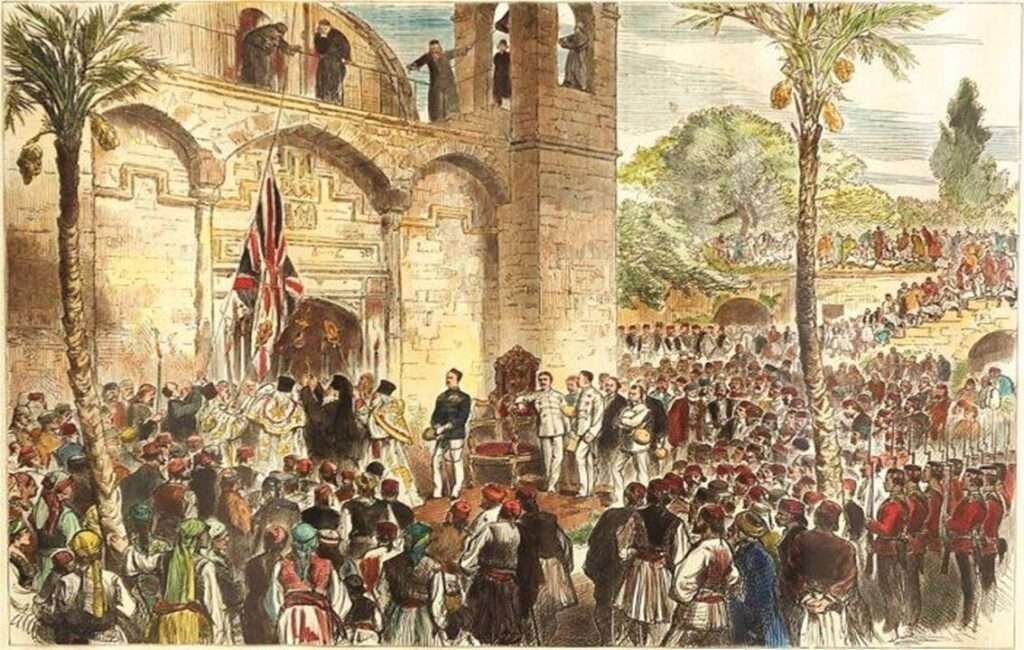
A NEW ERA: On the morning of July 22nd 1878, the HMS Himalaya took on a significant role in the Eastern Mediterranean. Several British dignitaries, along with the new governor of Cyprus, Sir Garnet Wolseley, arrived in the port of Larnaca. Sir Garnet Wolseley, along with his British Colonial administration, were tasked with establishing a new functioning government on the island as per the Treaty of Berlin. Their journey on the HMS Himalaya was described as a calm and pleasant voyage. Things did not start well, however, and the new British governor of Cyprus was not impressed with what he found at Larnaca. He later went on to describe it as a filthy pest house of dirt and fever.
NEW INTENTIONS FOR THE ISLAND
A STRATEGIC & MILITARY BASE: The Treaty of Berlin gave the Ottomans British assurances that they would help repel any further Russian expansion in the region. As a result, the British would go on to use Cyprus as a strategic naval and military base. The island also later became instrumental in protecting British interests in the Suez Canal.
AN ESSENTIAL TROOP SHIP
Originally built for the Peninsular and Oriental Steam Navigation Company, the HMS Himalaya was a 3,438 gross register ton iron steam crew passenger ship. The Shanghai-class cruiser then became a steam cruiser for the British Royal Navy after they purchased the vessel in 1854. It went on to serve as a troop ship for the British Navy for four decades. The vessel supported operations during the ‘Second Opium War’ and carried troops all over the British Empire of the time. This included India, South Africa, the Gold Coast, and North America.
A DISASTROUS END
The HMS Himalaya continued its troop duties until its retirement in 1894. It was then repurposed as a coal hulk after this. It was eventually sunk during World War I after an enemy air attack. The British Empire would go on to rule Cyprus until conditional independence was granted in the summer of 1960.