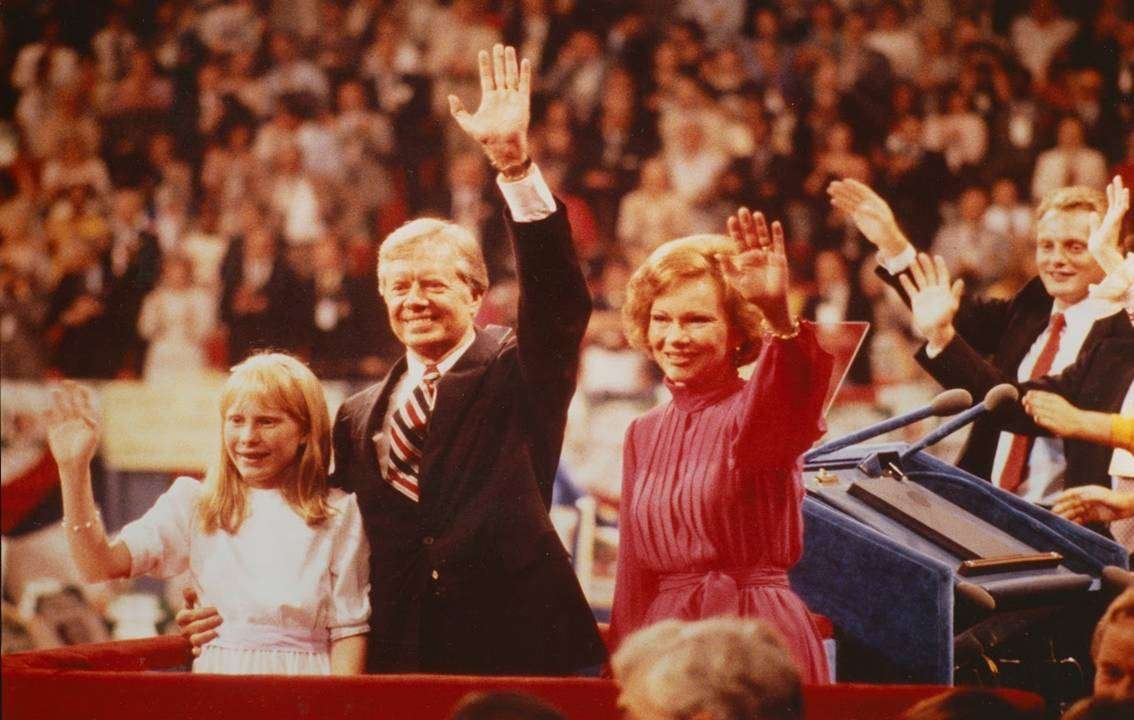
JIMMY CARTER’S ELECTION WIN IN 1976 HERALDED A NEW HOPE FOR A CYPRUS SOLUTION
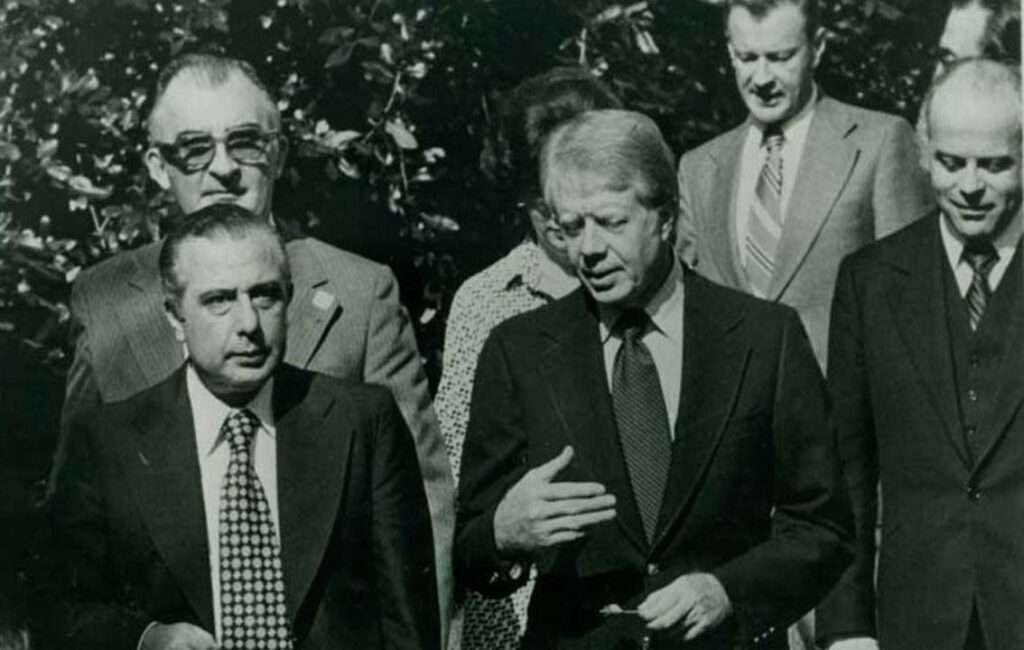
PRESIDENTS KYPRIANOU & CARTER OPEN DISCUSSIONS
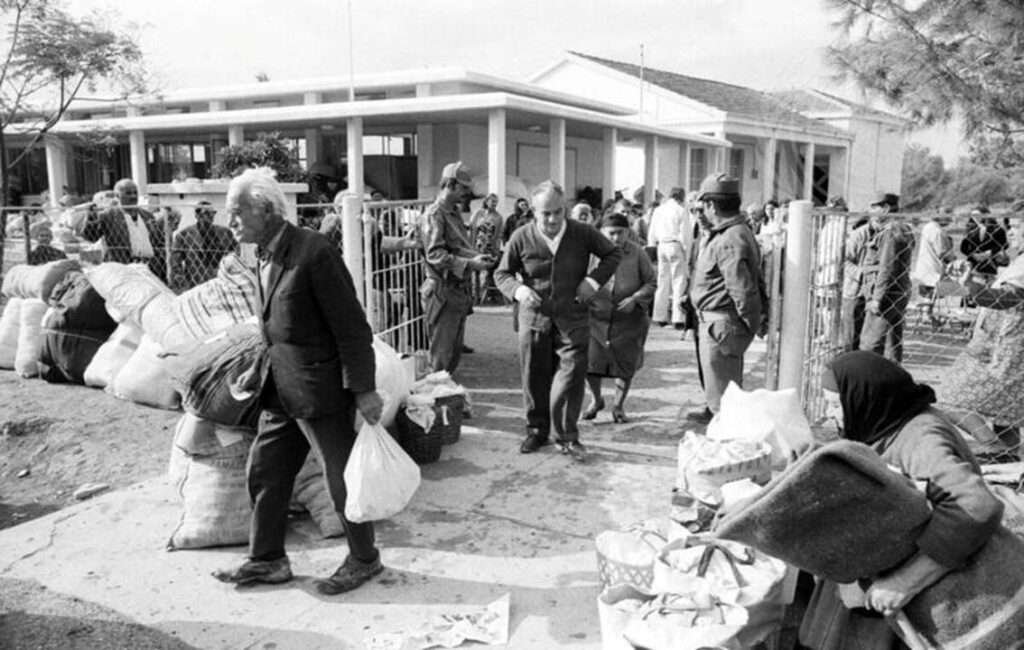
GREEK CYPRIOT REFUGEES AFTER THE WAR IN 1974
A STATE OF UNANIMOUS ELATION
Greek Cypriots greeted JIMMY CARTER’S close-run victory in 1976 with almost unanimous elation. This was largely because the 39th president of the United States was elected on a campaign of change. Jimmy Carter’s administration was offering the world a stark alternative in American foreign policy. This new policy came with a new premise to resolve conflicts and restore a balance in world affairs.
A REAL CHANCE FOR REUNIFICATION
Under the auspices of two and a half years of division, several Greek Cypriots came together in celebration after the Carter’s electiion in November 1976. They believed that Carter’s appointment offered a real chance of a fair solution to the ongoing Cyprus problem. Many thought that reunification of the small island nation was the only way forward, and expressed their joy and optimism with several island-wide gestures.
ISLAND-WIDE CELEBRATIONS
Church bells rang throughout the island when Carter’s victory was annouunced. Several schoolchildren, advocating reunification with a renewed optimism, constantly parading through the streets in the weeks that followed. Several rallies in support of the Carter administration were also held. These demonstrators were often found waving American flags and carrying placards outside the American Embassy in Nicosia.
A DIVIDED ISLAND
The events of the summer of 1974 were still fresh in everyone’s minds at the time. A Greek-inspired coup d’état that began on July 15th had led to a military intervention by Turkey just five days later. This resulted in the invasion and then subsequent occupation of the northern part of the island. Thousands of people on both sides of the new de facto ‘green line’ were then displaced. The two main Cypriot communities were separated and Greek Cypriots in the north were expelled to the south, whilst Turkish Cypriots in the south were offered several incentives to repatriate to the north. It was thought at the time that President Carter’s new administration would bring about the end of this seperation. The aim at this time was to find a viable and fair solution to the then two and a half year old Cyprus problem.
WAS AMERICA CULPABLE?
Hope for reunification was further enhanced after Carter had made several statements about returning displaced people during his election campaign. Several Greek Cypriots by this time had noted the previous American administration’s inactive response in 1974. President Ford, along with his Secretary of State, Henry Kissinger, were also viewed by most as partly culpable for the continued separation thereafter. They believed that this both enabled and, to an extent, encouraged Turkey’s new political strategy regarding Northern Cyprus. Known as ‘Taxim’, this new political strategy revived the old Turkish Cypriot movement that rigorously encouraged the division of the island.
WHAT DID AMERICA REALLY WANT?
JIMMY CARTER, on the other hand, represented a much-needed change. Greek Cypriots believed that he was the best man to find a solution that would accommodate both sides and acheive a just reunification. This was enforced by the fact that President Carter had often expressed a constructive attitude towards resolving the Cyprus problem before he became president. This gave new hope to the thousands of displaced people living in Cyprus at the time.
A TURNING POINT IN RELATIONS
The president of Republic of Cyprus, ARCHBISHOP MAKARIOS III, also openly expressed a renewed hope at the time. He firmly believed that Carter’s new administration would mark a turning point in relations between Cyprus and the United States. He immediately opened channels of communication with the new American administration, setting out mandates that offered an acceptable solution. This helped to prompt President Carter’s new administration into almost immediate action.
A NEW PLAN
President Carter went on to appoint a special envoy to Cyprus. This came in the form of Clark Clifford. He would go on to work closely with delegates from both the United Kingdom and Canada. This resulted in a new plan to resolve the Cyprus problem. The new plan, which would become known as the Anglo-American-Canadian accord, was submitted in 1978. It was largely based on the 1977 High-Level Agreement reached between Archbishop Makarios III and Rauf Denktash, who was the Turkish Cypriot representative of Northern Cyprus at the time.
THE ANGLO-AMERICAN-CANADIAN PLAN
The Anglo-American-Canadian plan stipulated the creation of a bizonal, bi-communal federation in Cyprus. It also facilitated the withdrawal of most of the Turkish troops stationed on the island at the time. It included the reopening and subsequent restoration of the City of Famagusta. It also foresaw and provided for the return of land and property to both Greek and Turkish displaced Cypriots. The plan also allowed for compensation to be paid for those who did not want to return to their former homes.
INITIALLY BACKED EVENTUALLY BLOCKED!
Although almost all of the Greek Cypriot political parties initially backed the plan, the new president of the Republic of Cyprus, SPIROS KYPRIANOU, was apprehensive. He went on to ultimately reject it in 1978. He wanted a better solution for the Greek Cypriot Republic in the south. Although largely miscalculated, it was thought that the Turkish contolled north would not want to remain unrecognised for a prolonged period. This part of Cyprus, however, has remained unrecognised internationally ever since.
SHOULD THE PLAN HAVE BEEN ACCEPTED?
The consequences of the division of both Greek and Turkish Cypriots have left the island reeling ever since. Along with hindsight, several Greek Cypriot politicians have since indicated that the Anglo-American-Canadian accord was the best plan ever produced. Several have also stated that President Kyprianou should have accepted it in 1978. Most claim that this would have forged a much better future for all Cypriots, both Greek and Turkish and that today the island would have at least been reunified.
1978 ANGLO-AMERICAN -CANADIAN PLAN
The 1978 Anglo-American-Canadian plan was a 12-clause initiative spearheaded by US envoy Clark Clifford. It was desigend to to settle the Cyprus dispute by transforming the island into a loose federation. It proposed demilitarisation, territorial adjustments, and the re-opening of the City of Famagusta. Although initially embraced by both sides, it was ultimately rejected and the island has remained in a state of partiition ever since.
KEY ASPECTS OF THE PLAN
Structure: The plan sought to convert the unitary state of 1960 into a federal structure based on the 1977 High-Level Agreement between Archbishop Makarios III and Rauf Denktash.
Territory: The plan emphasised the return, reopening, and restoration of the City of Famagusta using foreign funds.
Military: The plan also called for demilitarisation and the withdrawal of Turkish troops now stationed on the island.
Compensation: The plan also included provisions for the return of land to Greek Cypriots and compensation for those who did not return to their homes.
Context: Initially embraced, the plan was specifically designed to ease tensions between the two communities. It was widely rejected, however, by all involved parties in 1978. Although there were no Turkish settlers in northern Cyprus at the time, it seems that the proposal still could not achieve consensus.