A CYPRUS SMOKING HABIT

A POPULAR HABIT
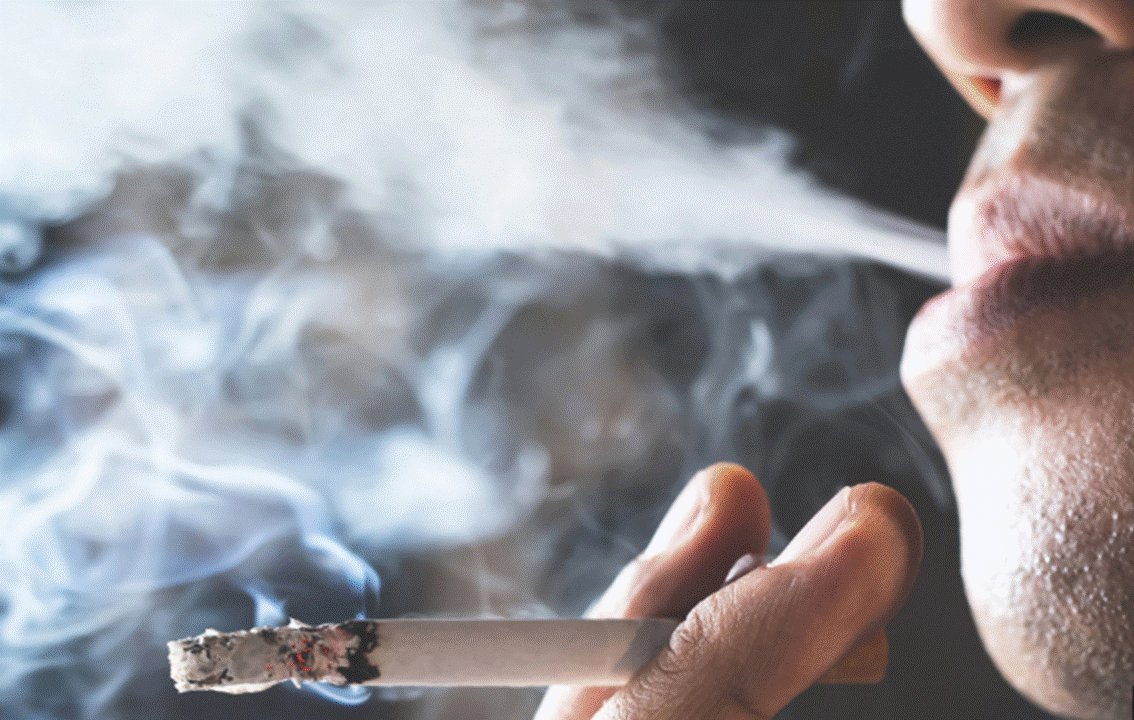
Recent studies have revealed that smoking and vaping in Cyprus remains a popular habit. This comes after it has been revealed that almost a third of all Cypriot residents regularly smoke or vape across the island. Over half of smoker’s non-smoking partners admitted that they did not like their partner’s smoking habit but tolerated it. The majority of these smokers did not seem to express any concerns about the effects of smoking on their health. The majority of smokers who were interviewed also expressed concerns that help and support for those wishing to quit the habit was not readily available.
AN OUTDATED PRACTICE
Two-thirds of the general public interviewed consider smoking an outdated practice. Currently one in every two adult males, and one in every five adult females regularly partake in the activity. Several smokers admitted that quitting the habit was unlikely, but some did express an interest in switching to vaping within the near future.
A SMOKING BAN
Currently, over 900 people in Cyprus die from tobacco smoking-related diseases each year. In light of this, the Cypriot Government has taken several measures in the past, aimed at encouraging people to curb their smoking habits. It seems, however, that these efforts have had no impact on the number of smokers on the island. The smoking ban in public places, which came into effect back in 2010, has also achieved muted results. Despite this, Cypriot Government health officials are constantly looking at ways to help buck the popular smoking trend across the island.
GLOBAL SMOKING FACTS
DIRECT CAUSES OF HEALTH ISSUES CAUSED BY SMOKING
- Smoking is the cause of 1 in 5 deaths globally every year.
- Heavy smokers are more likely to die of diseases caused by smoking.
- Overall, a smoker is 2.5 times more likely than a non-smoker to die before the age of 55 and twice as likely to die before the age of 75.
- Smoking contributes greatly to heart disease, and smokers are three times as likely to die from a heart attack as non-smokers.
- 8 out of 10 people with emphysema smoke cigarettes.
- Smokers are twice as likely to die from a form of cancer as non-smokers.
- Heart disease is nine times more common in smokers than in non-smokers.
- The lungs of a heavy smoker retain more than 70% of the tar and nicotine they inhale.
- 9 in 10 smokers who contract lung cancer will die because of the disease.
- Tobacco use kills more than the total number killed by AIDS, alcohol, motor vehicles, homicide, illegal drugs and suicide combined.
DIRECT CAUSES OF ENVIRONMENTAL ISSUES CAUSED BY SMOKING
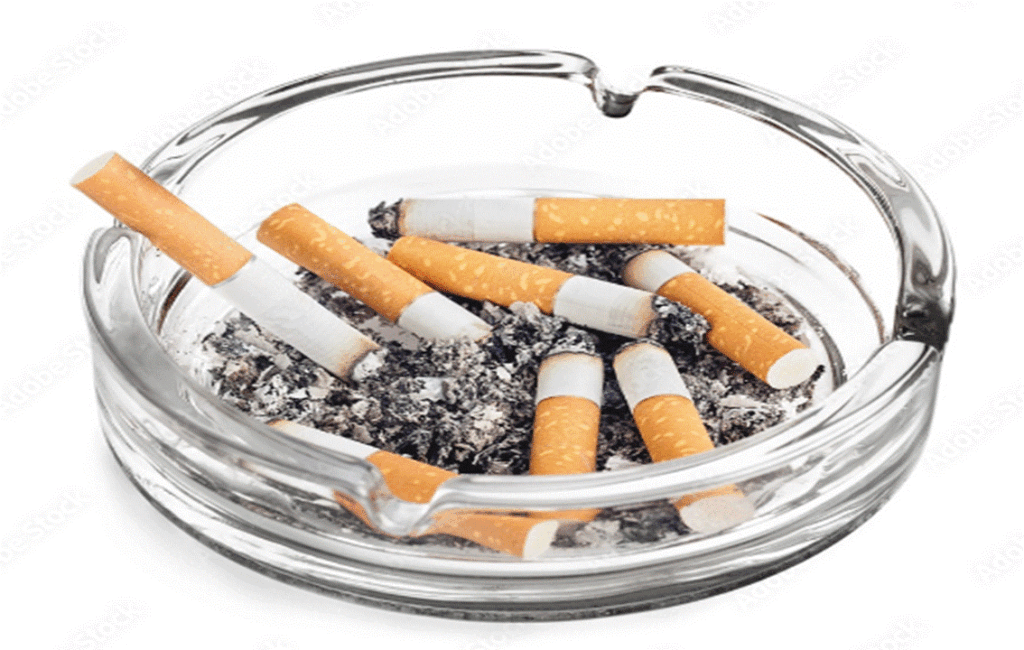
- Cigarette butts are the most littered item on Earth.
- A single cigarette is known to contain over 4,800 chemicals, 69 of which are known to be cancer-causing chemicals.
- Cigarette smoke is known to contain over 7,000 chemicals, 70 of which are known to be cancer-causing chemicals.
- Cigarettes are the leading cause of fire deaths globally.
THE DIRECT EFFECT OF SMOKING ON CHILDREN
- The 3,000 children every day who start smoking are 15 times more likely than non-smokers to go on to use narcotic drugs.
- One in four young men who smoke will die from smoking-related diseases.
- More than 2,500 deaths of infants under one year of age are attributable to smoking by mothers.
THE QUIT SMOKING CLINIC IN NICOSIA
A quit smoking clinic, offering practical support for people who wish to quit the habit, is operating at the Nicosia General Hospital. The ‘quit smoking program’ constitutes a useful and effective means of support. It also offers information about the effects of smoking, understanding addiction, and the mechanisms that maintain the habit.
The service that operates within the framework of the pulmonology clinic runs a specialised support programme that offers group sessions for up to five people at a time. A personalised support plan, with the possibility of medication, is also available. All sessions take place in the presence of a pulmonologist and a clinical psychologist.
The main treatment processes examine the decision-making process that all smokers face. They also aim to strengthen internal motivation for quitting the habit by setting a pre-designated date to quit. The programme usually lasts up to ten weeks, and sessions are initially held every week. Follow-up sessions are then held for at least three months after quitting.
Appointments can be made by calling 22603517 or 22603917