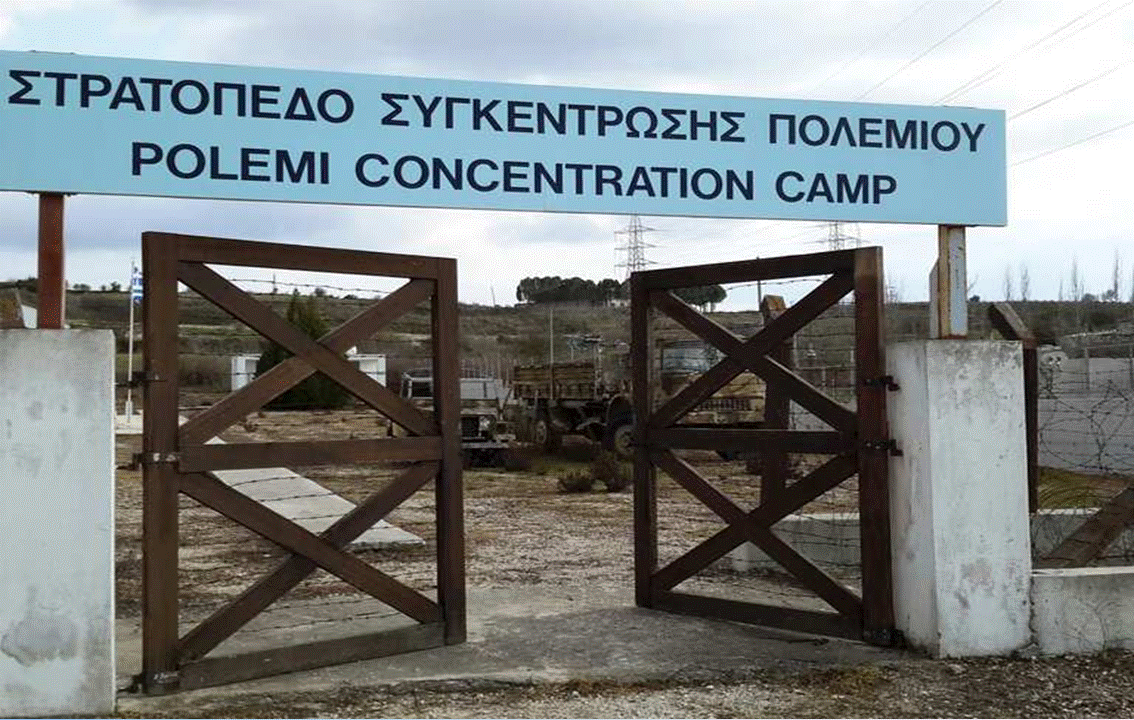
The village of Polemi, in the Paphos district, has a recent history that includes a little-known, yet uncomfortable reality. Situated on the foothills of the Troodos Mountains, this otherwise unassuming village is the location of what remains of the ‘Polemi Concentration Camp’.
A POIGNANT REMINDER OF THE PAST
This particular camp’s legacy, as a result, encapsulates the complexities of the island’s socio-political landscape during the mid-20th century. Acting as a poignant reminder of the past, it also helps to form an integral yet tragic chapter in the island’s recent history. As a result, the remnants of this camp today adequately reflect the tumultuous interplay between colonialism, nationalism, and a struggle for human rights that existed on the island at the time.
A HISTORIC LEGACY
The Polemi Concentration Camp’s origins can be traced back to the tumultuous period on the island following the end of World War II. This was when the Greek Cypriot community once again became increasingly vocal in its demands for ‘Enosis’. This movement, which advocated for a union with Greece, went firmly against British interests at the time, and would be resisted by the them at all costs.
THE VILLAGE OF POLEMI
A LIST OF DETAINESS
A STRATEGIC REMOTE LOCATION
The Polemi Concentration Camp was used in the latter part of the 1950’s to detain several Cypriot political activists. It was specifically chosen because of its strategic and remote location. The main intention was to isolate its detainees from the broader population on the island. Ironically, this helped to turn the camp into a symbol of oppression that nationalists used to emphasise the importance of freedom and justice for all. This particular camp would go on to become emblematic of the broader struggle against colonial oppression.
THE GREEK CYPRIOT NATIONALIST ORGANISATION KNOWN AS EOKA
A main advocate for the policy of Enosis was the Greek Cypriot Nationalist Organisation, which became known as EOKA. In 1955, after repeated talks broke down, EOKA began a clandestine military campaign against British Colonial rule. The British response was swift, and as the conflict progressed, they introduced a whole string of repressive measures that included the extended use of several concentration camps.
A USEFUL TOOL TO SUPPRESS GROWING NATIONALISTIC FERVOUR
The British used concentration camps as a particularly useful tool to suppress the growing nationalistic fervour amongst Greek Cypriots. The Polemi Concentration Camp, which opened in 1956, was one of several established by the British in various locations across the island. At its height, it was used to detain up to 400 or so Cypriot EOKA sympathisers at any one time. These included peaceful activists, as well as suspected active members of EOKA.
A MEETING BETWEEN ALL REPRESENTATIVES
THE ZURICH-LONDON AGREEMENT
A GALVANISED RESPONSE
As the widespread use of concentration camps took hold across the island, Cypriots began to question Britain’s role on the island. This seemed to help galvanise further support for the cause of freedom. The detainees of the Polemi Concentration Camp, in particular, because of their often harsh treatment, would eventually prove instrumental in swaying greater public opinion against British colonial rule. It is thought that the nationalist movement in Cyprus gained momentum because of this. The detainees, despite their suffering, would often emerge as symbols of the resistance. This inspired further activism and mobilisation within the Greek Cypriot community.
THE ZURICH-LONDON AGREEMENT
In 1960, the ‘Zurich-London Agreement’, facilitated the island’s independence from British rule, shifting the political landscape in Cyprus. This led to the dissolution of all concentration camps across the island. The legacy of these camps, however, continues to resonate within the collective memory of several Cypriots. In general, the use of concentration camps, including the one at the village of Polemi, has been widely criticised by human rights advocates and most historians since.
AN ATTEMPT TO CONTROL DISSENT
This camp directly reflected the British Government’s attempts to control dissent and maintain order in a colonial context. There is testimony that several detainees were badly mistreated. As a result, documented accounts of harsh treatment by the British have been recorded. In addition to this, most accounts also state that constant overcrowding, inadequate sanitation, and inhumane treatment were a direct violation of human rights at the time.
A SINGLE HUT THAT REPRESENTS HISTORY
THE POLEMI CONCENTRATION CAMP TODAY
THE POOR TREATMENT OF DETAINEES
Reports from former detainees also highlight the psychological and physical toll inflicted upon them. Most were subjected to arbitrary detention without a fair trial. This resulted in a growing sense of alienation among the Greek Cypriot populace at the time. This harsh and often uncouth treatment, instead of suppressing, ultimately helped to further fuel the desire for self-determination and independence.
A CLAIM FOR COMPENSATION
The lengths to which the British Government was willing to go to suppress dissent are often thought of as extreme. Along with other factors, this is further emphasised by camps of this nature. In 2017, a group of EOKA fighters took the British Government to court. They made a claim for compensation for historic atrocities and torture, which they claimed took place at these camps. British Government lawyers, fearing that a trial would be too costly, offered them a settlement to the tune of just over £1 million. The British Government did not accept any liability for the numerous claims, however. The remains of the camp today serve as a cautionary tale about the consequences of political repression and human rights violations.
A BRITISH LEGACY
All that remains today of the original camp is a watchtower, some abandoned vehicles, and a solitary tin hut, surrounded by a main gate and some barbed wire fencing. Although the camp and all that went on there are largely forgotten, in many ways, it still occupies a pivotal space in the historical narrative of Cyprus. As a result, the legacy of British concentration camps in Cyprus serves as a stark reminder of the fragility of civil liberties under colonial rule.
CONFRONTING THE PAST
As the island grapples with lingering divisions and the legacy of its colonial past, understanding the implications of institutions like the Polemi Concentration Camp is, in some ways, crucial for building a more inclusive and just society. The lessons drawn from this chapter in Cypriot history also serve as an enduring reminder of the importance of safeguarding individual liberties and promoting social justice in contemporary society. As a divided Cyprus moves forward, some claim that there is a need to confront the island’s past, paving the way for a more harmonious future.