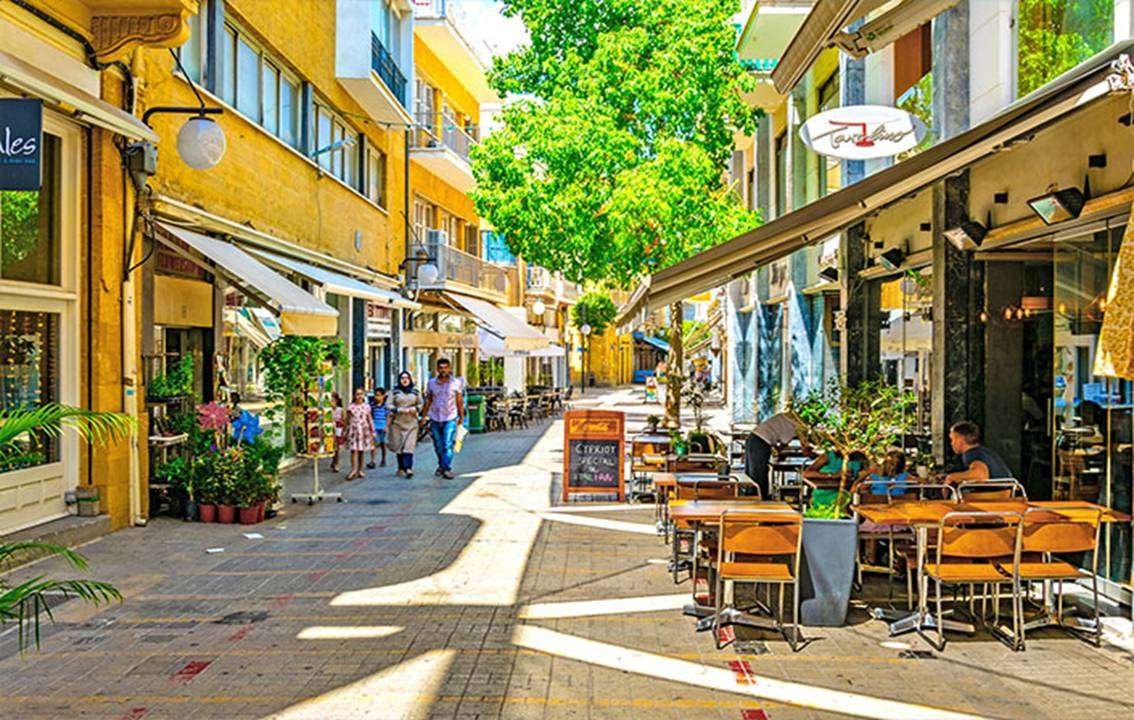
A HISTORICAL CENTRE OF DOMESTIC COMMERCE
A WORTHY VISIT!
A HISTORIC MONUMENT
Ledra Street, situated in the heart of the old city of Nicosia, is a historic monument in its own right. Approximately 1 km in length, it connects both the southern and northern parts of the old town within the city. This means that the buffer zone, which is also known as the ‘green line’, which separates the Republic of Cyprus from the Turkish-occupied northern part of the island, runs straight through Ledra Street.
A HISTORICAL CENTRE OF COMMERCE
Ledra Street has historically been a centre of commerce. Offering several boutiques, bars, restaurants, and art cafés, it is the busiest shopping street in Nicosia. The adjacent centuries-old, narrow streets also lead to the liveliest part of the old city, with the whole area being a hive of activity.
A STRUGGLE FOR INDEPENDENCE
During the struggle for the island’s independence that began in 1955, Ledra Street acquired the informal nickname of the ‘Murder Mile’. This was in reference to the frequent targeting of British soldiers by Cypriot nationalist fighters. They would often take potshots at the British military along the course of the length of the street.
THE END OF CONFLICT
After a brutal 5 year civil war, Cyprus was eventually granted independence from Great Britain in the summer of 1960. Although some Greek Cypriot factions were still advocating for a union with Greece, and the majority of Turkish representatives were hankering for a separate state of their own, a new independent Republic of Cyprus was formed. This was to be governed by a new coalition government that was made up of both Greek and Turkish Cypriot representatives.
THE BEGINNING OF SEPERATION
Hostilities, however, between the two communities soon followed. Things then came to a head in 1963 after Turkish government officials boycotted the government. This occurred after an attempt was made to make amendments to the relatively new Cypriot Constitution. Turkish Cypriot leaders did not accept the changes that were proposed by Greek leaders, and they were compelled to veto these amendments. As pressure built, Turkish government officials had no option but to boycott the coalition government.
TURKISH ENCLAVES
After the government boycott in 1963, Turkish Cypriot enclaves were formed across the whole island. Turkish Cypriot communities were then compelled to withdraw from Greek Cypriot areas and urged to resettle in the enclaves. This created an ad hoc separation. The Turkish Cypriot community of Nicosia followed suit and withdrew to the northern part of the city. This part of Nicosia then became one of several Turkish Cypriot-controlled enclaves, and Ledra Street was then blockaded and patrolled by both communities.
THE BUFFER ZONE
After the Turkish invasion and then occupation of Cyprus in 1974, a buffer zone was established across the island. This buffer zone, which is also known as the ‘Green Line’, today still separates the illegal, unrecognised northern-controlled Turkish part of the island from the legal and recognised Greek-controlled Republic of Cyprus in the south. Both communities remained separated for 34 years until April 3rd 2008. This was when the Ledra Street crossing was established. Although the buffer zone still currently splits Ledra Street in two, people can, at least today, legally cross over from either the north or the south of the island.
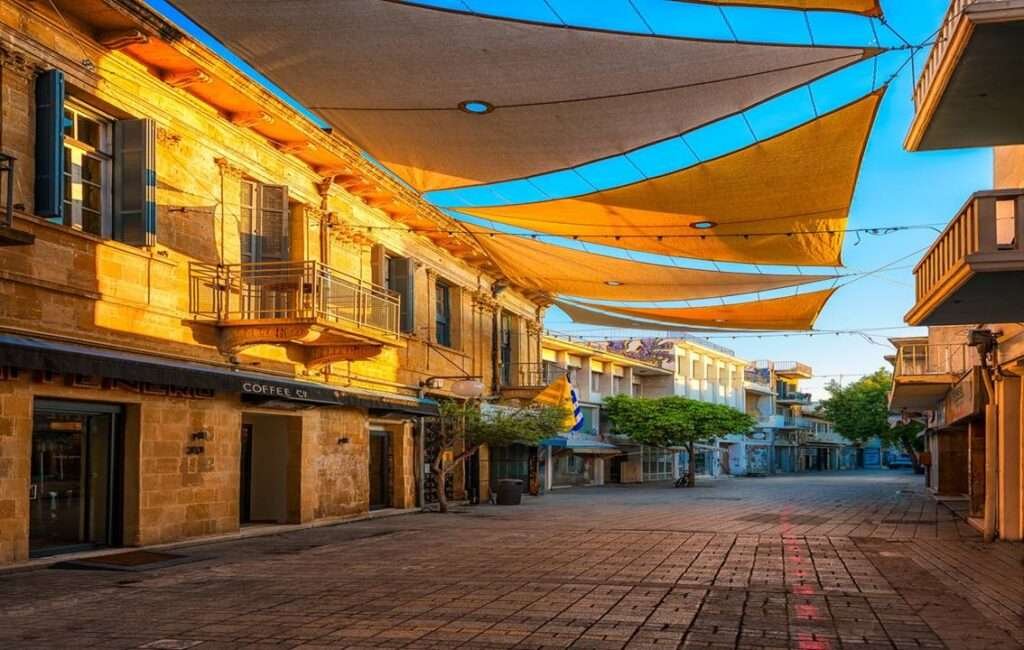
LEDRA STREET COVERING
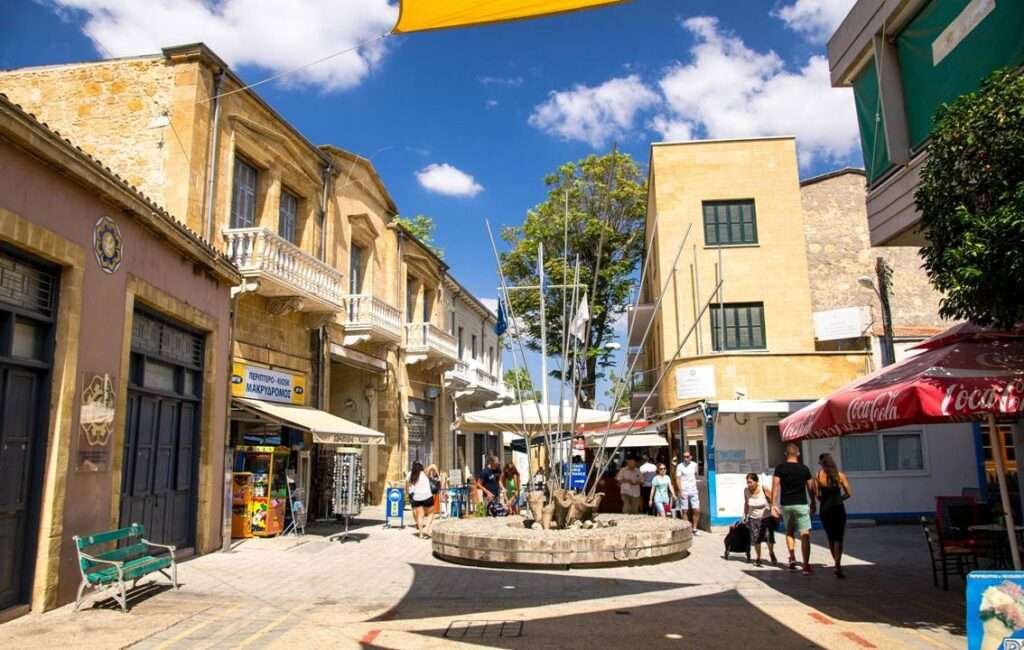
THE LEDRA STREET CROSSING
KEY HIGHLIGHTS
Ledra Street is a major, lively pedestrianised shopping thoroughfare located in the historic heart of Nicosia. Spanning across the United Nations buffer zone, the street not only serves as the primary pedestrian shopping area of the city, but also as a hive for several leisure activities. The top places to visit in and immediately around Ledra Street showcase its unique status as the vibrant heart of Nicosia and a direct window into Europe’s last divided capital. This bustling pedestrian thoroughfare is packed with history, modern shopping, and distinct cultural experiences that span across both sides of the UN Buffer Zone.
Shopping and Lifestyle: Enclosed by the HISTORIC VENETIAN WALLS of Nicosia, Ledra Street features an array of modern boutiques, international retail chains, cafes, and several al-fresco dining options.
Faneromeni Church: Situated just a few steps east of Ledra Street, this historic 19th-century church also acts as a lively cultural hub that is surrounded by bustling outdoor cafés and local restaurants.
Laiki Geitonia: Located in the narrow alleys just off Ledra Street, this area of Nicosia, reveals a charming, traditional neighbourhood that features beautifully restored 18th-century houses, artisan craft shops, and authentic tavernas.
Leventis Municipal Museum: This award-winning museum that details the complex history of Nicosia from ancient times to the modern era through engaging, immersive exhibits, is a short walk from the main street.
The Border Experience: For decades, the street was blocked by a military barricade that symbolised the island’s division. It was famously reopened in April 2008, establishing the Ledra Street Crossing Point as a vital checkpoint that is adorned with abandoned, bullet-torn buildings frozen in time since 1974. Today, this pedestrian-only checkpoint splits the street right down the middle.
Shacolas Tower: Located just off the street, this building houses the Shacolas Tower Museum and Observatory on its 11th floor, offering panoramic 360-degree views and interactive screens detailing several landmarks across the entire divided capital.