
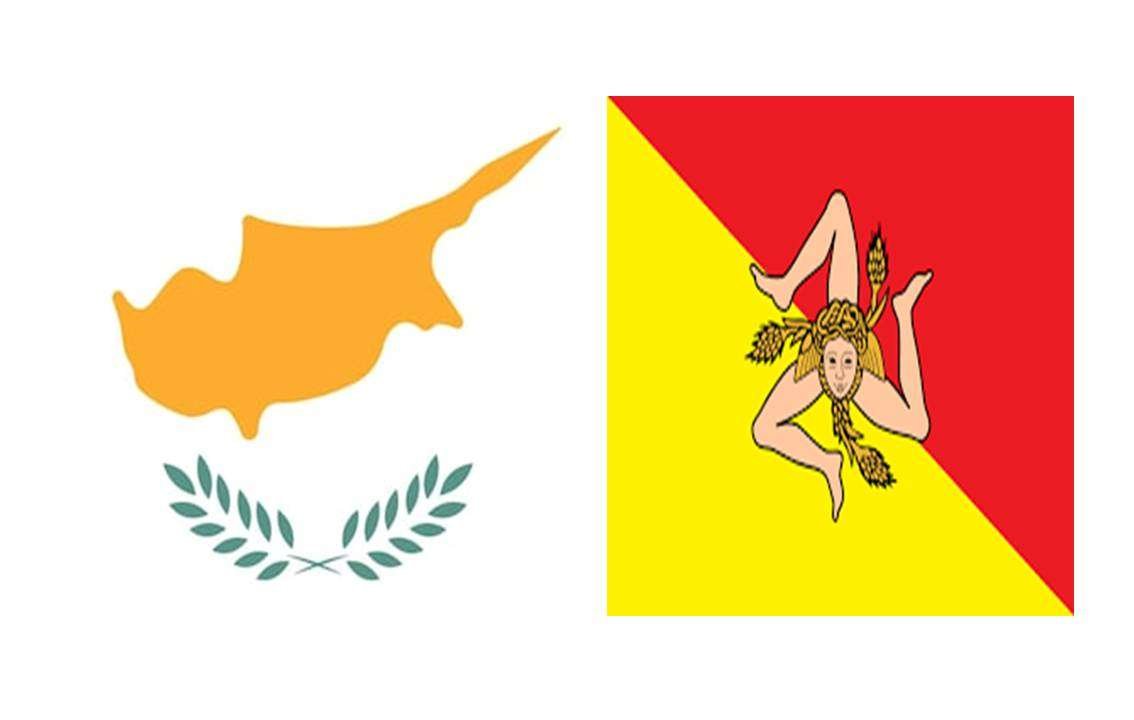
CYPRUS & SICILY

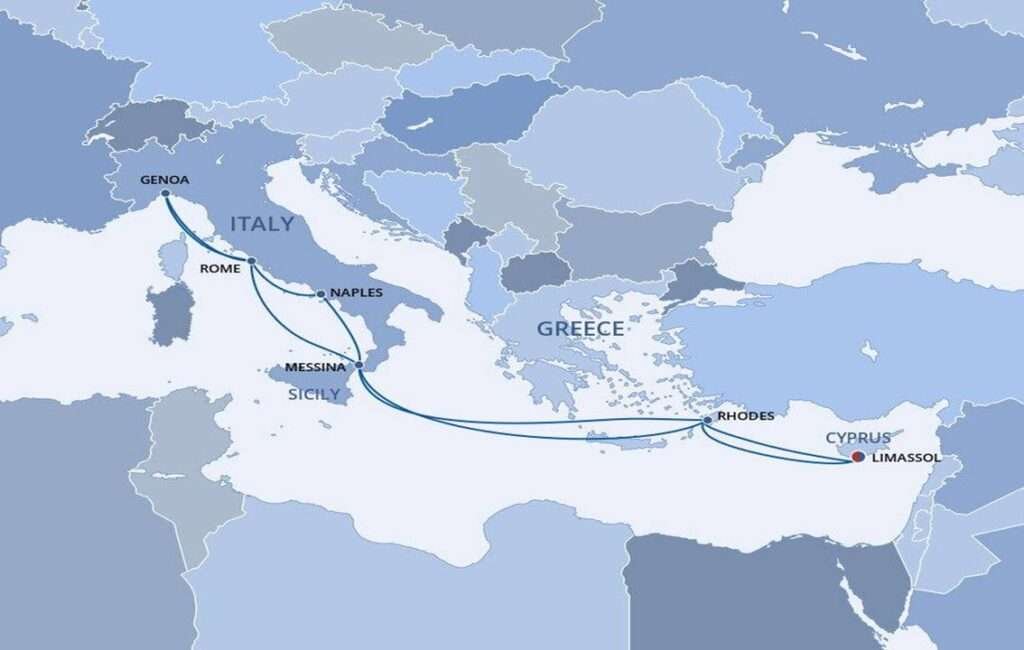
A CONTINUOUS MEDITERRANEAN LINK
It has emerged that the people of both Cyprus and Sicily share deep historical, maritime, and genetic connections, spanning prehistory through to the Middle Ages. This is known because of evidence revealed by genomic studies. These show a continuous Mediterranean genetic background linking both islands. These include Greek Neolithic farming migrations and later Greek Bronze Age trade movements.
THE BRONZE AGE
By the mid-Bronze Age, both islands are known to have been part of a wide-reaching Greek maritime network. This included central Mediterranean exchange routes formed from ancient Mycenaean trade networks. This is supported by archaeological finds from the period that have uncovered examples of Cypriot pottery recovered from key Sicilian Bronze Age sites, such as Thapsos, in the southeast, and Cannatello, in the south of the island. These examples include Cypriot pot marks on ceramic handles, white slipware, and storage pithoi that point directly to the presence of Cypriot maritime traders in Sicily.
THE MIDDLE AGES
Deep ties are also known to have existed between the two islands during the 12th century. This is when Cyprus was a province of the Byzantine Empire, and Sicily was under the direct control of the Normans. An early 12th-century mosaic depicting the Virgin of the Annunciation in the church of St Mary of the Admiral in Palermo strongly resembles an early 12th-century fresco illustrating the same scene in the church in the village of Trikomo. This indicates an exchange of iconography between the two islands at the time. In the 1170s, the Arab traveller and ascetic al-Harawi boarded a trade ship from Cyprus bound for Sicily. He described the passengers as ‘Ruum’, which is an old term used to describe Greek-speaking people. A document from 1181 originating from Sicily lists the possessions of the church of Saint Peter at Golisano in the diocese of Cefalù. This alludes to lands in Cyprus that had been acquired through donations made by Iohannis de Leone sometime after 1140.
A SUCCESSFUL REBELLION
By 1184, the Byzantine ruler of Cyprus, Isaac Comnenus, was a known cohort of the grand Sicilian admiral Margaritone. This acted as a direct catalyst for his successful rebellion against the Byzantine Empire. Margaritone’s Sicilian fleet helped defeat a huge Byzantine armada that was sent to recapture Cyprus after the rebellion. The two islands then formed even stronger bonds after this victory, when the new de facto ruler of Cyprus married Margaritone’s sister-in-law. This helped to cement a bond between the two that would last well into the next century.
A NEW ERA OF TRADE
Following the 1266 Angevin conquest of Sicily, King Charles of Anjou began to regularly ship massive quantities of Sicilian and Apulian grain to Cyprus en route to Latin Syria to support Crusader states in the region. Direct state relations, however, later suffered greatly after the Frankish Lusignan King of Cyprus, Hugh III and Charles of Anjou both laid rival claims to the Kingdom of Jerusalem. This resulted in a discord that directly led to the severance of all commercial ties between both islands. This changed once again, however, with the Sicilian Vespers and the Aragonese takeover of Sicily in 1282. Both Catalan and Aragonese merchants, who were active across both Sicily and the Levant, then managed to revive all commercial ties between the two islands. They then established a strong merchant presence in Cyprus by the beginning of the 14th century.

