THE CASTLE NEAR THE VILLAGE OF KOLOSSI
A LIMASSOL LANDMARK
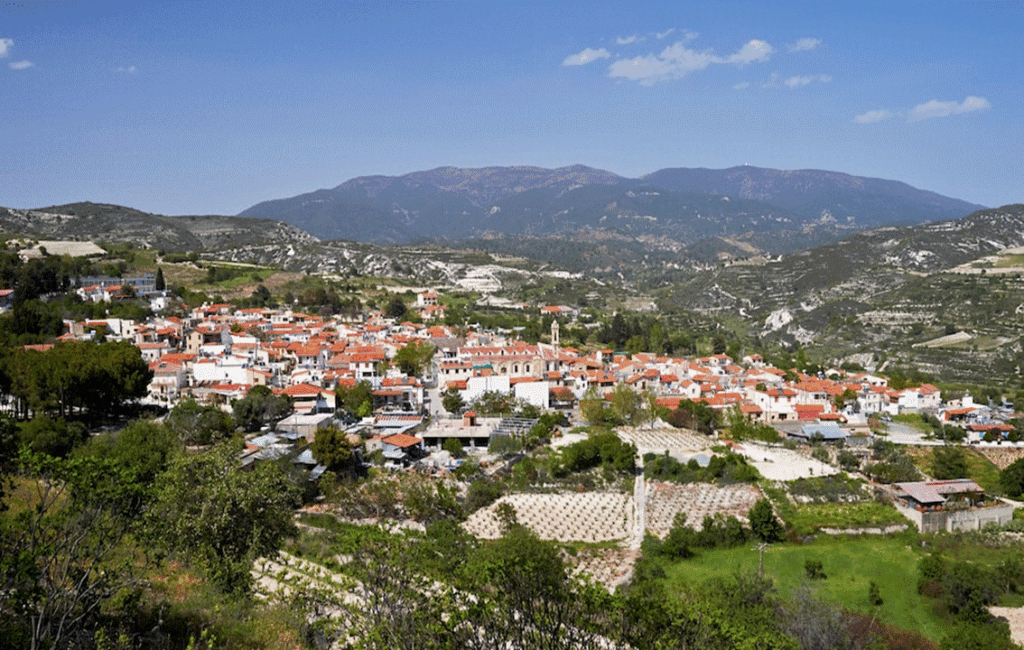
Kolossi Castle, situated 10 kilometres west of Limassol, is a remarkable example of medieval military architecture. Its history is deeply intertwined with the era of the Crusades and King Richard the Lionheart. After the king of England captured the island in 1191, on his way to the Third Crusade, ownership of Cyprus switched to the Knights Templar and then to Guy De Lusignan.
A LUCRATIVE FERTILE AREA
The name of the immediate area surrounding the castle derives from the feudal lord ‘Garinus de Kolossi’. He took control of these lands during the reign of Guy De Lusignan. His lands included the lucrative, fertile part of the Kuris River valley, where vineyards, sugarcane, olives, and carob trees would be successfully cultivated.
THE ORDER OF SAINT JOHN
In 1210, King Hugh I de Lusignan of Cyprus purchased the whole territory. He transferred ownership of the area to the Knights of the Order of Saint John, also known as the Knights Hospitallers. It was during this period that the first fortification was built on the site in the form of the castle that exists today. The fortification served both as a residence and a strategic centre of military operations in the region for these knights.
ORIGINALLY A FORT
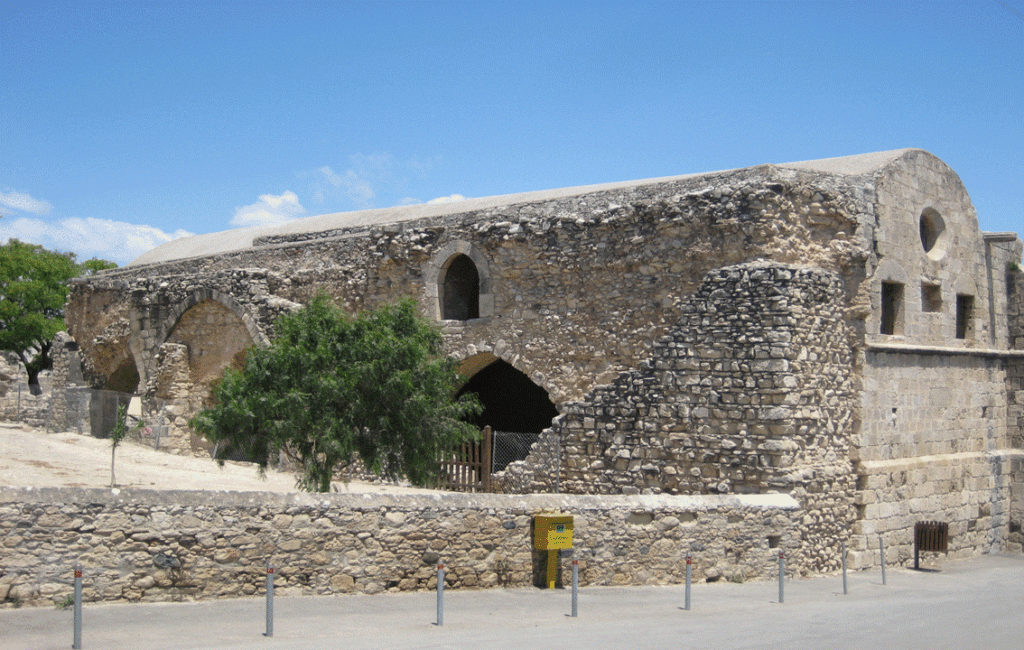
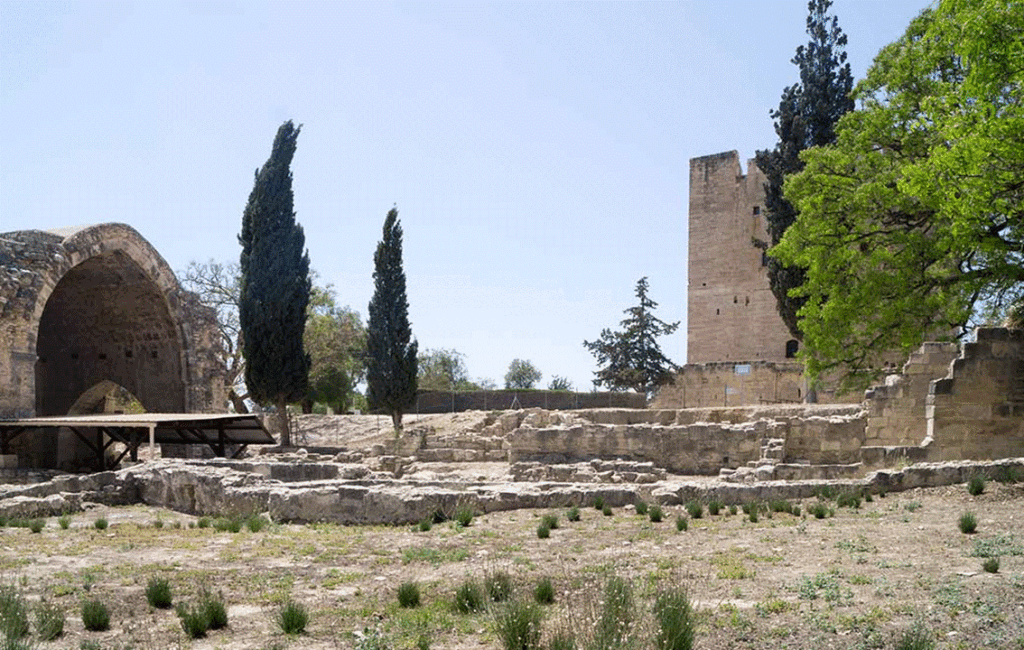
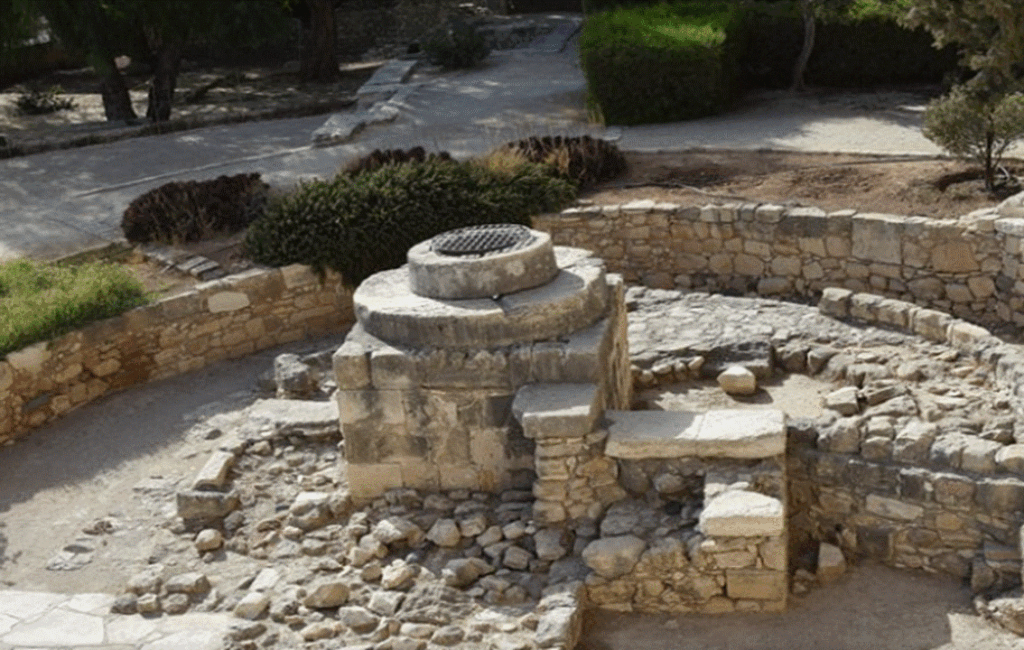
The early castle was part of a fortified structure that made up a fort. It was surrounded by high walls with defensive towers, the ruins of which are still visible today. These ruins lie about three and a half metres from the eastern part of the castle. There are also impressive remains of a wall with an arched entrance. At the end of the wall are the remnants of an 8 metre diameter tower with a well in its centre. The well, which is 7.5 metres deep, still holds water today.
AN ADMINISTRATIVE CENTRE
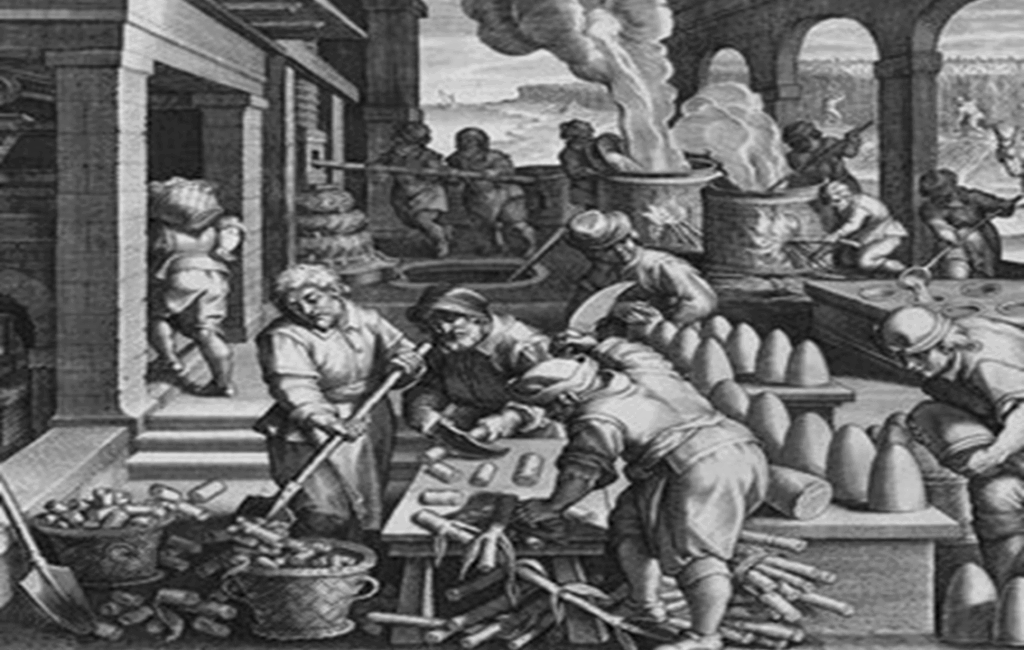
The Hospitallers went on to actively develop the region’s economy. They focused their efforts on sugarcane and grape cultivation, and it was during this period that large-scale production of the famous Cypriot wine ‘Commanderia’ began. This centuries-old wine is named after the Commandery because of this. Their Commandery, which served as their administrative centre in Kolossi, enabled them to effectively manage vast estates that encompassed up to 60 villages at any one time.
REPEATED CHALLENGES
The castle faced repeated challenges during the 14th and 15th centuries. It sustained damage after being attacked by the Genoese in 1373 and then by Egyptian Mamluks in 1402, 1413, and 1425. Several earthquakes also caused significant damage to its structure. The original complex lay in virtual ruins by the mid-15th century. This necessitated the construction of a new fortification.
A MAJOR RECONSTRUCTION
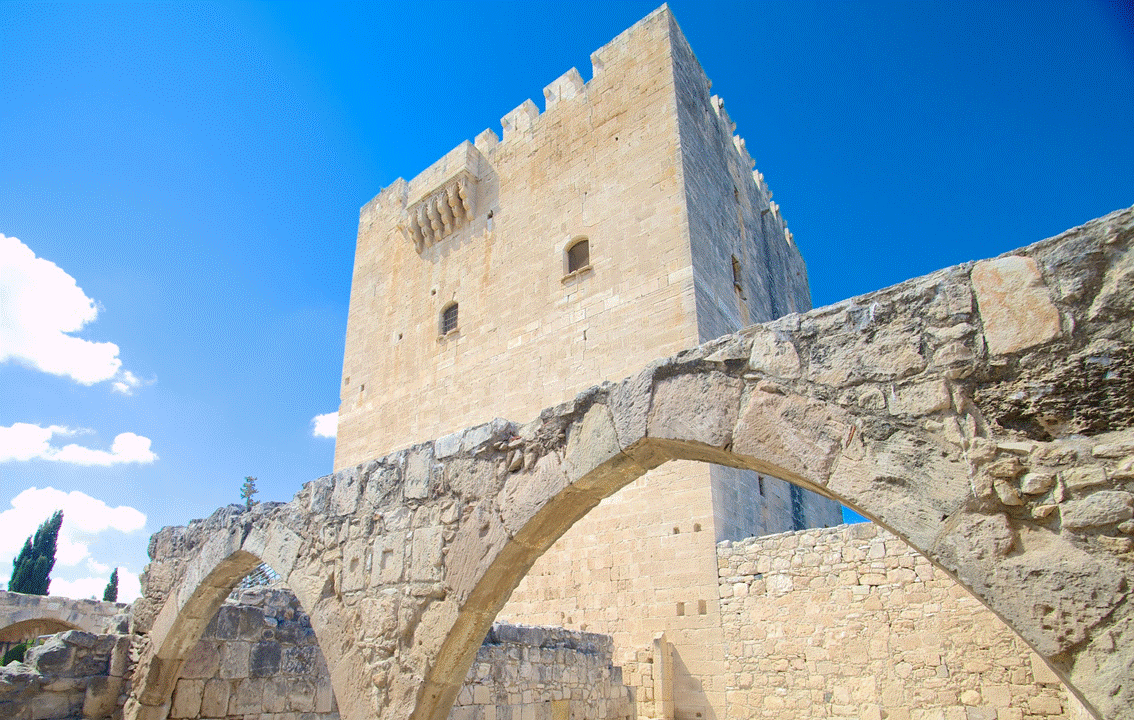
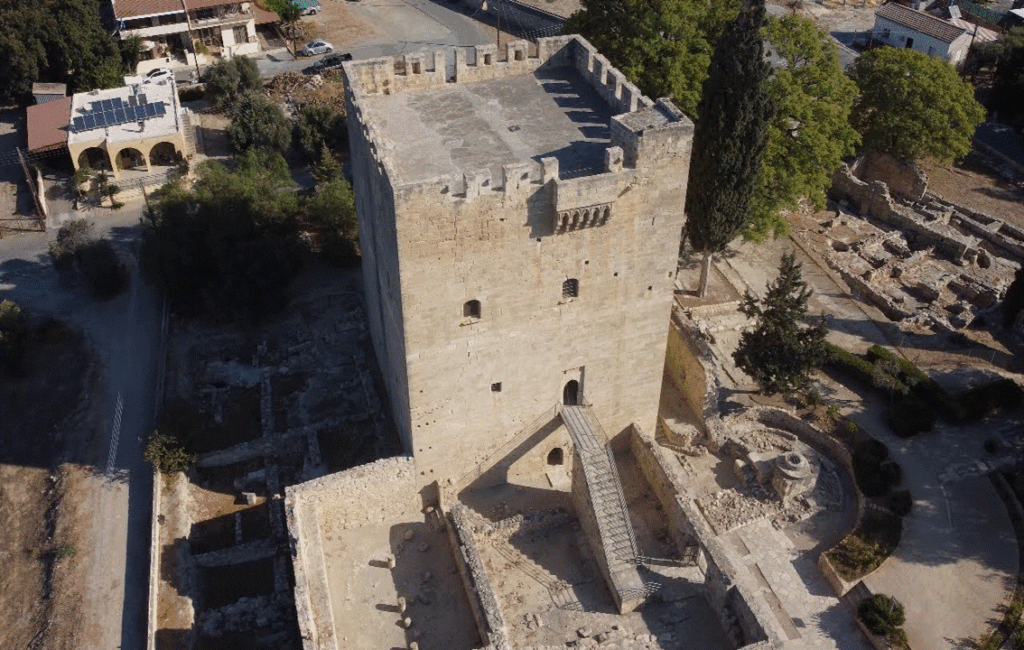
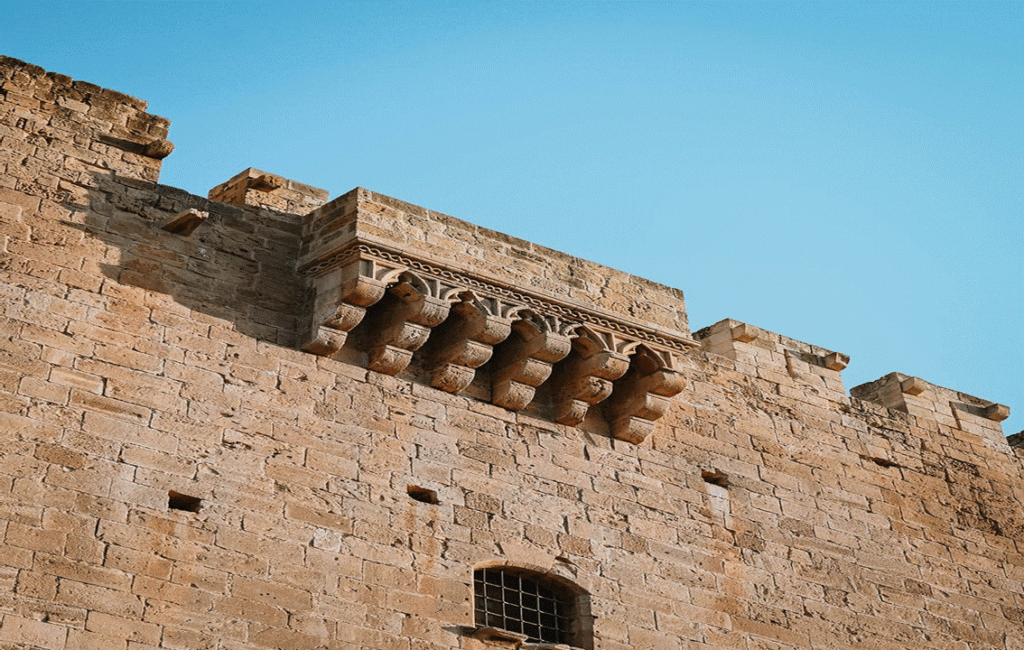
In 1454, Louis de Magnac, the commander of the Hospitallers, completed a major reconstruction of the castle, giving it its current appearance. The reconstruction established the castle, once again, as the main stronghold of the Hospitallers in Cyprus at the time. Built from local limestone, the new three-story donjon tower was deemed somewhat reckless, however! Fortifications of this kind were considered outdated at this time because they were unable to effectively withstand the fire of modern siege artillery.
A QUEEN'S RESIDENCE
Catherine Cornaro, the last queen of Cyprus, briefly took ownership of the castle in the late 15th century. This occurred before her abdication that handed Cyprus over to the stewardship of the Republic of Venice. The castle lost its military significance with the onset of Ottoman rule in the late 16th century. It did, however, retain its economic significance, mainly due to winemaking and sugar production.
NUMEROUS LEGENDS
There are numerous legends surrounding Kolossi Castle. One tells of treasures hidden by the Templars in the castle’s dungeons, while another speaks of a knight’s ghost guarding the castle during a full moon. These stories add a touch of mystique to this historical site, now a popular tourist attraction.
A VISIT TO KOLOSSI CASTLE
Kolossi Castle is located in Kolossi village, which is 14km west of the City of Limassol, Cyprus. The former Crusader stronghold, built in the 13th century, is famous for its commanding three-story keep and the surrounding vineyards that historically produced Commandaria, the world’s oldest named wine.
A visit to the castle typically involves an approximately 10-minute drive from the City of Limassol, and then between 30 and 60 minutes to complete, making it a highly accessible and affordable historical excursion.
WHAT TO SEE & WHAT TO DO
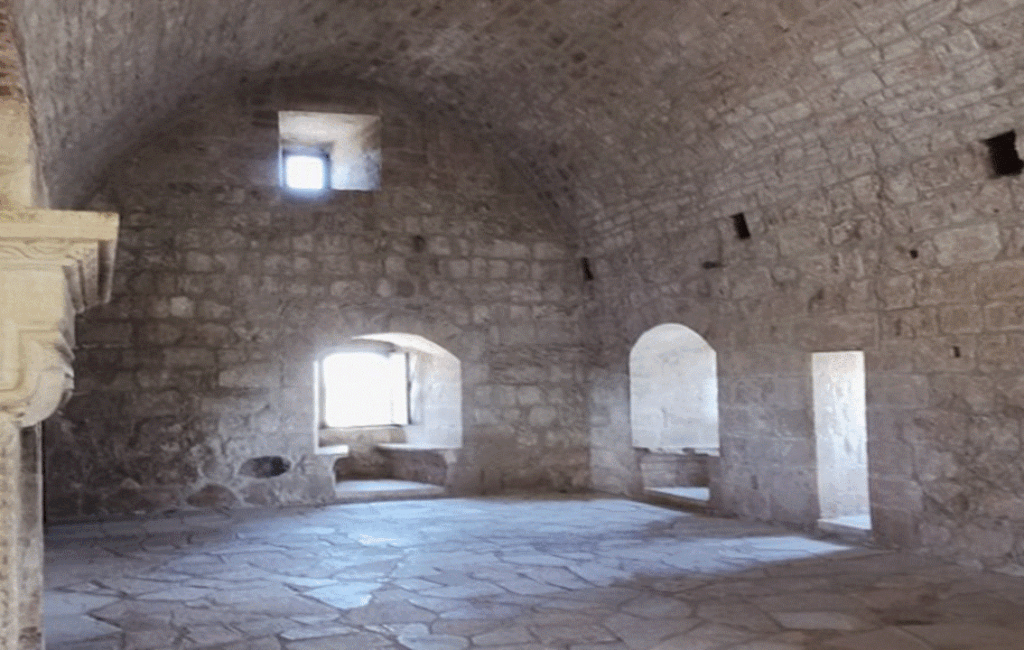
The Main Keep: Accessible over a drawbridge, the largely empty stone chambers include a room with a 15th-century fresco depicting the crucifixion.
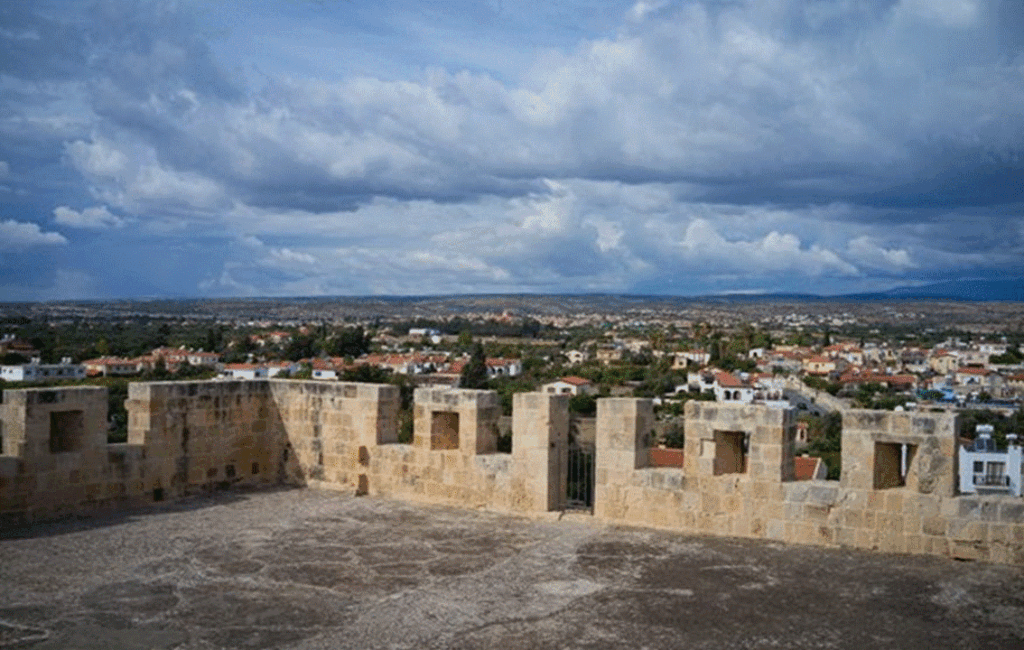
The Rooftop: A steep helical spiral staircase accesses the roof and the battlements, which provide excellent panoramic views of the surrounding lush vineyards, the Kouris River Valley, and the Mediterranean coastline.
Sugar Mill Ruins: Just east of the castle, are the ruins of a 14th-century sugar processing factory, a water tower, and an aqueduct.
Facilities & Amenities: The grounds are well-maintained, with ample parking and a small, family-run cafe near the ticket office.
Mobility Warning: The interior staircase is very narrow, steep, and single-file, so it may be difficult for visitors with mobility issues or young children.
A LIMASSOL LANDMARK
Kolossi Castle is a landmark that has survived the test of time. This historic building serves as a vivid reminder of the strategic importance of Cyprus and its influence in the immediate area surrounding the island. The castle also stands as a good example of the diverse influences that have shaped the island’s history over the ages. Primarily used for military purposes, the castle, since its inception in the 13th century, has also been used as a sugar refinery and a prison. The structure has helped to shape the local landscape through the ages and stands as a symbol of the island’s enduring resilience and legacy which is highlighted by its medieval past. The castle today still stands tall and continues to captivate visitors who want to immerse themselves in the multi-faceted history of the island.
A MEDIEVIL FORT
The village of Kolossi, in the Limassol region, boasts one of the most poignant landmarks on the island. The Kolossi Medieval Castle has become one of the most important preserved fortresses from the Frankish period on the island. Today, it stands as a fine example of the military architecture of the time. The site where the imposing castle stands began life as a simple fort during Byzantine times. The early part of the 13th century, however, saw a dramatic change in the area’s demographic. The arrival of the Knights Hospitaller marked a stark change in the fortunes of the fort. They immediately recognised its importance and quickly identified the economic potential of the area surrounding it. This prompted them to add the strategically positioned castle to the fort to protect their economic interests.
THE ARRIVAL OF THE FRANKS
The Franks, after the Third Crusade, lost Jerusalem to the forces of Islam. Cyprus, because of this, became their new base of operations. The Knight Hospitallers, who arrived as a contingent of the new ruling Frankish class, were granted full autonomy in key regions of the island. This included the village of Kolossi. The Knight Hospitallers, as their name suggests, were a military order that held caring for the sick and the poor at the centre of their religious order. As a result, they often sought to generate their own funds for their philanthropic causes.
PERFECT CONDITIONS FOR SUGAR CULTIVATION
The Knights Hospitaller noticed almost immediately that the area, where the castle stands today, was very fertile. It also had an abundant supply of fresh water from the river Kouris. This, along with the local climate, created almost perfect conditions for sugar cultivation. Sugar, at the time, was a highly prized commodity throughout Europe. With this in mind, the knights would go on to create a fledgling sugar industry.
A CASTLE BUILT TO PROTECT SUGAR
As the Knight Hospitaller’s sugar operation took hold, it was identified that they needed more security. They went on to establish an extensive sugar plantation around the fort, and they went on to add a castle almost immediately thereafter. The castle’s direct connection to the sugar industry, which flourished in Cyprus during the Middle Ages, remains one of the most fascinating aspects of the island’s history.
A STRONGHOLD OF COMMERCE
After the castle’s completion, all sugar production was moved to within the castle’s walls. This transformed the structure into a thriving commercial centre. The castle’s imposing structure not only served as a key defensive stronghold but also allowed the Knight Hospitallers to successfully gain a vantage point for monitoring and protecting their interests in the whole region. Once sugar production was firmly established, the knights went on to exploit the rest of the agricultural industries surrounding the village of Kolossi. The knights further developed the cultivation of olive trees, cereal, carob trees, and, of course, viticulture that bore the famous Commandaria wines. All of this further allowed the immediate area to become one of the richest on the island.
AN INTRIGUING PAST
Over the ages, the strategic significance of the castle, as well as its location and economic power, made it a target for various rival powers. The castle was used as a base for several elite military units. The castle’s intriguing history includes several battles for control that involved numerous sieges. These have all left their indelible mark on its sturdy walls and commanding tower. The most well-known military unit to use the castle is the infamous ‘Commandaria Battalion’ of Hospitallers.
THE COMMANDARIA BATTALION
This group of knights went on to control most of the agricultural produce in the wider region. This included all of the surrounding villages and their agricultural produce. They adopted their informal name from their most prized export, ‘Commandaria Wine’. This wine was once proclaimed as ‘Wine of Kings and King of Wines’ by no other than Richard the Lionheart at his wedding in Limassol years earlier.
A COAT OF ARMS
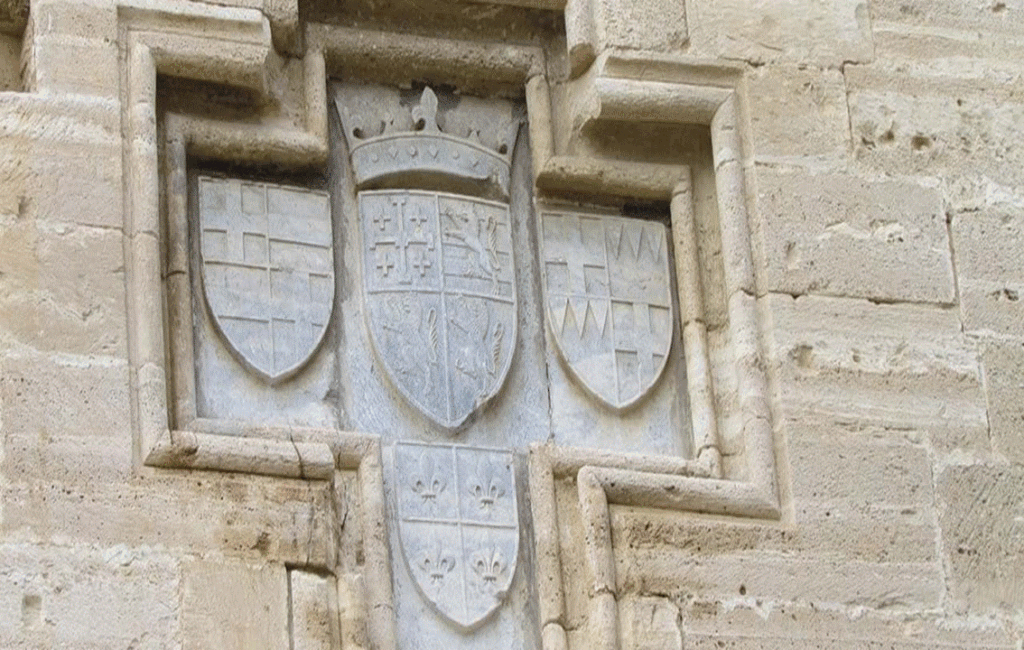
The presence of Louis de Magnac’s coat of arms on the wall of the castle is a tribute to the knight. During the 15th century, it is believed that the castle was expanded and largely rebuilt by the Hospitaller Commander of Kolossi at that time.
A NOBLE RESIDENCE
As the centuries passed, Kolossi Castle continued to play a significant role in the island’s history. The castle served as a residence for various noble families, as well as several military commanders of their day. The Republic of Venice, which took control of the island in the late 15th century, improved the castle’s fortifications. They also upgraded the sugar refinery, increasing production.
DESTROYED BY ARTILLERY
Ottoman artillery destroyed most of the Castle after a gallant defence by Venetian defenders. The Ottomans had launched a large-scale invasion of the island in the late 16th century and needed to eradicate the castle’s threat. The Venetians refused to surrender, and the decision was taken to destroy it. All that remains today of this once great castle is its three-story keep and its bailey. The castle would go on to serve as a prison under the British administration of the 19th century.
THE CASTLE TODAY
Today, the castle stands as a landmark and place of historical interest. It is a testament to the island’s tumultuous history, drawing visitors from around the world. Visitors often visit the landmark to witness its medieval architecture and explore its varied history first-hand. The castle offers a glimpse into the past, allowing visitors to step back in time and imagine the lives of those who once lived there. Visitors can explore all three storeys of the keep and then make their way to the roof, where they can enjoy panoramic views of the area. Visitors can also enjoy the wonderful gardens that are often used as a backdrop for wedding photos.
Kolossi Medieval Castle
Winter operating hours:
September to April
8.30 am to 5.00 pm
Summer operating hours:
April to September
8.30 am to 7.30 pm
Tel: 25 934 907
Bus 17 from Limassol