A PUBLIC HOLIDAY THAT CELEBRATES GREEK DEFIANCE & FREEDOM
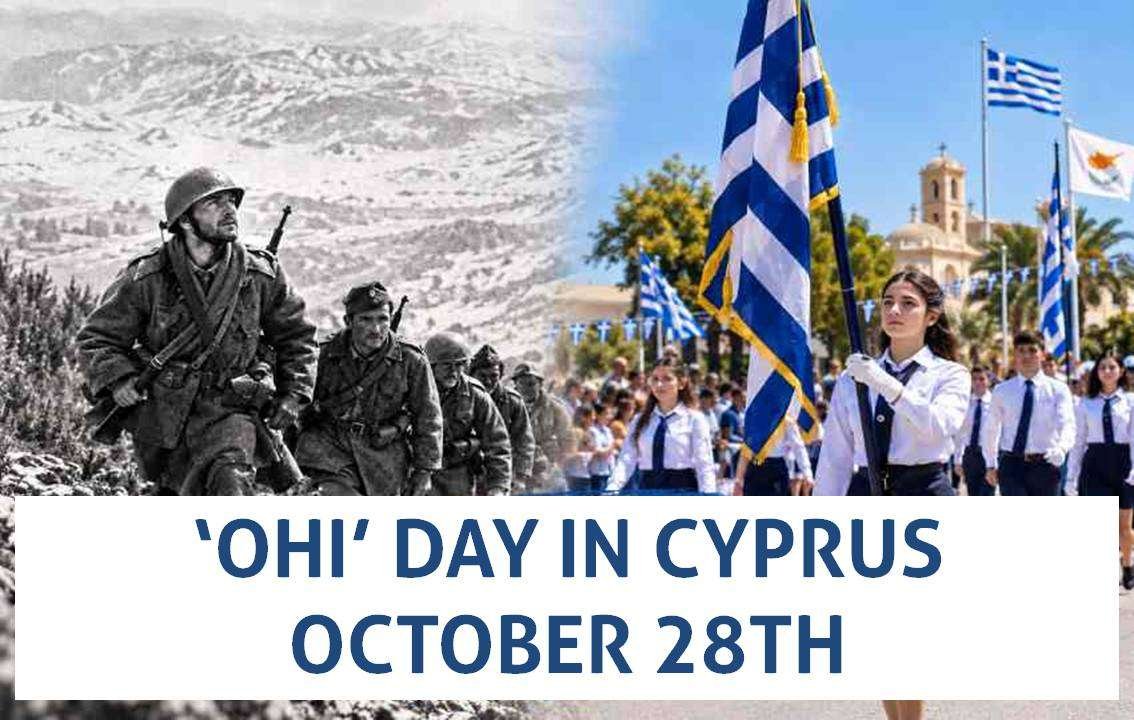
Although Ochi Day is primarily associated with Greece, it is also commemorated in the Republic of Cyprus. The national holiday is marked with school celebrations, church services, official ceremonies and student parades.
Every October 28th, Greek flags appear in streets and schoolyards, students prepare for parades, and communities come together to commemorate ‘Ohi’ Day across the Republic of Cyprus. This anniversary is especially meaningful to Greek Cypriots as it connects the island’s Greek cultural heritage with a defining moment in modern European history that has become a lasting symbol of Greek courage, freedom and national identity.
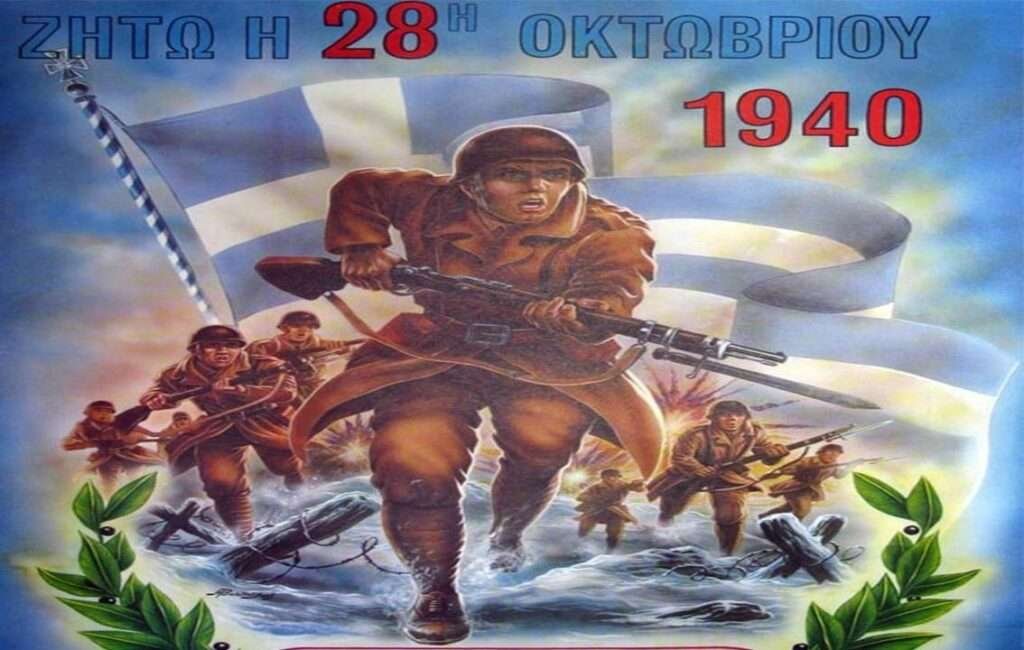
Ohi Day represents the story behind the refusal of Greece to accept an ultimatum from Fascist Italy on October 28th, 1940, during the Second World War. It is about a country confronted with the threat of invasion, a population that rallied in resistance, and the consequences of standing up to a powerful aggressor. For Cyprus, it also offers an opportunity to remember the island’s own contribution to the Allied war effort and the complicated history of living under British colonial rule during the same period.
WHAT IS OHI DAY?
The word ‘Ohi’ means ‘No’ in Greek, and this was the answer given to the demands made by Benito Mussolini’s fascist Italian government on October 28th, 1940. Greece at the time stated that a nation should not have to surrender its independence and freedom simply because a more powerful country was demanding it.
By 1939, Adolf Hitler’s Germany and Benito Mussolini’s Italy were pursuing aggressive expansionist policies, seeking greater territory and political influence through military force. In light of this, Italy had already occupied Albania, and Nazi Germany invaded Poland on September 1st, 1939, triggering the start of the Second World War. In June 1940, Mussolini officially entered the war on Germany’s side, hoping to secure territorial gains as France was being defeated by German forces. Greece, meanwhile, was attempting to remain neutral, but its geographical position made it strategically important.
The Greek light cruiser Elli was torpedoed and sunk by an Italian submarine while anchored near the island of Tinos on August 15th, 1940. The attack, which took place during a major religious celebration, intensified anti-Italian feeling, and over the next two months an Italian invasion of Greece was becoming increasingly likely.
A GREEK EMERGENCY
What happened on October 28th?
In the early hours of October 28th, 1940, at approximately 3:00 am, the Italian ambassador to Greece arrived at the residence of Greek Prime Minister Ioannis Metaxas in Kifisia, near Athens. He delivered an ultimatum on behalf of Mussolini’s government, demanding permission for its armed forces to enter Greek territory and occupy strategically important locations, including sites connected to transport and military operations. It was immediately obvious that accepting these demands would effectively allow Italy to occupy parts of Greece, and although Greece was then given three hours to respond, the familiar story says that he answered immediately with a single word, ‘Ohi!’. This word then became the enduring expression of Greece’s refusal to accept Italian demands. Within hours, Italian forces crossed into Greece from Albania, sparking the start of the Greco-Italian War.
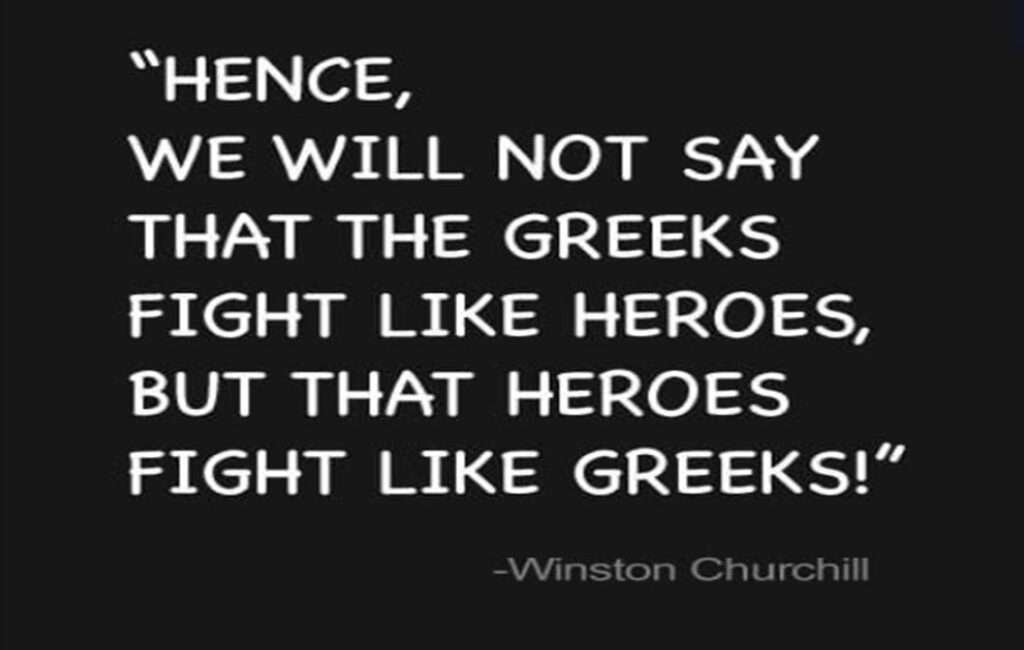
Mussolini expected the campaign to bring a relatively quick victory. Instead, the Italian advance encountered determined Greek resistance. Greek forces fought in difficult conditions, particularly in the mountainous regions of Epirus and the Pindus range. The weather, challenging terrain, logistical difficulties and the determination of Greek soldiers all complicated the Italian offensive. The Greek army not only stopped the initial advance but launched a counteroffensive that pushed Italian troops back into Albanian territory, and by late 1940, Greek forces had even captured several towns in southern Albania that had served as Italian bases. This was later recognised as a significant development in the early years of the Second World War, at a time when Axis forces appeared formidable across much of Europe. Although Greece had demonstrated that the Italian army could be resisted and defeated in a land campaign, the story did not end with a Greek success against Italy, however.
On April 6th, 1941, Nazi Germany invaded Greece through Bulgaria. German forces eventually overwhelmed Greek resistance, and mainland Greece came under Axis occupation. Crete was subsequently captured following fierce fighting in May 1941. The occupation brought severe suffering, including executions, repression, destruction and devastating famine. ‘Ohi’ Day, as a result, therefore, commemorates both the decision to resist and the Greek sacrifices that followed.