
INTERNATIONAL OVERSEAS BUYERS
Home ownership in Cyprus is a highly popular and well-regulated option for international buyers, offering a mix of Mediterranean lifestyle, strong rental yields, and structural legal protections. However, following recent rule changes, the exact process, limits, and tax advantages depend heavily on each individual’s nationality.
RULES BY NATIONALITY
The Republic of Cyprus puts buyers into two main legal categories:
• EU Citizens: People from the European Union enjoy complete freedom with no restrictions on Cyprus. These people can buy as many residential properties, commercial buildings, or plots of land as they wish.
• Non-EU Citizens: Under the Ministry of Interior guidelines, these people must apply for permission to buy property from the local District Administration of the Council of Ministers. Although this is typically a routine formality for bona fide buyers with clean criminal records, it does come with some strict allowances. These allowances include the limit of up to two units within the same development, and any purchased land cannot exceed a plot size of 4,014 square metres. Married couples are treated as a single entity, meaning the limits will be applied jointly. The rules for permanently relocating to Cyprus, however, are different. Purchasing a brand-new property, with a minimum value of €300,000, as a primary residence, qualifies the buyer for the Cyprus Permanent Residency Program. This SCscheme, which covers the purchaser’s whole family, takes about two months to process, and grants lifelong residency rights provided that the buyer visits the island at least once every two years.
PURCHASE TAX
Property tax for new purchases in Cyprus is designed to lower upfront transaction costs and to add transparency.
Property Transfer Fees: This is only applicable to resale properties. These fees are applied on a sliding scale of between 3% and 8%, which is based on property value. A 50% discount is applied if the property is subject to VAT. Stamp Duty has been fully abolished for all property sales contracts.
VAT: This is only applicable to new-build properties at a standard rate of 19%. A 5% reduction applies to the property if it is to be the primary residence. Strict limits apply, however, and all discounts are capped for properties up to 130 square metres with a maximum value of €350,000.
Capital Gains Tax: A flat 20% rate on all profits gained from selling a property is applied. A general exemption on a main residence is also applied, but this requires 5 years of proven occupancy.
THE PURCHASE PROCESS
A Step-by-Step Guide
Buying a property in Cyprus typically takes 2 to 3 months and follows these strict legal milestones.
1. Hire an Independent Lawyer: Never use the developer’s or seller’s lawyer. Your lawyer will check the Land Registry for hidden developer mortgages, boundary disputes, or missing planning permissions.
2. Sign a Reservation Agreement: Insist on a signed reservation agreement after paying the minimum deposit. Make sure that this agreement stipulates that the property is taken off the market while due diligence occurs.
3. Obtain a Digital Cyprus Tax Identification Number: All buyers must generate a Cyprus Tax Identification Number through the TAX FOR ALL platform before a contract can be formalised.
4. Sign and Deposit the Contract: Any further deposits registered at the Land Registry Office after the contract of sale is signed will protect the buyer’s equitable ownership.
5. Apply for Council of Ministers Approval: All non-EU buyers have to submit approval using a COMM 145 form.
6. Completion and Title Deed Transfer: Physical possession of the property can be taken after the final balance is settled. This is a process controlled by all legal parties and includes the legal registration of the property. Physical possession of the property can still be legally taken if title deeds are delayed.
CRITICAL PITFALLS TO AVOID
• The Title Deed Trap: Always verify that the property has a clean, separate title deed. Any outstanding bank loans on the land could be inherited by the buyer if any bankruptcies occur before the transfer of any deeds.
• The Northern Cyprus Warning: Buying property in the northern, Turkish-controlled area of Cyprus is not advisable. The majority of properties there belong to displaced Greek Cypriots, and purchasing or renting them without the original owner’s permission is considered a criminal offence under Republic of Cyprus law and carries a prison sentence.
HELP FOR HOME OWNERSHIP!
GRANTS FOR HOMEOWNERS
Cyprus is constantly trying to find ways of promoting greener energy solutions across the island. It does this as part of its commitment to the European Union’s larger greener agenda.
In light of this, various schemes, offering grants, are available at different times over the course of the year. Although these schemes constantly change, there is always something available for homeowners that want take advantage of greener schemes.
The main goal of these initiatives is to make homes more energy efficient and to reduce energy bills. Some of these schemes encourage homeowners to help conserve energy by allowing homeowners to invest in solar energy, whilst others aim to reduce water consumption. Waste disposal is also becoming an issue and this is highlighted by the recent LANDFILL TAX that has now been introduced.
Most of the schemes operate in a similar way and have the same qualifying criteria. Homes must not be under construction or used for business purposes. All new systems must be installed by certified professionals using approved equipment.
Applications for these schemes are made online, and most require a series of inspections.
THE CYPRUS HOMEOWNERSHIP PLAN
Cyprus often runs a housing assistance program to help residents buy their own homes. Whilst this scheme constantly runs in one form or another, the qualifying criteria often changes. At the moment the sceme is open to all residents who want to buy their own homes up to age 41.
With overall home ownership down on the island, this initiative aims to provide younger generations with opportunities for affordable housing in Cyprus. It does this by offering incentives, as well as financial aid, but has a strict qualifying criteria.
All applicants must complete and then submit their forms through the official online platform. Applications must be accompanied by all of the required documents listed in the program guide.
Those below taxable levels are exempt, and applicants without certain documents, such as real estate survey certificates, can still apply if they include a request to the DEPARTMENT OF LANDS & SURVEYS for the necessary paperwork.
The scheme requires proof of
- Income
- Residency for the past five years
- A tax return confirming gross family income
INTERESTING CYPRUS HOUSING FACTS
Cyprus has one of the lowest shares in Europe of households spending over 40% of their disposable income on housing.
- Rent and mortgage payments remain the largest expense for most Cypriot households
- 70% of homes across the island are considered under-occupied.
- Nearly 70% of Cypriots are homeowners
- Nearly 70% of Cypriots live in houses
- Nearly 30% live in apartments
- Nearly 30% of Cypriots rent
HOMEOWNERSHIP IN CYPRUS IN DECLINE

TO RENT OR TO BUY IN CYPRUS

A DOWNWARD TREND IN HOMEOWNERSHIP
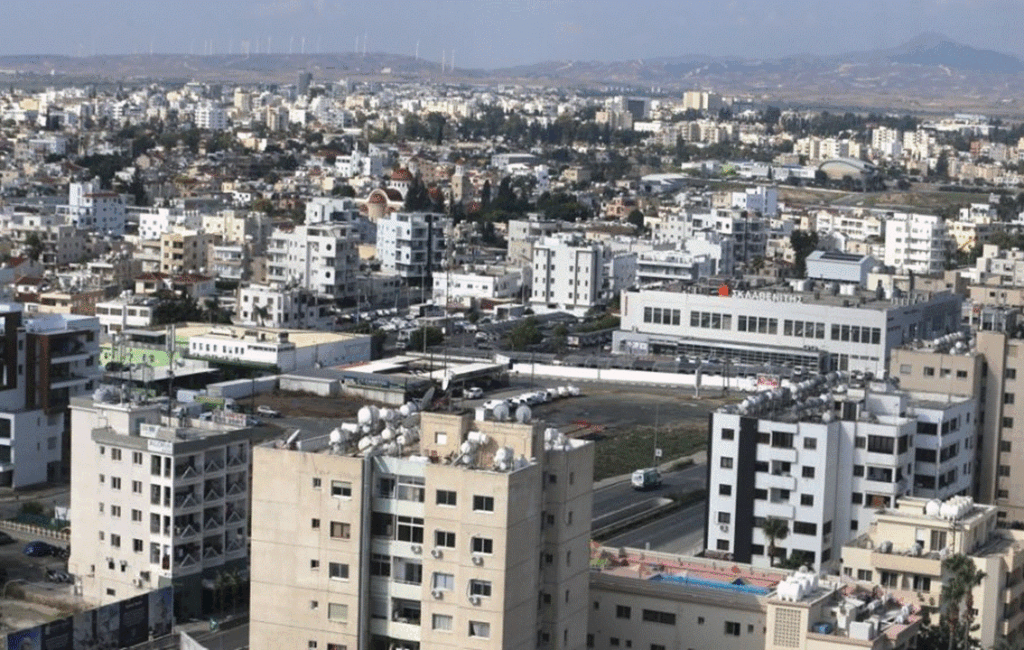
Homeownership in Cyprus is a cornerstone of Cypriot life. At the turn of the century, approximately 80% of Cypriots owned their own homes. Recent figures indicate, however, that this now stands at 70% overall. This decline has prompted some analysts to attribute the downturn directly to the recent economic turmoil on the island. Others, however, have stated that there are other factors to consider also!
A SERIES OF ECONOMIC CHALLENGES
Several Cypriots are still reeling from the economic challenges faced after the 2013 financial meltdown. The financial crisis that followed saw more than onebank disappear along with a great deal of money. This has meant that the remaining banks have raised their lending criteria, which has made borrowing for a new home very difficult. Homeownership in Cyprus has suffered because of this. This long drawn out process along with significant shifts in the housing market sector over the past two decades has created a rather volatile housing market on the island. The stark increase in foreign cash buyers dominating the market has increased the investment arm of the property market, but not homeownership.
A CULTURAL CORNERSTONE OF CYPRIOT LIFE
Historically, Cyprus has boasted one of the highest homeownership rates globally. This has remainined a cultural cornerstone of Cypriot life that is deeply rooted in family traditions and societal values. This however, seems to be changing and recent studies have shown a changing trend indicating that home homeownership on the island is now dropping below the European Union average. Whilst there are still a few people who can still afford to buy their own homes, the majority it seems cannot and some analysts have suggested that if this trend continues, then there will be a need for new policies addressing housing affordability to support sustainable homeownership that will ensure that this tradition continues for future generations.
CONSTANT RENTAL INCREASES
The once nation of proud homeowners are now choosing to rent homes instead of building or purchasing new ones. Recent evidence has indicated that high demand in the rental sector is causing sharp rent rises all over the island. The more affluent homebuyers now favour cheaper options, such as apartments or homes in rural areas, as oppossed to expensive inner city properties. This has meant that potential property sellers have opted to rent their porperties instead.
AFFORDABILITY CHALLENGES FOR POTENTIAL NEW HOMEOWNERS
The numerous challenges faced by purchasers, or people that want to build a new home are evident on the island and affordability challenges amidst economic and market changes have proved too volatile. Falling household incomes and difficult access to financing have made homeownership less attainable for many. Additionally, rising property prices and high mortgage rates have further strained affordability for all Cypriots. The island’s real estate market has also seen increased foreign investment, particularly in urban centres and coastal areas, and this has further driven up property values all over the island making it more challenging for residents to purchase homes.
PROPERTY SALES IN CYPRUS SEE MODERATE GROWTH IN 2024
Last year’s Cyprus property market saw moderate growth, despite regional differences in filings for sales. According to land registry data, Nicosia and Larnaca led the way, helping to drive a 1.5% overall increase in sales.
The District of Nicosia experienced a significant surge of up to 14%, with the District of Larnaca following with a 5% rise. The three other districts however, saw a drop in sales, with the District of Paphos recording an 8% decline, followed by a 5% decline for the District of Famagusta and a 1% decline for the District of Limassol.
A NEW EUROPEAN HOUSING AFFORDABILITY STRATEGY
Cyprus is to benefit from a €10 billion European Union housing initiative. The European Investment Bank has launched a new platform that intends to invest in affordable and sustainable housing across Europe. This initiative is part of the European Union’s effort to address housing shortages across Europe. This is welcome news for Cyprus as it is suffering from a growing housing affordability crisis. The island has seen sharp increases in the cost of housing with rents rising significantly in recent years. The government is considering different ways to use the funding, including offering interest subsidies for new affordable housing. They also intend to directly finance projects that allocate units for affordable housing.