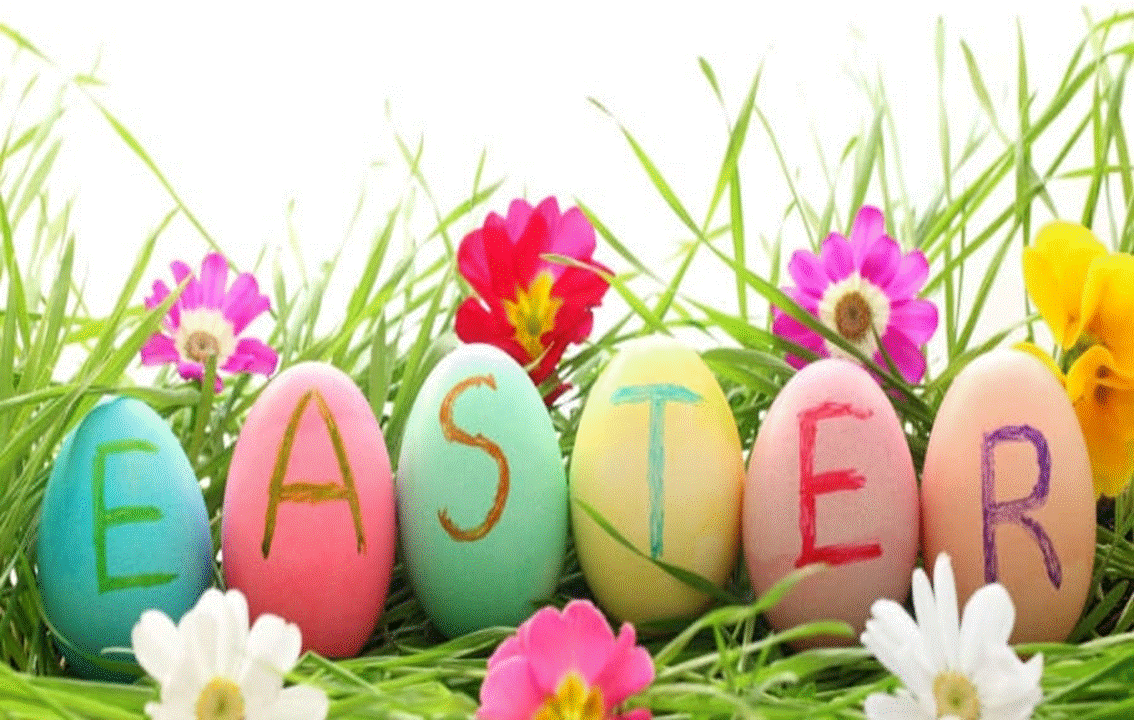
CELEBRATING GREEK ORTHODOX EASTER IN CYPRUS

Symbolising warmth, love, and tradition, Easter is one of the most important and cherished holidays for all Greek Cypriots across Cyprus
A SNAP SHOT OF EASTER TRADITIONS IN CYPRUS
THE START OF HOLY WEEK: Long services are held in all Cypriot churches, both in the mornings and evenings, during the first three days of Holy Week.
HOLY THURSDAY: Church services focus on the Last Supper. A day for baking, most households bake homemade versions of FLAOUNES on this day.
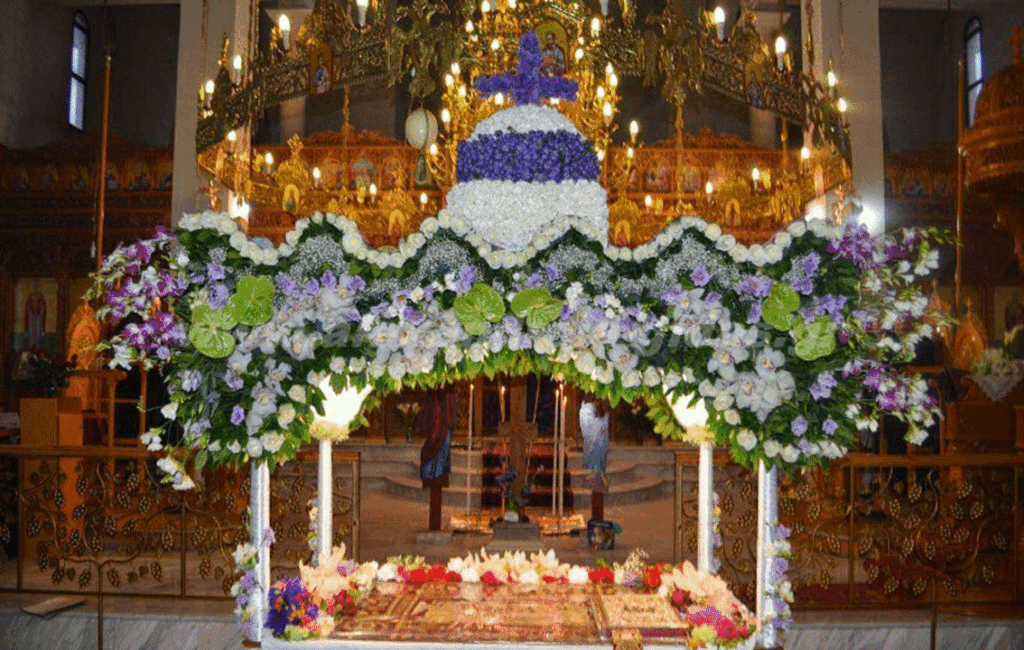
GOOD FRIDAY: The day that marks the Crucifixion of Christ. Every church decorates large wooden structures with flowers on this major day of lamentation. This symbolic bier of Christ, or ’ Epitaphios’ as it is known, is then carried out onto the street during the night in a solemn procession. As the LENT FAST is still in place, AVGOLEMONO SOUP is then served after the procession.
HOLY SATURDAY: The period of reflecting and preparation for the resurrection. An Easter vigil takes place, and at the end of the service, worshippers light candles during the midnight mass using the holy flame. They pass the flame to one another in anticipation of the lighting of a large Easter bonfire known as the ‘lambradjia’. This is where a symbolic effigy of Judas is burned. As the LENT FAST ends, a herb-and-lamb soup, known as Magiritsa, is often served after the resurrection service.
EASTER SUNDAY: Celebrates the resurrection of Christ. Rigorous celebrations see extended families gather together on this day. The centrepiece of the festive table is roasted lamb. The Easter meal is then followed by party games that include the symbolic cracking of red dyed eggs.


KEY GREEK ORTHODOX EASTER TRADITIONS
CHURCH SERVICES
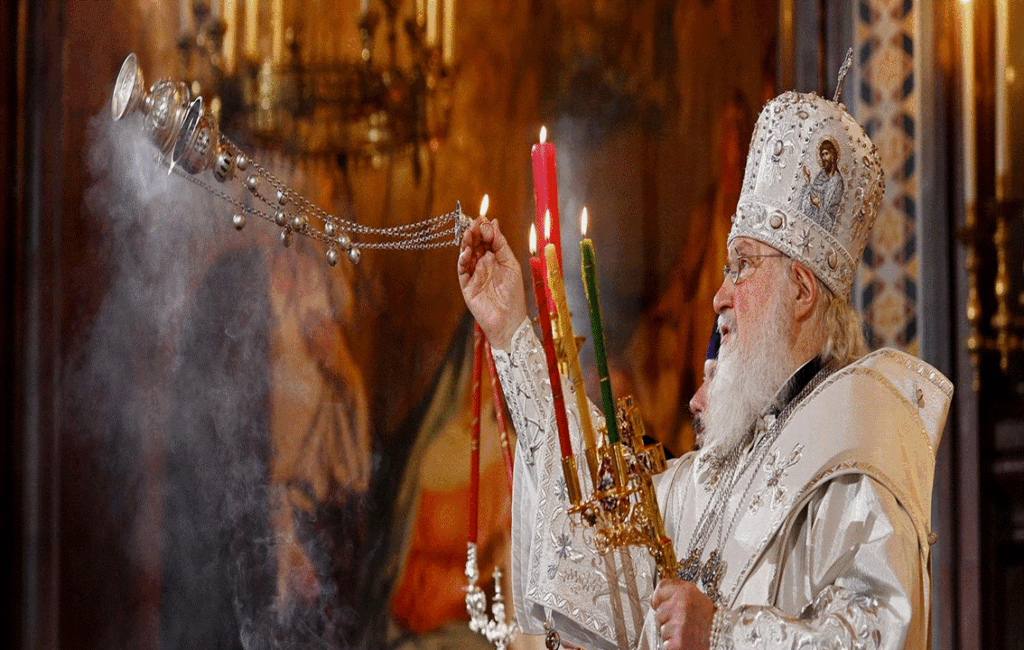
Long, reverent liturgies and chanting are a major part of the Greek Orthodox Easter experience, and they take place throughout the Holy week that precedes Greek Orthodox Easter Sunday. The resurrection service, also known as ‘Midnight Mass’, celebrates the resurrection of Christ. This is symbolised by the ‘Holy flame’, and is then followed by the burning of the effigy of Judas on a huge bonfire known as ‘Lambrajia’.
GREETINGS & SYMBOLIC GESTURES
Red-dyed eggs symbolise new life and the resurrection of Christ. The correct response to ‘Christ has risen’ (Christos Anesti) is ‘Truly He has Risen’ (Alithos O Kyrios).
GREEK ORTHODOX EASTER FOODS
FLAOUNES are often consumed instead of bread, over the Easter period. Magiritsa is a herb-and-lamb soup that is especially common after the Resurrection service. Roasted lamb on open coals becomes the classic centrepiece in many Greek households on Easter Sunday.
A TIME FOR FAMILY, FAITH & FUN
AN IMPORTANT RELIGIOUS HOLIDAY
From the solemn observance of Holy Week to the colourful traditions of Easter Sunday, Cyprus offers a unique experience for those looking to celebrate this important religious holiday across the island. With this in mind, it is a time that brings families and friends together in joyful religious and cultural celebration. Dictated by age-old traditions, several church services take place across the island. Greek Orthodox Easter also uses the symbolic gesture of colouring boiled eggs, baking Cyprus cheese pies, also known as FLAOUNES, and roasting of CYPRUS SOUVLA. Traditional Cypriot folk music also takes centre stage at this time, and in this way, most Cypriots honour the deep cultural traditions that have existed on the island for centuries.
WHY DOES CYPRUS CELEBRATE EASTER AT A DIFFERENT TIME?
A UNIQUE FUSION OF RELIGIOUS & CULTURAL PRACTICES
Greek Orthodox Easter is probably the most important religious holiday celebrated across the island. The festivities that follow remain as a unique fusion of both religious and cultural practices that dominate Cyprus every spring. As a result, the Greek Orthodox Church, which remains a significant pillar of society across the island, holds Easter as one of the most important religious holidays in the Greek Orthodox calendar. Although Greek Orthodox Easter dates often differ, they do align with Catholic and Western European dates every six years. The reason for this is that Greek Orthodox Christianity, which also represents large parts of Eastern Europe and Russia, follows the Julian calendar, which is tied to the first full moon after the vernal equinox and the Sunday that follows. This differs from the Gregorian calendar that most Catholic and Western European countries follow.
THE ROLE OF THE CHURCH
A WAY OF BRINGING COMMUNITIES TOGETHER
Greek Orthodox Easter has brought communities on the island together for centuries. This is often illustrated today when entire communities congregate at their local church to commemorate the resurrection of Christ. Greek Cypriots celebrate Easter across the island with great enthusiasm, and the Greek Orthodox Church plays a vital role in all of the Easter festivities. Greek Orthodox Christians attend church services throughout Holy Week, receiving the holy light from the sacred flame. This represents a message of hope and renewal. A procession, held in the streets on Good Friday, represents the crucifixion of Christ, and then a church service on Easter Sunday celebrates the resurrection of Christ.
A BLEND OF RELIGIOUS AND CULTURAL PRACTICES
AN OCCASION FOR FAMILY GATHERINGS
Easter in Cyprus is an occasion for family gatherings, religious observance, and traditional feasting. Easter Sunday marks the end of the 40-day fast during LENT, and the aroma of spit-roasted meats fills the air. Friends and family gather to enjoy the lively atmosphere, and the traditional Easter meal centres on the famous CYPRUS SOUVLA, when succulent pieces of lamb or pork are spit-roasted over an open flame.
CHEESE PIES, COLOURED EGGS & LOCAL FIREWATER
TRADITIONAL FOOD & DRINK
Traditional Cypriot cheese pies, also known as FLAOUNES come to the forefront throughout Easter. Although readily available in most bakeries on the island, these delicious pastries are often homemade and come in several variations. No Easter celebration in Cyprus is complete without them, along with coloured eggs and a shot of ZIVANIA. The local firewater that packs a punch is often raised in a toast celebrating Easter festivities.
EGG-CRACKING BATTLES
TRADITIONAL GAMES
Another beloved tradition during Easter festivities is the egg-cracking battles. These take place in nearly every Cypriot household on Easter Sunday, and add an element of fun to the festivities. Boiled eggs are coloured with a dye, and then everybody in attendance chooses one. The most popular colour is red, as this represents the blood of Christ. After everybody chooses their egg, a last person standing competition then takes place with each person tapping the other’s egg until one of them cracks. The winner of this light-hearted game is the person who remains with their egg intact. They are then said to receive good fortune for the rest of the year.

HOLY THURSDAY - APRIL 9TH 2026
This is when the traditional Easter pies, also known as FLAOUNES are prepared. They typically contain a mixture of cheeses, sultanas and mint fillings. FLAOUNES become a staple at Easter time, and they are often consumed during the weeks following the Easter celebrations. Coloured hard-boiled eggs, which are coloured using a red food dye, are also usually prepared on this day. The red dye symbolises the blood that Christ shed on the cross. Orthodox Christians attend church in the evening to mourn Christ’s crucifixion. Black veils, symbolising grief, usually cover church icons on this day.
HOLY FRIDAY - APRIL 10TH 2026
Good Friday is a PUBLIC HOLIDAY in Cyprus, and Orthodox Christians use this day to commemorate the events leading to the crucifixion of Christ. Churchgoers take flowers to their local church to decorate the Holy Sepulchre, known as the Epitafios. A procession of people led by local priests begins after the evening church service, when the Epitafios is carried around the neighbourhood and then back to the church again.
HOLY SATURDAY - APRIL 11TH 2026
Although Greek Orthodox Christians commemorate the burial of Christ on this day, significance is placed on the midnight mass that takes place across all churches in Cyprus. Church bells ringing in unison at midnight mark the resurrection of Christ. Congregations then light candles from the holy flame to symbolise the resurrection and then return home to enjoy a traditional Easter ‘AVGOLEMONO’ soup.
EASTER SUNDAY - APRIL 12TH 2026
This is the day of the resurrection and marks the end of fasting. Families gather after the Easter Sunday church service for reflection and celebration. Lamb is usually spit-roasted on open coals, and the symbolic cracking of dyed eggs takes place. Cypriots greet each other with the phrase ‘Christos Anesti’, which means ‘Christ has risen’. FLAOUNES are usually consumed instead of bread, and feasting, playing games, music and dancing often take place in nearly every household on the island.
EASTER MONDAY - APRIL 13TH 2026
This day is a PUBLIC HOLIDAY in Cyprus, and it is the day when Cypriots come together to attend pre-organised communal events. Festivities include several traditional games, which are normally held in village squares all over Cyprus. The legacy of Easter is further compounded by the spirit of the occasion, and this creates an unforgettable, jubilant atmosphere that has to be experienced at least once in a lifetime.
IT'S ALL ABOUT FLAOUNES!
Easter is a joyful, heart-warming celebration that is vigorously celebrated across Cyprus.
Easter celebrations would not be complete without the mouth-watering aroma of traditional Cypriot baking.
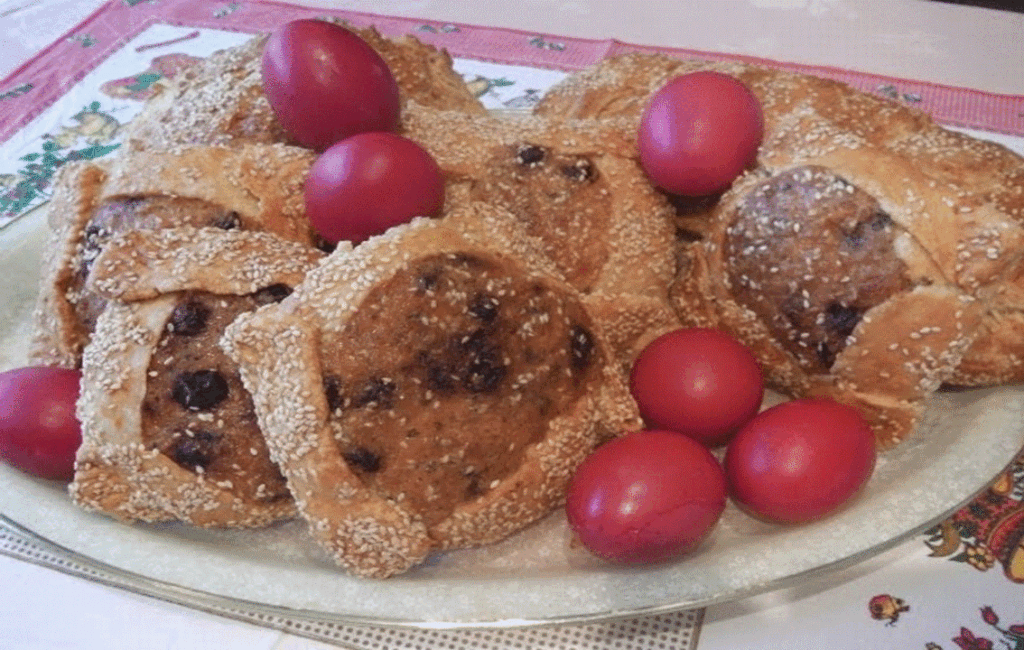
These include FLAOUNES, also known as Cyprus Cheese Pies, and for most Cypriots, Easter would not be the same without them!
What are flaounes?
They are savoury or slightly sweet cheese-based pies that are filled with a blend of local cheeses. They are usually consumed instead of bread across the island throughout the Easter period.
What do they look like?
As they are mostly homemade, they often come in different shapes and sizes, but always include cheese and sesame seeds. Most versions are triangular, square, or round in shape.
What do they taste like?
A savoury Flaouna typically features various cheeses, including large amounts of halloumi cheese. The sweet version usually features anari cheese, raisins or sultanas, and fresh mint. Both versions are traditionally topped with generous amounts of sesame seeds.
When are they made?
Traditionally, homemade versions are baked on Holy Thursday. Bakeries across Cyprus, however, produce them all year round.
EASTER OPENING HOURS
Supermarkets
- Holy Thursday: Normal working hours in operation
- Good Friday: Normal working hours in operation with early closure at 6 pm
- Easter Saturday: Normal working hours in operation with early closure at 6 pm
- Easter Sunday: Closed
- Easter Monday: Closed
- Tuesday: Normal working hours in operation
- Wednesday: Normal working hours in operation
Retail shops
- Holy Thursday: Normal working hours in operation
- Good Friday: Normal working hours in operation with early closure at 6 pm
- Easter Saturday: Normal working hours in operation with early closure at 6 pm
- Easter Sunday: Closed
- Easter Monday: Closed
- Tuesday: Normal working hours in operation
- Wednesday: Normal working hours in operation
Shopping Malls
- Holy Thursday: Normal working hours in operation
- Good Friday: Normal working hours in operation with early closure at 6 pm
- Easter Saturday: Normal working hours in operation with early closure at 6 pm
- Easter Sunday: Retail outlets remain closed, but restaurants, cafes and cinemas remain open.
- Easter Monday: Retail outlets remain closed, but restaurants, cafes and cinemas remain open.
- Tuesday: Normal working hours in operation
- Wednesday: Normal working hours in operation
Bakeries
- Holy Thursday: Normal working hours in operation
- Good Friday: Normal working hours in operation
- Easter Saturday: Normal working hours in operation
- Easter Sunday: Normal working hours in operation
- Easter Monday: Normal working hours in operation
- Tuesday: Normal working hours in operation
- Wednesday: Normal working hours in operation
kiosks
- Holy Thursday: Normal working hours in operation
- Good Friday: Normal working hours in operation
- Easter Saturday: Normal working hours in operation
- Easter Sunday: Normal working hours in operation
- Easter Monday: Normal working hours in operation
- Tuesday: Normal working hours in operation
- Wednesday: Normal working hours in operation
Banks
- Holy Thursday: Normal working hours in operation
- Good Friday: Closed
- Easter Saturday: Closed
- Easter Sunday: Closed
- Easter Monday: Closed
- Tuesday: Closed
- Wednesday: Normal working hours in operation