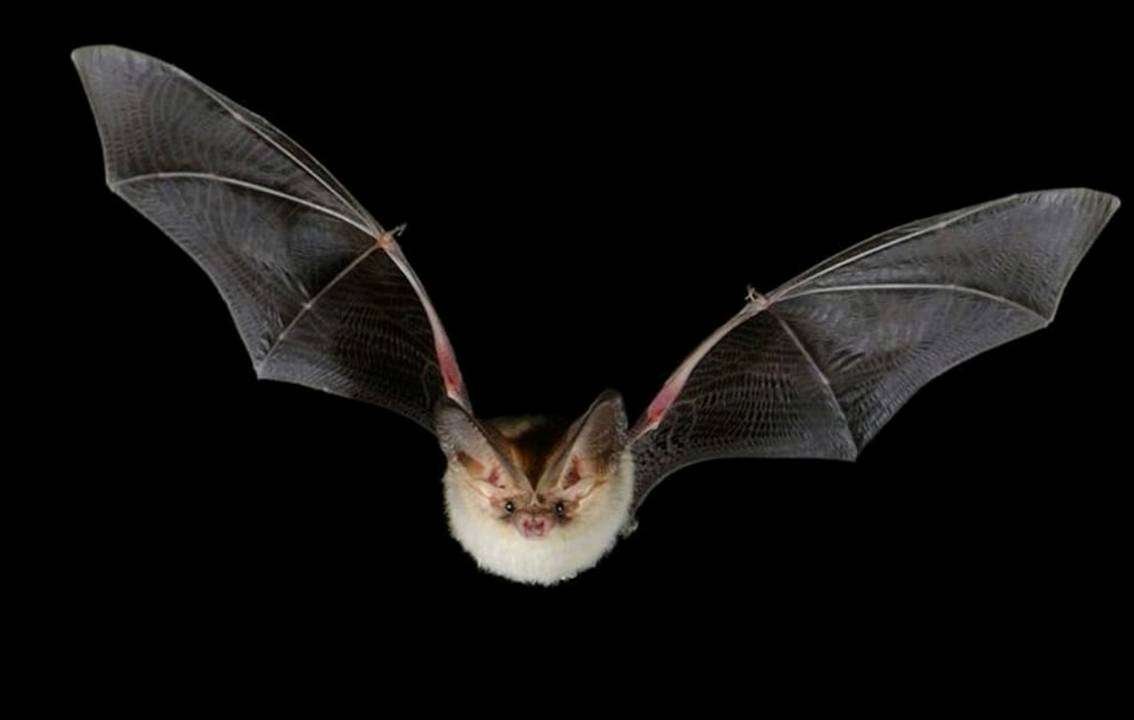
SEVERAL NATIVE BAT SPECIES
Cyprus is home to several native bat species that are all important to the local ecosystem. Along with the notable iconic Egyptian fruit bat, several insectivorous microbats mainly help control insect populations, including mosquitoes, across the island. These bats are found to roost in natural caves, old quarries, and abandoned buildings in all areas of the island. Although all native bat species are protected under environmental laws, recent studies note a severe, critical population decline as their numbers steadily dwindle. This is mainly due to severe habitat loss, disturbance of underground cave roosts, and agricultural pesticides that have reduced their food supply.
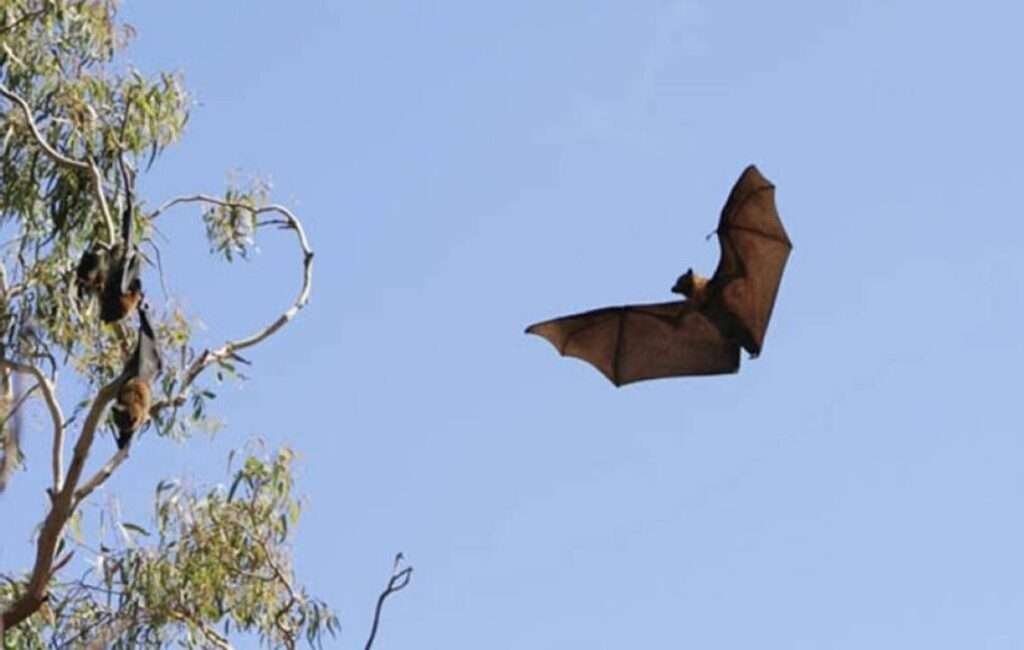
Egyptian Fruit Bat: (Rousettus aegyptiacus) Locally known as the ‘Nychtopapparos’, which translates to ‘Night Rider’ in Greek, the largest bat on the island has an average wingspan of up to 60 cm and a body length of about 15 cm. Adults typically weigh between 80 and 170 grams, with males being noticeably larger than females. Also referred to as the Egyptian rousette, these bats feature large, dark eyes, prominent canine teeth, and fox-like long muzzles, which gives them yet another nickname of ‘flying foxes’. Unlike most other fruit bats, this bat does not hibernate and has the unique ability to navigate in total darkness. This allows them to go further than other bats and navigate and roost in pitch-black caves. They do this by using a primitive form of tongue-clicking echolocation that emits several sharp, audible sounds. They live in massive, tightly packed colonies that can number in the thousands. These colonies are notoriously loud, as the bats constantly vocalise to squabble over personal space and food. Their bodies are covered in short, sleek fur that ranges from dark brown to light grey-brown, with a slightly lighter underside. They feed almost exclusively on fruit, favouring wild figs, dates, carob, mangoes, and bananas. They are also known to consume flower nectar and pollen when fruit is scarce. As they forage, they act as vital seed dispersers and pollinators. They aid forest regeneration by dropping seeds across vast areas when they frequently carry fruit away from trees to eat elsewhere. Globally, the species is listed as Least Concern on the IUCN Red List due to its wide distribution and large populations. However, they are highly significant to medical science. The Egyptian fruit bat is the natural reservoir host for the Marburg virus, a severe filovirus related to Ebola. While the bats carry the virus safely without getting sick, direct contact with their secretions or cave guano presents a zoonotic disease risk to humans
Kuhl’s Pipistrelle: (Pipistrellus kuhlii) First described by German naturalist Heinrich Kuhl in 1817, this bat is a small, highly adaptable vesper bat that is renowned for its seamless adaptation to urban environments. The most reliable field identifier is its prominent, 1 to 2 mm wide white line along the outer edge of its wing membrane between the fifth digit and the foot. Unlike other closely related species, like the common pipistrelle, Kuhl’s pipistrelle is also uniquely distinguished by having a single-cusped upper incisor. With a head-and-body length of between 40 and 50 mm, this small mammal weighs a mere 5 to 10 grams and has a wingspan of 210 to 240 mm. Its thick dorsal fur ranges from pale beige to yellowish-brown, while the belly is a contrasting pale white or light grey. This bat is highly synanthropic, making it the most dominant bat species in many Mediterranean urban areas. It frequently roosts in artificial crevices, including building gaps, window shutter boxes, and roof interspaces. This bat is an opportunistic insectivore that performs quick, low-altitude flights to hunt on the wing. Its diet consists primarily of small swarming insects, including midges, mosquitoes, moths, caddisflies, and beetles. Highly tolerant of artificial light, these bats frequently congregate around streetlights in cities to feast on the dense clouds of nocturnal insects attracted to the light. Unlike highly migratory bats, Kuhl’s pipistrelles are mostly sedentary, remaining within a small home range all year round. Although the species is officially classified as Least Concern on the IUCN Red List, it does still face constant localised threats. These mainly stem from building renovations that accidentally seal active roosts.
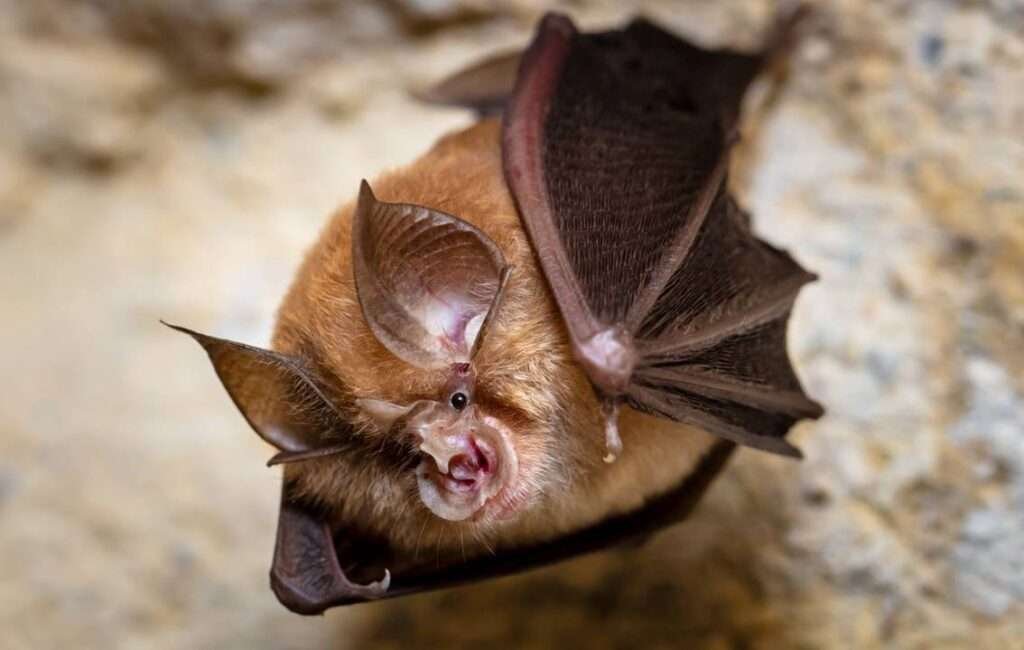
Horseshoe Bat: (Rhinolophus) These bats are named after the intricate, horseshoe-shaped fleshy structures on their noses that function as highly advanced acoustic lenses. Unlike most bats that call through open mouths, horseshoe bats keep their mouths closed and emit ultrasound pulses exclusively through their nostrils, using the nose-leaf to focus and beam sound. This acoustic adaptation allows them to use the Doppler effect to detect the fluttering wings of insects against dense, cluttered backdrops like heavy forest foliage. They also possess short, broad, and heavily rounded wings that grant them extraordinary agility. They are capable of hovering, executing tight turns in dense canopy, and wrapping their wing membranes completely around their bodies like a cloak when hibernating. Rather than constantly flying, they hang from a regular branch, scan the immediate area with their sonar, and then swoop out to ambush passing prey before returning to their perch. Their food intake consists heavily of nocturnal flying insects, specifically favouring large beetles, moths, caddisflies, and midges. To evolutionary biologists and medical researchers, horseshoe bats are known as primary natural reservoirs for various coronaviruses. Extensive genetic tracking indicates that the ancestral origins of both SARS-CoV and SARS-CoV-2 are directly linked to viruses endemic to wild Rhinolophus populations.
Schreiber’s Bat: (Miniopterus schreibersii). Also widely known as the common bent-wing bat or Schreiber’s long-fingered bat, this medium-sized insectivorous bat typically weighs between 8 and 17 grams, features a head-body length of 48 to 65 mm, and has a wingspan reaching up to 350 mm. Named in honour of the Austrian naturalist Carl Franz Anton Ritter von Schreibers, this bat possesses a unique wing structure where the second phalanx of the third finger is three times longer than the first phalanx, causing the wing tip to fold back completely when at rest. This bat also features a characteristically high, domed, rounded forehead, a very short snout, and small, widely separated triangular ears that do not protrude past the top of the head. This bat also exhibits thick, woolly dorsal fur ranging from grey-brown to dark grey, paired with a lighter-coloured belly. Strongly dependent on caves, Schreiber’s bats live in massive, dense colonies that can exceed 2,000 individuals per square metre. They aggregate in karst caves, mines, and deep cellars for both hibernation and summer breeding. Capable of reaching speeds up to 60 km/h, they are exceptionally fast and highly manoeuvrable flyers that primarily hunt on the wing along woodland edges and open water bodies using echolocation calls. Their diet consists predominantly of various insects, which include moths, which form the majority of their intake, alongside mosquitoes, beetles, and spiders. Globally, the Schreiber’s bat faces severe threats from human disturbance in caves, habitat loss, and toxic pesticides that reduce their primary insect food sources. It is listed as vulnerable on the IUCN Red List, so they are strictly protected in Cyprus.
A NEW THRIVING BAT COLONY DISCOVERED
The recent draining of the main dam of the Mavrokolympos reservoir, after a leak appeared, revealed an enclave of approximately 1,000 Egyptian fruit bats in a tunnel. The protected species abandoned the tunnel whilst the fault was being repaired. Special detectors verified that no bats had been trapped in the tunnel. The same detectors then revealed that the bat colony slowly returned after human activity ceased.
The Mavrokolympos reservoir stores water diverted from the nearby Mavrokolympos River. It was constructed in 1966 to mainly serve banana plantations in and around the villages of Kissonerga and Peyia. It currently has a capacity of 2.18 million cubic metres of water