HUMBLE BEGINNINGS
The symbolic name of the famous coastal resort town of Ayia Napa, located on the southeast coast of the island, within the Famagusta district, derives from the ancient Greek language that was once widely spoken across the island. Ayia directly derives from the Greek word for holy, and Napa derives from the Greek word for wooded valley or forest. Archaeological finds in the Makronissos area of the town have revealed several Greek burial sites from the Cypro-Archaic and Cypro-Classical periods, suggesting that the area was settled by then. This community of early settlers are thought to have formed a small farming and fishing community in the surrounding coastal areas.
A SIMPLE FISHING VILLAGE
Although Ayia Napa largely remained a simple fishing Village throughout the ages, it became a much more prominent settlement during the island’s 15th century Venetian era. The town’s 15th-century monastery is a testament to this. Built around a sacred cave, where a miraculous icon of the Virgin Mary was reportedly found by a local hunter, Ayia Napa seems to have been prominent enough to receive this major building.
A RAPID DEVELOPMENT
The loss of the nearby City of Famagusta, which had been the island’s premier tourist resort at the time, following the TURKISH INVASION of Cyprus in the summer of 1974, led to a rapid influx of displaced refugees who resettled in Ayia Napa. They brought with them new capital, labour, and a drive to create a new tourist hub, and these displaced refugees helped to transform the quiet, picturesque fishing village, centred around a 15th-century Venetian monastery, into a major tourist destination. Rapid hotel construction soon followed, and this firmly established a new resort town by the end of the 1970s.
THE CLUBBING CAPITAL OF THE MEDITERRANEAN
Fueled by low-cost airlines, cheap package holidays, and a booming club scene, Ayia Napa successfully established itself as a Mediterranean clubbing destination by the 1980s. The resort town also reached a cultural milestone with the launch of the Ayia Napa International Festival in 1985. Evolving into Europe’s premier youth party hotspot, Ayia Napa became the clubbing Capital of Europe by the 1990s and early 2000s, before then broadening its appeal to families thereafter.
PLACES TO SEE & VISIT
Although Ayia Napa today is known for its lively nightlife and grand party atmosphere, the resort town also has stunning beaches and some fantastic sights to take in.
Here are some places of interest to visit and things to see when visiting Ayia Napa.
Vibrant Nightclubs: Known as a top party destination across Europe, featuring numerous bars and clubs that stay open until dawn.
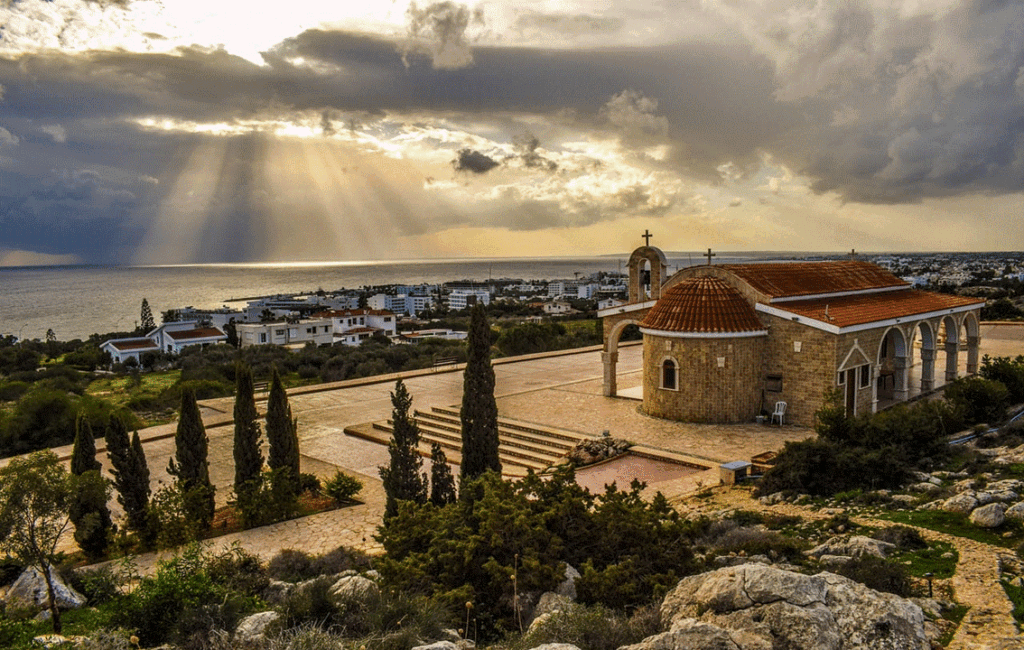
Ayia Napa Monastery: A historic 15th-century Venetian Monastery located in the heart of the town that is partly built underground inside a natural limestone cave.
MUSAN Underwater Museum: The town hosts the Museum of Underwater Sculpture Ayia Napa, featuring art sculptures submerged in the sea to form an artificial forest.
Nissi Beach: A famous stretch of soft white sand and clear shallow turquoise waters that feature a tiny islet that can be reached on foot during low tide.
Click here for further information
Cape Greco National Forest Park: A protected nature area featuring dramatic sea caves, hiking trails, and scenic cliff edge viewpoints. The legendary Lovers Bridge, which is a natural rock formation that is very popular for photographs can be found on the coastal edge of the park.
WaterWorld Themed Waterpark: One of the largest themed water parks in Europe.
A VIBRANT TOURIST DESTINATION
Although known primarily as a vibrant tourist destination, Ayia Napa is now striving to become a European Capital of Culture. This comes after it recently officially entered the race for acknowledgement of the award. In its attempt to secure the award, it has also demonstrated a renewed commitment to cultural development. Ayia Napa is also striving to emulate Paphos, which was the first Cypriot city to earn the prestigious accolade in 2017.
ENHANCING CULTURAL OFFERINGS
The European Capital of Culture award would be a big step toward establishing Ayia Napa as an international cultural hub. It is thought that the accolade would boost both the cultural and tourism landscape across the whole Famagusta district. As a result, Ayia Napa has been actively working to diversify its appeal beyond just nightlife and beaches and is now enhancing its cultural offerings. In addition to this, it is also actively supporting its local communities and has submitted new plans for sustainable tourism.
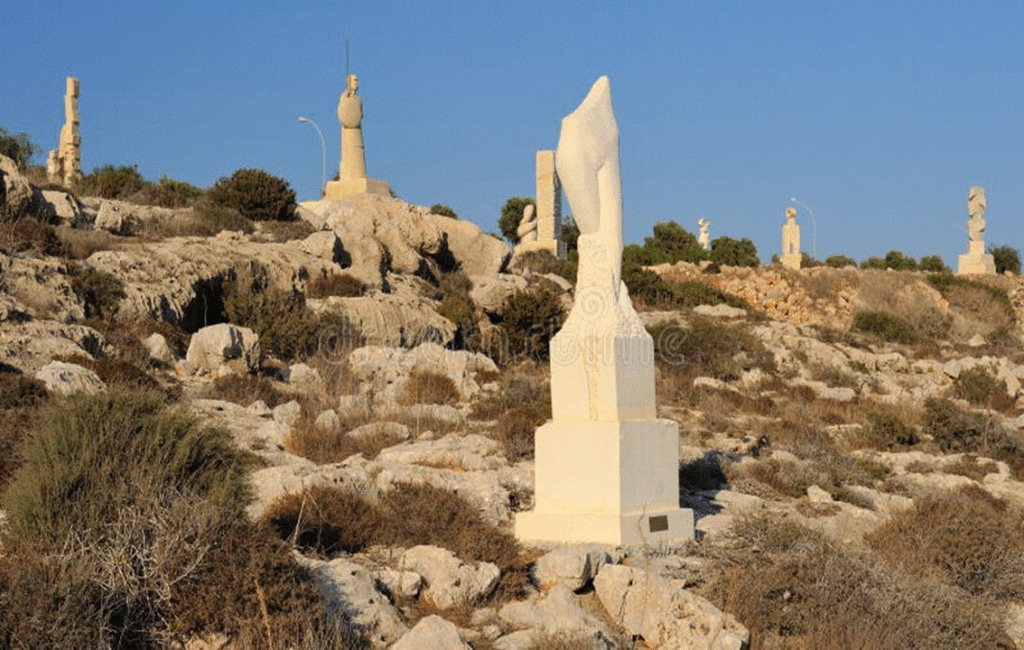
WHAT IS A CAPITAL OF CULTURE?
The European Union’s Commission manages the title, and the Council of Ministers formally designates the cities each year. The program has evolved from a traditional arts festival to a more complex program that includes economic and social objectives.
The current European Capitals of Culture are
Bad Ischl, Austria: A popular tourist destination in the Salzkammergut region.
It is known for its scenic views and lakes. In 2024, the city will host a project highlighting its diverse cultures and history through the use of art as its medium.
Bodø, Norway: The largest cultural project in Northern Norway’s history.
The Queen of Norway is the royal patron for Bodø 2024, and she is involved in over 1,000 events that are organised annually.
Tartu, Estonia: Known for its rolling countryside.
This city has come to the forefront for its numerous cultural initiatives.
CONSIDERATIONS
Cultural Heritage: Ayia Napa offers several historical sites. It has a 16th-century monastery and several churches that reflect its rich Orthodox Christian heritage. Promoting these historical aspects through events and exhibitions could attract cultural tourism.
Art and Festivals: Ayia Napa has been hosting an increasing number of art festivals and cultural events. These include both traditional and modern music and dance festivals. Ayia Napa has also been instrumental in showcasing both local and international talent. This has all enhanced its appeal as a cultural hub.
Natural Beauty: Ayia Napa’s stunning coastline and natural parks offer a picturesque backdrop for most cultural events and artistic activities. This has made it an appealing location for both artists and performers.
Community Engagement: Efforts to involve local communities in cultural projects have strengthened Ayia Napa’s local identity. This has also enabled it to build a vibrant cultural scene reflecting its beauty and uniqueness.
Tourism Growth: As tourism evolves, Ayia Napa is trying to diversify. Its offerings as a resort now include more cultural and artistic experiences. This has helped cement its position as a cultural capital.
Strategic Development: Investments in infrastructure and cultural programs have recently enhanced Ayia Napa’s attractiveness for cultural initiatives. This has allowed it to align itself with the goals of the European Capital of Culture program.