THE RICH HISTORICAL NARRATIVE OF THE VENETIAN BRIDGES OF CYPRUS
At the time of their construction, medieval VENETIAN BRIDGES in Cyprus went on to play a crucial role in the daily lives of Cypriots of old. Essential for trade, communication, and even military strategy, these bridges helped to create vital links across the island.
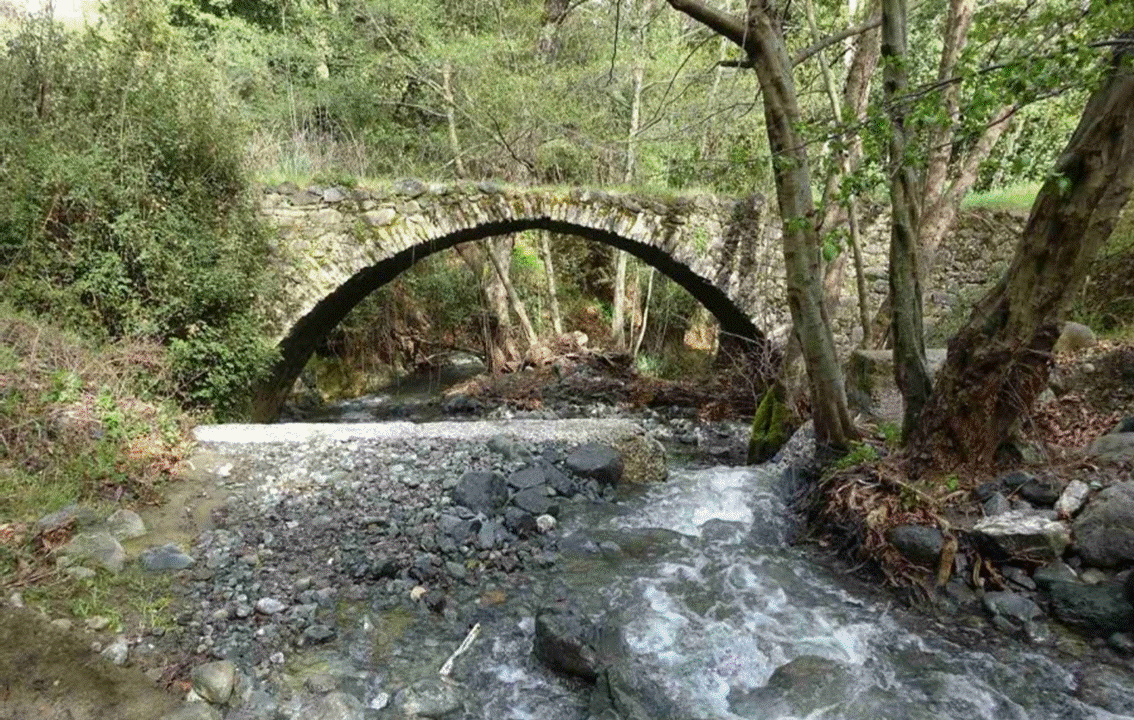
The Piscopou Bridge, which is also often referred to as the Piscopos Crossing, embodies the island’s rich historical narrative, architectural ingenuity, and cultural significance. Known locally as the Bishop’s Bridge, this 16th-century Venetian-era stone bridge is hidden in the dense greenery near the mountain village of Foini within the Limassol District of Cyprus.
Set in rural mountainous countryside, its surroundings help to form a tranquil setting for most visitors today. Its name is thought to have been derived from one of the bishops of Saint Anargyra. Bishop Piscopos is said to have used the crossing on a daily basis to transfer local goods with his mules. Often found sitting at one end of the bridge, he would use it as a daily halfway resting point, often coming into contact with other local travellers who began to refer to the bridge using his name.
This 500-year-old bridge, while maintaining its role as a critical link within its local community, also enabled the village of Foini to become a crucial transit point during medieval times. In light of this, the bridge has held both cultural and economic significance for the local community for centuries.
MADE FROM LOCAL STONE
A DEEP HISTORICAL CONTEXT
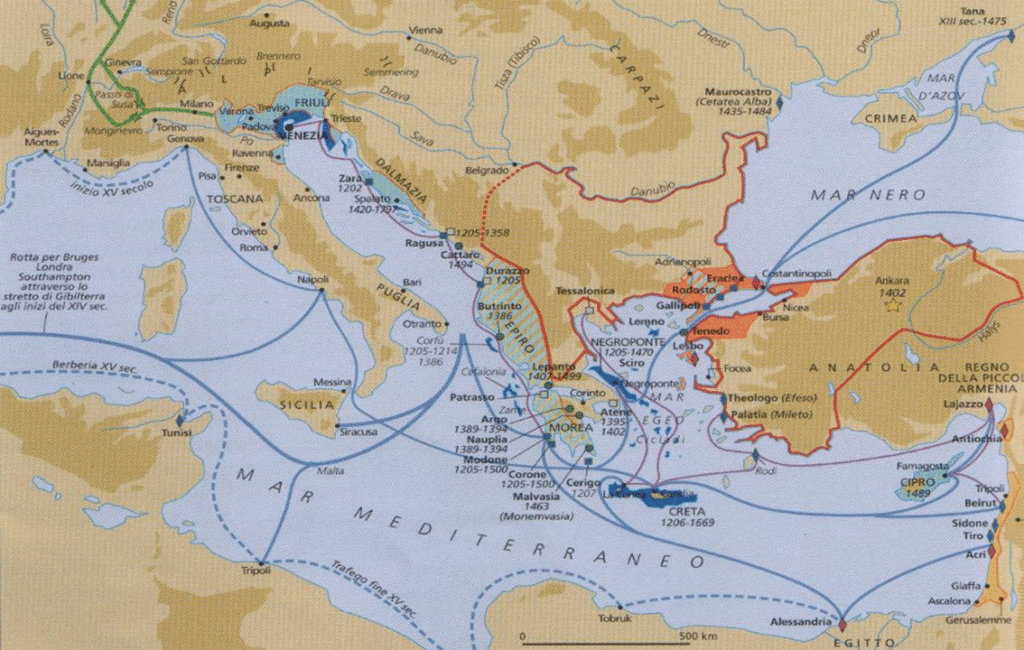
The Venetians essentially ruled over an empire built on trade. After acquiring Cyprus in the latter part of the 15th century, they immediately set about constructing several medieval bridges and roads across the island to facilitate this. Some bridges, which were originally built by the Franks as early as the 12th century, were already in place, and these went on to serve as a blueprint for later Venetian structures that exist today.
Although the exact construction date of the Piscopos bridge remains unclear, it is thought that it was originally built during the early part of the 16th century by the Venetians. The Ottomans then rebuilt it in the latter part of the 19th century.
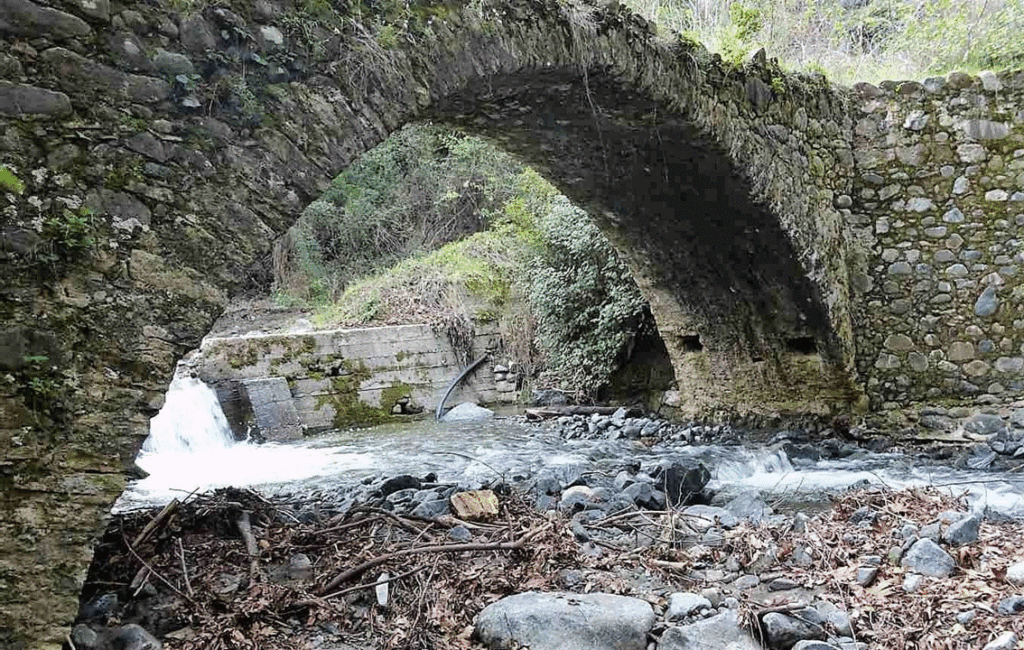
Medieval Venetian bridges are usually characterised by a single distinctive semi-circular stone arch that rises in the centre. Measuring 8.9 metres, this particular example uses local materials, particularly limestone from the surrounding hills. This bridge employs a tested functional design that is common in Frankish, Venetian and Ottoman bridge construction. The total length of the bridge measures approximately 25 metres in length, and it has a width of 2.4 metres.
THE VENETIAN EMPIRE'S TRADE NETWORK AT ITS HEIGHT IN THE 16TH CENTURY
A DEEP CULTURAL CONTEXT
Retaining both its charm and historical identity, the Piscopou Bridge is a classic example of the island’s medieval heritage. This bridge has stood as a silent witness to the changing dynamics on the island since its construction.
The bridge, over the ages, has facilitated not only the movement of people but also the movement of goods. Local farmers and merchants over the ages have relied on the crossing to transport their produce and wares. This has helped to foster a thriving local trade network that has contributed to the economic vitality of the immediate area.
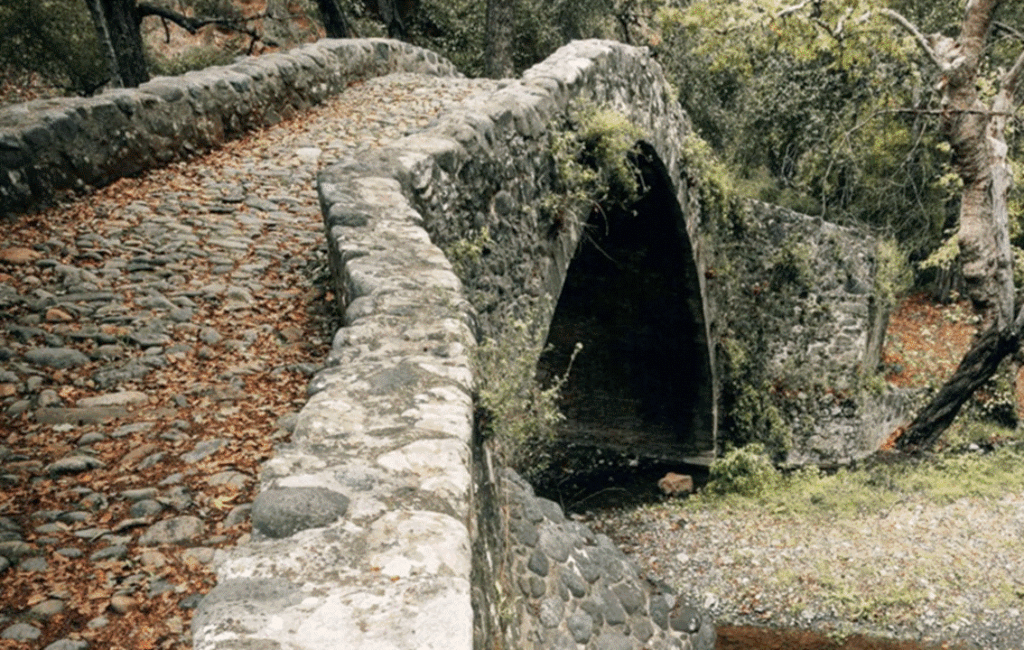
THE PICOPOU MEDIEVAL BRIDGE
THE PISCOPOU BRIDGE TODAY
The bridge today stands as a testament to time. Firmly adopting its role as an icon of heritage tourism, the bridge’s historical and cultural value has led local authorities and heritage organisations to acknowledge the landmark’s importance. These organisations have worked to maintain the structure of the bridge, and their efforts have been vital not only for preserving the physical structure of the bridge, but also for promoting awareness and appreciation of the local area’s history.
The bridge has also helped to highlight the historical significance of similar bridges across Cyprus, and their relation to the broader narrative of Cypriot history.
The bridge has also become a focal point for several cultural activities, often used to stage local festivals and events. This ultimately brings together residents and visitors in celebration of several Cypriot traditions.
Tourists visiting the bridge often include the village of Foini in their itinerary. This means that they often engage with the local culture meaningfully. Promoting sustainable tourism, the bridge has remained an integral part of the local landscape.
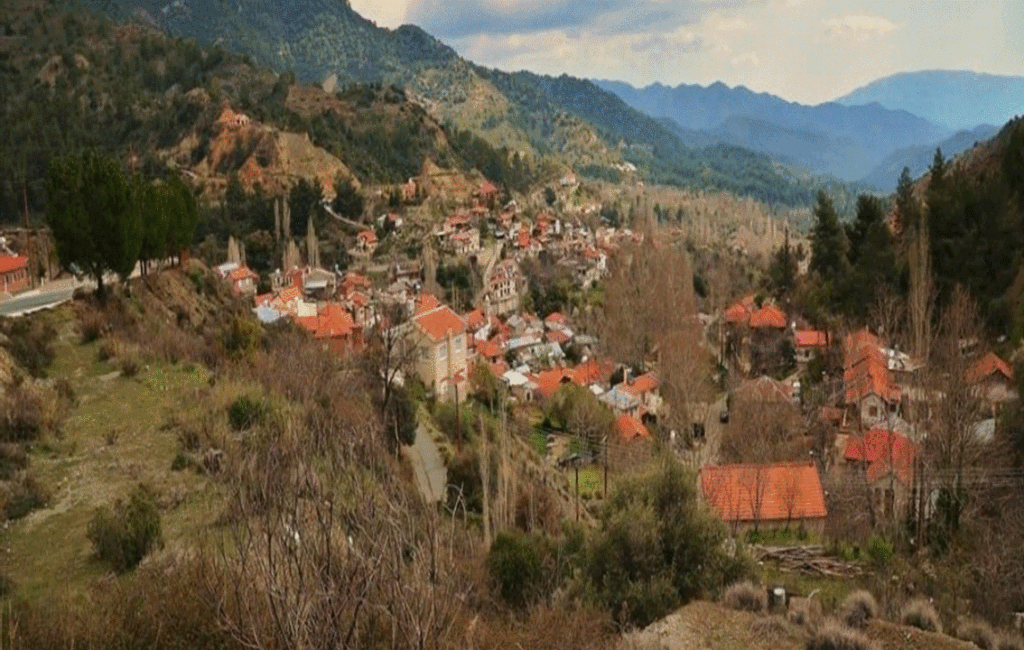
THE VILLAGE OF FINI
AN EMBLEM OF ENDURING LEGACY
The Piscopou Bridge often attracts the interest of visitors seeking to explore the natural beauty and historical heritage of Cyprus. Its picturesque setting against the backdrop of the Troodos Mountains makes it a popular spot for photography and leisurely walks. In light of this, the bridge remains an emblem of enduring legacy that also acts as a reminder to all who pass over it.
The bridge also acts as an intricate tapestry of history that defines Cyprus. Along with the bridge, the immediate area around the village of Foini has also been recognised as an area of archaeological importance. Visitors often foster a greater appreciation for the island’s cultural landmarks after a visit to the bridge. This helps to underscore the importance of preserving such sites for future generations. Through continued respect and care for such landmarks, future generations will have the opportunity to connect with the past and understand the importance of the island’s cultural heritage.
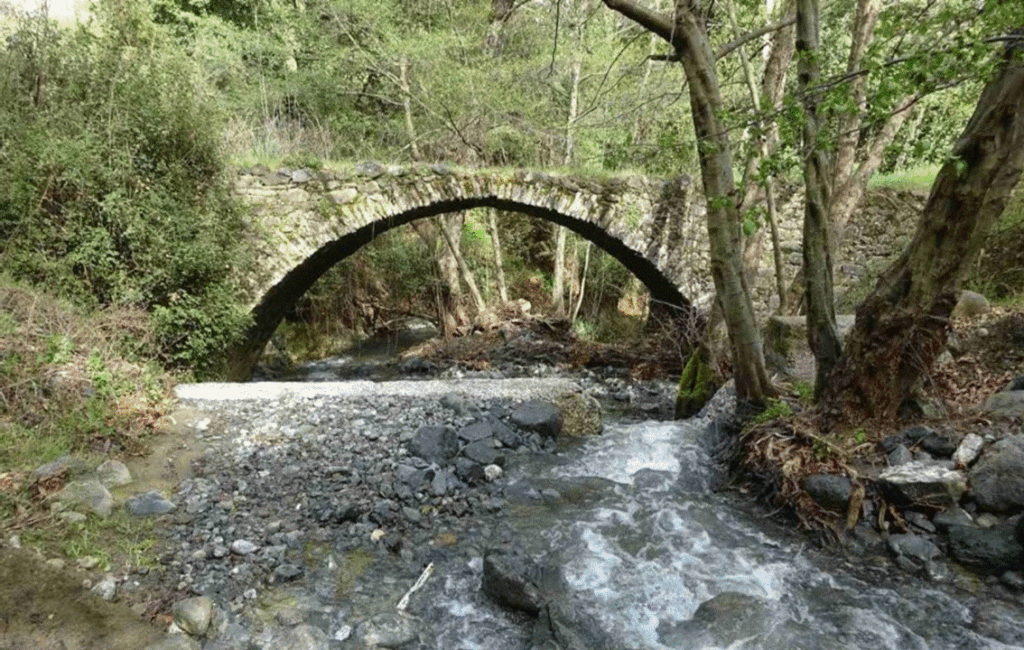
A SINGLE ARCH DESIGN
KEY FACTS
The Name: According to local folklore, this bridge was named after a bishop from the nearby Agioi Anargyroi monastery who used this exact crossing as a resting point daily.
Location: The bridge spans the Limassol section of the Diarizos River, which flows directly out of the Troodos Mountain range. It is completely surrounded by thick, wild vegetation kept lush by the year-round river waters.
Historical Purpose: Beyond its religious connection, it served as a vital medieval transportation link, connecting the village of Fini to neighbouring villages for trade and local transit.
Construction: The bridge features a classic medieval, single semi-circular arch. It was built during the Venetian era using raw, unprocessed stone slabs in the centre and roughly-hewn limestone to fortify its edges.
Dimensions: The structure features a span length of 8.90 metres and a width of 2.40 metres. This bridge stretches 25 metres across the DIAROZOS RIVER.