The number of butterfly species in Cyprus varies as discoveries of species new to the island take place every so often. Currently, there are 57 butterfly species documented for Cyprus, with some of these beiing endemic to the island.
A BRIGHT POWDER BLUE
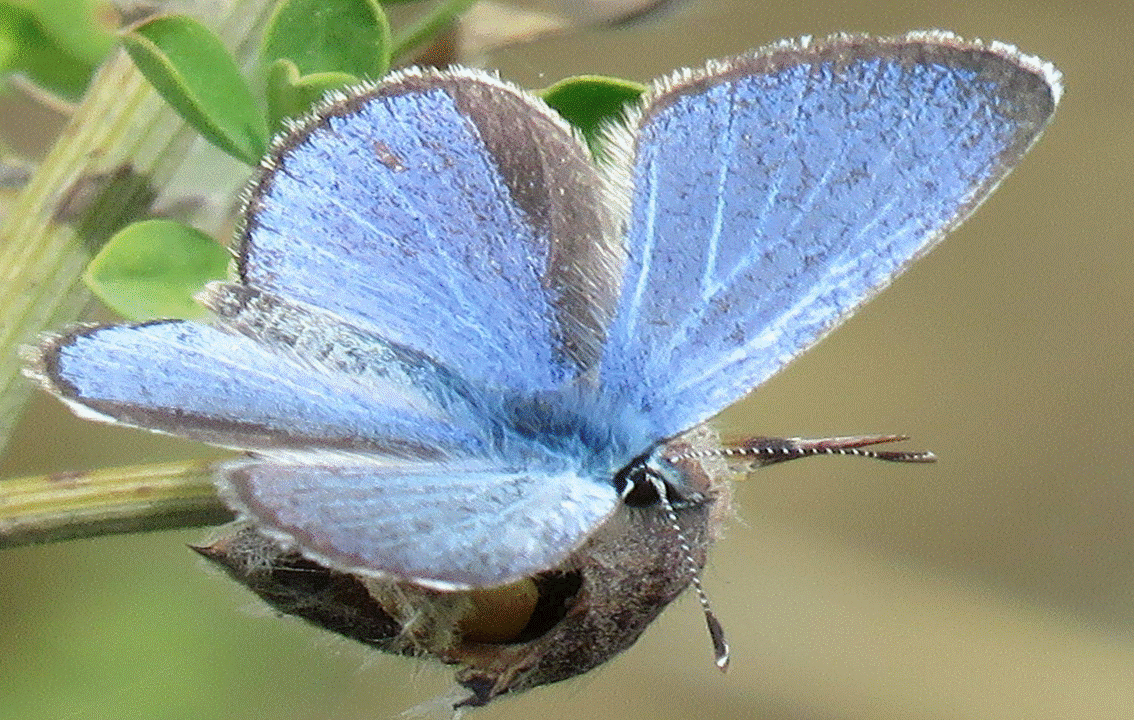
The Paphos Blue (Glaucopsyche paphos) is a small, iridescent, bright powder blue butterfly that is entirely endemic to the island of Cyprus. Although mainly observed in the Akamas region to the west of the island, the Paphos Blue also maintains a presence throughout the Troodos and Pentadaktylos Mountains and all along the northern coast from Cape Kormakitis to Cape Apostolos Andreas. Other sightings also regularly occur to the south near the village of Zygi. The name of this particular species of butterfly was first used in 1920 by an entomologist named Chapman.
A THRIVING SPECIES
The butterfly, although currently thriving, still faces potential threats. These include habitat loss mainly due to the construction of new roads, buildings, and other infrastructure projects. Agriculture and tourism have also disrupted some areas in which the butterfly has been found. Despite this, its numbers are still healthy and it is considered that many hundreds of thousands of these magnificent creatures still populate the island.
PRICKLY BROOM
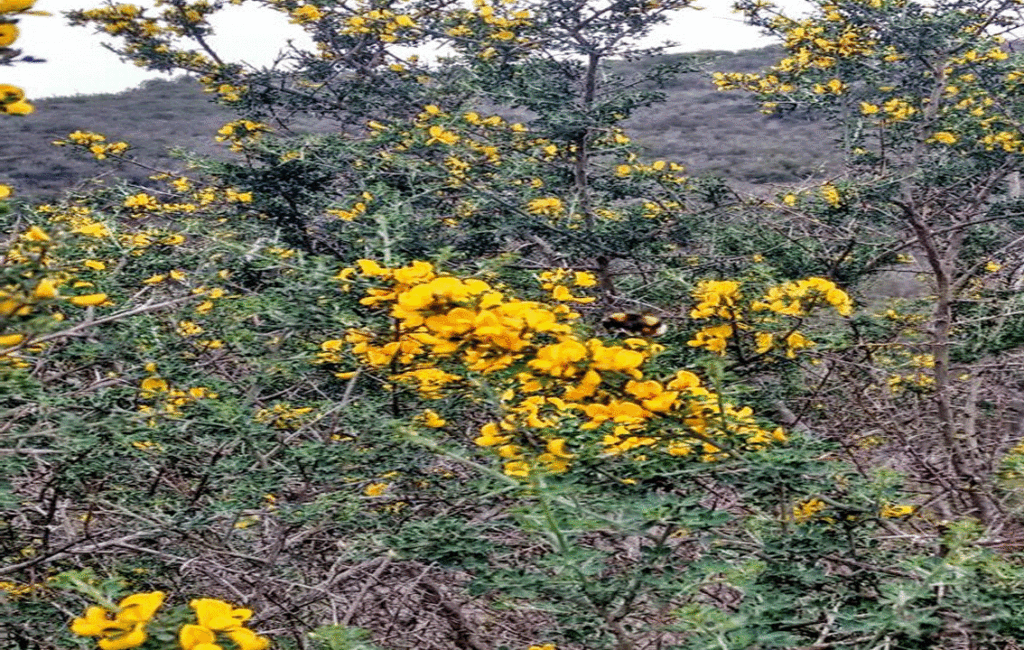
Sightings of this butterfly are commonplace, mainly from March to May, and are usually to be seen in areas that supports its larval host plant, Prickly Broom (Genista fasselata). This bush normally loses its leaves during the hot summer, exposing sharp woody grey prickles.At other times of the year it normally has bright yellow flowers with small dark green rounded leaves.
INSTANTLY RECOGNISED
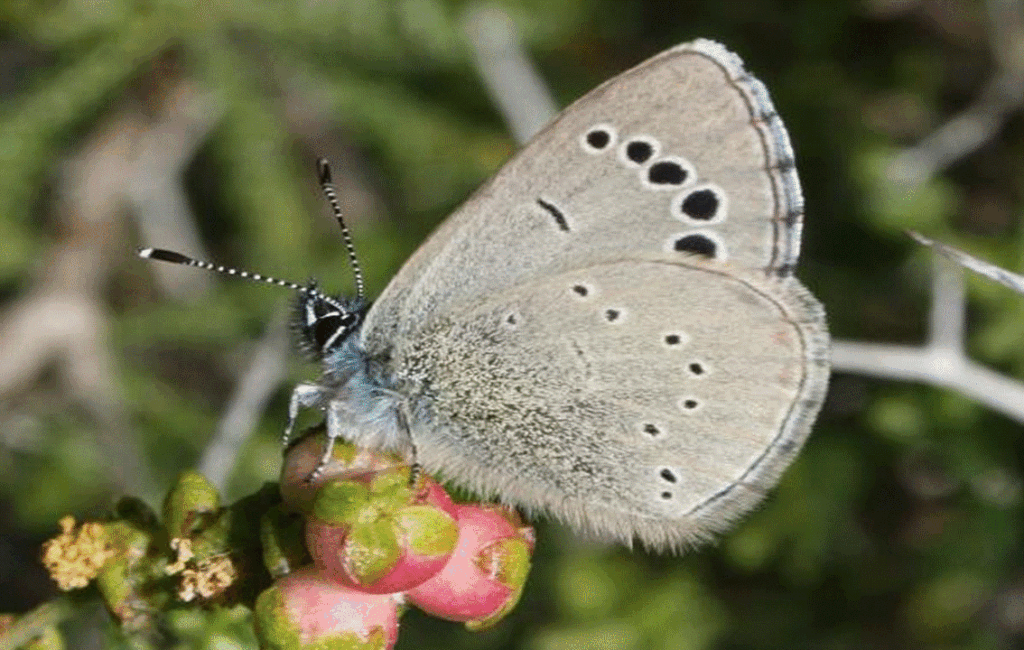
Males are recognisable by the bright powder blue colour of their wing uppersides that span around three centimetres. Females on the other hand are slightly smaller and remain a subdued brown or grey colour. Both genders however, are aslo best identified by a series of large black spots that are knowns as ocelli, ringed in white, on the underside of their forewing.
THE MATING SEASON
The mating season of this butterfly typically begins in March but is later at higher or cooler elevations. During this time, the males search for females in areas where Prickly Broom is present. Females lay their eggs on most parts of the host plant with the eggs hatching into caterpillars after about five days. The caterpillers then feed on the leaves before each transforms into a pupa, also known as the third stage of metamorphosis. They usually emerge as the adult butterfies in spring of the following year. The main food source for the adults is nectar from the local flora, which includes a variety of wild herbs.
CONSERVATION
The Paphos Blue Butterfly’s natural beauty and ecological significance make it a valuable asset to the country. As a result, this butterfly is often used as a symbol of natural heritage. This has helped various organisations and has highlighted the importance of preserving the island’s rich biodiversity. As with all butterflies, one of the key challenges it faces is its total dependence on its larval host plant. While some butterfly larvae accept a wide range of food plants, the Paphos Blue feeds only on Prickly Broom. Therefore, the destruction of the habitat in which Prickly Broom flourishes often leads to the local extinction of the butterfly.
ONGOING RESEARCH
The Paphos Blue Butterfly is the focus of ongoing research. This is aimed at understanding its ecology and behaviour. These studies constantly work to monitor the butterfly population and to develop effective conservation strategies. Scientists and conservationists constantly work to identify the specific needs of butterflies and their host plants. They also effectively identify new factors that threaten their survival. Conservation efforts may include habitat restoration, regular monitoring programmes and general public awareness campaigns. Conservation efforts may also include the establishment of protected areas, where the butterfly and its habitat are strictly monitored and managed.
A FEMALE PAPHOS BLUE BUTTERFLY
PRICKLY BROOM
KEY FACTS
Location: A common and widespread species on the island, it is often one of the most frequently observed butterflies during spring. In light of this, sightings range from coastal paths up to rocky mountain terrain and open woodlands. Sightings have also been recorded at around 1,400 metres high.
Flight Period: Appears in a single yearly generation, usually from February through to early July. This is dependent, however, on seasonal weather and altitude.
Food: The caterpillars of this butterfly species feed primarily on the flowers and buds of local leguminous shrubs, such as prickly broom.
Overwintering: The species spends the winter months in the pupa stage.