A FANTASTIC DESTINATION FOR UNDERWATER EXPLORATION
Offering clear waters, diverse marine life, and accessible wrecks and cave sites, the Republic of Cyprus is a fantastic destination for both scuba diving and snorkelling. With mild currents and warm water temperatures that often peak between May and October, along with exceptional underwater visibility of up to 30 metres, Cyprus is a premier eastern Mediterranean destination for a whole host of underwater exploration.
The island’s coast caters brilliantly to all diving levels, and this is compounded by the fact that it houses one of the world’s most legendary shipwrecks for advanced divers and a series of shallow, turtle-rich bays for beginners. The infamous expansive underwater MUSAN sculpture museum also offers something a little different for both novice divers and snorkellers. Because diving is a massive industry in Cyprus, there are some excellent options regarding professional-led diving centres.
650 KM OF DIVERSE RUGGED COASTLINE
Cyprus is generally considered to be one of the best diving locations in the Mediterranean. The island offers divers 650 km of diverse, often rugged coastline. Its waters are generally warm and clear, allowing divers to easily see the rocks, fish, and seashells on the shallow sea beds.
AN IDEAL BASE
Cyprus has always been a diver-friendly place, and scuba diving and snorkelling as an activity has grown immensely on the island in recent years. Cyprus appeals to both beginners and veteran divers. It is an idyllic location for beginners to learn to dive and also makes for an ideal base for advanced divers to find the best dives.
A GREAT PLACE TO DIVE ALL YEAR ROUND
Water temperatures range from 25⁰C in the summer to around 18⁰C in December. The best months for diving are from April to October, when water temperatures are higher, but diving during the winter months is also popular. This makes Cyprus a great place to dive all year round. There are numerous dive sites to explore and several wrecks to traverse. Diving in Cyprus can be diverse, and there are both shallow and deep dives, as well as wrecks, caves and reefs with big rock faces too.
THE PROFESSIONAL ASSOCIATION OF DIVING INSTRUCTORS
Today, several excellent diving centres and clubs can be found all over the island. These clubs, shops and organisations will help anybody who wants to start diving. Most offer advice and equipment hire, and they can also arrange basic and advanced training. The Professional Association of Diving Instructors (PADI) is the world’s leading scuba diving training organisation. They maintain a strong presence on the island and offer several instructor-led courses at various underwater locations all over the island.
OPPORTUNITIES FOR ALL DIVERS
Cyprus offers diving opportunities for all levels of diving. Beginners usually start diving in the numerous shallow sandy bottom locations, dotted all around the coast. Wreck or cave diving, as well as deep water and night diving are available for the more experienced divers.
CAVE & REEF DIVING
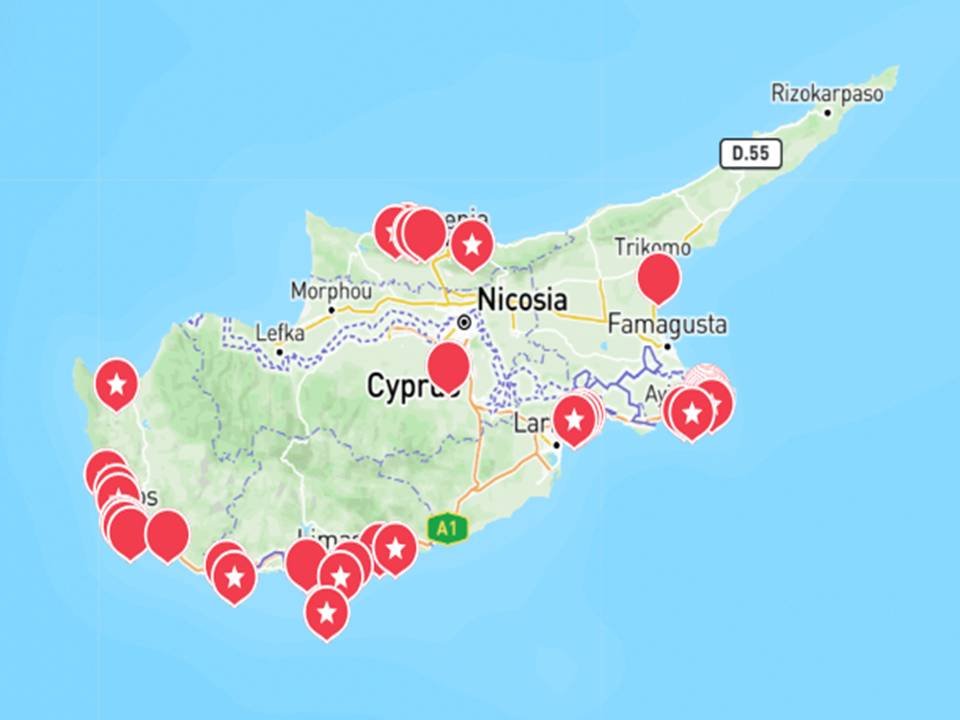
There are several popular diving sites on the island with the Paphos coastline specifically offering the Amphorae Caves. Ayia Napa’s coastline also offers numerous caves and reefs for divers to pursue. Diving alongside the infamous turtles of Akamas has become popular in the waters near Polis Chrysochou and the Akamas peninsula.
WRECK DIVING
Popular wreck sites include, the B2 Canberra Wing, near the coast of Pissouri. The Copper and Lady Thetis, which can be found off of coast of Limassol. The Zenobia is another wreck near the coast of Larnaca.
A DIVERSE MARINE LIFE
The list of fish species you can expect to encounter is endless. The most common fish are grouper, rainbow wrasse, moray eel, damsel fish, octopus, scorpion fish, sponge fish, sword fish, cuttlefish and lobster.
RECOMMENDED LOCATIONS FOR DIVING & SNORKELLING
LARNACA
The Zenobia Wreck: Fully laden with over 100 articulated trucks, the Zenobia is a 172-metre Swedish ferry that sank off the coast of Larnaca on its maiden voyage in 1980, creating one of the top 5 wreck dives in the world. In light of this, this dive site is highly recommended for advanced divers. The massive hull, propellers, and truck cargo of the wreck, which starts at 16 metres and then drops to 40 and then 50 metres, can only be safely explored as a guided dive with local boat operators. While expert snorkellers can peer down at the top of the ferry on clear days, it is strictly regarded as an ‘Advanced Open Water scuba dive’. It typically offers pristine visibility and a dramatic underwater landscape with intact cargo and several large fish, including moray eels.
LIMASSOL
Amathus Ancient Harbour Ruins:Just off the coast of Limassol lie the sunken limestone walls of an ancient Greek port. It is shallow enough to explore entirely with just a mask and fins. This forms a unique site for snorkellers interested in archaeology.
FAMAGUSTA
The Ayia Napa and Protaras Coastal Reefs: This region is widely considered the crown jewel for casual diving and snorkelling. This is due to its calm, sheltered bays and unique marine projects. Recommended for entry-level divers, the shallow coastal reefs and caverns on its coast are ideal for snorkelling, offering pleasant visibility. Several local boat trips and shore dives are available during the summer months.
Cape Greco Ayia Napa: Recommended for divers of all levels, the clear waters of this protected marine park offer several underwater caves that are ideal for both snorkelling and diving. Several local boat trips and shore dives are available during the summer months.
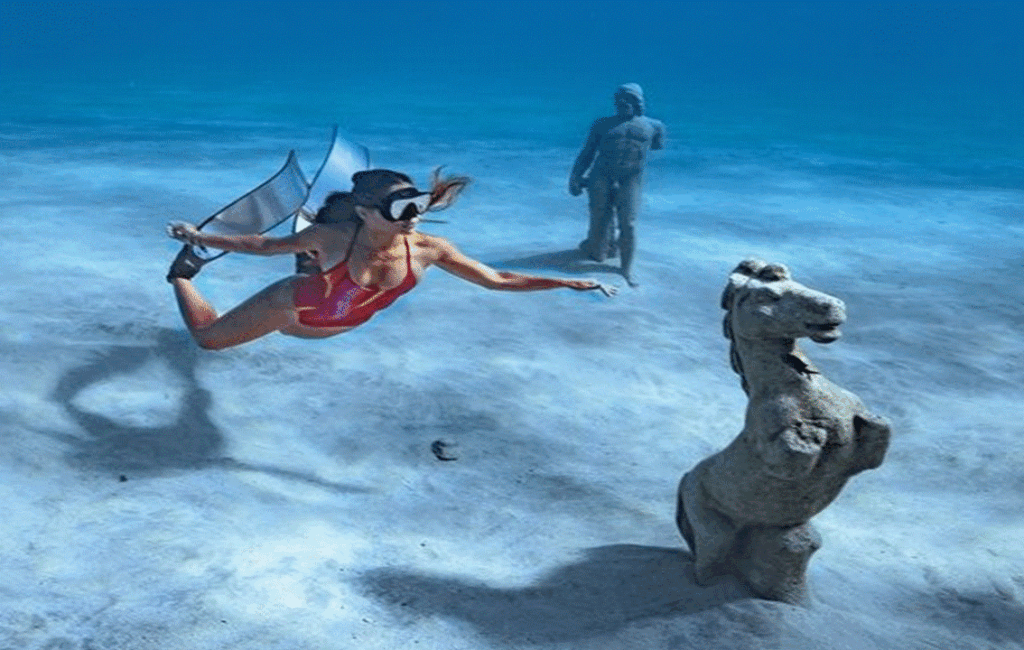
MUSAN Museum of Underwater Sculpture Ayia Napa: A surreal, sunken underwater museum that It features over 93 life-sized, eco-state sculptures, designed by artist Jason deCaires Taylor. Snorkellers can view the statues easily from the surface due to the crystal-clear water, while beginner and certified scuba divers can weave through the exhibits.
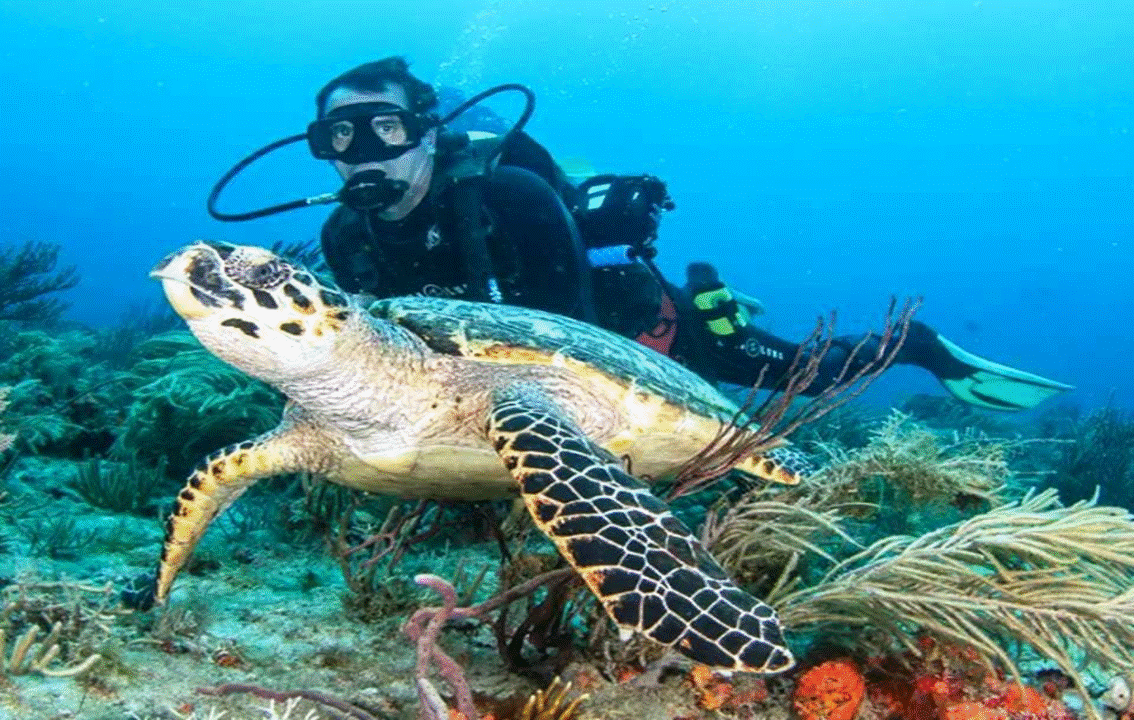
Green Bay Protaras: This forms a good training ground for novice scuba divers and is an absolute must for snorkellers. Featuring a shallow, sandy bottom, it provides a highly consistent spot to swim with green and loggerhead sea turtles, which graze on the seagrass beds.
Konnos Bay: This national park coastline features dramatic underwater topography filled with caves, swim-throughs, and rock arches. Snorkellers love Konnos Bay for its stunning turquoise water and rocky edges where octopus hide. Scuba divers head to Cyclops or the caves and tunnels site to explore deeper rock walls.
PAPHOS
The Paphos Coast: The west coast of the island offers a more rugged experience for both divers and snorkellers. Defined by volcanic rock formations and wild, untouched, diverse coastlines that offer shallow reefs and underwater tunnel systems, this location is recommended for divers of all levels. Several local boat trips and shore dives are available for advaned diving during the summer months.
The Akamas Peninsula: Recommended for divers of all levels, there are several pristine dive sites that include wall dives, seasonal wildlife, and good visibility in summer. Several local boat trips and shore dives are available during the summer months.
The Blue Lagoon Akamas:Famous for having some of the most vibrant, electric-blue water in the Mediterranean, the sandy lagoon is pristine and ideal for relaxed surface snorkelling as well as diving. It is best reached via an organised boat excursion, which can be chartered in nearby Latchi.
The Amphitheatre Coral Bay: A highly popular shore dive for scuba divers. The natural rock has been carved away by sea currents into a stunning underwater amphitheatre, offering great overhangs and swim-throughs where groupers and moray eels seek shelter.
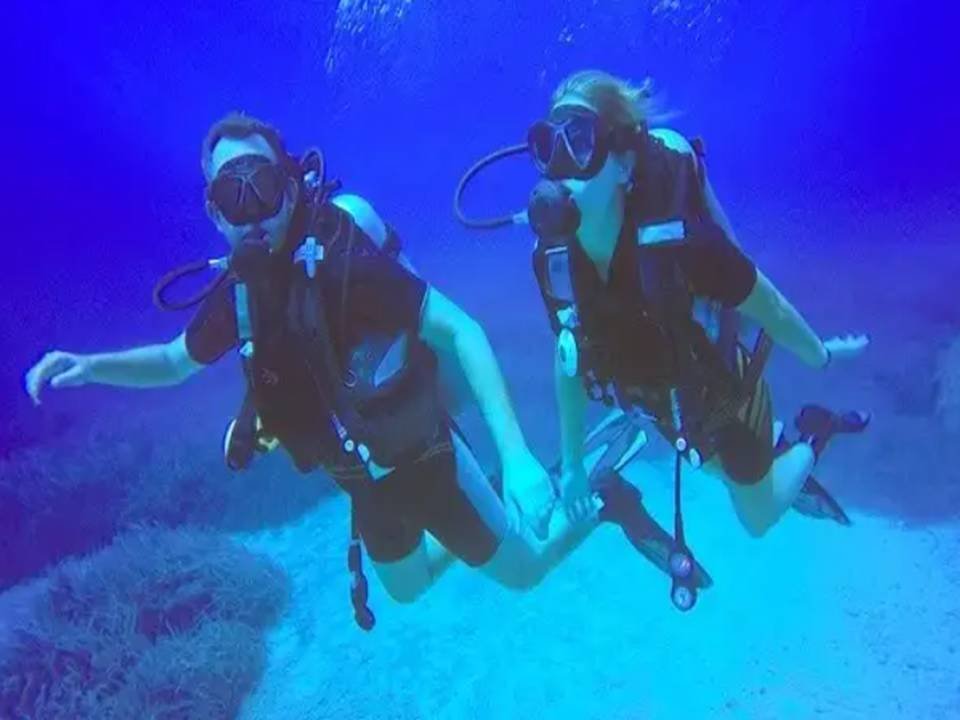
SCUBA DIVING FOR BEGINNERS
The recommended age to start scuba diving is 8 years old. Scuba with a bubble maker session is highly recommended. Special fit scuba gear is also available, and these include mini air-bottles, and extra small masks and mouthpieces. The depth for these young divers is usually set at 2 metres.